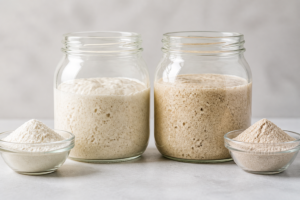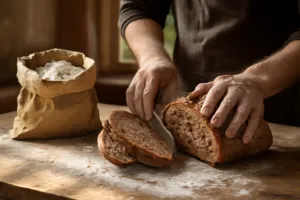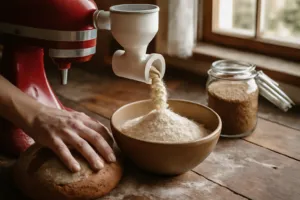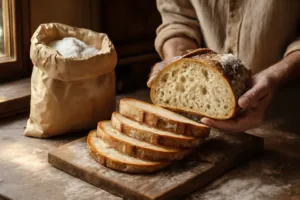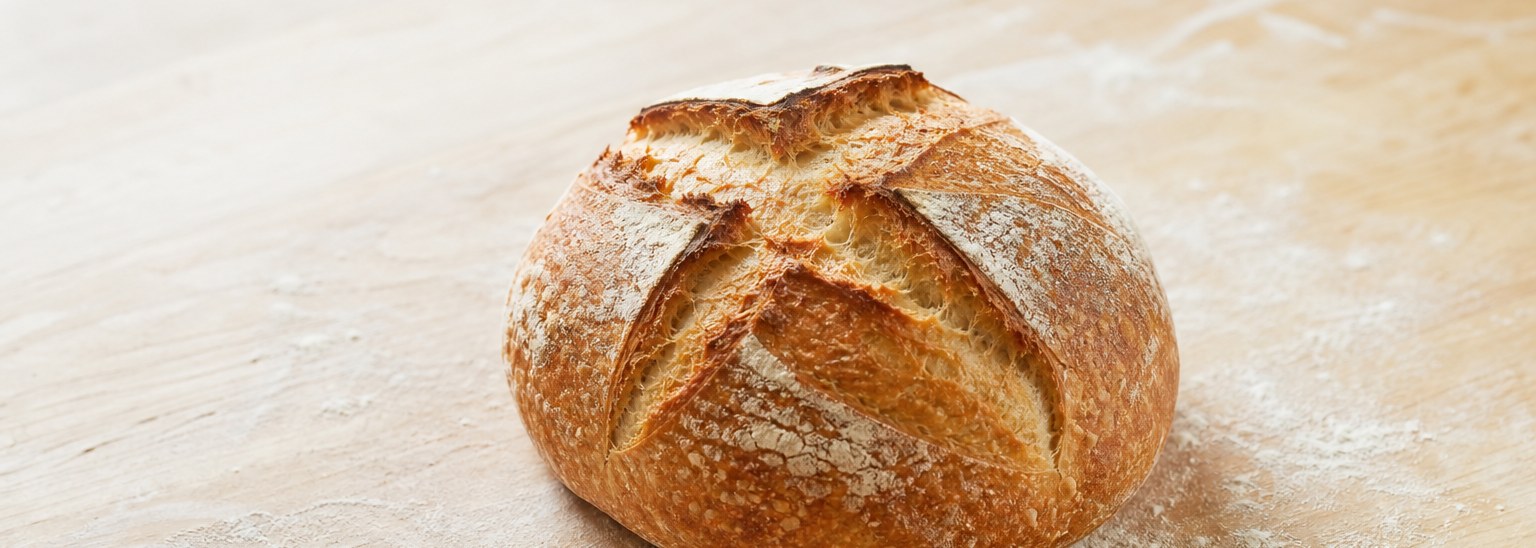
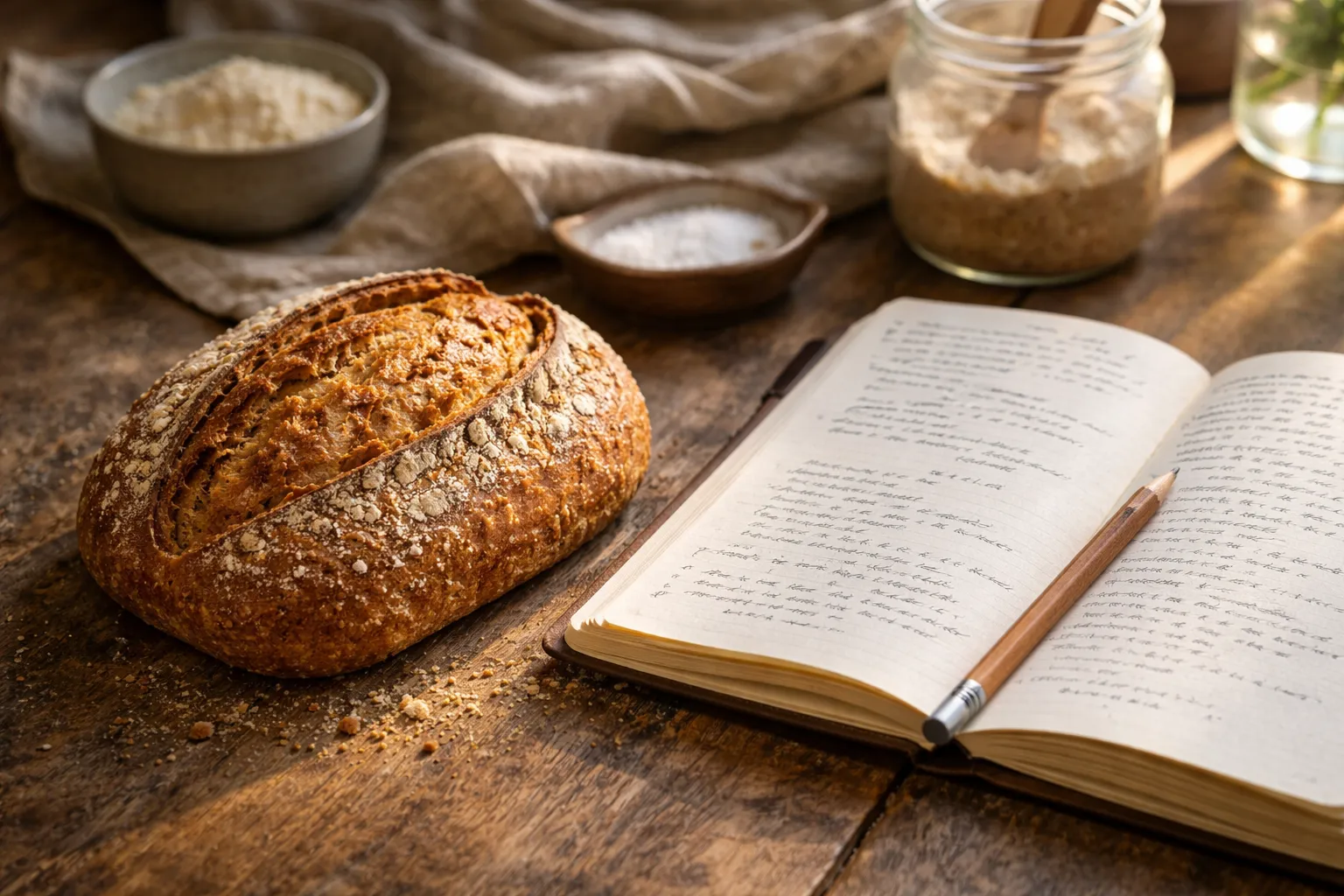
No recipe card ever bothers to mention this part: the exact moment einkorn flour turns your dough into something that looks suspiciously like pancake batter. That’s precisely what greeted me one ordinary weekday morning — a puddle spreading lazily across my countertop, showing zero intention of holding any shape at all. I’d followed my usual sourdough steps without changing a thing, or so I believed. What I’d actually done was swap in einkorn flour for the first time, convince myself it would act “close enough” to my regular bread flour, and then handle it exactly the same way. It was not close enough. Not remotely. And yet that soupy disaster eventually turned into one of the best einkorn sourdough loaves I’ve ever pulled out of my oven. Bear with me — we’ll get to how that happened.
So What Exactly Is Einkorn, and Why Does It Matter?
Einkorn ranks among the oldest cultivated grains still around — people were harvesting this wheat roughly 10,000 years ago across the Fertile Crescent. It’s never been hybridized or reworked by modern agricultural breeding, which is what earns it the label “ancient grain” in the fullest sense of that phrase. The color is a striking gold, the flavor leans nutty and almost buttery, and nutritionally it outpaces modern wheat in several respects — more protein, a richer supply of fat-soluble vitamins, and a gluten makeup that a lot of people find gentler on digestion.
That very gluten makeup is exactly why my dough acted like a toddler mid-tantrum that morning. Einkorn does contain gluten, but it’s a softer, more stretchy version than what modern wheat gives you. It soaks up water on its own terms, races through fermentation faster than you’d expect, and refuses to cooperate if you handle it the way you’d handle a sturdier, high-gluten dough. Once that clicked for me, the whole process changed.
The Einkorn Flour That Finally Kept My Dough From Turning Into a Puddle
Einkorn simply doesn’t play by the same rules as bread wheat — it takes on water on a different schedule, ferments quicker, and will make you pay for it if you approach it like your standard sourdough starter recipe. Finding a flour that’s consistently milled and reliably sourced solves half the puzzle; the rest comes down to accepting that your timing and ratios need a full overhaul.
Where it delivers
- The whole wheat version kept its gluten structure far better than I expected — my second try, right after the puddle disaster, showed genuine tension and never collapsed before shaping.
- Since it’s organic and milled consistently, I can now drop my hydration by 5-8% and count on the results staying steady from one batch to the next.
- Flavor builds noticeably quicker with this flour — I’m now bulk fermenting for 3-4 hours instead of 5-6, which actually suits my schedule much better once I stopped forcing it to act like something it isn’t.
Where it falls short
- It costs noticeably more than standard bread flour, and you’ll go through it faster too, since einkorn loaves come out denser and you’ll almost certainly need extra test batches to get the feel right.
- The 32 oz 2-pack disappears fast if you’re baking on a weekly basis — I’ve had to reorder more frequently than I’d like, and the shipping fees start adding up.
I almost gave up on einkorn after that Tuesday puddle, convinced I’d never figure out the timing, but switching to a flour I could actually count on made all the difference. Jovial Organic Einkorn Whole Wheat Flour, 32 oz 2-Pack
Frequently Asked Questions
Why does einkorn dough behave so differently from regular bread flour?
Einkorn contains softer, more stretchy gluten than modern wheat. It soaks up water on its own schedule, ferments faster than expected, and won’t cooperate if you handle it like standard sourdough. Once you accept that your timing and ratios need a full overhaul, the process becomes manageable.
How much should I reduce hydration when using einkorn flour?
Dropping hydration by 5-8% helps keep einkorn dough stable. With consistently milled organic einkorn, you can count on results staying steady from batch to batch once you make this adjustment.
How long should bulk fermentation take with einkorn sourdough?
Einkorn bulk ferments for 3-4 hours instead of the 5-6 hours typical for standard sourdough. Flavor builds noticeably quicker with this flour, so shorter fermentation actually works better once you stop forcing it to behave like regular bread flour.
Is einkorn sourdough more expensive than regular sourdough?
Yes, einkorn costs noticeably more than standard bread flour, and you’ll go through it faster since einkorn loaves come out denser. The 32 oz 2-pack disappears quickly on a weekly baking schedule, and shipping fees add up with frequent reorders.
About This Article

Written by Sam Whitaker. Sam Whitaker has been baking sourdough for over a decade, including three years baking commercially, and now works out of a home kitchen in the Pacific Northwest. Sam's eleven-year-old starter, Harold, is the foundation for every recipe and troubleshooting guide on Sourdough Rising — real bread tested over and over until it works. More about this site.
Scope and limits. Sam is a home baker with no formal culinary training. Follow current food safety guidance for storage and handling, particularly with enriched or filled doughs.
Verify this against a primary source
Specifics change, and your situation may differ from the one described here. These are the authorities worth checking directly:
- USDA FoodData Central — flour and ingredient composition data
- FoodSafety.gov — safe handling and storage