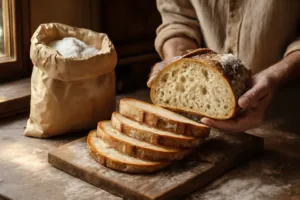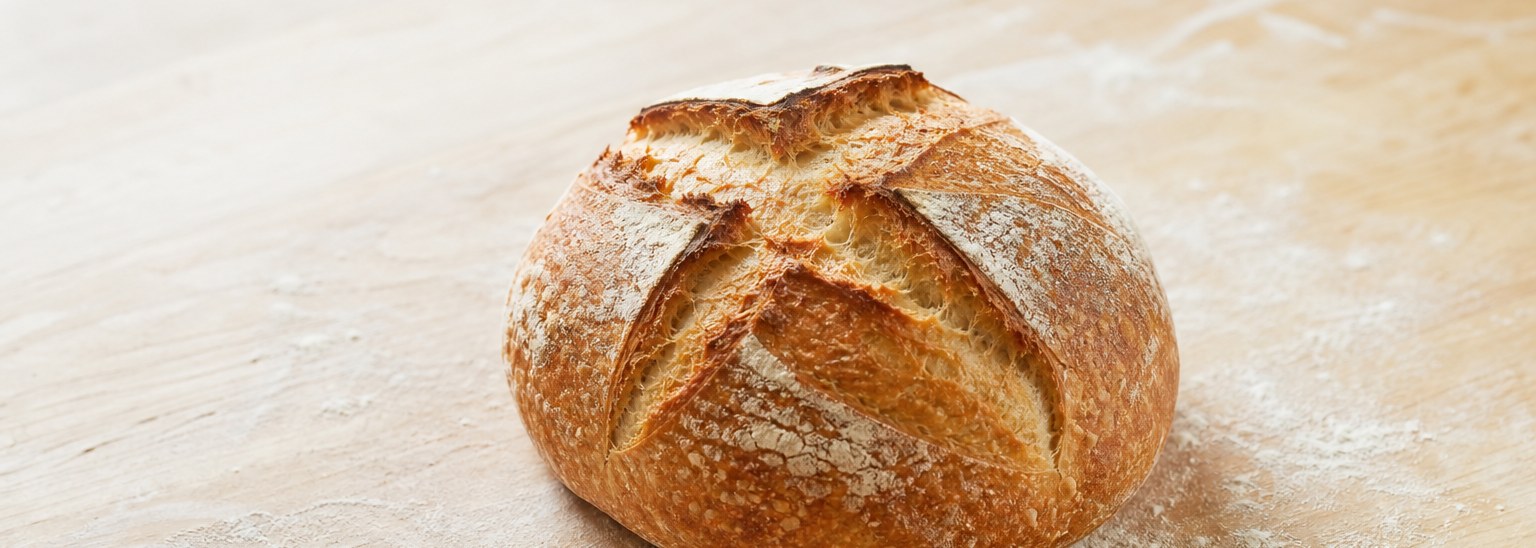
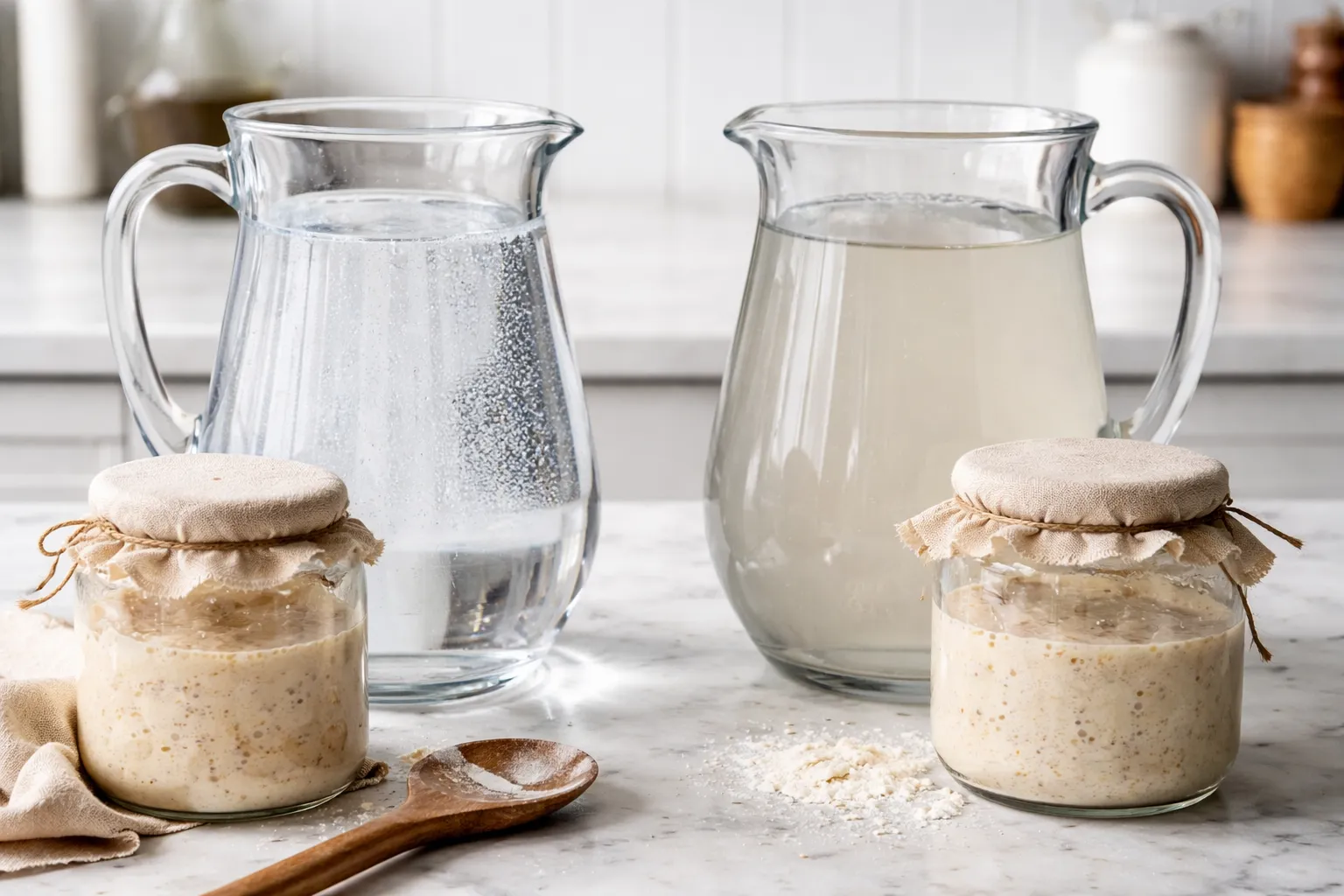
Two loaves of sourdough, baked from the same dough on the same day, don’t lie — even when the internet insists they should. Half of what you’ll read about sourdough water treats plain tap water like a silent starter-killer, and the other half insists filtration is a gimmick nobody actually needs. The first camp gets it wrong, though not in the way I expected. That’s roughly where I landed after staring at two finished loaves at the end of a six-week filtered-versus-tap trial, comparing them like a slightly deflated science-fair judge, only to realize both looked… fine. Not the dramatic transformation I’d built up in my head. Not a disaster either. Just fine. Six weeks of a dedicated notebook, a husband who had officially reached his limit on fermentation-timing updates, and no tidy conclusion to show for any of it. Or so I believed at first.
Rewind a bit. Like most of my sourdough detours, this one started with a late-night forum argument I stumbled across around eleven at night. One poster swore, with total confidence, that tap water was “destroying” their starter. Another fired back that filtered water was “a complete waste of effort for home bakers.” I closed my laptop, lay there wide awake for an hour, and then did the only sensible thing a bread-obsessed person could do: I mapped out a six-week trial involving two separate starters, a notebook dedicated entirely to the project, and a filter pitcher I’d already been eyeing anyway.
| Water Type | Starter Rise Consistency | 6-Week Loaf Results | Primary Benefit |
|---|---|---|---|
| Filtered (Brita pitcher) | Slight consistency advantage | Fine loaves | Removes cloudiness and minerals |
| Tap water | One rough patch week three | Fine loaves | Works if chlorine present |
What Water Quality Really Does to Sourdough (Quick Science, I Promise)
Before I walk you through my humbling results, here’s the reasoning behind even asking this question. Most municipal water systems add chlorine or chloramine specifically to knock out microorganisms — a smart move for keeping drinking water safe. That same additive is a lot less helpful when your goal is nurturing a thriving colony of wild yeast and lactic acid bacteria in a jar on your counter.
Chlorine is the easier of the two to deal with. It’s volatile, meaning if you leave an open jar of tap water sitting out for thirty to sixty minutes, a good chunk of it simply evaporates away. Plenty of seasoned home bakers rely on exactly this trick and keep perfectly healthy starters. Chloramine is a different animal entirely — it’s far more stable, doesn’t off-gas nearly as easily, and more municipalities are switching over to it. If your city uses chloramine, letting the jar sit won’t do much good. Filtering becomes the more dependable fix instead.
Beyond chlorine and chloramine, water hardness matters too — very high mineral content can interfere with gluten development, while overly soft water tends to leave dough feeling loose and harder to shape. The sweet spot for sourdough sits somewhere in the middle: some minerals present, no heavy disinfectants, and the right temperature for whatever dough you’re mixing. That last piece, incidentally, might be the single most important water variable of all — and it’s exactly the twist I’m about to walk you through.
The Equipment Behind My Filtered vs Tap Sourdough Test
If you’re thinking about running a version of this test yourself, or you’d simply like to start filtering your baking water as a habit, here’s the pitcher setup I used and still stand behind. I picked it up right as the experiment began, and honestly, filtered water has stuck around as part of my everyday baking routine no matter what the results ultimately showed.
- Brita Large Water Filter Pitcher (10-Cup, Bright White) – This is the one I used throughout my test. It’s BPA-free, filters last two months, and it lives happily on my counter next to my starter jars. Simple, reliable, and it works.
- Waterdrop Water Filter Pitcher (7-Cup, NSF Certified) – A great option if you want something compact. NSF certified and rated for 200 gallons per filter, which is impressive. Also reduces chlorine and PFOA/PFOS.
- Waterdrop 10-Cup Large Water Filter Pitcher – If you bake a lot or feed a busy household, this larger Waterdrop model is excellent. Five times the filter lifetime compared to standard pitchers and it reportedly improves coffee and tea flavor too, which is a lovely bonus.
- Brita UltraMax Large Water Dispenser (27-Cup) – This is the one I want next. A 27-cup dispenser that sits on your counter like a tiny hydration station. Perfect for high-volume bakers or anyone who bulk ferments multiple loaves at once.
- Brita 10-Cup Pitcher with SmartLight Change Indicator (Stretch Limo Black) – A sleeker version of the classic Brita with a built-in light that tells you when to change your filter. I have been known to forget filter changes for embarrassingly long stretches, so this is genuinely useful for me.
Six Weeks, Two Starters, and the Realization That Humbled Me
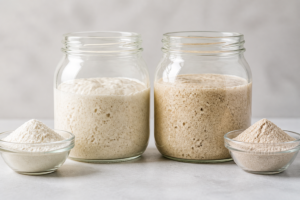
Here’s the setup. I split my mature starter into two even portions on the same day, feeding both identical ratios of the same flour blend (my usual mix of bread flour with a touch of whole wheat). Starter A got filtered water from my new Brita pitcher at every feeding, while Starter B got plain tap water straight from the faucet. Both lived in matching jars, on the same patch of counter, and I baked a loaf from each one every single week for six weeks straight. I tracked rise speed, peak height, aroma, and then the finished bread itself: oven spring, crumb structure, crust color, and taste.
For the first four weeks, the difference was basically nothing. Starter A, the filtered one, showed a touch more consistency in how quickly it rose. Starter B hit one rough patch around week three, and I chalked it up immediately to the tap water. My notes from that week literally read, “B is being difficult, as expected.” I’d already decided how this story was going to end.
Then week five arrived, and Starter B roared back, turning out one of the strongest loaves of the entire trial. My tidy theory started to crack. I flipped back through my notebook hunting for a pattern, and that’s when I found it — the detail that’s a little mortifying, the one my husband has been kind enough not to bring up too often.
That rough week three, the one where Starter B was supposedly “struggling”? My own handwriting in the notebook noted that I’d grabbed cooler water than usual because I was in a rush that day. It wasn’t tap water sabotaging anything. It was me. The water ran several degrees colder than it should have, and that alone slowed fermentation down completely. Starter B wasn’t reacting to chlorine — it was just cold.
I’d gotten so fixated on the idea that water quality was the deciding factor that I nearly missed the variable that actually mattered: water temperature. When it comes to sourdough, filtration isn’t the biggest water-related lever you can pull — temperature is. Both dough and water temperature directly drive how fast fermentation moves, and getting that right consistently outweighs whatever filtered-versus-tap debate you’re having, at least if your local tap water is reasonably decent to begin with.
The Filter Pitcher That Ended My Tap Water Suspicions
If your tap water tends to run a little cloudy or carries that unmistakable mineral taste, it’s easy to assume it’s the thing wrecking your fermentation schedule. Six weeks into testing, though, here’s what I actually landed on: consistent, filtered water removes one more variable from an already unpredictable process — and that alone makes it worthwhile.
Where it delivers
- Clears out visible cloudiness and mineral buildup, so a slow bulk fermentation doesn’t leave you second-guessing whether your water is to blame
- Fits neatly in the fridge and filters quickly enough that refilling between feedings never turns into a chore
- The filter-change indicator is genuinely reliable — you get a clear heads-up instead of wondering whether your water quality has quietly slipped
Where it falls short
- Replacement filters are needed roughly every 2 months, and that cost adds up fast if you’re filtering water for every autolyse and every hydration tweak
- It won’t fix an off fermentation schedule on its own — filtered water controls one variable, it isn’t a cure for a weak starter or an overheated kitchen
I went through one filter in week two thinking it wasn’t actually filtering (it was), but once I committed to the rhythm, it became the baseline I needed to actually isolate what was affecting my dough. Grab a Brita Large Water Filter Pitcher (10-Cup, Bright White) and stop wondering if your water is the problem.
Frequently Asked Questions
Does tap water actually harm sourdough starters?
Not necessarily. Municipal tap water contains chlorine or chloramine to kill microorganisms, which can stress wild yeast and bacteria. Chlorine evaporates in thirty to sixty minutes, so many home bakers keep healthy starters using plain tap water. Chloramine is more stable and harder to remove, making filtering more dependable if your city uses it.
What’s more important: filtered water or water temperature?
Water temperature matters more than filtration. Both dough and water temperature directly drive fermentation speed, and getting that right consistently outweighs the filtered-versus-tap debate. Sam discovered this when a rough fermentation week turned out to be caused by cooler water she’d grabbed in a rush, not tap water quality.
What did Sam find after six weeks of testing?
Both the filtered and tap water starters produced fine loaves with only minor differences. For the first four weeks, the filtered starter showed slightly more consistency in rise speed. The filtered water’s real value is removing one variable—visible cloudiness and mineral content—so you can isolate other fermentation problems to technique instead.
Will a water filter pitcher fix fermentation problems?
No. A filter pitcher controls one variable; it isn’t a cure for weak fermentation on its own. Filtered water won’t fix an off fermentation schedule, a weak starter, or an overheated kitchen. It simply removes mineral buildup and cloudiness so you can troubleshoot other factors more clearly.
About This Article

Written by Sam Whitaker. Sam Whitaker has been baking sourdough for over a decade, including three years baking commercially, and now works out of a home kitchen in the Pacific Northwest. Sam's eleven-year-old starter, Harold, is the foundation for every recipe and troubleshooting guide on Sourdough Rising — real bread tested over and over until it works. More about this site.
Scope and limits. Sam is a home baker with no formal culinary training. Follow current food safety guidance for storage and handling, particularly with enriched or filled doughs.
Verify this against a primary source
Specifics change, and your situation may differ from the one described here. These are the authorities worth checking directly:
- USDA FoodData Central — flour and ingredient composition data
- FoodSafety.gov — safe handling and storage