The dough sat there on my counter, flat as a pancake and weeping a thin film of liquid across the top, giving off a sour-but-wrong smell — sharper than the usual tang, almost tipped over from ripe into rotten. It was pushing 11 on a Sunday night, two full days of careful tending headed straight for the trash. That was the moment I stopped pretending I understood how temperature and time actually work together in sourdough fermentation, and admitted that until I figured it out, I’d keep burning through flour and free weekends for nothing.
Maybe you’ve had this happen too — you pull a loaf from the oven, slice into it, and find a dense, gummy crumb with no clue why. That’s what this guide is for. Temperature and timing are the two levers that decide whether your sourdough succeeds or flops, and nobody ever spelled that out for me in plain terms when I was starting out. So consider this the explanation I was missing back then.
| Temperature Range | Bulk Fermentation Time | Dough Behavior | Key Notes |
|---|---|---|---|
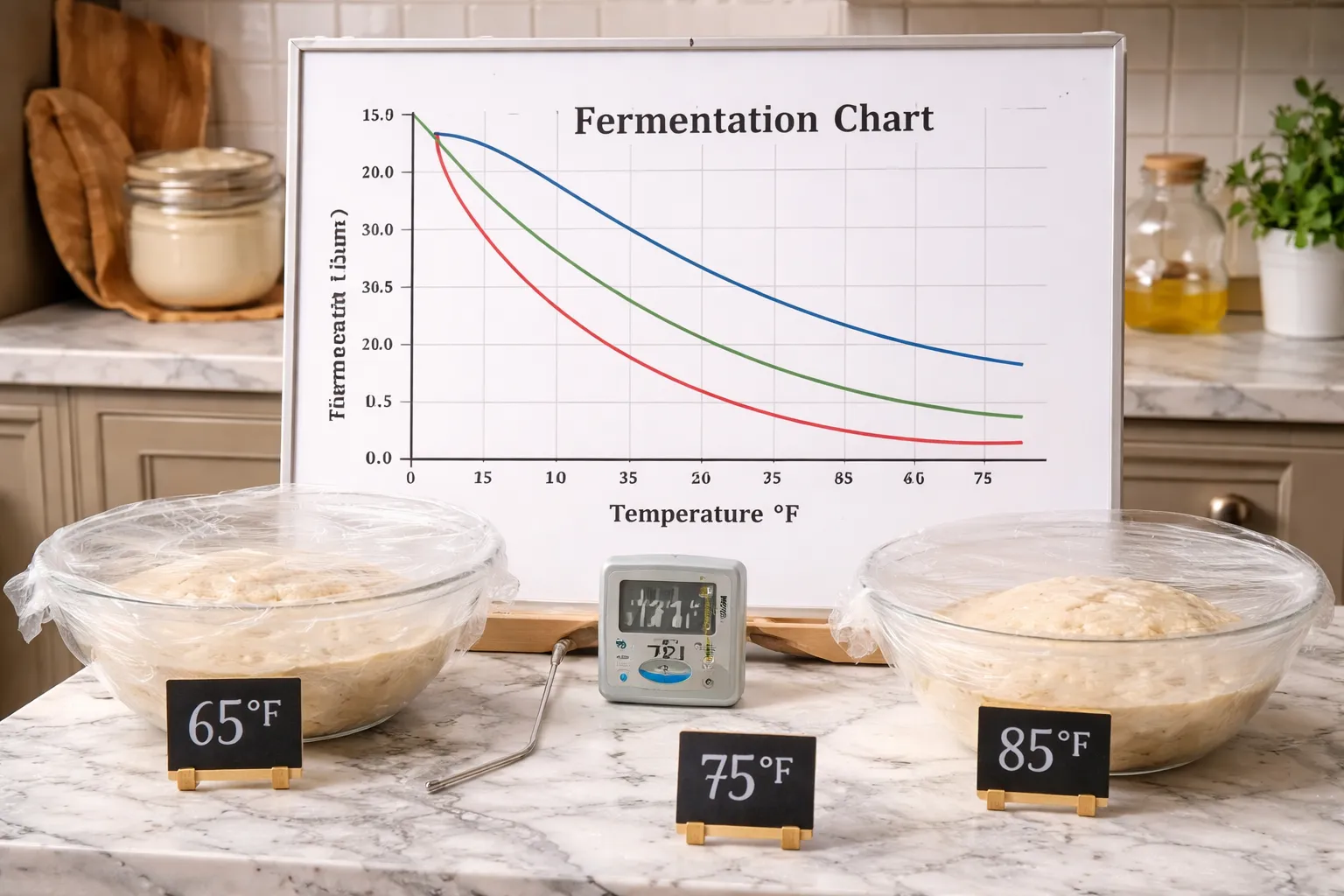
| 65°F to 68°F | 8 to 12-plus hours | Slow fermentation | Deep, complex flavor; underproofing risk if watching timer |
| 70°F to 74°F | 6 to 8 hours | Moderate pace | In-between zone; trips up bakers during spring and fall |
| 75°F to 78°F | 4 to 6 hours | Vigorous, active rise | Target zone; most recipes assume this range |
| 80°F to 82°F | 3 to 4 hours | Fast fermentation | Requires close attention to dough, not just clock |
| Above 85°F | Very fast | Bacterial activity overtakes yeast | Gluten weakened, over-acidic; treat with caution |
Breaking Down That Ruined Sunday Loaf — My Mistake, Not the Recipe’s
Here’s exactly where I went sideways: the recipe called for a four-to-five-hour bulk ferment, and I followed it to the letter — four and a half hours on the timer, feeling pretty proud of myself. What I hadn’t factored in was that it was January, my kitchen was sitting at 64°F, and my dough was essentially fermenting inside a fridge. Fermentation barely got off the ground. I shaped it anyway, let it cold proof overnight, then baked it straight from the fridge the next morning. Oven spring? Nonexistent. The crumb came out dense and gummy.
Nothing was wrong with the recipe itself. I’d simply overlooked one of the most basic realities of sourdough baking: time and temperature are really just two ways of describing the same process. Warm dough moves fast; cold dough drags its feet. That stated four-to-five-hour window assumed a dough sitting somewhere around 75 to 78°F. Mine was nowhere close.
The Core Relationship Between Temperature and Fermentation Speed
Grasping how temperature drives fermentation speed was the real turning point for me. Your starter is a living colony of wild yeast and bacteria, and those organisms respond directly to heat. Turn the temperature up and their activity speeds up. Drop it down and they slow to a crawl. For balanced, active bulk fermentation, you generally want to land somewhere between 75°F and 80°F.
Here’s the cheat sheet I’ve got taped inside my cabinet door for quick reference:
- 65°F to 68°F: Expect bulk fermentation to stretch anywhere from 8 to 12-plus hours. The flavor payoff is deep and complex, but underproofing becomes a real risk if you’re tracking the timer instead of the dough itself.
- 70°F to 74°F: Bulk fermentation generally lands in the 6-to-8-hour range. This in-between zone trips up plenty of home bakers during spring and fall transitions.
- 75°F to 78°F: This is the target zone. A vigorous, active starter should give you 4 to 6 hours of bulk fermentation here — and it’s the range most published recipes are quietly assuming.
- 80°F to 82°F: Fermentation picks up considerably, often wrapping up in 3 to 4 hours. This calls for close attention to what the dough is actually showing you, not just what the clock says.
- Above 85°F: Things can get away from you fast. Bacterial activity overtakes the yeast, which can leave you with gluten that’s weakened and over-acidic. Treat summer heat with extra caution.
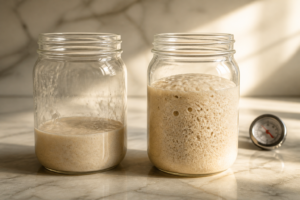
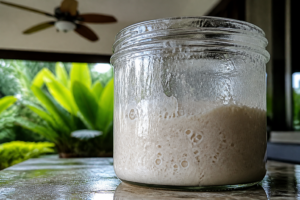
Here’s the mental shift that mattered most: the time range in a recipe is a starting point, not a deadline. What you’re actually watching for is dough behavior — roughly 50 to 75 percent volume increase, a surface that’s domed and just slightly jiggly, and bubbles you can see pressed against the sides of your container. The clock gives you a rough sketch. Temperature tells you what’s actually happening.
My Current Method for Tracking Dough Temperature
The other lesson buried inside that ruined Sunday loaf was this: I’d never once actually taken my dough’s temperature. I just assumed “room temperature” was good enough and moved on. That assumption got corrected right away.
These days I check dough temperature immediately after mixing, then again as bulk fermentation begins. A decent instant-read thermometer has turned into one of the genuinely indispensable tools on my counter, and it doesn’t need to be expensive or elaborate. I cycle through a couple of them depending on which one’s clean and which one’s drying on the rack.
The Tool That Ended My Fermentation Guesswork
I spent months just eyeballing dough temperature and crossing my fingers — which is precisely how I wound up staring at that flat, wasted loaf late one Sunday night. There’s a real gap between knowing your kitchen’s air temperature and knowing your dough’s actual temperature, and closing that gap is what separates a fermentation you can predict from one that wrecks your whole schedule.
Where This Held Up
- Gives you a dough temperature reading in about 1–2 seconds, which counts for a lot when you’re dipping in several times a day to track bulk fermentation without letting the dough cool off
- Precise to within about ±1°F, tight enough to tell the difference between 75°F and 78°F — a gap that shifts your entire fermentation timeline and how predictable the rise turns out to be
- Sturdy enough to handle being snatched up with dough-covered wet hands and shoved back in the drawer over and over, all without drifting out of calibration
Where It Falls Short
- The probe falls a bit short for reaching the true core of a thick, cold dough without stirring it first, so what you sometimes get is a surface reading instead of the real center temperature
- Since it’s built as a meat thermometer, the screen defaults to a beef setting — harmless, but it’s a small reminder every time that you’re repurposing a tool built for something else entirely
I nearly sent it back within the first week, doubting whether a two-second readout could really be trusted. But once I began logging my fermentation temperatures alongside how the dough actually rose, the correlation became impossible to ignore.
Frequently Asked Questions
What kitchen temperature should I aim for bulk fermentation?
Aim for 75°F to 78°F for balanced, active fermentation. This is the target zone where a vigorous starter typically gives you 4 to 6 hours of bulk fermentation, and it’s the range most published recipes assume. Outside this window, fermentation speeds up or slows down significantly, affecting your timeline and results.
How long does bulk fermentation take at different temperatures?
At 65°F to 68°F, expect 8 to 12-plus hours. At 70°F to 74°F, aim for 6 to 8 hours. At 75°F to 78°F, figure on 4 to 6 hours. At 80°F to 82°F, fermentation wraps up in 3 to 4 hours. Above 85°F, fermentation moves dangerously fast and bacterial activity can overtake yeast, weakening gluten and creating over-acidity.
Should I follow recipe timing or watch my dough instead?
Watch your dough’s behavior, not just the clock. Recipe timing is a starting point, not a deadline. Look for roughly 50 to 75 percent volume increase, a domed surface that’s slightly jiggly, and visible bubbles pressed against your container’s sides. Temperature tells you what’s actually happening in fermentation.
Do I need an expensive thermometer to track dough temperature?
No. An instant-read thermometer doesn’t need to be expensive or elaborate. Sam uses an affordable meat thermometer that reads dough temperature in about 1–2 seconds and is precise to within about ±1°F, tight enough to distinguish between temperatures that shift your entire fermentation timeline.
About This Article

Written by Sam Whitaker. Sam Whitaker has been baking sourdough for over a decade, including three years baking commercially, and now works out of a home kitchen in the Pacific Northwest. Sam's eleven-year-old starter, Harold, is the foundation for every recipe and troubleshooting guide on Sourdough Rising — real bread tested over and over until it works. More about this site.
Scope and limits. Sam is a home baker with no formal culinary training. Follow current food safety guidance for storage and handling, particularly with enriched or filled doughs.
Verify this against a primary source
Specifics change, and your situation may differ from the one described here. These are the authorities worth checking directly:
- USDA FoodData Central — flour and ingredient composition data
- FoodSafety.gov — safe handling and storage