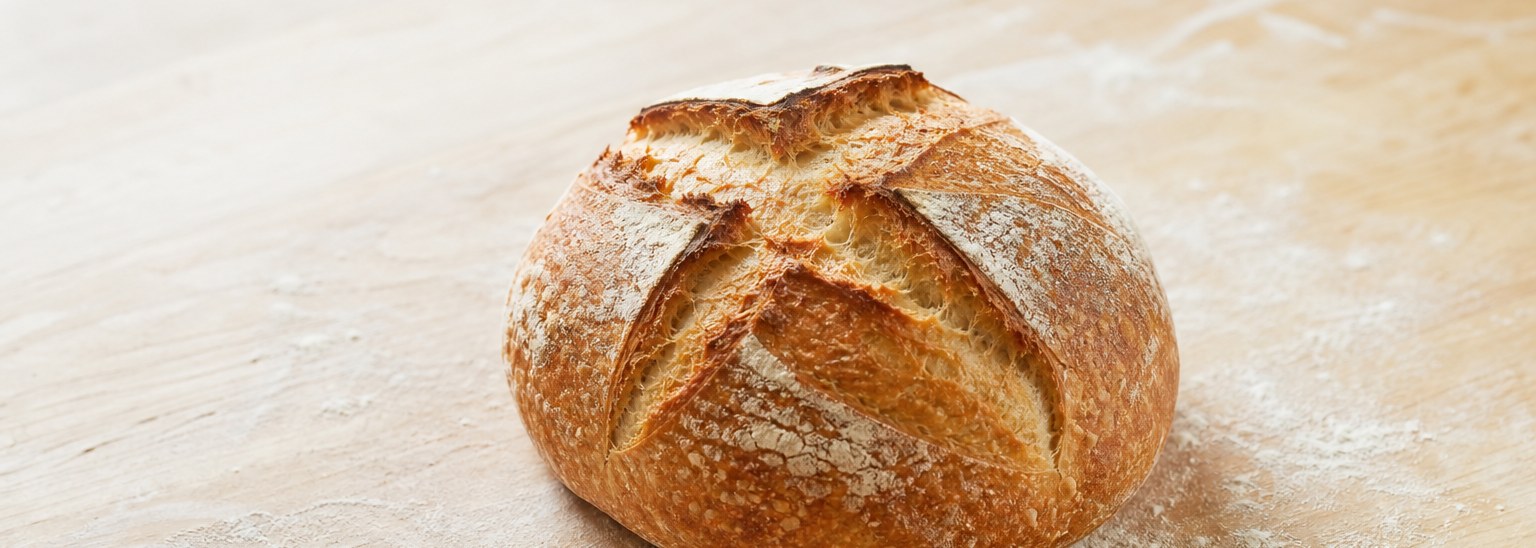
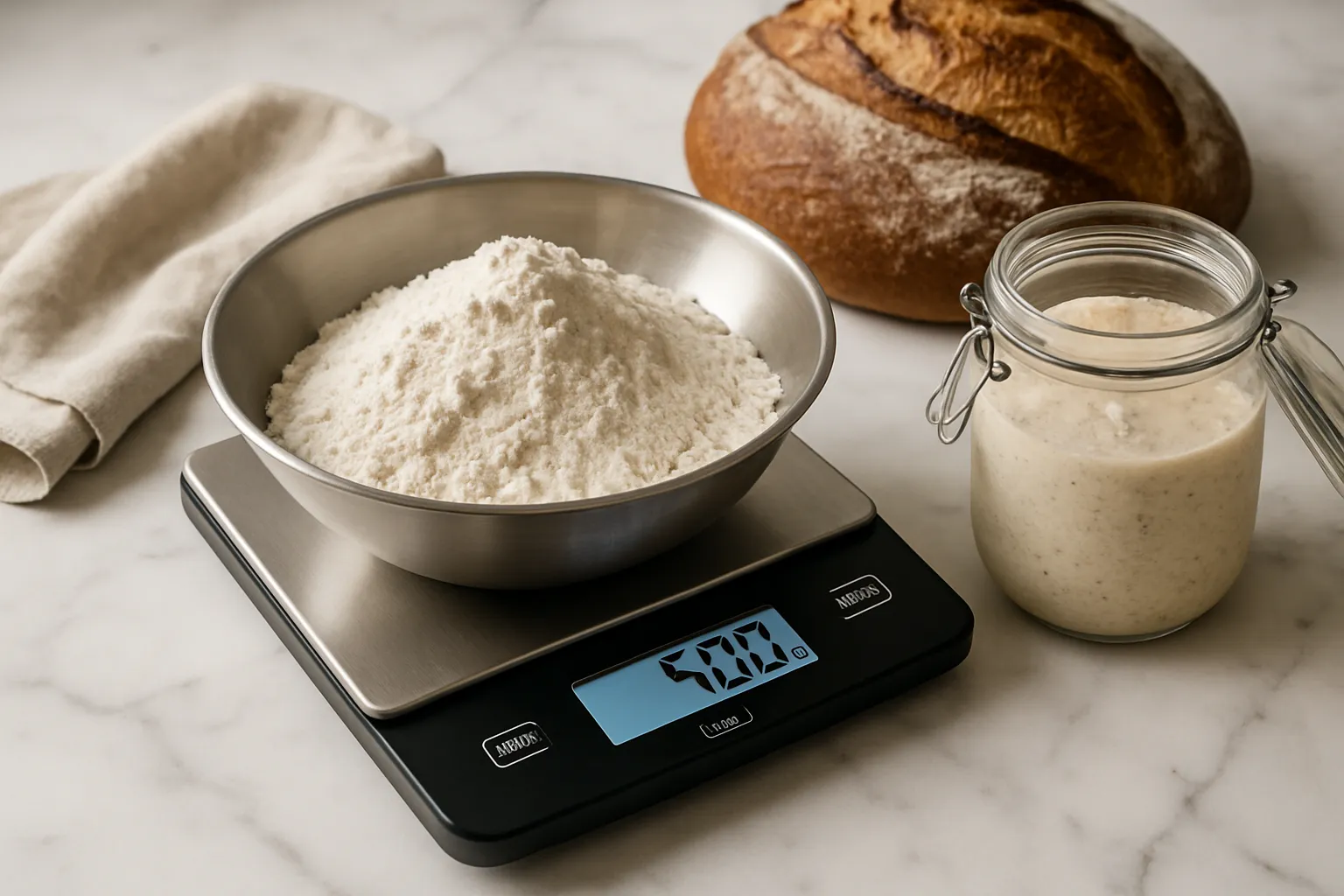
Don’t trust your cup measurements — they’re quietly wrecking your sourdough. I learned this the hard way one afternoon when a loaf that should’ve turned out gorgeous came out of the oven dense and heavy, more like a brick than bread. The culprit? I’d jammed flour into the measuring cup while rushing, packing it down without thinking twice. It wasn’t until another baker asked me, point blank, “Did you weigh that?” that the lightbulb finally went on. If you’re taking your sourdough seriously and haven’t switched to weighing your ingredients with a digital scale for sourdough baking, this is, hands down, the single biggest change you can make to how you bake.
Cups and Spoons Are Sabotaging Your Sourdough (Here’s Why)
Measuring cups and spoons exist for speed, not accuracy — and sourdough is one of those crafts where accuracy usually wins out over everything else. Flour is the biggest offender here, since its volume swings wildly depending on how it’s scooped. Spoon it lightly into a cup and you might land at 120 grams. Pack that same cup down tight and you could be looking at 165 grams or beyond. That 45-gram gap sounds small on paper, but in a sourdough formula, it’s often the line between a beautifully open crumb and something you’d use to prop open a door.
Everything in sourdough comes down to ratios — hydration levels, starter percentages, salt percentages — and all of it is calculated by weight, not volume. Recipes written by people who bake professionally are almost always expressed in grams. Once you start weighing your own ingredients, you can follow those recipes to the letter, diagnose problems with actual logic instead of guesswork, and resize a formula up or down without breaking a sweat. No more eyeballing it. No more scraping a butter knife across the top of a cup and crossing your fingers. Just numbers that don’t lie.
It’s not only flour that benefits from weighing — your starter, water, and salt all deserve the same treatment. Even a gram or two of extra salt can noticeably drag down fermentation speed. A starter that’s a touch too wet or too dry throws off timing, rise, and even flavor. Individually these seem like tiny details, but they stack up fast, and a kitchen scale wipes out almost all of that uncertainty in one move.
Features That Actually Matter in a Sourdough Scale
Kitchen scales are not interchangeable, and sourdough baking has its own short list of non-negotiable features. Here’s what I always check before I’ll tell another baker to buy one:
- 0.1-gram accuracy: When you’re portioning salt or a lively starter, rounding to the nearest whole gram isn’t tight enough. A scale that measures down to a tenth of a gram gives you real command over small amounts.
- At least 5kg (11 lb) of capacity: More often than not you’ll be weighing dough right inside a mixing bowl or a Dutch oven, and bigger loaves demand a scale that can handle the load.
- A working tare button: This zeroes out the weight of your container so ingredients can go in one after another without you doing math in your head. There’s no skipping this one.
- Dual grams/ounces readout: Grams are the go-to unit in sourdough, but it’s nice to have ounces available too.
- A screen you can actually read: A messy, flour-covered kitchen is no place for a display you have to squint at.
- A stainless steel weighing surface: It holds up over time, wipes clean in seconds, and won’t get stained if some starter sloshes over the side.
The Scales That Have Earned My Trust
Over the years I’ve put a fair number of scales through their paces, and the ones below are the models I actually stand behind and hand to fellow bakers, no matter their experience level. If you’re just picking up sourdough or you’re churning out several loaves a week, you’ll find something on this list worth your money.
How I Quit Eyeballing Flour Weights and Started Baking Loaves That Actually Turn Out the Same Way Twice
The gap between 500 grams of flour and 520 grams seems trivial right up until it’s the reason your crumb goes from open and airy to tight and gummy. A solid digital scale is the one tool that pulls you out of guesswork territory and into loaves you can actually repeat on purpose.
What I like
- It measures down to 0.1g, so hitting exact hydration numbers and starter ratios stops being a guessing game halfway through mixing.
- The tare feature snaps back to zero right away, letting you weigh several ingredients into one bowl without pulling out a calculator or washing containers between each one.
- The readout catches up quickly enough that pouring water or liquid levain doesn’t mean staring at a slowly climbing number for ten seconds — which matters a lot when your hands are covered in dough.
Where it falls short
- The screen runs small and gets tough to make out under dim kitchen lighting, particularly if you’re checking on your dough late at night during bulk fermentation.
- It needs a moment to boot up, so grabbing it cold mid-process means a short pause before it’s ready to weigh anything — a minor annoyance, but one worth flagging.
I once panicked when the scale seemed to freeze mid-measurement and thought I’d wasted money, then realized I hadn’t turned it on. Since then, it’s been bulletproof. If you’re ready to stop blaming the recipe and start trusting the numbers, grab the Etekcity 0.1g Food Kitchen Scale.
Frequently Asked Questions
How much does flour weight vary in a measuring cup?
Flour weight in a cup varies wildly depending on how it’s scooped. Spoon it lightly and you might get 120 grams, but pack it down tight and you could reach 165 grams or beyond — a 45-gram difference that changes your crumb from open and airy to tight and gummy.
What features should I look for in a sourdough scale?
Look for 0.1-gram accuracy for portioning salt and starter, at least 5kg capacity for weighing dough in bowls, a working tare button to zero out container weight, dual grams/ounces readout, a readable screen, and a stainless steel weighing surface that wipes clean easily.
Why does digital weighing matter for sourdough?
Everything in sourdough comes down to ratios — hydration levels, starter percentages, salt percentages — all calculated by weight, not volume. Weighing eliminates guesswork, lets you follow professional recipes exactly, diagnose problems logically, and resize formulas without breaking a sweat.
Can a gram or two of salt really affect fermentation?
Yes. Even a gram or two of extra salt can noticeably drag down fermentation speed. A starter that’s too wet or too dry throws off timing, rise, and flavor. These details stack up fast, and a kitchen scale wipes out that uncertainty.
About This Article

Written by Sam Whitaker. Sam Whitaker has been baking sourdough for over a decade, including three years baking commercially, and now works out of a home kitchen in the Pacific Northwest. Sam's eleven-year-old starter, Harold, is the foundation for every recipe and troubleshooting guide on Sourdough Rising — real bread tested over and over until it works. More about this site.
Scope and limits. Sam is a home baker with no formal culinary training. Follow current food safety guidance for storage and handling, particularly with enriched or filled doughs.
Verify this against a primary source
Specifics change, and your situation may differ from the one described here. These are the authorities worth checking directly:
- USDA FoodData Central — flour and ingredient composition data
- FoodSafety.gov — safe handling and storage