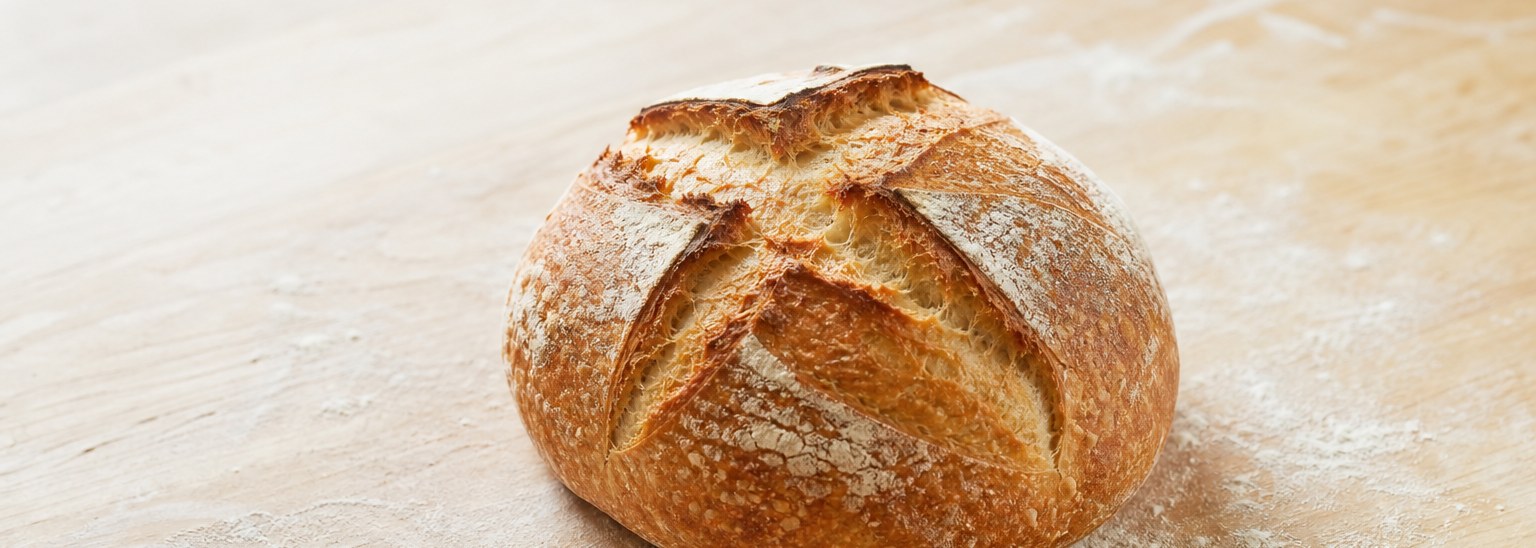
There’s a particular strip of marble counter just past my stove — chipped at one corner from a dropped Dutch oven lid — and that’s exactly where I attempted my first hands-only transfer of a fully proofed loaf into the pot. No bench scraper, no dough whisk, just my palms and a stubborn confidence that everything would work itself out. The dough clung to the counter, sagged, and flopped into the pot looking far more like a deflated pancake than anything resembling artisan bread. Standing right there, I finally understood that essential sourdough baking tools aren’t about looking impressive — they’re about respecting the process enough to give yourself an actual shot at a good loaf.
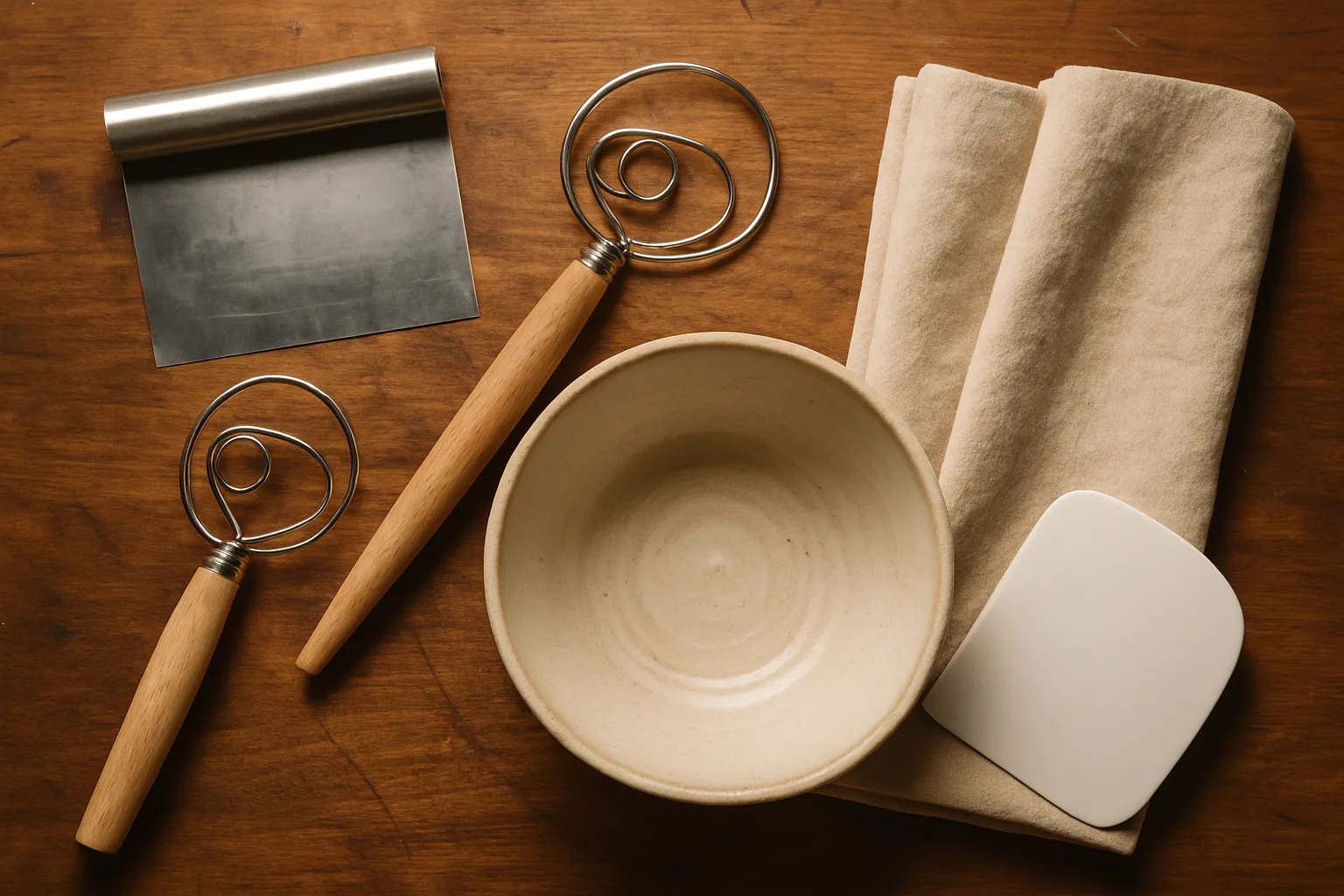
These days, my sourdough setup has been whittled down to only the tools that genuinely earn their spot on the counter. No gimmicky gadgets, no single-purpose contraptions gathering dust in a drawer. Just a small lineup of dependable, hardworking pieces that show up every single bake day and make the whole process quicker, smoother, and honestly more fun. So let’s dig into the three unsung heroes of my sourdough setup: the bench scraper, the dough whisk, and the mixing bowl. Basic tools? Sure. Game-changing anyway? Without question.
Why the Simplest Tools Matter Most in Sourdough Baking
Sourdough is a tactile, hands-in-it kind of craft. Unlike bread leavened with commercial yeast, it asks for patience, feel, and repetition at every turn. You’re stretching and folding, shaping loaves on a floured surface, nudging a living starter toward a beautifully open crumb. Whatever tools you grab in those moments should feel almost like an extension of your own hands — intuitive to use, dependable, and simple to wipe clean.
After hundreds of bakes, here’s what I’ve noticed: the tools new bakers tend to skip over are exactly the ones that solve the most annoying problems. Dough welded to the counter? That’s a bench scraper fix. Flour clumping up in your levain mixture? Grab a dough whisk. Can’t tell your hydration levels apart in a bowl that’s too small to work in? Time for a better mixing bowl. Let’s walk through all three, one at a time.
The Bench Scraper: The Hardest-Working Piece of Sourdough Equipment You Own
If I had to strip my sourdough kitchen down to a single tool, the bench scraper would win without me even pausing to think it over. This flat rectangular blade pulls off tricks that feel almost like magic the first time you see them work. It peels sticky dough off your countertop without tearing the surface apart. It gives you clean, confident control while pre-shaping and shaping loaves. It portions dough with real precision, clears your counter in seconds flat, and even doubles as a handy way to shuffle prep ingredients around. Mine stays in my hand from the second I touch the dough until the counter’s wiped spotless.
What separates a good bench scraper from a mediocre one is a stiff, thin blade paired with a grip that actually feels comfortable in your hand. The flexible plastic bowl-style scrapers have their own uses, sure, but for countertop work you want genuine rigidity and a straight, clean edge.
My Go-To Bench Scrapers
I’ve put quite a few of these through their paces, and three keep earning a permanent spot in my kitchen:
- Pro Dough Pastry Scraper — Stainless Steel with Measuring Scale: This is the one that ends up in my hand most often. Its mirror-polished stainless blade is rigid and thin, and the measuring scale etched along the edge genuinely comes in handy when portioning dough evenly. It has a solid, almost professional feel in the hand.
- OXO Good Grips Stainless Steel Scraper & Chopper: Ergonomics are basically OXO’s whole thing, and this tool proves it. The cushioned handle is a genuine relief on long bake days when your hands are worn out. It’s dishwasher safe, nicely balanced, and built to hold up over time — a solid everyday workhorse.
- Urbanstrive Bench Scraper — Stainless Steel, Black Handle: For anyone who likes their kitchen tools looking sleek and modern, this one fits the bill. That black handle gives it a striking look, but what matters more is that the blade behaves exactly the way a bench scraper should — stiff, smooth-moving, and still easy to grip even when your hands are covered in dough.
Any of these three will change how you handle dough on the counter, full stop. Pick whichever one fits your style and your budget — you honestly can’t pick a bad one from that list.
The Dough Whisk: The Mixing Tool You Probably Didn’t Realize You Needed
The first time a friend suggested I try a Danish dough whisk, I gave a small eye-roll. I already had a stand mixer. I already had regular whisks sitting in a drawer. What could this possibly add? Then I borrowed one on a bake day and never went back to doing it any other way. This old-school, loop-shaped whisk was built specifically for thick batters and sticky doughs, and nothing else handles sourdough mixing quite as effortlessly.
Because of its open coil shape, dough doesn’t get trapped between tight wires the way it does with a standard balloon whisk. You can work your autolyse, blend levain into the main dough, bring a wet starter together with flour and water, or even whisk a high-hydration batter without wrestling the dough at every stage. Cleanup is nearly effortless too — a quick rinse under warm water and it’s done.
I reach for my dough whisk at the very beginning of nearly every bake, and honestly, it turns the whole start of the process into something calmer and more enjoyable. There’s a real satisfaction in watching that simple looping motion pull everything together into a shaggy, promising mass of dough.
My Favorite Dough Whisks
- Zulay Kitchen 13-Inch Danish Dough Whisk: This is my current daily driver. The 13-inch length gives you great reach into a deep mixing bowl, and the wooden handle feels warm and comfortable in the hand. The stainless steel loop holds its shape well even under thick, stiff doughs. It’s a beautiful tool that also happens to work brilliantly.
- TEEVEA Danish Dough Whisk — Stainless Steel with Wooden Handle: Another excellent option with a sturdy stainless steel hook and a classic wooden handle.
The Whisk That Finally Let Me Mix Without Wrestling My Dough
When you’re mixing a stiff sourdough dough by hand, a flimsy whisk will bend, twist, or just give up halfway through. I spent years using whatever came in the drawer and ended up with sore wrists and lumpy dough that never mixed evenly.
What works
- The 13-inch length reaches the bottom of a 5-quart bowl without your hand disappearing into the dough, which makes a real difference when you’re incorporating flour or water during the mix.
- The stainless steel loop stays rigid even when you’re working a 78% hydration dough—no flexing, no bending, no moment where you wonder if it’s going to snap.
- The wooden handle actually warms up in your hand instead of staying cold, and it’s thick enough that you’re not white-knuckling it after two minutes of mixing.
Where It Falls Short
- It won’t replace autolyse or a proper rest period — if your dough truly hasn’t developed yet, whisking harder will just wear out your arm and your patience.
- Given enough time, the wooden handle will pick up stains and hold onto a faint sour smell if you don’t dry it right after washing — pretty much unavoidable with any wooden tool in a sourdough kitchen.
I had a moment early on where I questioned whether a whisk could really handle thick dough, worried I’d invested in another pretty tool that would let me down. But three years in, this one still has the same rigidity it came with. Zulay Kitchen 13-Inch Danish Dough Whisk
Frequently Asked Questions
What size dough whisk reaches a mixing bowl without dunking your arm?
The 13-inch length reaches the bowl bottom without your whole arm disappearing into the dough, making a real difference when you’re incorporating flour or water during mixing. This size works well in a 5-quart bowl and handles thick doughs effectively.
Why would a bench scraper improve my sourdough shaping?
A bench scraper gives you clean, confident control while pre-shaping and shaping loaves by peeling sticky dough off your countertop without tearing the surface. A stiff, thin blade with a comfortable grip is key to managing dough effectively throughout the entire bake.
Can a dough whisk handle 78% hydration dough without bending?
Yes. A stainless steel loop stays rigid even when working a 78% hydration dough with no flexing or bending. The open coil shape prevents dough from getting trapped between tight wires like a standard balloon whisk does.
Should I use a dough whisk instead of autolyse or rest periods?
No. A dough whisk won’t replace autolyse or a proper rest period. If your dough truly hasn’t developed yet, whisking harder will just wear out your arm and your patience without speeding development.
About This Article

Written by Sam Whitaker. Sam Whitaker has been baking sourdough for over a decade, including three years baking commercially, and now works out of a home kitchen in the Pacific Northwest. Sam's eleven-year-old starter, Harold, is the foundation for every recipe and troubleshooting guide on Sourdough Rising — real bread tested over and over until it works. More about this site.
Scope and limits. Sam is a home baker with no formal culinary training. Follow current food safety guidance for storage and handling, particularly with enriched or filled doughs.
Verify this against a primary source
Specifics change, and your situation may differ from the one described here. These are the authorities worth checking directly:
- USDA FoodData Central — flour and ingredient composition data
- FoodSafety.gov — safe handling and storage