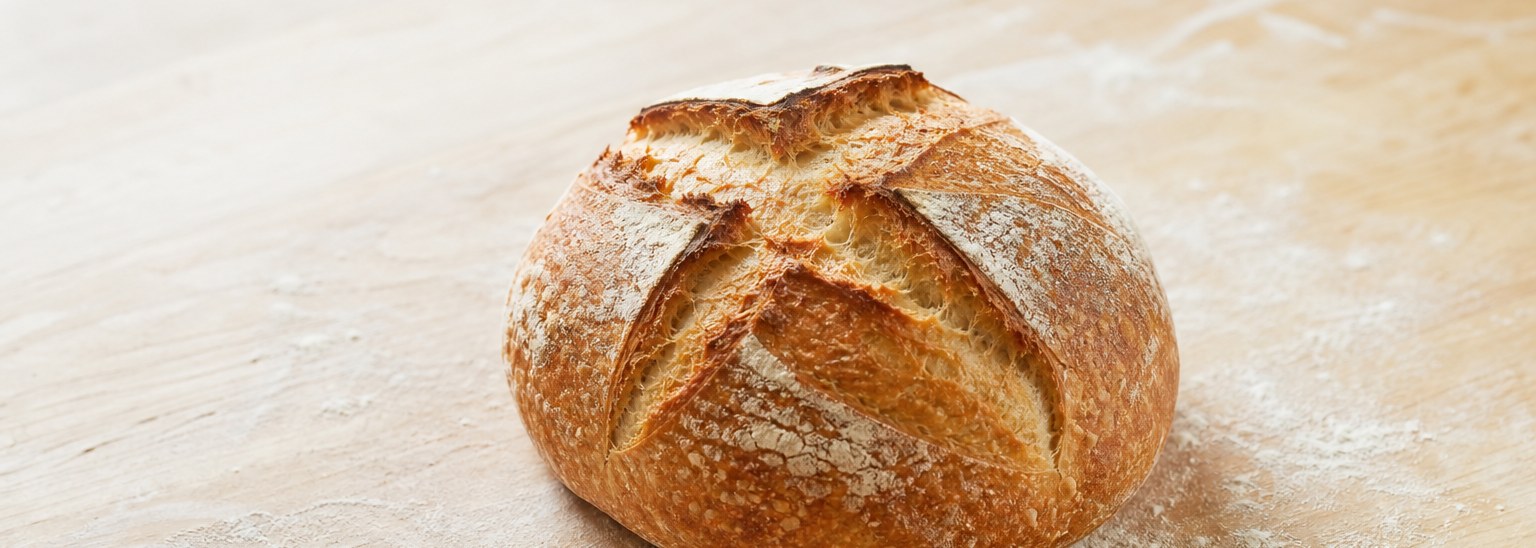
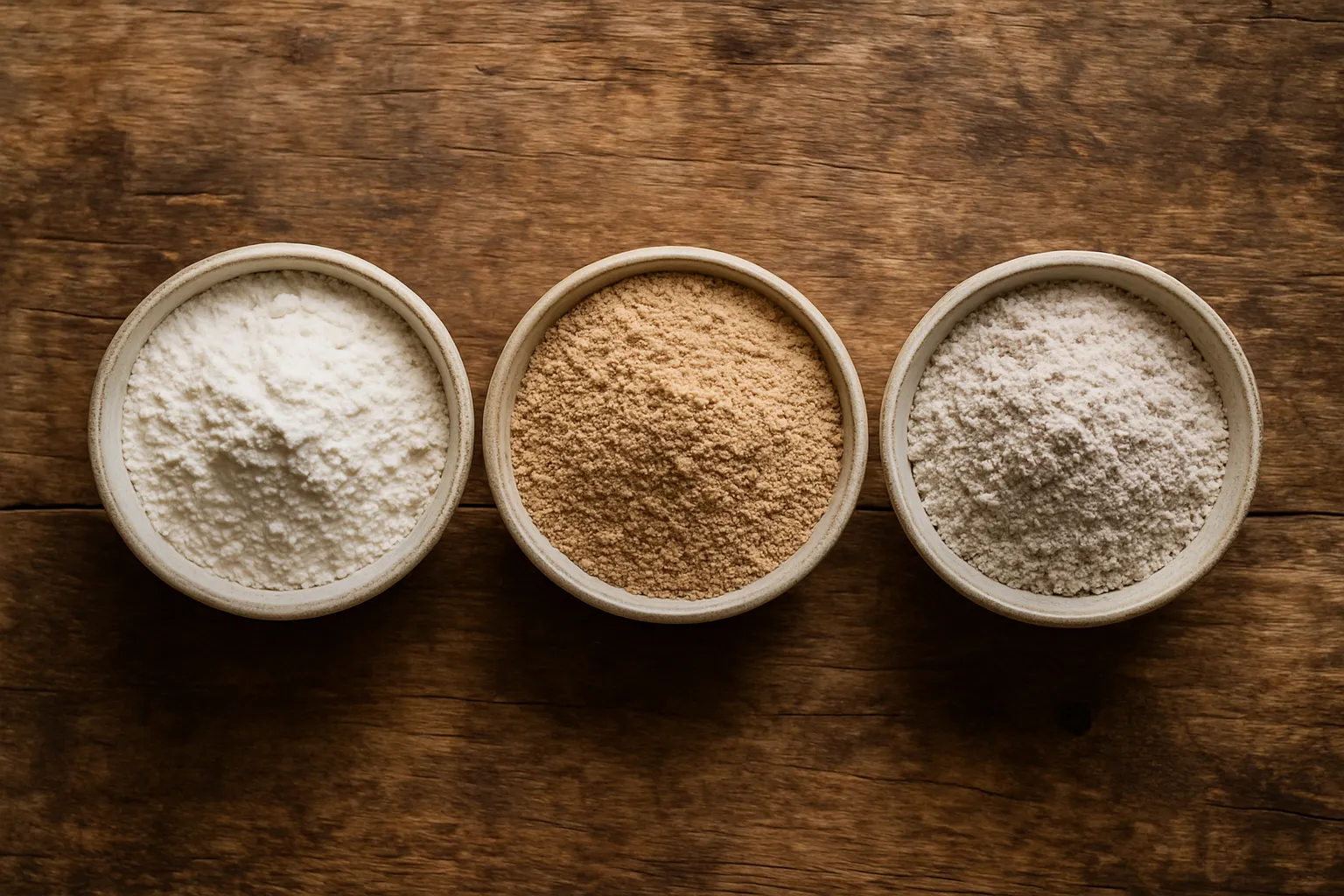
Almost every home baker assumes flour is flour — that any white bag sitting on the pantry shelf will behave the same way once it meets a bubbling starter. I believed exactly that until one Tuesday evening when my starter was doing its thing on the counter and I grabbed the closest bag on hand, a half-used sack of all-purpose I normally kept around for pancakes. The dough turned slack and strange under my hands, and what came out of the oven was flat, dense, and just plain sad. That one disheartening bake sent me into months of testing, reading, and eating a whole lot of mediocre loaves, all in pursuit of the best flour for sourdough bread. What I eventually figured out reshaped my entire approach to baking, and I’m walking you through all of it below.
| Flour Type | Protein Content | Gluten Structure | Oven Spring & Crumb |
|---|---|---|---|
| Bread Flour | 12–13.5% (organic: 13–14%) | Robust, stretchy network | Strong oven spring, open crumb |
| All-Purpose Flour | 10–12% | Less gluten forms | Weaker oven spring, denser crumb |
| Whole Wheat Flour | Not specified | Weakened by bran fragments | Denser loaf, faster fermentation |
Why the Flour You Grab Actually Matters
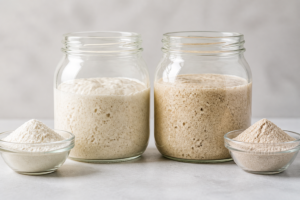
Here’s what nobody explained to me when I first started this hobby: flour isn’t a background ingredient you can swap without consequence — it’s the whole foundation. Your oven spring, your crumb, your crust, and even how lively your starter behaves all trace back to the flour sitting in your bin. The variable driving all of this is protein content. Protein is what turns into gluten once water hits it and you start working the dough, and gluten is the stuff that gives your loaf strength, stretch, and the ability to trap the gas your fermentation is producing. Build more gluten structure and you get a taller rise with a more open crumb. Skimp on it and you end up with something flatter and denser. Before we crown a winner, let’s break down what each flour type actually contributes.
Bread Flour, All-Purpose, and Whole Wheat, Compared Directly
Bread Flour: The Heavy Lifter
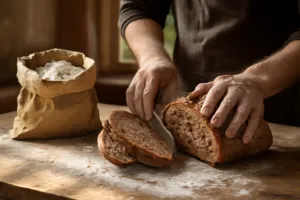
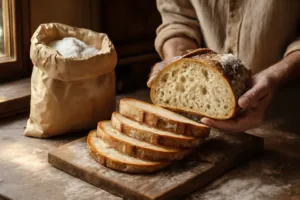
Bread flour is what I reach for by default, and if sourdough is more than a passing hobby for you, it should probably be your default too. Sitting at roughly 12% to 13.5% protein, it forms a robust, stretchy gluten network built to survive a long fermentation without falling apart. That matters enormously in sourdough, since our slow, cold-proofed timeline asks a dough to keep stretching and holding gas for hours on end. The payoff shows up as stronger oven spring, a more open crumb, and that dramatic ear along your scoring line. Bread flour also drinks up water more efficiently, letting you push hydration higher if you’re chasing that wide-holed, glossy crumb everyone on sourdough social media seems obsessed with.
All-Purpose Flour: The Dependable Default
All-purpose flour generally falls between 10% and 12% protein, depending on which brand you buy. It’s far from a poor choice for sourdough — plenty of skilled bakers use nothing else — but you should understand where it comes up short. Lower protein means less gluten forms, so the dough handles more gently and forgives small mistakes, though it won’t hold its shape as forcefully. For someone new to this, that softness can actually work in your favor, since the dough is easier to manage and shape. But if a dramatic oven spring or a wide-open crumb is the goal, all-purpose will cap you well below what bread flour can deliver. I’ll sometimes combine bread flour with all-purpose when I want a gentler crumb texture without sacrificing too much structure.
Whole Wheat Flour: Big on Flavor, Trickier to Handle
Whole wheat flour is where the story gets genuinely interesting, and a bit messier. Since it still contains the bran and germ from the wheat kernel, it brings nutrients and a nutty, earthy flavor that white flour simply can’t replicate. The downside is that those bran fragments act almost like tiny blades, slicing through gluten strands as fermentation moves along. That weakens your dough’s structure and can leave you with a denser loaf if you lean too hard on whole wheat. It also soaks up water differently and speeds fermentation along noticeably faster. My real-world advice: skip the all-whole-wheat sourdough as your first attempt. Swap in just 10–20% whole wheat for your bread flour to start, then work your way up as you get a feel for how it shifts the dough. The flavor you gain is well worth the adjustment period.
How Bread Flour Finally Ended My Run of Flat, Sad Loaves
After watching too many all-purpose loaves ooze sideways in the oven instead of climbing upward, I figured out the real culprit wasn’t my hands, it was my flour. Bread flour’s higher protein range, roughly 13% to 14%, builds a sturdier gluten network that actually props your dough up while it bakes, rather than letting it slump like it’s given up.
Where it delivers
- You can feel the dough firm up and stretch differently during bulk fermentation — the contrast with all-purpose is obvious under your hands, even on your very first attempt.
- Your loaves climb with real oven spring rather than pooling flat; mine went from squat, dense rounds to loaves with legitimate height and shape.
- Organic versions carry a clean, uncomplicated taste with no strange aftertaste, and they hold up well through extended fermentation without turning sour or harsh.
Where it falls short
- It costs noticeably more than all-purpose — expect to pay close to double per pound, which adds up fast if you’re baking a couple of times weekly.
- Because of the extra protein, your dough needs more water to hit the same hydration target, so early bakes may feel wetter than anticipated unless you tweak your recipe accordingly.
I’ll admit I was skeptical the first time I paid $8 for a bag of flour — that felt excessive — but the difference in my bake results made me a believer within two loaves. If you’re tired of flat, dense sourdough, grab the King Arthur 100% Organic Bread Flour (5 lb) and see what proper oven spring actually feels like.
Frequently Asked Questions
What protein content does bread flour have for sourdough?
Bread flour sits at roughly 12% to 13.5% protein, with premium organic versions ranging from 13% to 14%. This higher protein forms a robust, stretchy gluten network that survives long fermentation, giving you stronger oven spring and a more open crumb compared to lower-protein flours.
Can I use all-purpose flour to bake sourdough bread?
Yes, all-purpose flour generally falls between 10% and 12% protein depending on the brand, and plenty of skilled bakers use nothing else. However, lower protein means less gluten forms, so you won’t achieve the dramatic oven spring or wide-open crumb that bread flour delivers.
How much whole wheat flour should I add to sourdough?
Start by swapping in just 10–20% whole wheat for your bread flour, then work your way up as you get comfortable. Whole wheat contains bran fragments that weaken gluten structure and speed fermentation, so whole-wheat-only sourdough isn’t ideal for your first attempt.
Why did my all-purpose flour sourdough come out flat?
All-purpose flour’s lower protein content, between 10% and 12%, forms less gluten to support your dough during baking. Bread flour’s higher protein creates a sturdier gluten network that props your dough up during oven spring instead of letting it slump flat.
About This Article

Written by Sam Whitaker. Sam Whitaker has been baking sourdough for over a decade, including three years baking commercially, and now works out of a home kitchen in the Pacific Northwest. Sam's eleven-year-old starter, Harold, is the foundation for every recipe and troubleshooting guide on Sourdough Rising — real bread tested over and over until it works. More about this site.
Scope and limits. Sam is a home baker with no formal culinary training. Follow current food safety guidance for storage and handling, particularly with enriched or filled doughs.
Verify this against a primary source
Specifics change, and your situation may differ from the one described here. These are the authorities worth checking directly:
- USDA FoodData Central — flour and ingredient composition data
- FoodSafety.gov — safe handling and storage