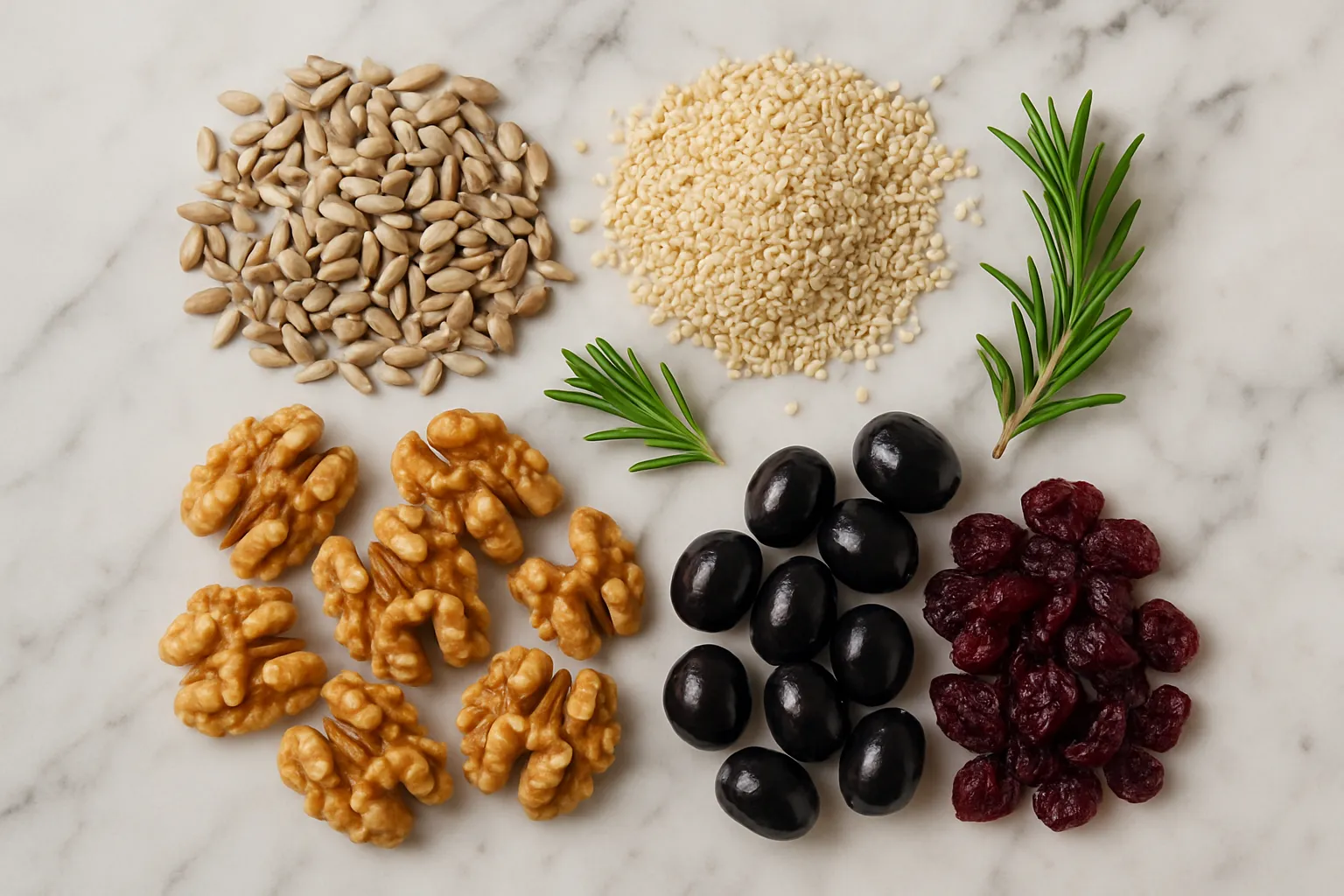
Ask five different bakers when you’re supposed to fold seeds or nuts into sourdough, and you’ll hear five different answers — but two of those answers flatly contradict each other, and only one of them actually holds up under a rolling pin. Some corners of the internet will tell you timing barely matters, that you can toss mix-ins in whenever it’s convenient as long as the ratio is close. That’s the one that’s wrong, and I found out exactly why the hard way, the first time I decided to fold a fistful of everything bagel seasoning straight into my dough mid-bulk-ferment. I was thrilled with the idea and completely unready for what came next — seeds scattered across the counter, the dough tearing under my fingers, and a finished loaf that looked like it had barely survived the oven. And yet it tasted incredible. That one chaotic, humbling bake is what showed me how much power seeds, nuts, herbs, and other mix-ins really hold over a loaf. Learn the how and the when, and that power stops working against you.
What Add-Ins Actually Do for a Sourdough Loaf
A plain sourdough loaf is already gorgeous on its own — the tang, the blistered crust, the airy crumb. But mix-ins let you steer that same loaf in almost any direction you’re in the mood for. Want something hearty and earthy? Pile in the seeds. Craving savory and aromatic? Fresh rosemary and roasted garlic will get you there. Looking for a curveball flavor combo? Toasted walnuts paired with dried cranberries never disappoints. The options are practically limitless, and thankfully, most add-ins are pretty forgiving once you’ve got a handful of basic rules down.
If there’s one thing years of baking has hammered into me, it’s that hydration and timing are the whole game when mix-ins are involved. Toss the wrong ingredient in at the wrong moment and you’ll be wrestling that dough all the way to the oven door. Nail the timing, though, and the dough seems to welcome each new addition without a fight.
Seeds, Nuts, and Herbs in Sourdough — Getting the Technique Right
Seeds: The Reliable Backbone of Mix-Ins
Seeds top my list of favorite add-ins, and it’s not a close call. They contribute texture, real nutritional value, and a toasted depth that plays off the natural tang of a well-fermented dough beautifully. Sunflower seeds are what I reach for most often — mild enough that nobody complains, and they toast up gorgeously once the loaf hits the oven.
Here’s something worth knowing upfront: certain seeds, chia and flax especially, are thirsty. Drop them in dry and they’ll pull moisture straight out of your dough, tightening up the crumb in the process. My workaround is soaking any absorbent seeds in a little water for 20–30 minutes before they go in. It keeps the hydration where it should be and, as a bonus, makes those seeds far easier to fold through the dough.
When it comes to sesame, I always go toasted — the flavor is nuttier and warmer, almost buttery, in a way raw sesame just doesn’t achieve. I also like pressing a coating onto the outside of the shaped loaf right before final proof. That’s what gives you that gorgeous, crackly crust on top.
Right now my seed lineup rotates through sunflower, sesame, pumpkin, and a mix of flax, chia, and hemp. I usually work seeds in during the first stretch-and-fold, roughly 30 minutes into bulk fermentation, once the gluten network has had a chance to establish itself. That head start on structure matters before you throw inclusions into the mix.
Nuts: Rich, Buttery, and Worth the Extra Step
Walnuts, pecans, hazelnuts, almonds — they all earn their place in sourdough. I never skip toasting nuts first; five minutes in a dry skillet over medium heat changes the flavor dramatically. Skip that step and raw nuts can taste dull, plus they sometimes leak oils that get in the way of gluten development.
For how they distribute, I’ve found rough, uneven chopping beats fine crumbling every time. You end up with satisfying little pockets of crunch scattered through the crumb instead of a greasy, gummy texture. Work nuts in exactly the way you would seeds — during an early stretch-and-fold, folded in gently so the dough doesn’t lose its gas.
Walnut and rosemary together is a combination I keep coming back to — earthy, fragrant, and it looks incredible next to a cheese board. Go generous with the walnuts; I use roughly 100–120 grams for every 900 grams of dough.
Herbs: Choosing Between Fresh and Dried
The right herbs turn a basic loaf into something that smells like it just came out of a bakery in the south of France. Fresh herbs are lovely, but they bring extra moisture along with them, so I use them lightly — folding them in during lamination or an early fold works best. My top three are rosemary, thyme, and chives. Dried herbs pack more concentrated flavor and behave much better in a wet dough, so I typically use roughly half the amount when swapping dried for fresh.
Garlic paired with herbs deserves its own callout. Fold roasted garlic into a rosemary loaf and you’ve basically guaranteed a crowd favorite. The key word there is roasted — and cooled. Raw garlic can actually slow down fermentation thanks to its natural antimicrobial compounds. I discovered that the hard way, staring at a loaf that refused to rise properly.
Choosing Sunflower Seeds That Won’t Tear Your Dough on Fold-In
Looking back at that everything bagel seasoning mess, the real issue wasn’t add-ins in general — it was reaching for seeds that were too tiny and jagged, slicing straight through the gluten network right when the dough could least afford it. Bigger, sturdier sunflower seeds slide into the dough cleanly, without stabbing holes through it during bulk fermentation.
What worked for me
- They’re hearty enough to fold in without tearing the dough — I noticed noticeably less structural damage compared to smaller seeds that leave weak spots behind.
- They hold their position throughout the crumb rather than settling to the bottom or bunching up in clumps, so every single slice gets that nutty bite.
- Being organic-certified, there’s no unknown coating or treatment to worry about messing with fermentation — my bulk fermentation times stayed consistent even with a generous handful mixed in.
Where they fall short
- Cost per ounce runs higher than grabbing bulk-bin seeds at the grocery store, and that difference adds up fast if you’re turning out four loaves a week.
- A bag can linger in your pantry for months before it’s used up, and even sealed tight, the seeds will drift toward slightly rancid if you’re not cycling through your stock regularly.
I doubted whether paying this much for seeds was worth it until I pulled apart a loaf and saw perfect distribution and zero dough damage — that was the moment it clicked. Grab the NOW Foods Certified Organic Sunflower Seeds and fold confidently.
Frequently Asked Questions
When should I fold seeds into my sourdough dough?
Fold seeds in during the first stretch-and-fold, roughly 30 minutes into bulk fermentation, once the gluten network has established itself. This head start on structure matters before you add inclusions. If you’re using absorbent seeds like chia or flax, soak them in water for 20–30 minutes first to maintain hydration.
Why do some seeds tear my sourdough dough?
Tiny, jagged seeds slice through the gluten network during bulk fermentation, creating weak spots. Bigger, sturdier sunflower seeds slide in cleanly without stabbing holes through the dough. Choosing larger seeds and folding them in gently during an early fold prevents structural damage and ensures better distribution throughout the crumb.
How much walnut should I add to sourdough?
Use roughly 100–120 grams of walnuts for every 900 grams of dough. Toast nuts first in a dry skillet over medium heat for five minutes to deepen flavor, then chop them roughly into uneven pieces. Fold them in during an early stretch-and-fold, gently so the dough doesn’t lose gas.
Can I use raw garlic in my sourdough?
No. Raw garlic’s natural antimicrobial compounds can slow down fermentation, causing the loaf to rise poorly. Use roasted garlic instead, and make sure it’s cooled before folding it into the dough. Roasted garlic paired with rosemary creates a crowd-favorite combination.
About This Article

Written by Sam Whitaker. Sam Whitaker has been baking sourdough for over a decade, including three years baking commercially, and now works out of a home kitchen in the Pacific Northwest. Sam's eleven-year-old starter, Harold, is the foundation for every recipe and troubleshooting guide on Sourdough Rising — real bread tested over and over until it works. More about this site.
Scope and limits. Sam is a home baker with no formal culinary training. Follow current food safety guidance for storage and handling, particularly with enriched or filled doughs.
Verify this against a primary source
Specifics change, and your situation may differ from the one described here. These are the authorities worth checking directly:
- USDA FoodData Central — flour and ingredient composition data
- FoodSafety.gov — safe handling and storage