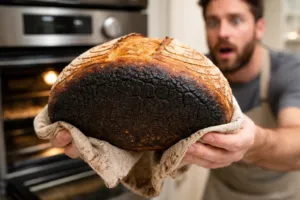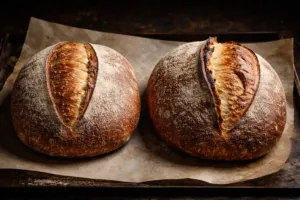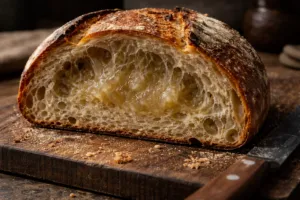
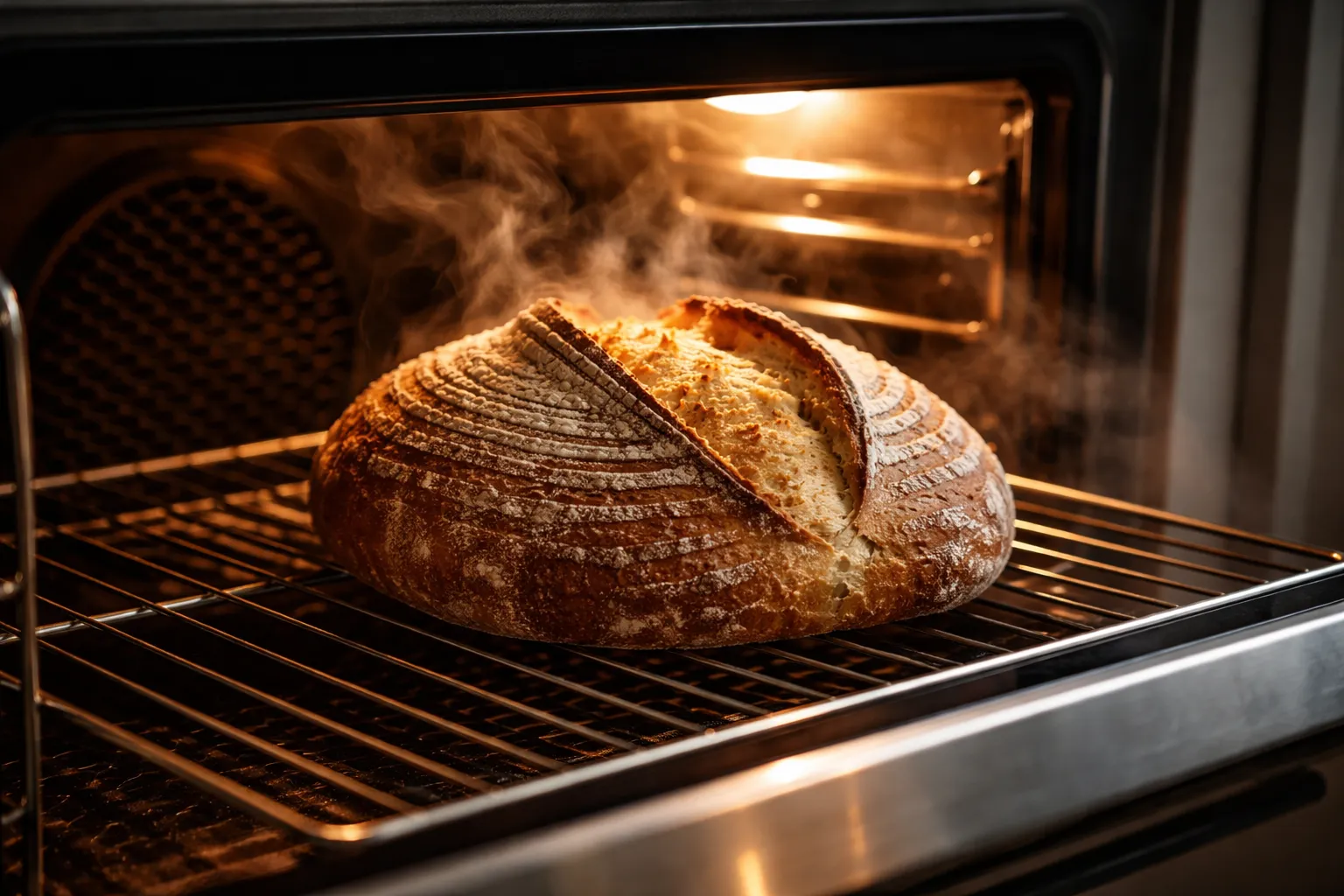
I pulled my sourdough loaf out of the oven on a Sunday afternoon, and it was genuinely the most beautiful thing I had ever baked. I am not exaggerating. The crust was deep mahogany brown, blistered in all the right places, and when I tapped the bottom it made that hollow knock that every sourdough baker lives for. I actually did a little victory dance in my kitchen. My dog looked concerned. I set it on the counter, covered it with a clean kitchen towel because that felt like something a serious baker would do, and went to watch TV for an hour. When I came back and sliced into it, the crust was soft. Not a little soft. Soft like sandwich bread soft. I stood there holding my bread knife wondering what I had done wrong, and whether my dog had somehow jinxed me with his worried look. If you have ever searched “sourdough crust soft after cooling” in a state of mild despair, this post is for you.
Why Your Sourdough Crust Goes Soft After Cooling
The short answer is moisture, and the slightly longer answer is that you are probably trapping that moisture without realizing it. Here is what happens: your sourdough loaf comes out of the oven holding a tremendous amount of steam inside. As it cools, that steam needs somewhere to go. If you set your loaf on a flat surface, wrap it in a towel, or put it somewhere with restricted airflow, that moisture gets pushed outward and absorbed right back into the crust. The crust that was crispy and crackling ten minutes ago essentially gets steamed from the inside out. It sounds dramatic because it kind of is.
The crust on a sourdough loaf is different from most other breads. Because sourdough is typically baked at high heat in a covered Dutch oven, it develops a very thin, almost glassy crust that is delicious but also genuinely delicate once it starts interacting with moisture. That is part of what makes sourdough so special, but it also means you have to be a little more intentional about how you handle the loaf once it comes out of the oven.
The Most Common Mistakes That Lead to a Soft Sourdough Crust
Resting the Loaf on a Solid Surface
This was my exact mistake on that fateful Sunday. Setting a hot loaf directly on a cutting board, plate, or countertop completely blocks airflow to the bottom of the bread. The steam has nowhere to escape from underneath, so it condenses and soaks back into the crust. Even just a few minutes on a flat surface can begin to soften things up.
Covering the Loaf While It Is Still Hot
A towel over a hot loaf creates a little steam tent. I thought I was protecting my bread from drying out. What I was actually doing was recreating the exact conditions that soften a crust. Let your loaf breathe completely uncovered while it cools. You can store it once it reaches room temperature, but those first one to two hours of cooling time should be open air only.
Under-Baking the Loaf
If there is too much moisture in the crumb when the loaf comes out of the oven, no amount of clever cooling technique will save your crust. A properly baked sourdough loaf should reach an internal temperature of around 205 to 210 degrees Fahrenheit. I know that sounds high, but trust it. Under-baked bread has a gummy crumb and releases way more steam during cooling, which means even more moisture attacking that crust from the inside.
Not Leaving the Lid Off Long Enough
Most sourdough recipes bake the loaf covered for the first 20 minutes or so, then uncovered for the remaining time. That uncovered period is not just about getting color. It is about driving off surface moisture and crisping the crust. If you pull the loaf too early, or your oven runs cool so it does not quite finish, the crust will not have developed enough structure to stay crispy once that internal steam starts moving.
What You Actually Need to Keep That Crust Crispy
Good news: fixing this problem does not require any fancy new technique. It mostly requires the right tools and a little patience, which I have finally, after many soft-crusted loaves, managed to develop.
The Cooling Rack That Actually Lets Your Crust Stay Crispy
Here’s the thing most bakers don’t realize: if you let that mahogany-brown loaf sit directly on your counter or wrapped in a towel while it cools, steam gets trapped underneath and turns your beautiful crust soft and chewy within an hour. You need air circulation underneath, and you need it immediately.
What works
- The elevated grid design creates an air pocket under the loaf, so steam escapes downward instead of condensing back into the crust as it cools.
- At 10″ x 15″, it’s wide enough to hold a standard boule or batard without the loaf hanging off the edges, which would cause uneven cooling and a soft spot on one side.
- Heavy-duty stainless steel doesn’t warp or flex when you set a hot loaf on it, which matters because a sagging rack creates pockets where steam pools.
What doesn’t
- The grid is close enough that smaller decorative scoring marks can leave faint lines on the bottom of your loaf if you’re not careful—not a deal-breaker, but worth knowing.
- You do need counter space; this isn’t something you can tuck away easily, and two racks take up real estate during that critical cooling window.
I was skeptical the first time I used one—I thought I was overthinking it, that my towel method was fine—but the difference in crunch texture at the 45-minute mark was undeniable. 2PCS Cooling Racks for Cooking and Baking (10″ x 15″ Heavy Duty Stainless Steel)
This post contains affiliate links. As an Amazon Associate, I earn from qualifying purchases at no extra cost to you.