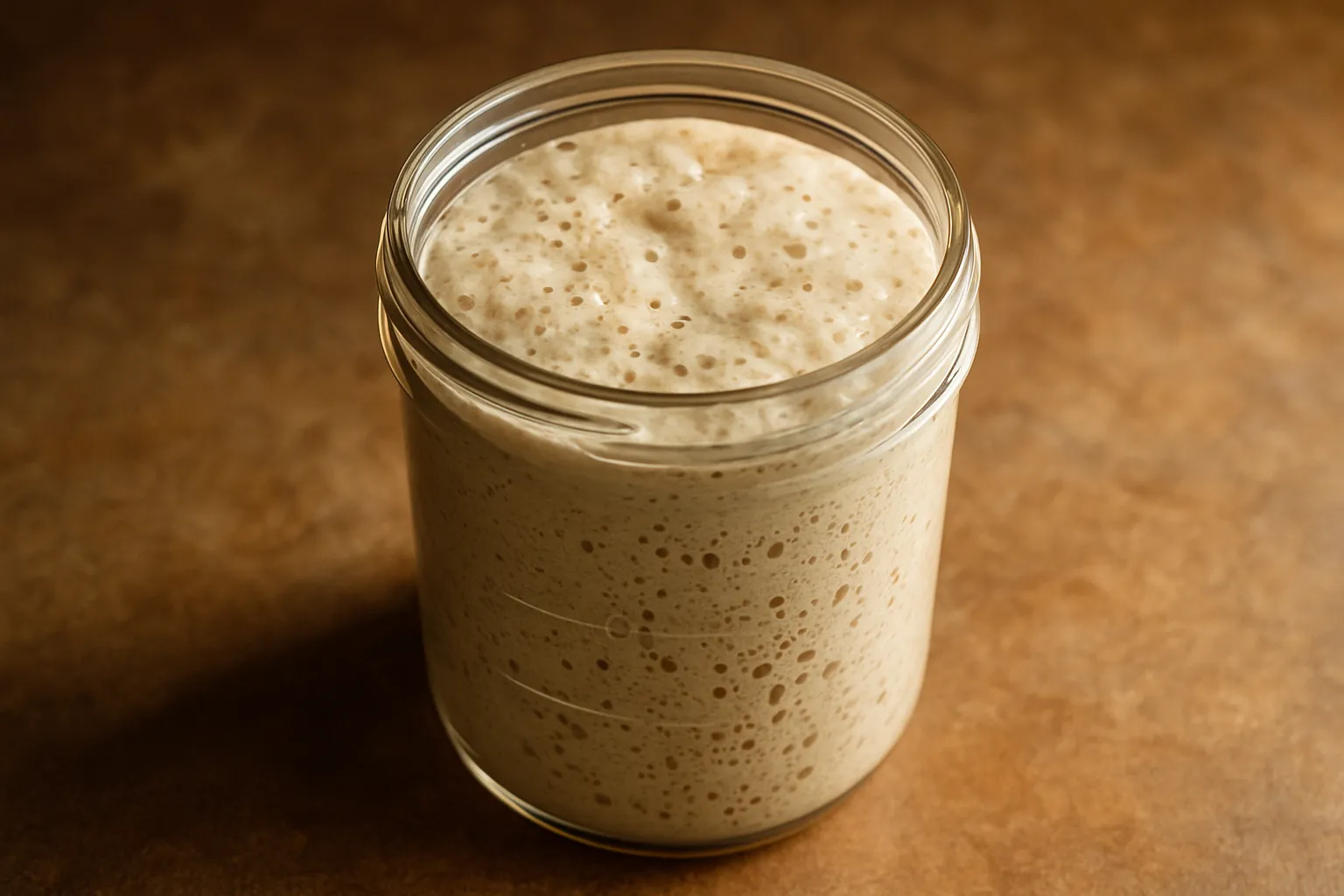
I still remember staring into a mason jar on my kitchen counter, watching nothing happen. Day three of my very first attempt, and there wasn’t a single bubble in sight. I almost poured it down the drain. I’m so glad I didn’t — because by day five, that same jar was alive, tangy, and practically climbing out on its own. If you’ve ever wanted to know how to make sourdough starter from scratch, you’re in exactly the right place. I’ve been through the failures, the flat loaves, and the triumphant rises, and I’m here to walk you through every single day of this magical process.
What Is a Sourdough Starter and Why Should You Make One?
A sourdough starter is simply a living culture of wild yeast and beneficial bacteria, fed with nothing more than flour and water. It’s the ancient engine behind every sourdough loaf — no commercial yeast required. When you feed it regularly, it rewards you with lift, flavor, and a depth that store-bought bread can only dream about. The best part? You’re cultivating something completely unique to your home, your hands, and your kitchen environment. No two starters are exactly alike, and that’s honestly one of the things I love most about this craft.
The Jar That Finally Stopped My Starter From Drying Out
When you’re nurturing a new starter through those first fragile days, you need a container that lets you actually see what’s happening without lifting the lid every five minutes. A poorly sealed jar will let your culture dry out along the edges, or trap too much moisture and encourage mold — both mistakes I made more times than I’d like to admit.
What works
- The 40oz size is the sweet spot for a new starter — big enough that you’re not fighting overflow during peak rise, small enough that you can actually read the timeline through the glass without guessing.
- The graduated measurements printed right on the side mean you can track feeding ratios by sight instead of weighing or doing math at 7am — I can see exactly when my starter has doubled without opening it.
- The breathable cloth lid seals just tight enough to prevent a crusty surface from forming, but loose enough that you’re not building up pressure or trapping condensation that leads to liquid mold.
What doesn’t
- The lid isn’t airtight, so if you’re storing it in the fridge for weeks, you’ll need to cover it with plastic wrap or a plate to keep it from drying out completely.
- Glass conducts temperature too readily — on a sunny kitchen counter, your starter will heat up faster than in a neutral cabinet, which can throw off your feeding schedule if you’re not paying attention.
I almost sent this jar back after day three when my starter looked like it had barely moved, but that was just because I was obsessively checking every hour instead of letting it sit. Premium Pro Sourdough Starter Jar Kit (40oz)
This post contains affiliate links. As an Amazon Associate, I earn from qualifying purchases at no extra cost to you.