I was standing in my kitchen at 6 a.m., wearing yesterday’s flour-dusted sweatshirt, when my sister-in-law casually mentioned that my sourdough had “basically cured her IBS.” I froze mid-sip of coffee. Not because I was thrilled (though I was), but because I suddenly realized I had absolutely no idea if what she was saying was actually true, and I’d been serving people bread for over a decade without ever really understanding the science behind sourdough bread and gut health.
That moment of panic sent me down a research rabbit hole that lasted three weeks and involved more peer-reviewed journals than I care to admit. What I discovered surprised me, humbled me, and actually made me a better baker. So I’m sharing what the research really shows, minus the jargon and judgment, written by someone who’s been fermenting dough longer than she’s been reading about its microbiome.
The Embarrassing Moment That Started It All
Let me set the scene more clearly. My sister-in-law Sarah had casually mentioned during Sunday dinner that after eating my sourdough for a few weeks, her digestive issues had improved dramatically. She wasn’t asking for medical advice, wasn’t making wild claims—just mentioning it like you’d mention a new haircut. But I suddenly felt like a fraud.
Here’s the thing: I’d been baking sourdough for eleven years. I ran a microbakery. I knew my dough. I could tell you the exact hydration of my starter on any given Tuesday. But when someone credited my bread with actual health benefits, I panicked because I realized I’d been resting on the assumption that “fermented” automatically meant “good for your gut” without ever actually verifying it.
I nodded, said something vague and baker-y like “that’s the long fermentation,” and then spent the next three weeks reading everything I could find about sourdough bread and gut health, from respected nutritionists, gastroenterologists, and fermentation researchers. I needed to know if I’d been accidentally helping people or just getting lucky.
What the Research Actually Shows About Sourdough Bread and Gut Health
Okay, here’s where I get to redeem myself. The good news: there’s real science here. The better news: it’s actually more nuanced and honest than most sourdough blogs would have you believe.
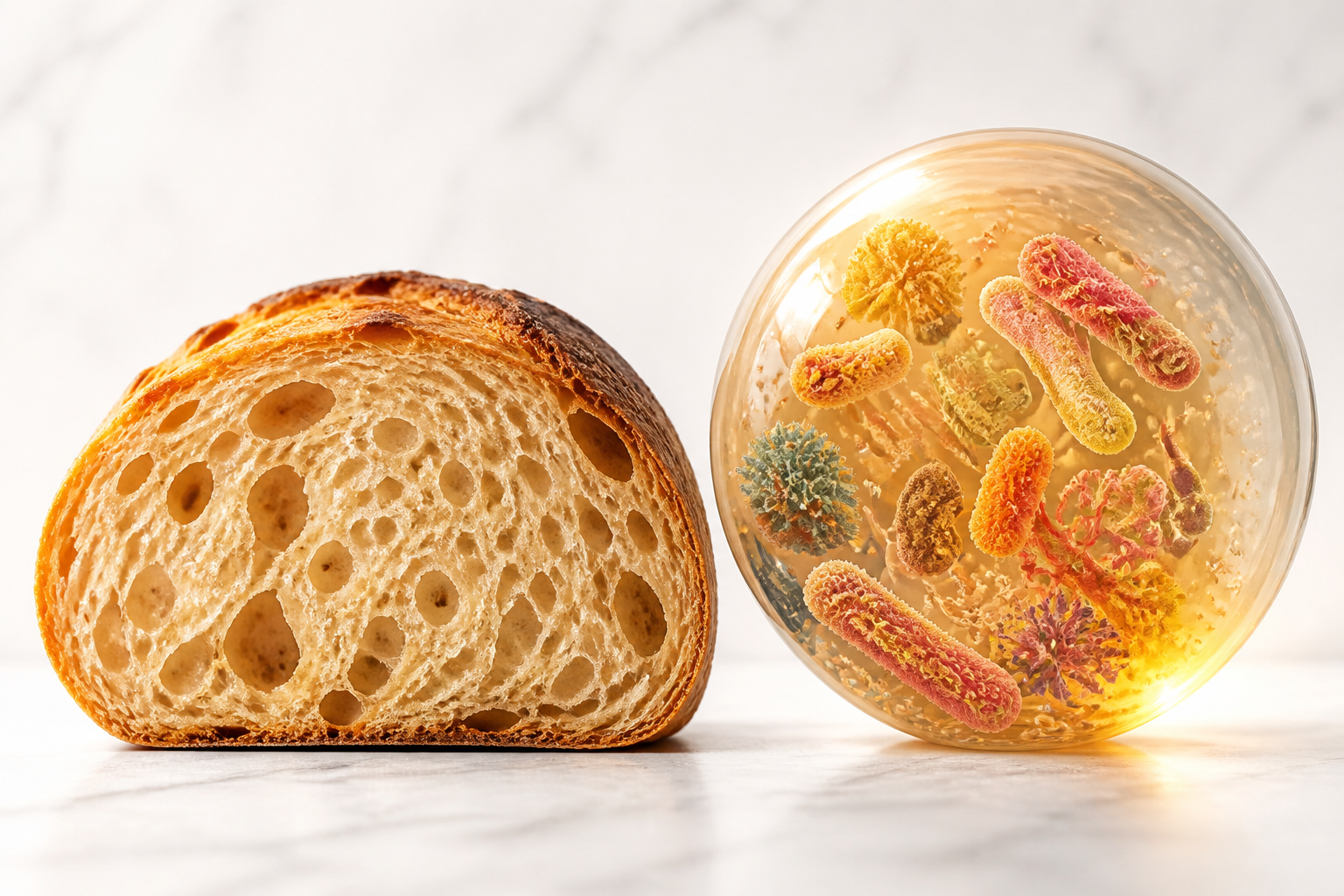
First, let’s talk about what happens during fermentation. When you’re bulk fermenting your dough for twelve to eighteen hours (or longer, as I often do), you’re creating an environment where wild yeast and lactic acid bacteria thrive. These microorganisms literally consume the starches and proteins in your flour, breaking them down into simpler compounds. This is objectively measurable and real.
Here’s what the research confirms: long-fermented sourdough is genuinely easier to digest than commercial yeast bread because of three main factors. First, the gluten structure is partially broken down by the fermentation process, making it gentler on your digestive system. Second, the phytic acid in the grain (which can inhibit mineral absorption) is significantly reduced through fermentation. Third, the bread has a lower glycemic index, meaning it won’t spike your blood sugar as aggressively.
But here’s the asterisk that nobody wants to talk about: sourdough bread itself isn’t packed with live probiotics by the time you eat it. The heat from baking kills most of the bacteria. So when people feel better eating sourdough, it’s usually because the bread is easier to digest and absorb, not because they’re eating billions of beneficial bacteria. It’s a meaningful distinction, and an honest one.
That said, some research suggests that the fermentation byproducts and the altered microbiota in the bread might have prebiotic effects, meaning they could feed your existing good bacteria. But we’re talking “promising research” territory, not “sourdough cures all” territory.
What Actually Matters for Digestive Benefits: The Baker’s Truth
After weeks of research, I realized the most important factor isn’t some magical property of sourdough itself. It’s fermentation time.
Commercial sourdough bread baked in one to two hours won’t give you these benefits. You need a real, slow fermentation period—minimum eight to twelve hours, ideally longer. This is where my three years running a microbakery actually paid dividends in understanding why this matters. I wasn’t just making bread; I was managing a living ecosystem, and that ecosystem needed time to do its work.
Here’s what this means practically: when you’re bulk fermenting at room temperature overnight, or doing a cold retard in the fridge for twelve to forty-eight hours (my preferred method), you’re giving the bacteria and yeast time to actually break down the flour’s compounds. Rush it, and you’re just making slow-rise bread, not fermented bread.
The other honest truth: your flour matters too. Whole grain or heritage flours ferment differently than refined white flour, partly because they have more minerals for the bacteria to work with. This isn’t marketing speak—it’s chemistry.
When Your Sourdough Actually Needs to Support Digestion (Not Just Taste Good)
I realized my sister-in-law’s comment about gut health wasn’t actually backed by anything I could explain—which meant I was baking “healthy” sourdough without understanding the fermentation science that actually makes it digestible. That gap between what we *think* we know and what’s really happening in the dough is exactly what this book closes.
What works
- Explains the actual mechanics of long fermentation and how it breaks down gluten and phytic acid—not wellness fluff, but real biochemistry you can apply to your next bake.
- Gives you specific fermentation timelines and temperatures that actually matter for gut health, so you’re not just guessing whether your bulk ferment is “long enough.”
- Written by someone who understands baking practice, not just nutrition theory—the recipes are actually buildable in a home kitchen, not aspirational.
What doesn’t
- It’s dense with science—if you want a quick Instagram-friendly read, you’ll find yourself going back to re-read sections to actually understand the fermentation part.
- Doesn’t promise that sourdough will cure anything; it’s honest about what the research actually shows, which means some of your claims to friends will need to be more measured.
I actually put this down halfway through the first chapter because I was intimidated by the amount I didn’t know, but going back and reading it slowly completely changed how I think about fermentation time. If you’re serious about understanding whether your bread is actually doing what you claim, The Sourdough School: The ground-breaking guide to making gut-friendly bread is the book that will actually answer your questions.
This post contains affiliate links. As an Amazon Associate, I earn from qualifying purchases at no extra cost to you.