There I was, standing in my kitchen at 11 PM on a Friday night, staring at a beautiful, perfectly fermented sourdough round that absolutely refused to fit into my banneton.
Not just refused. It was physically impossible. The dough was doming up out of my “professional-grade” proofing basket like a mini volcano, with about two inches of perfectly good dough sitting on top of the rim like it was mocking me. I’d spent three days building flavor, perfecting my technique, and babying this dough through cold fermentation. And now my fancy new basket—the one I’d splurged on after reading some Amazon reviews—was about to ruin everything.
That mortifying moment taught me more about proofing baskets for sourdough than any amount of reading ever could. Over my 11 years of home baking, plus three years running my microbakery, I’ve worked with just about every banneton configuration you can imagine. Some were absolute gems. Others were expensive paperweights. And one—well, that’s the story I’m here to tell.
Why the Right Proofing Basket Actually Matters
Before I get into my embarrassing banneton disaster, let me be clear: your proofing basket is not just a nice-to-have. It’s fundamental to successful sourdough. A good banneton supports your dough’s shape during cold fermentation, prevents it from spreading into a pancake, and creates those beautiful flour-dusted rings on your finished loaf.
The problem? Not all proofing baskets for sourdough are created equal. Size matters. Depth matters. Liner quality matters. And apparently, reading the actual dimensions before buying matters a lot.
Here’s what I learned the hard way: that basket I bought online was marked as “10-inch” but was actually measured at the widest point of the lip, not the actual usable proofing surface. By the time I’d built up my dough to a proper bulk fermentation (which meant it had expanded during autolyse, lamination, and coil folds), it was too big for the actual interior. I’d been so excited about the reviews that I never checked the depth.
This is why I’m writing this post from real experience, not just product specs.
The Basket That Started It All
When I first got serious about sourdough eleven years ago, I was using a colander lined with a flour-dusted kitchen towel. Yes, really. It worked in a pinch, but it wasn’t ideal—the dough would slip around, and I had zero support for shaping.
Then I bought my first actual banneton. It was inexpensive, came with a liner, and seemed perfect. I used it for probably two years before I realized I could invest in something better. But here’s the thing: that cheap basket worked reliably every single time. Sometimes the basics are just fine.
My Honest Recommendations: Proofing Baskets I’ve Actually Tested
After that 11 PM panic with the oversized round, I decided to be methodical. I tested multiple proofing baskets for sourdough side-by-side during my microbakery years and still do for my home baking. Here’s what genuinely works.
The 2-Pack That Solved My “Dough Volcano” Problem
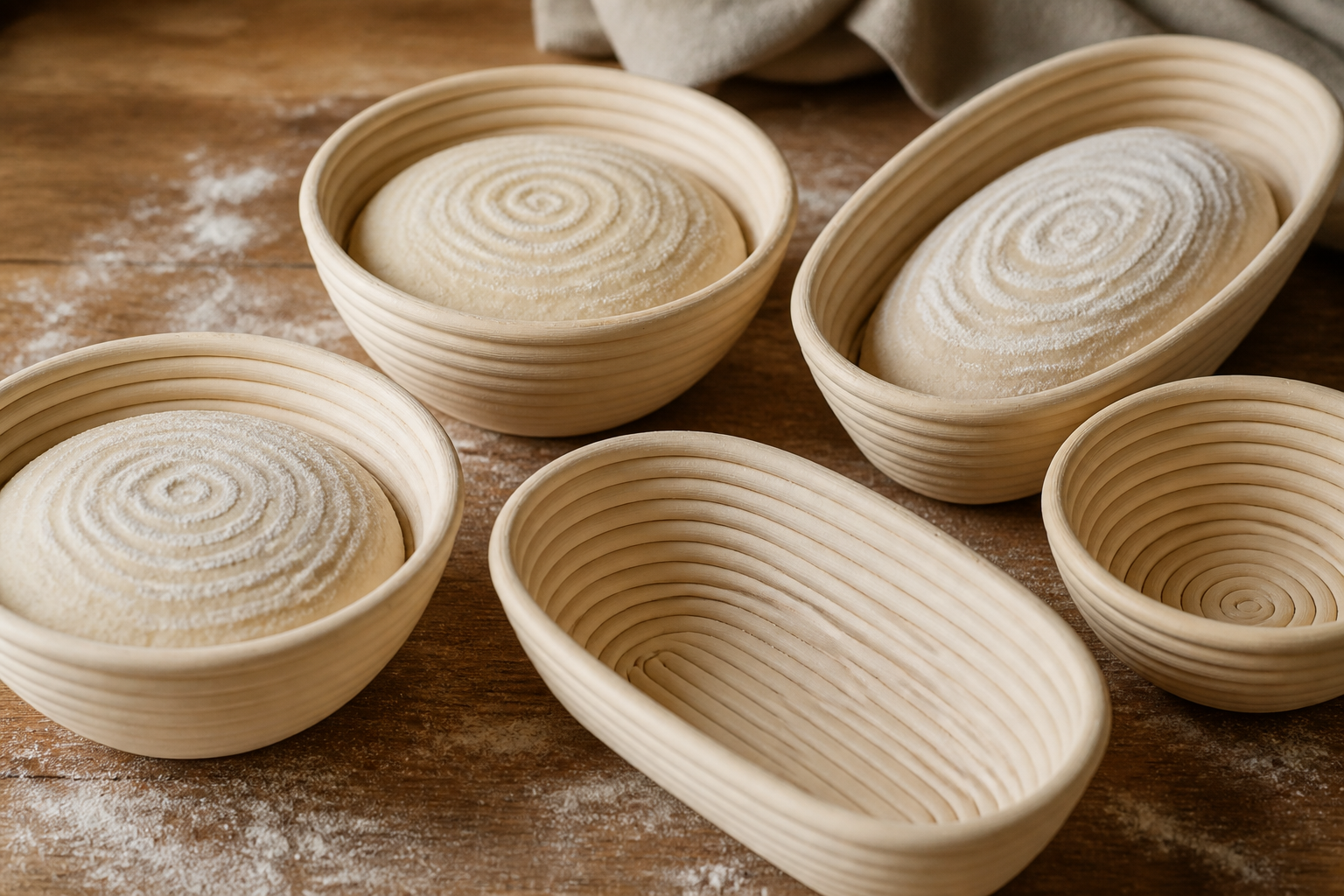
If your dough keeps doming up and spilling over the rim of your banneton, you’re probably working with a basket that’s too small for the dough you’re actually making. I learned this the hard way—multiple times—before I realized that having two properly-sized baskets meant I could bake larger boules without that 11 PM panic.
What works
- The two-pack gives you real flexibility—one for a bulk ferment while the other is proofing, which means you’re not stuck waiting for one basket to dry between bakes.
- The depth is generous enough that even a high-dome boule sits comfortably below the rim, no spillover, no guessing whether it’ll fit when you score.
- The banneton walls hold their shape after dozens of bakes—no sagging or warping, which means consistent proofing support every single time.
What doesn’t
- The baskets take longer to air-dry than I’d like—if you’re a frequent baker, you’ll want to plan ahead or have a dedicated drying spot so mold doesn’t creep in during humid seasons.
- The seams where the rope joins can snag wet dough if you’re not careful during loading, which cost me one piece of ear-development on an otherwise perfect loaf.
I almost sent these back after that snagged loaf, thinking they weren’t worth the trouble—until I realized the problem was my technique, not the baskets. If you bake regularly, the two-pack pays for itself in peace of mind alone. Check out the Sourdough Bread Baking Supplies 2 Pack Banneton Bread Proofing Basket.
This post contains affiliate links. As an Amazon Associate, I earn from qualifying purchases at no extra cost to you.