I was standing in my kitchen at 5 a.m., staring at a beautiful, perfectly proofed loaf that I’d spent two days nurturing, when I grabbed a dull paring knife and completely mangled the score. The blade caught, dragged, and tore through the dough like I was hacking at a cardboard box instead of performing delicate surgery. The ear—that gorgeous, crispy flap of crust that signals a well-executed bake—was completely lost to a ragged, uneven gash. Two days of work. Gone.
That was the moment I realized that after eleven years of sourdough baking, I’d been undermining my own success with the wrong tools. I’d invested in Dutch ovens, bench scrapers, and a proper scale, but I’d never committed to finding the best bread scoring tools. And it was costing me loaves.
If you’re serious about sourdough and want to develop that signature ear that makes your loaves look professional and bakery-worthy, you need to understand why scoring matters—and more importantly, what tools actually work. Over the past few months, I’ve tested dozens of scoring tools and learned some hard lessons about blade sharpness, handle design, and safety. Today, I’m sharing everything I’ve learned, plus the specific gear that finally transformed my bakes.
Why Scoring Matters More Than You Think
Before we dive into the best bread scoring tools themselves, let’s talk about why this step is so crucial. When you score (or slash) your dough right before it goes into the oven, you’re doing three essential things:
- Controlling where the bread expands during the oven spring
- Creating surface area for crust development
- Allowing steam to escape in a controlled way
But here’s the thing—a bad score undermines all of that. If your blade is dull, you’re tearing instead of cutting. You’re compressing the gluten on the edges of your cut instead of creating a clean separation. The dough tears unevenly, steam escapes from the wrong places, and your ear doesn’t form properly. I learned this the hard way, through dozens of loaves that baked up looking more like lumpy potato bread than artisan sourdough.
The difference between scoring with the right tool versus the wrong tool isn’t subtle—it’s the difference between a loaf that looks like something you’d buy at an upscale bakery and one that looks like you forgot a step.
The Three Main Types of Scoring Tools
When I started researching best bread scoring tools, I realized there are really three categories worth considering, each with different benefits:
Bread Lames (My Top Choice)
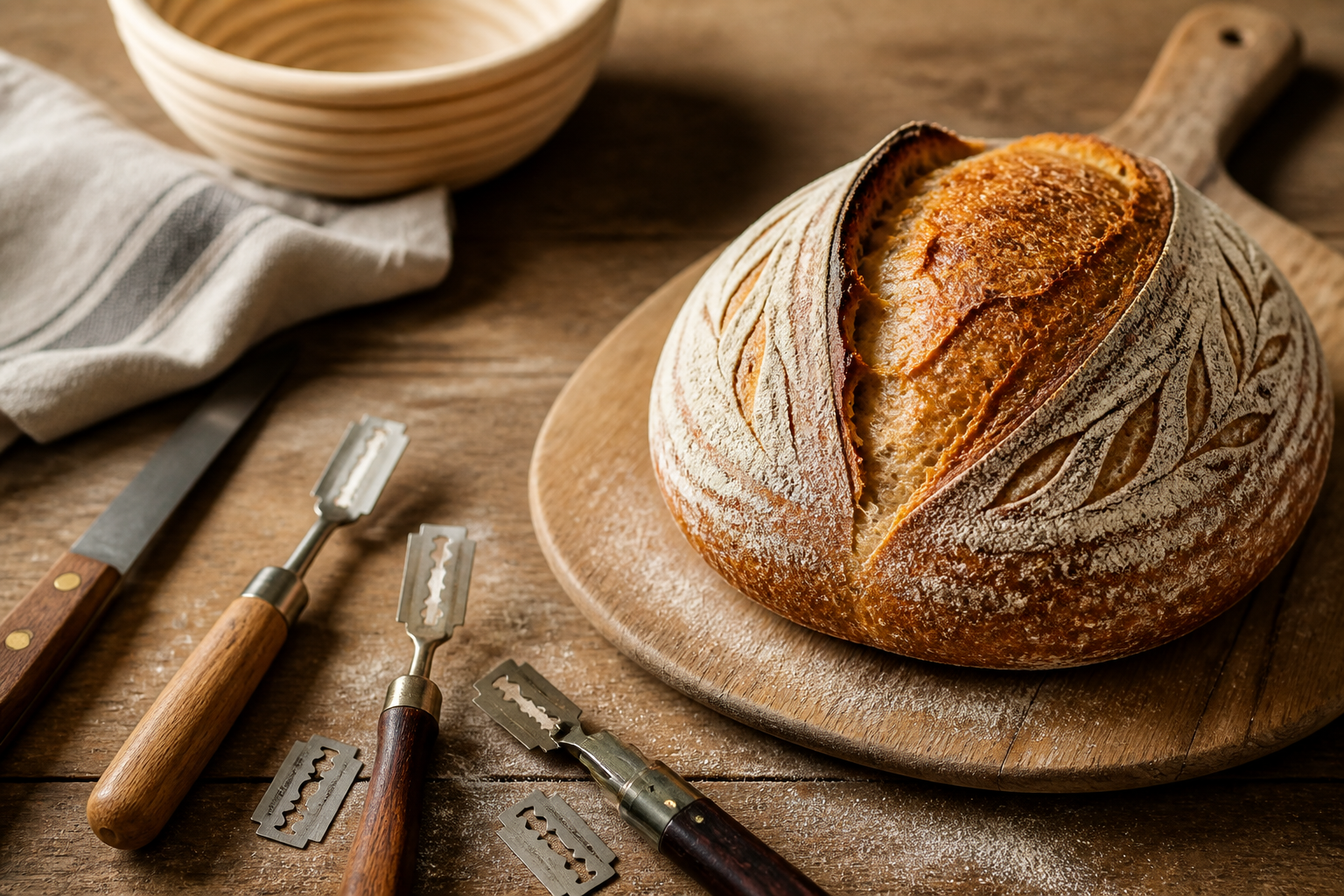
A bread lame is essentially a specialized handle designed to hold a razor blade at the perfect angle. Most bakers come to prefer these once they try them, and I’m now firmly in that camp. The handle keeps your fingers far away from the blade, the blade angle is ergonomic and controlled, and because you’re working with actual razor blades, they stay sharp enough to slice through proofed dough cleanly.
The biggest advantage? A sharp lame doesn’t tear. It cuts with such precision that you get clean, even scores every single time—which means consistent oven spring and beautiful ears.
Serrated Bread Knives
Many home bakers start here because they already own a serrated knife. And honestly? If yours is genuinely sharp, you can make it work. But most serrated knives aren’t designed for scoring—they’re designed for sawing through baked bread. The serrations are too coarse, and even a sharp serrated knife compresses the dough rather than making a clean cut. I’ve used mine in emergencies, and while it works, the results are never as crisp as they are with a proper lame.
Straight Knives and Razor Blades
Before I invested in a proper lame, I experimented with holding a bare razor blade—and honestly, it’s terrifying. One slip and you’ve got a bleeding hand and ruined dough. I don’t recommend it unless you’re extremely confident and careful. A knife can work if it’s very sharp, but maintaining that sharpness requires consistent honing, and the angle is harder to control.
The Lame That Finally Gave Me Control Over My Score
A dull knife will betray you every time—it catches, drags, and tears instead of slicing cleanly through a taut, proofed dough. A proper lame with a sharp blade and a comfortable grip is the difference between a ragged gash and a controlled, predictable score that actually opens into an ear.
What works
- The magnetic blade holder keeps the razor steady and at the right angle—no more fumbling or guessing the depth; you get consistent 30-45 degree cuts every time.
- The blade feels like it’s floating on the dough surface instead of fighting it, which means you can score in one confident motion without the dough tearing or deflating.
- The handle design keeps your knuckles clear of the work, so you’re not white-knuckling it or accidentally scoring your own hand at 5 a.m. when you’re half asleep.
What doesn’t
- The blade dulls faster than you’d expect if you’re scoring crusty, seeded loaves regularly—I’ve found myself replacing blades every 15-20 loaves instead of the 30+ I’d hoped for.
- If you’re left-handed, the ergonomics feel a bit awkward; the handle seems designed with right-handers in mind, which means some of the comfort advantage disappears.
I had one moment of doubt when the magnetic blade felt slightly loose on its first use, but after scoring just three loaves, I realized the tension was exactly right—sharp, responsive, and completely under control. HHZPAEK Magnetic Bread Lame
This post contains affiliate links. As an Amazon Associate, I earn from qualifying purchases at no extra cost to you.