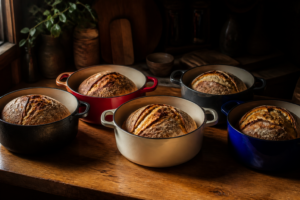
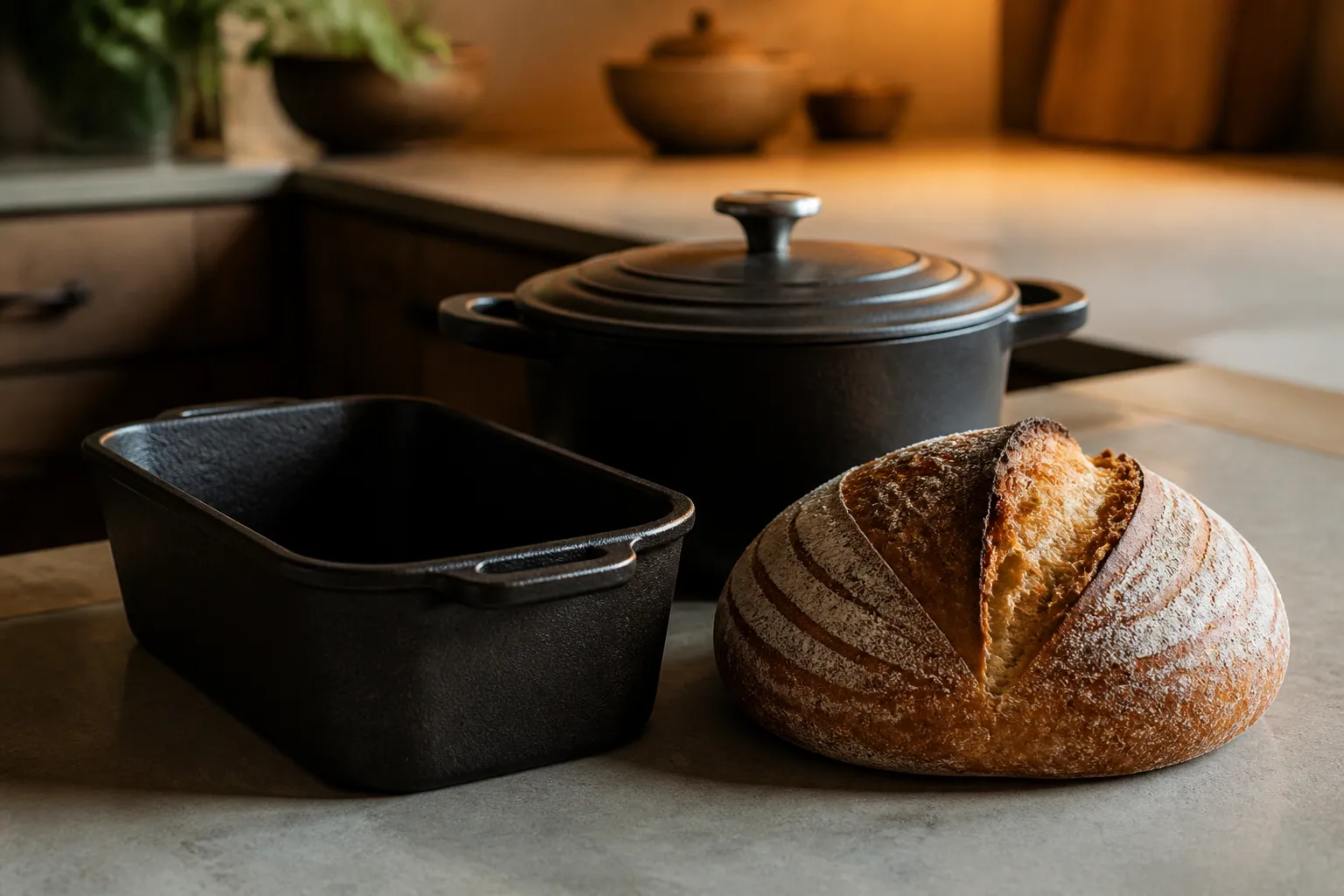
There I was, at 6 AM on a Tuesday morning, staring at 30 balls of cold dough and absolutely no idea which vessel would actually get the job done. My kitchen looked like a sourdough crime scene. A Dutch oven sat on one counter. A shiny new Challenger Bread Pan sat on another. And me? I was standing in the middle wearing my husband’s old sweatshirt with flour in my hair, holding a cold cup of coffee, wondering what on earth I’d gotten myself into.
After 11 years of serious sourdough baking, I thought I had all the answers. But the question that kept landing in my inbox was impossible to ignore: “Which is actually better for home bakers—a Challenger Bread Pan or a Dutch oven?” Everyone had an opinion. Nobody seemed to have real data. So I did what any slightly unhinged sourdough enthusiast would do: I decided to bake 30 loaves back-to-back to settle the debate once and for all.
Today, I’m sharing everything I learned from my admittedly obsessive experiment, including the hilarious disaster that almost derailed the whole thing, and why this comparison between the challenger bread pan vs dutch oven matters way more than I expected.
The Setup: Why I Even Thought This Was a Good Idea
Let me back up about three months. I’d been using the same trusty Dutch oven for nearly a decade. It worked beautifully. Consistent oven spring, gorgeous crust, zero complaints from me or anyone who ate my bread. But then the Challenger Bread Pan started appearing everywhere in sourdough circles. Instagram was flooded with photos. YouTube videos were popping up. And my email inbox? Suddenly full of questions from readers asking me to compare them.
I’m not typically the gear-obsessed baker. I think good bread comes from understanding your starter, mastering fermentation, and respecting the dough, not from buying the fanciest equipment. But I also know that when it comes to sourdough baking, the right vessel actually does matter. Steam management, heat distribution, ease of scoring, cleanup—these aren’t trivial details.
So I decided: no more guessing. I’d run a proper test.
I ordered both tools, cleared my schedule for two weeks, and got to work.
The Disaster That Changed Everything
Here’s where the story gets embarrassing.
By day four of my experiment, I’d baked about 12 loaves. I had notes. Data. I was feeling very scientific and very smug about my dedication. Then I did something spectacularly stupid: I grabbed the Dutch oven with a wet cloth instead of my heat-resistant gloves while it was still at 500 degrees.
The wet cloth steamed. My hand didn’t quite burn, but it certainly felt like it wanted to. I yelped (okay, I screamed), jumped backwards, knocked my current dough into the sink, and gave myself such a fright that I sat down on my kitchen floor for about fifteen minutes wondering if this whole experiment was some kind of sign from the universe.
My husband found me sitting there with my hand under cold water, looking at the dough slowly draining away, and did what he always does: he laughed. Not mean-laughed, but that “you-are-ridiculous-and-I-love-you” laugh that married people do.
“How many loaves left?” he asked.
“Eighteen,” I said miserably.
“Then I guess you’d better keep going,” he said. “And maybe wear the heat gloves that I bought you last year that you refuse to use because you think they’re ugly.”
He was right. I put on the gloves (they’re not that ugly), made more dough, and kept testing.
The Pan That Finally Stopped My Loaves From Spreading Into Pancakes
After years of Dutch oven baking, I kept getting beautiful oven spring but frustratingly wide loaves that looked more squat than tall. The Challenger Bread Pan’s tall, narrow walls promised something different: actual vertical rise instead of lateral creep.
What works
- The tall, narrow shape genuinely contains the dough’s sideways expansion, giving you a noticeably taller loaf with better height-to-width ratio than a traditional Dutch oven.
- Steam gets trapped effectively in that enclosed environment — I’m talking dark, crispy crust without the fussing, and the lid sits flush enough that you don’t lose moisture before the bread sets.
- The cast iron heats evenly and holds temperature, so whether you’re baking lean doughs or enriched loaves, the bottom browns consistently without hot spots.
What doesn’t
- The narrower diameter means you’re limited to smaller loaves — if you’re used to 2-pound boules, you’ll need to adjust your dough weight or accept a slightly shorter, wider loaf to make it work.
- Scoring is trickier because of the confined space and the angle required; my first attempt with this pan had me second-guessing my blade angle, and I got a less defined ear than usual.
I nearly ditched it after that awkward third bake, convinced I’d wasted money on a gimmick. But once I adjusted my scoring technique and dough sizing, the results spoke for themselves. Grab the Challenger Bread Pan Cast Iron Loaf Pan with Lid if you’re serious about vertical oven spring.
This post contains affiliate links. As an Amazon Associate, I earn from qualifying purchases at no extra cost to you.