October sourdough is easier to time than July, but it won’t stay as predictable as December. The Pacific Northwest autumn—roughly 50–65°F—lands in a narrow sweet spot where fermentation moves steadily without the wild swings of summer heat or the near-hibernation of winter cold. The problem is that most online timing advice assumes either a warm kitchen or a cold one. Fall demands a middle road, and that road changes week by week as the season slides toward November.
Here’s how to stop guessing and start adjusting your schedule for what’s actually happening in your kitchen right now.
Why Fall Is the Goldilocks Zone
Summer sourdough can double its bulk in 4 hours on a warm day and overproof before you finish your coffee. Winter dough moves so slowly that bulk fermentation can stretch to 12 hours or more, and cold proofing becomes a multi-day commitment just to build flavor. Fall sits between these extremes—fast enough to keep things moving, slow enough to give you predictable, repeatable timing.
The catch: fall temperatures aren’t stable. A 50°F morning can become 65°F by noon, and then drop again by evening. This matters because fermentation rate—how fast yeast and bacteria work—speeds up noticeably with every few degrees of warmth and slows down just as noticeably with every few degrees of cold.
The practical upshot is that fall requires active attention to your specific room temperature, not just faith in a recipe’s timeline. A dough bulk might take 5 hours in mid-October and 6.5 hours by late October. That’s not failure; that’s autumn.
Taking Your Kitchen’s Temperature
Before you adjust anything, know your baseline.
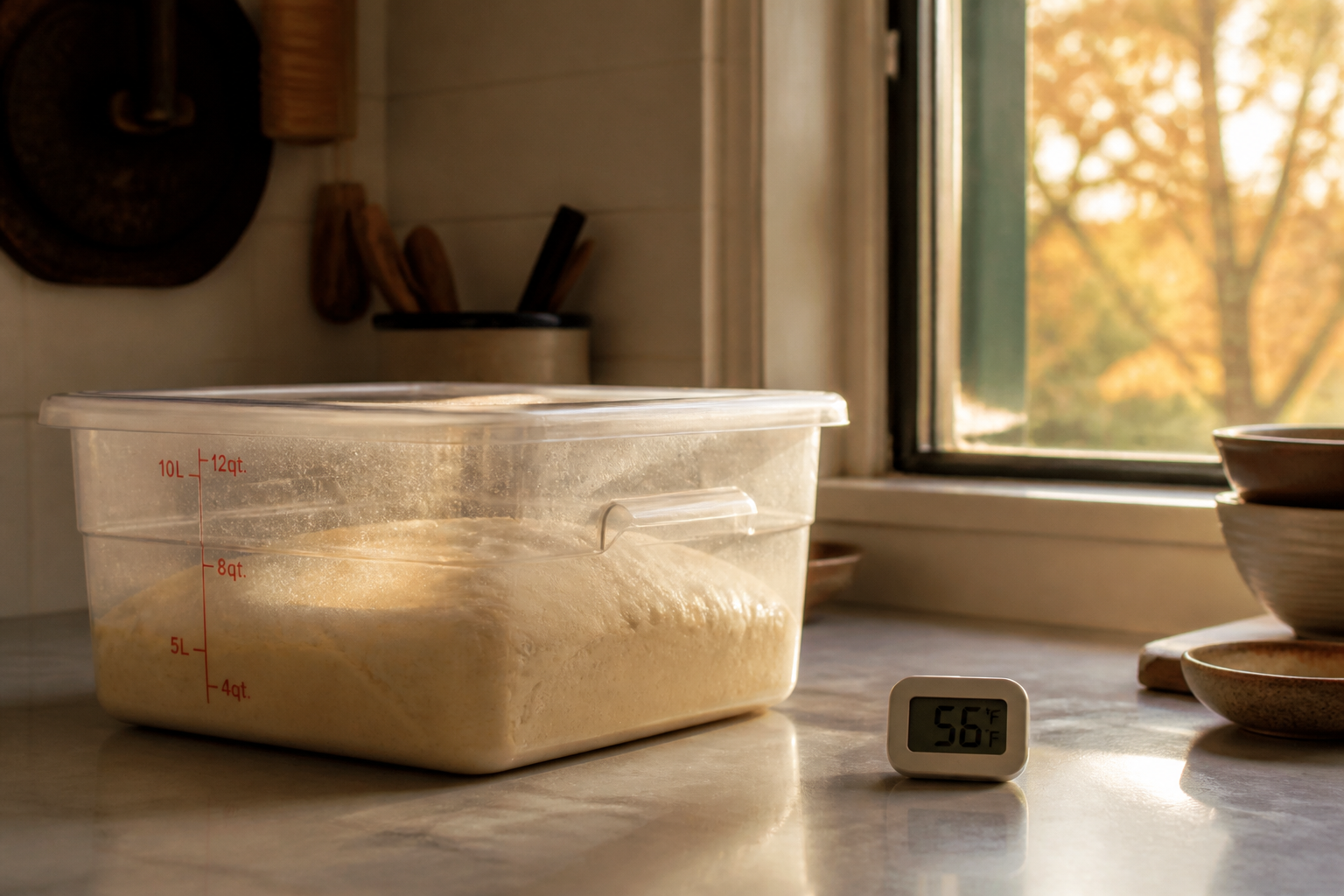
- Get a simple thermometer (even a cheap probe thermometer works) and check your kitchen at the same time each day for a week. Record the morning low and afternoon high.
- Note the room where your dough lives—near a window, far from it, in a basement, upstairs. These spaces warm and cool differently.
- Check temperatures for the next few weeks, not just today. Mid-October and late October can feel like different seasons.
Once you have a range—say, 52–62°F—you have real data to work with.
Adjusting Your Feeding Schedule
Your starter’s rise and fall time doesn’t change because you fed it. It changes because of temperature.
In summer, a fed starter at 72°F might peak and begin to fall within 4–5 hours. By October, the same starter at 58°F might take 7–8 hours to reach peak and won’t fall noticeably for 10–12 hours.
For fall feeding:
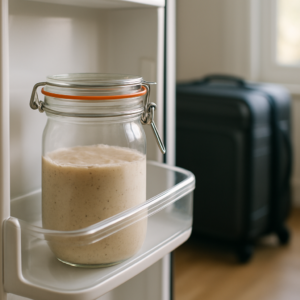
- Feed at a 1:1:1 ratio (starter:flour:water by weight) and let it sit until you see clear signs of peak: dome on top, visible rise, smell of yeast and alcohol, maybe a few bubbles breaking through the surface. Don’t rely on a time—wait for the visual.
- Push feeding back earlier in the day if you want to use the starter in the afternoon or evening. At 55°F, a starter fed at 8 a.m. might be ready at 4 p.m., not at 2 p.m. Feed earlier than you did in summer.
- If your kitchen drops below 50°F at night, consider feeding your starter in the morning only, or move it to a warmer spot (a closed cabinet, away from windows) overnight.
Mapping Bulk Fermentation in Fall
This is where temperature precision pays off.
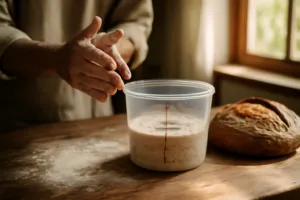
Bulk fermentation (the rise after you mix dough and before you shape) typically aims for 50–75% rise, depending on your dough style and hydration. In fall, you’re looking at 5–7 hours under most conditions.
A practical fall bulk timeline:
- Mix dough at, say, 9 a.m. (mid-morning, when your kitchen has warmed slightly from overnight)
- Autolyse (rest mixed dough) for 30 minutes
- Add starter and salt, mix in
- Bulk ferment for 5–6 hours at 55–62°F, doing 4 sets of stretch-and-fold at 30-minute intervals starting 30 minutes after mixing
- Check rise after 4.5 hours by eye (not clock)—look for noticeable dome, jiggly surface, visible bubbles at the edges
- Shape when dough looks risen and alive but before it’s completely doubled (overproofing in fall is still possible, just slower)
If your kitchen trends toward the cooler end (50–55°F), add 30–60 minutes to these windows. If it’s consistently 60–65°F, you might shorten slightly.
Why stretch-and-fold matters in fall:
In cooler temperatures, your dough’s gluten network develops more slowly and needs help. Regular gentle folds—not aggressive kneading—build strength and even out fermentation. They also keep you in the dough’s progress, so you’ll notice if things are moving faster or slower than expected.
Cold Proofing: When and How Long
By October, cold proofing (resting shaped dough in the fridge before baking) is your friend. It’s not required, but it:
- Develops deeper sour flavor as cold fermentation continues slowly overnight
- Gives you flexibility: shape in the evening, bake the next morning
- Requires less guesswork than room-temperature overnight proofing
For fall cold proofing:
- Shape in the evening (6–7 p.m.)
- Cold proof immediately in a fridge between 38–45°F for 12–16 hours
- Bake the next morning directly from cold
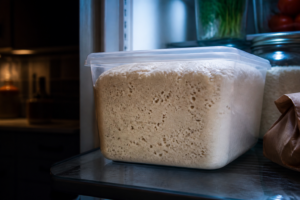
A shaped, cold dough from an October fridge will have light rise (maybe 50% more volume) plus deep, developed flavor—ideal for a long, cool fermentation.
If you prefer room-temperature proofing, shape in the late afternoon and let sit at room temperature (55–62°F) for 4–6 hours until your poke test shows a slow spring-back (not instant, not none). Then either bake or move to the fridge for the remaining hours before morning baking.
Building a Fall Workflow Template
Here’s what a real October bake day looks like:
| Time | Step | Notes |
|---|---|---|
| 8 a.m. | Feed starter | Leave at room temp |
| 4 p.m. | Starter peaked | Mix dough now or wait 1 hour if cooler |
| 4:30 p.m. | Autolyse | 30 min rest, no activity |
| 5 p.m. | Add starter, salt, mix | Begin bulk |
| 5:30 p.m. | Stretch 1 of 4 | 4 sets, 30 min apart |
| 6:45 p.m. | Last fold | Check rise visually |
| 10 p.m. | Shape | Dough should look risen, not doubled |
| 10:30 p.m. | Into fridge | Cold proof overnight |
| 8:30 a.m. (next day) | Bake | Straight from fridge, 475–500°F |
Adjust the times to match when your kitchen temperature peaks (usually early-to-mid afternoon in fall).
Common Fall Timing Mistakes
- Trusting summer timelines. If a recipe says “bulk for 4 hours,” expect 5–6 in October.
- Skipping the visual check. A thermometer tells you the ambient temperature, but the dough might ferment faster or slower based on hydration, starter strength, and flour type. Watch the dough, not the clock.
- Feeding too late. Cold kitchens mean slow starters. Feed earlier than you think you need to.
- Cold-proofing for 18+ hours straight. Beyond 16 hours in a true fridge (not a cool pantry) and many doughs begin over-fermenting or flattening. If you need a longer window, shape and sit at room temp for 2–3 hours first, then chill.
When Early November Arrives
As the season creeps toward winter, your fermentation will slow further. By mid-November, bulk fermentation can stretch to 7–8 hours, and your starter might take 10+ hours to peak. Plan for an earlier start time, more patience, and slightly longer cold proof windows. But that’s next month’s problem—this month, October gives you the most forgiving window of the year.
—
Fall sourdough timing isn’t magic—it’s just temperature awareness and a willingness to read your dough instead of blindly following a recipe. Start with your room-temperature data, adjust your feeding and bulk windows accordingly, and bake by feel. By late October, you’ll have a rhythm that works for your kitchen, your starter, and your autumn schedule.
About This Article

Written by Sam Whitaker. Sam Whitaker has been baking sourdough for over a decade, including three years baking commercially, and now works out of a home kitchen in the Pacific Northwest. Sam's eleven-year-old starter, Harold, is the foundation for every recipe and troubleshooting guide on Sourdough Rising — real bread tested over and over until it works. More about this site.
Scope and limits. Sam is a home baker with no formal culinary training. Follow current food safety guidance for storage and handling, particularly with enriched or filled doughs.
Verify this against a primary source
Specifics change, and your situation may differ from the one described here. These are the authorities worth checking directly:
- USDA FoodData Central — flour and ingredient composition data
- FoodSafety.gov — safe handling and storage