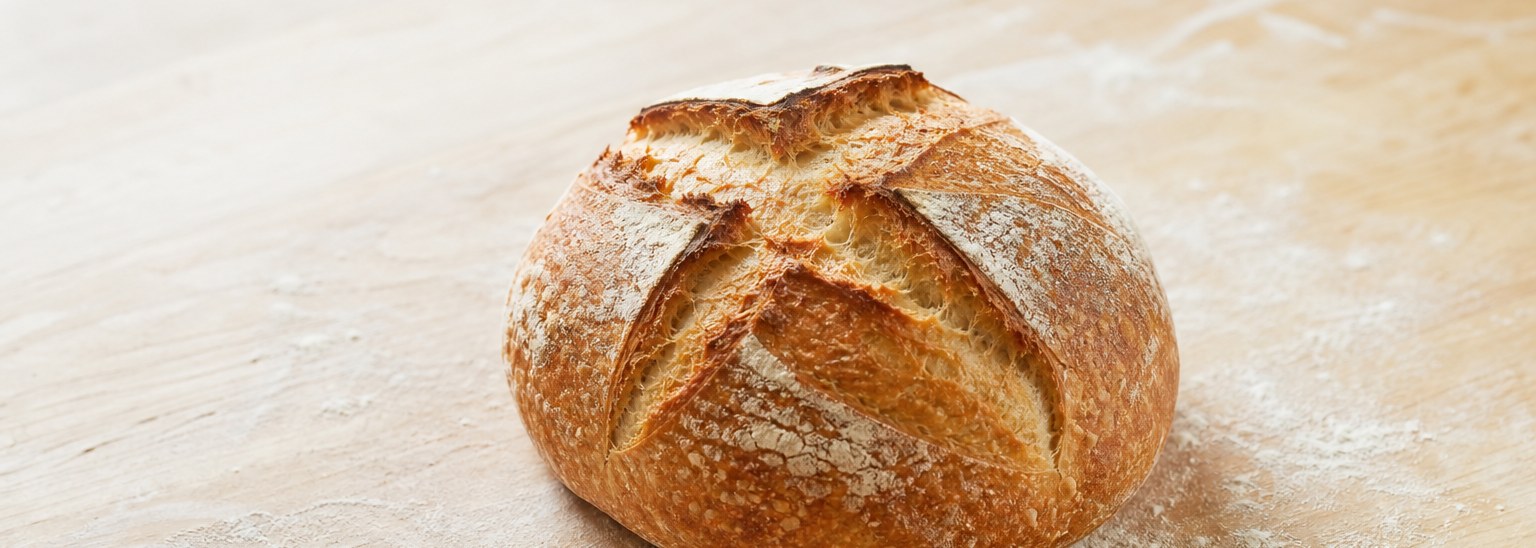
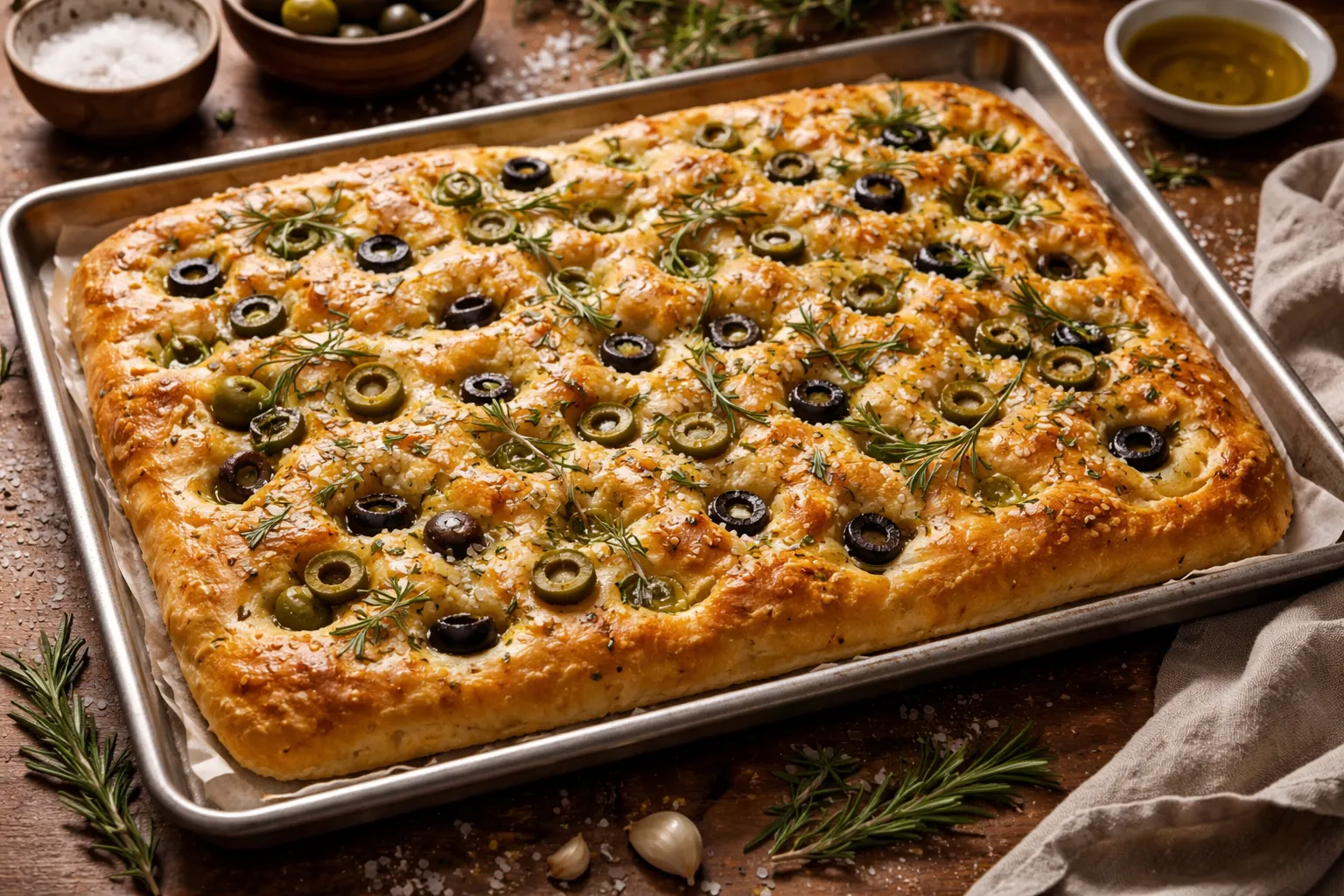
Here’s a claim that gets repeated constantly and isn’t quite true: that focaccia is somehow “no-fail,” a bread so forgiving it can’t embarrass you. I’d love to believe that, except I’ve got a ruined linen tablecloth as evidence otherwise. I once carried a “rustic artisan focaccia” over to my neighbor’s dinner party and set the pan down directly on her brand-new tablecloth, and within seconds a perfect olive oil ring the size of a dinner plate had bloomed across the fabric. I just stood there, masterpiece in hand, watching the stain spread in slow motion, and the only thing that came out of my mouth was, “So… it’s extra hydrated.” That mortifying moment is, weirdly, the exact reason this sourdough focaccia recipe turned into my signature dish. Nothing motivates you to perfect a bread quite like humiliating yourself in front of dinner guests.
Here’s the part that still surprises me. Tablecloth casualty aside, my neighbor took one bite of that focaccia and asked for the recipe on the spot. Then her husband wanted it. Then everyone else at the table did too. I drove home that night feeling both embarrassed and weirdly proud, thinking: alright, this bread is clearly doing something right — I’m just the weak link when it comes to carrying it safely.
Why Focaccia Is the Easiest Door Into Sourdough Baking
If sourdough has ever felt like too much of a commitment, focaccia is where that fear falls apart. There’s no shaping to fuss over, no scoring, no nerve-wracking moment of lowering a boule into a scorching Dutch oven. You mix the dough, let the pan do the heavy lifting while it proofs, press your fingertips into it (one of the most oddly satisfying moves in all of baking), and then bake it off. The margin for error is far wider than with a classic loaf, and yet the payoff never disappoints — golden and crackly on the bottom, soft and airy in the middle, glistening with olive oil, basically every time.
What the sourdough starter contributes here, commercial yeast simply can’t fake: a subtle, layered tang that adds real depth of flavor, the kind that stops conversations mid-sentence while someone asks, “Wait, what IS this?” That reaction alone is what keeps home bakers hooked.
Choosing a Pan That Keeps the Oil on the Bread, Not the Table Linens
Because focaccia dough is loaded with oil, it demands a pan sturdy enough not to buckle under all that combined moisture and heat — a warped pan just funnels the oil into low pockets and sets you up for a mess. Looking back, my tablecloth disaster had just as much to do with a warped, tired old pan as it did with my own clumsiness.
Where it earns its keep
- Comes out of the oven exactly as flat as it went in, straight through cooling too — no oil creeping toward the edges, which gives you a crust that browns evenly and stays crisp-tender throughout.
- The anodized aluminum lets the focaccia release without a fight, no matter how heavily you’ve oiled the pan beforehand, and you can flip it directly onto a cutting board with total confidence.
- It holds up over time — I’m somewhere past 40 focaccias baked on mine, and it still looks brand new, not a warp or a discolored spot anywhere on it.
Where it falls short
- Heat reaches the outer edges faster than the middle, so if you’re not paying attention, the border can turn deep brown well before the center’s dough has finished setting up.
- The cost buys you one genuinely good pan rather than a handful of cheaper ones, which feels like a lot upfront — until you remember those bargain pans tend to warp after just a few hot bakes.
I almost returned mine after the first use when I saw heavy browning on just the perimeter, convinced I’d made the wrong choice. That’s when I learned to rotate the pan halfway through—now it’s muscle memory, and my focaccia comes out golden all over. Grab the Nordic Ware Naturals Half Sheet Pan (1-Pack) and thank me when you don’t have to explain oil stains to anyone.
Ingredients
- 500g bread flour
- 425g water (85% hydration)
- 100g active sourdough starter
- 10g salt
- Olive oil, for the pan and topping
- Flaky salt and fresh rosemary, for topping
Step by Step
- Mix. Combine flour and water and autolyse 30 minutes. Add the starter and salt and mix thoroughly – this dough is wet and sticky, which is correct.
- Bulk ferment with folds. Do 4 sets of stretch-and-folds over the first 2 hours.
- Continue bulk fermentation. Let the dough ferment 3-4 hours total, until increased by about 50%.
- Transfer to the pan. Pour a generous layer of olive oil into a sheet pan, then transfer the dough into it without deflating it. Turn once to coat both sides in oil.
- Proof. Cover and let rise until puffy and nearly filling the pan, 1-2 hours.
- Dimple and top. Dimple the dough all over with oiled fingertips, drizzle with more olive oil, and top with flaky salt and rosemary.
- Bake. Bake at 425F (220C) for 25-30 minutes, until deeply golden on top and crisp on the bottom.
Focaccia requires no shaping, scoring, or lowering into a Dutch oven. You mix the dough, let it proof in the pan, press your fingertips into it, and bake. The margin for error is far wider than with a classic loaf, yet the payoff—golden, crackly bottom with soft, airy middle—rarely disappoints. This focaccia dough is 85% hydration, made with 425g water and 500g bread flour. The dough is wet and sticky, which is correct and necessary for focaccia’s characteristic texture and the generous oil it requires. Sam recommends the Nordic Ware Naturals Half Sheet Pan. After baking over 40 focaccias, it still releases cleanly and shows zero wear. The anodized aluminum prevents warping, ensures even browning when rotated halfway through, and lets focaccia flip directly onto a cutting board with confidence. After transferring the dough to the oiled sheet pan, cover it and let it proof for 1-2 hours until puffy and nearly filling the pan. Then dimple with oiled fingertips, top with olive oil, flaky salt, and rosemary before baking at 425F for 25-30 minutes.Frequently Asked Questions
Why is sourdough focaccia easier than regular sourdough bread?
How much hydration is this sourdough focaccia recipe?
What pan does Sam recommend for focaccia?
How long should focaccia proof in the pan before baking?
About This Article

Written by Sam Whitaker. Sam Whitaker has been baking sourdough for over a decade, including three years baking commercially, and now works out of a home kitchen in the Pacific Northwest. Sam's eleven-year-old starter, Harold, is the foundation for every recipe and troubleshooting guide on Sourdough Rising — real bread tested over and over until it works. More about this site.
Scope and limits. Sam is a home baker with no formal culinary training. Follow current food safety guidance for storage and handling, particularly with enriched or filled doughs.
Verify this against a primary source
Specifics change, and your situation may differ from the one described here. These are the authorities worth checking directly:
- USDA FoodData Central — flour and ingredient composition data
- FoodSafety.gov — safe handling and storage