Don’t preheat a pizza stone that’s even slightly damp — it can crack apart with real force, and I mean that almost literally. Mine split clean down the middle with a bang loud enough that my husband walked into the kitchen, glanced at the oven, glanced at me, and quietly backed right back out without saying a word. That busted stone is the whole reason I got a little obsessive comparing pizza stone vs baking steel vs cast iron for sourdough pizza, and oddly enough, wrecking that stone turned out to be one of the better things that ever happened to my pizza nights.
Once you’ve spent real time nursing a sourdough starter along and you’re finally ready to turn that tangy, bubbly culture into pizza dough, the very first big decision is what surface it lands on. A stone? A steel? The cast iron pan already sitting in your cabinet? I put all three through their paces — some on purpose, some because I broke something — and I’d rather hand you the shortcuts now than have you repeat my mistakes.
| Surface | Heat Delivery | Baking Time for Sourdough | Pizza Size |
|---|---|---|---|
| Pizza Stone | Holds heat, hands it off slowly | 14-16 minutes | Full size |
| Baking Steel | Dumps heat aggressively | Under 8 minutes | Full size |
| Cast Iron | Between stone and steel | 2 minutes stovetop + broil | Up to 12 inches |
Stone or Steel for Sourdough Pizza: The Surface Decides More Than You’d Guess
It took me way longer than it should have to realize that sourdough pizza dough acts nothing like standard yeasted pizza dough. It’s wetter, stretchier, and carries that open, holey crumb you’ve worked hard to build into your loaves. All of that means the bottom needs a serious, fast blast of heat — otherwise you end up with a pale, chewy base while the toppings overcook up top. Whatever surface you choose to bake on decides the fate of that crust.
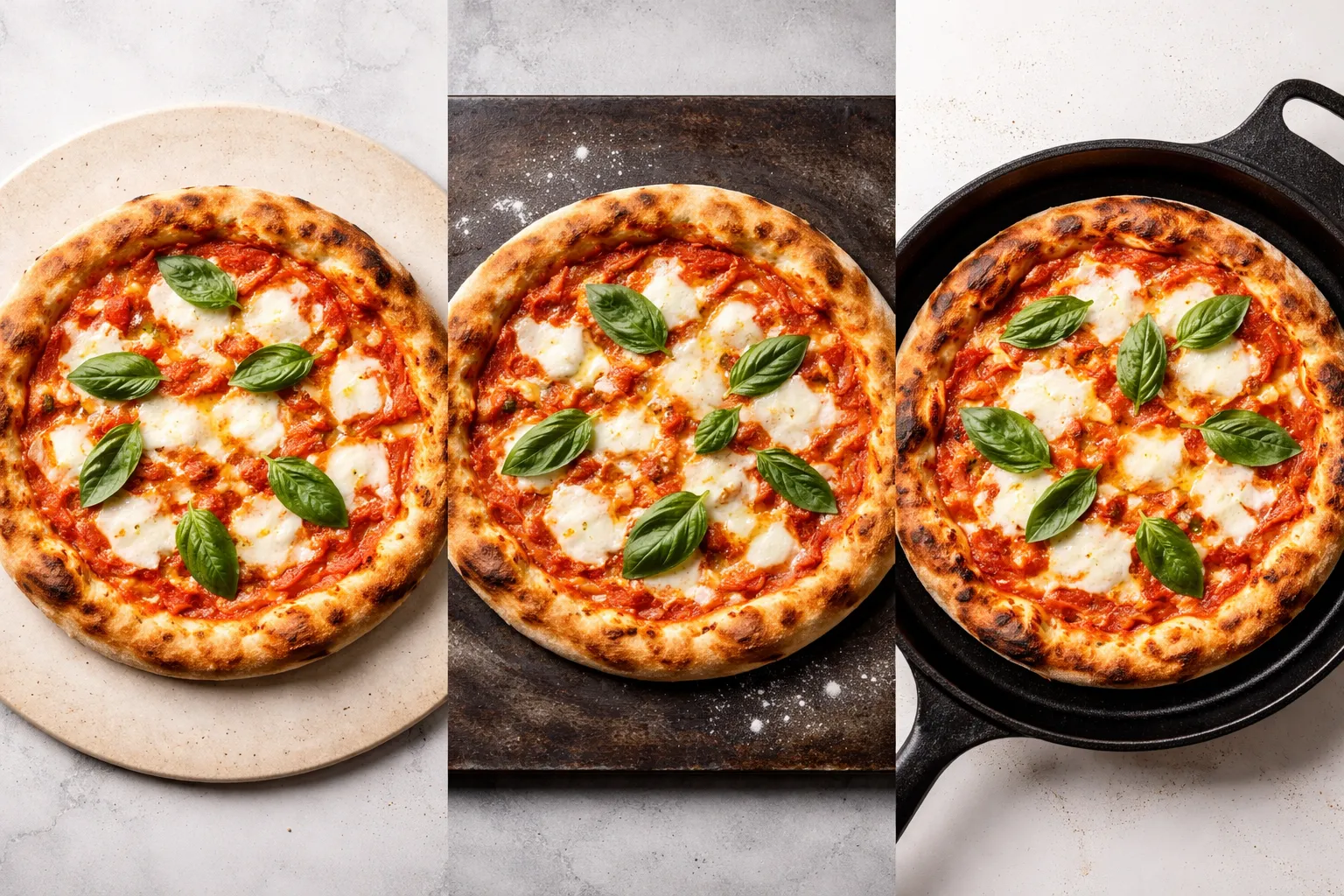
There’s a real difference between holding onto heat and actually delivering it, and that distinction sits right at the center of the whole stone-versus-steel argument. A stone holds warmth decently but hands it off to your dough slowly. A steel holds heat just as well but dumps it into the dough at a speed that borders on aggressive. Cast iron lands somewhere in between, with its own particular quirks. Here’s my honest rundown of each one.
Stone, Steel, and Cast Iron — Laid Out Plainly
The Traditional Pick — And Its One Real Flaw
Pizza stones are porous, so they pull moisture straight out of the dough as it bakes. That’s actually a plus for sourdough pizza — it lets the bottom crisp up without turning tough. The real danger, one I discovered the loud way, is thermal shock. A stone holding onto even a little leftover moisture, or one rushed into a hot oven too quickly, can split wide open. Mine failed because I’d rinsed it the day before and it hadn’t fully air-dried. Lesson learned, and learned loudly.
Even so, a solid cordierite stone — one clearly marked thermal-shock resistant — is still a genuinely great tool, especially if you’re new to this. It costs less than steel, weighs less in your hands, and turns out a crust with a satisfying crisp bite and light blistering. Just warm it up gradually, skip the soap when you clean it, and make absolutely certain it’s bone dry before it goes anywhere near a hot oven.
Baking Steel: The Switch That Rewrote My Pizza Nights
Once the stone disaster was behind me, I finally caved and bought a baking steel. I doubted a slab of metal could justify the extra cost, right up until my first sourdough pizza came off it and I just stood there gawking at the oven door. The bottom had developed deep, leopard-print char in only eight minutes flat. Eight minutes. My stone-baked pizzas had needed fourteen to sixteen minutes and still never reached that same color.
Steel moves heat so efficiently that it basically rebuilds a professional pizza oven’s floor right inside your home oven. For sourdough pizza specifically — where fast cooking and quick oven spring keep your fermented dough from turning gummy — a baking steel is a genuine game-changer. Crank your oven to its highest setting, let the steel preheat on the top rack for at least 45 minutes, slide the pizza in, then switch to broil for the final two to three minutes. It sounds like overkill. It bakes like magic.
Cast Iron: The Dark Horse in This Lineup
A cast iron skillet or griddle isn’t the flashiest tool for pizza, but if one’s already sitting in your kitchen, it does the job well. Get it screaming hot on the stovetop, lay your shaped sourdough in, let the bottom cook for about two minutes, then move the whole pan under a broiler set to high. The results are genuinely solid. The catch is size — most cast iron tops out near 12 inches across, which means personal-sized pizzas rather than one big pie to share. Fine for a regular weeknight, a bit limiting when guests show up.
A Baking Steel That Won’t Let You Down Halfway Through
Once my pizza stone gave out, it hit me that I’d been gambling with a brittle material that simply couldn’t handle sourdough dough hitting a scorching surface. Switching to steel solved that problem entirely — it’s practically unbreakable and spreads heat far more evenly than any ceramic stone ever managed.
Where it delivers
- It browns the crust quicker and more uniformly than either stone or cast iron manages — I land a crisp bottom with zero pale patches in under 8 minutes at 500°F.
- There’s no need to babysit the preheat — I’ve taken it from room temperature straight up to 550°F with zero cracking once it’s been used the first time.
- That 1/4″ slab retains heat so steadily that pizza number two turns out nearly identical to pizza number one, whereas cast iron loses noticeable heat between rounds.
Where it falls short
- It’s hefty enough that sliding it in and out of the oven takes real caution — drop it and it’s your oven rack that suffers, not the steel itself.
- The upfront price tag beats out cordierite stone by a good margin, so if you’re only dipping a toe into pizza baking, it can feel like too much tool too soon.
I’ll admit I was skeptical about spending this much on a flat piece of metal — until my third pizza, when I realized I hadn’t adjusted my technique or oven temp once and everything was still turning out perfectly. If you’re serious about sourdough pizza, grab a Baking Steel – The Original Ultra Conductive Pizza Stone (14″x16″x1/4″).
Frequently Asked Questions
Can you preheat a damp pizza stone safely?
No. A pizza stone that’s even slightly damp can crack apart with real force due to thermal shock. Mine split clean down the middle when preheated wet. Always ensure your stone is bone dry before it goes near a hot oven.
How long does sourdough pizza take on a baking steel?
Sourdough pizza bakes in under eight minutes on a baking steel at 500°F, then switch to broil for the final two to three minutes. This is significantly faster than stone-baked pizzas, which needed fourteen to sixteen minutes.
What size pizza can you make in cast iron?
Most cast iron skillets top out near twelve inches across, which means personal-sized pizzas rather than one big pie to share. Get it screaming hot on the stovetop, lay your shaped sourdough in, let the bottom cook for about two minutes, then move the whole pan under a broiler set to high.
Why is baking steel better than pizza stone for sourdough?
Steel moves heat so efficiently that it rebuilds a professional pizza oven’s floor inside your home oven. It browns the crust quicker and more uniformly than stone, delivers deep leopard-print char in minutes, and retains heat steadily pizza after pizza without the heat loss cast iron experiences.
About This Article

Written by Sam Whitaker. Sam Whitaker has been baking sourdough for over a decade, including three years baking commercially, and now works out of a home kitchen in the Pacific Northwest. Sam's eleven-year-old starter, Harold, is the foundation for every recipe and troubleshooting guide on Sourdough Rising — real bread tested over and over until it works. More about this site.
Scope and limits. Sam is a home baker with no formal culinary training. Follow current food safety guidance for storage and handling, particularly with enriched or filled doughs.
Verify this against a primary source
Specifics change, and your situation may differ from the one described here. These are the authorities worth checking directly:
- USDA FoodData Central — flour and ingredient composition data
- FoodSafety.gov — safe handling and storage