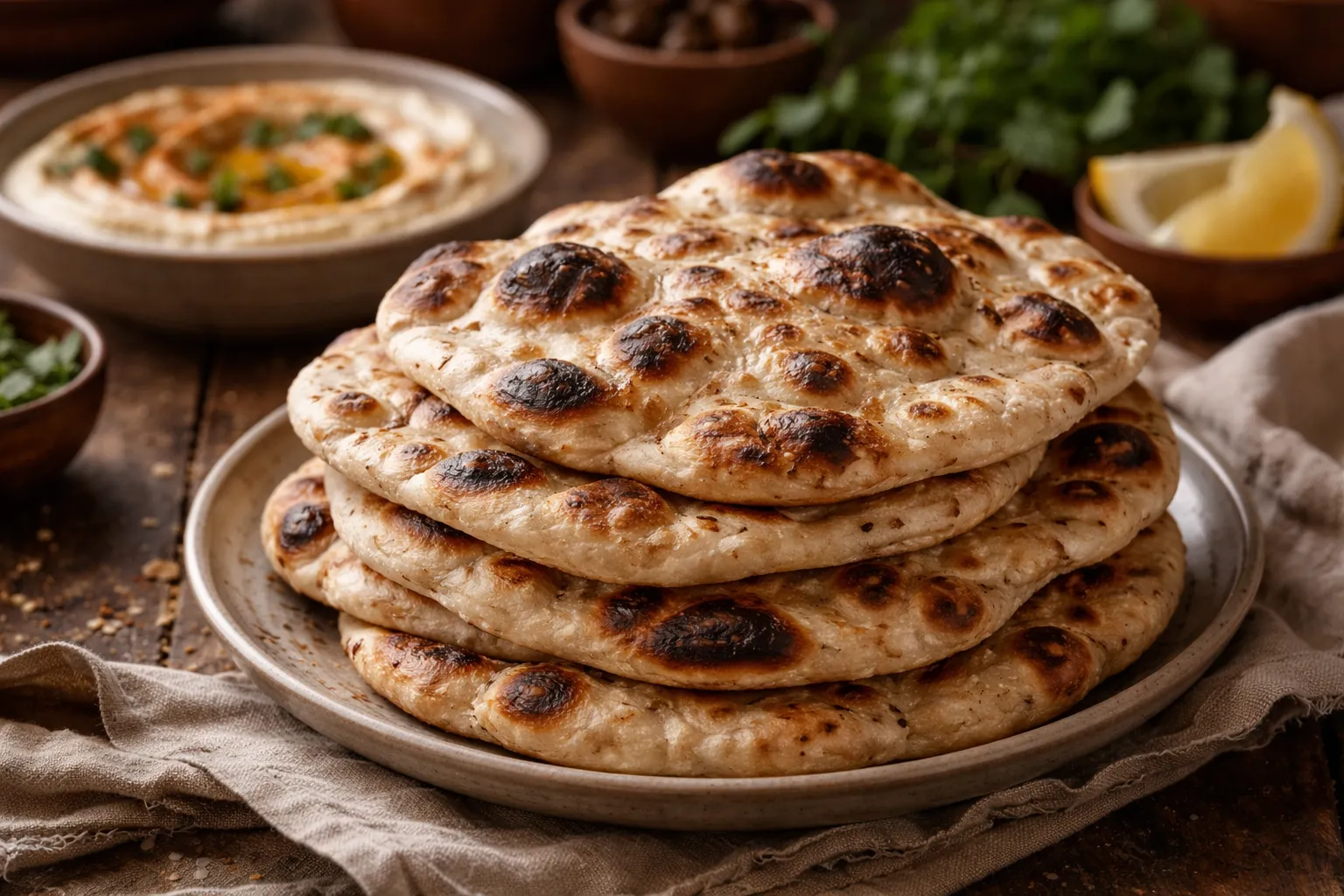
Right now there’s a puffed, blistered round of dough sizzling against ripping-hot cast iron in front of me, and I’m sliding a thin spatula underneath to flip it before that first charred bubble turns into an actual burn mark. This has basically become my weeknight ritual: dough hits the pan, roughly twenty minutes later there’s a stack of golden, chewy, edge-crisp flatbreads on the table, and nobody at dinner has a clue I started with an empty fridge and a jar of sourdough discard giving me the side-eye from the counter. That’s genuinely how this recipe was born — out of full-blown panic — and it’s turned into the fastest, most reliably good thing I make on nights when dinner has completely fallen apart. Twenty minutes, clocked from the moment of pure dread to the first bite, and yes, people at my table have gone back for seconds more than once.
Before I hand over how it actually comes together, though, let me back up and tell you about the night this whole thing happened almost by accident — a night that went sideways in the funniest way and somehow ended up better than the dinner I’d originally planned.
The Evening I Nearly Served My Family Nothing But Plain Crackers
I had a whole vision for the evening — because I always have a vision. That particular Tuesday, dinner was supposed to be roasted chicken, herbed potatoes, and a salad with dressing I’d make from scratch. I had already pictured the plated result in my head. I was mentally fielding compliments before a single pan had been touched.
What hadn’t actually happened, though, was pulling the chicken out of the freezer. I found this out at 6:45 PM, opening the fridge with all the confidence of someone whose life was completely together, and instead finding a bird frozen into a solid brick. My husband strolled in right then, nose in the air, already hopeful. “Smells amazing — what’s for dinner?”
Reader, absolutely nothing was on the stove. Nothing smelled like anything at all. He was simply choosing optimism.
So I did the only sensible thing a person in that position can do — spun toward the counter, grabbed my sourdough discard jar, and started announcing flatbread plans in a voice loud enough to sound like I’d meant to do this all along. “Oh, flatbread! Tonight’s a flatbread night — it’s going to be great.” My husband gave me a blank look. My kids, meanwhile, erupted in cheers, since kids will celebrate pretty much anything that isn’t the roasted vegetable medley I’d also had in mind.
I had zero prior experience making sourdough flatbread. I was making it up entirely as I went. One section of dough got rolled paper-thin, another stayed thick as cardboard, a whole piece slid straight off the counter onto the floor (that one quietly became “the cook’s snack”), and somehow flour ended up on the ceiling. I still cannot explain the physics behind that last part.
And yet — those flatbreads turned out incredible. Soft and chewy through the center, crisp along the edges, with that tang only sourdough gives you. We loaded them up with hummus, whatever produce was hanging around in the crisper, and a scattering of crumbled feta. My husband called it “the best dinner we’ve had in weeks.” I didn’t argue. I just quietly filed the recipe away for good.
Why a Cast Iron Skillet Is What Gets Flatbread Actually Crispy
A thin pan that heats unevenly will leave you with flatbread that’s washed-out pale on one side and scorched on the other — or worse, still soft and floppy in the middle right when you need it chewy instead. A proper cast iron skillet spreads heat evenly and climbs to a serious temperature, and that’s really the whole trick behind getting that golden, faintly charred crust in the twenty minutes you’ve got.
Where it earns its keep
- Holds its heat so evenly that every single flatbread cooks at roughly the same pace — no more hovering over the first batch while the later ones cook twice as fast.
- Reaches a temperature that genuinely crisps the bottom and edges within your time window, something a flimsier pan just can’t manage no matter how long you leave it preheating.
- Comes pre-seasoned, which cuts down on fuss and gives you dependable browning right from your very first batch.
Where it falls short
- Needs a solid 10 minutes to get fully hot if your oven tends to run on the cooler side, which can chip away at a tight twenty-minute window if you don’t plan for it.
- That handle turns properly, dangerously hot — I’ve grabbed it bare-handed and regretted it more times than I care to admit.
I almost switched to a griddle because I was convinced the skillet wasn’t getting my flatbreads golden enough, then realized I just wasn’t preheating long enough for the mass of iron to truly come to temperature. Grab the Lodge Seasoned Cast Iron Skillet (10.25 inches) and commit to the full preheat — it’s worth it.
Ingredients
- 300g all-purpose flour
- 150g sourdough discard
- 100g water or plain yogurt
- 5g salt
- 15g olive oil
Step by Step
- Mix. Combine the discard, flour, water, salt, and olive oil into a smooth, soft dough – no rise needed, this is a quick unleavened-style flatbread.
- Rest. Cover and let rest 10 minutes so the flour fully hydrates and the dough relaxes.
- Divide and roll. Divide into 6 pieces and roll each one thin, about 1/8 inch, on a lightly floured surface.
- Cook. Heat a dry skillet or griddle over medium-high heat. Cook each flatbread 1-2 minutes per side, until lightly browned and puffed in spots.
- Serve warm, brushed with olive oil or butter if you like.
The entire process takes roughly twenty minutes from mixing the dough to serving the flatbreads. This includes a 10-minute rest after combining ingredients, dividing and rolling the dough, and cooking each flatbread 1-2 minutes per side on a hot skillet. You can use a dry skillet or griddle to cook flatbread, but cast iron spreads heat most evenly and reaches the high temperature needed for a golden, crispy crust within your twenty-minute window. A thinner pan heats unevenly and won’t achieve the same browning. The recipe uses 300g all-purpose flour, 150g sourdough discard, 100g water or plain yogurt, 5g salt, and 15g olive oil. Mix these into a smooth, soft dough without letting it rise, then rest for 10 minutes before dividing into 6 pieces and rolling thin. Roll each flatbread thin, about 1/8 inch thick, on a lightly floured surface. This thickness helps them cook evenly and develop the chewy center with crisp edges that makes this recipe work in twenty minutes.Frequently Asked Questions
How long does sourdough flatbread take to make from start to finish?
Can you make sourdough flatbread without a cast iron skillet?
What ingredients do you need for sourdough flatbread?
How thin should you roll sourdough flatbread dough?
About This Article

Written by Sam Whitaker. Sam Whitaker has been baking sourdough for over a decade, including three years baking commercially, and now works out of a home kitchen in the Pacific Northwest. Sam's eleven-year-old starter, Harold, is the foundation for every recipe and troubleshooting guide on Sourdough Rising — real bread tested over and over until it works. More about this site.
Scope and limits. Sam is a home baker with no formal culinary training. Follow current food safety guidance for storage and handling, particularly with enriched or filled doughs.
Verify this against a primary source
Specifics change, and your situation may differ from the one described here. These are the authorities worth checking directly:
- USDA FoodData Central — flour and ingredient composition data
- FoodSafety.gov — safe handling and storage