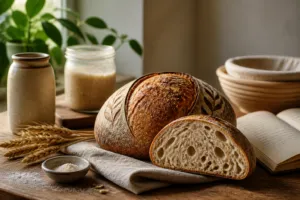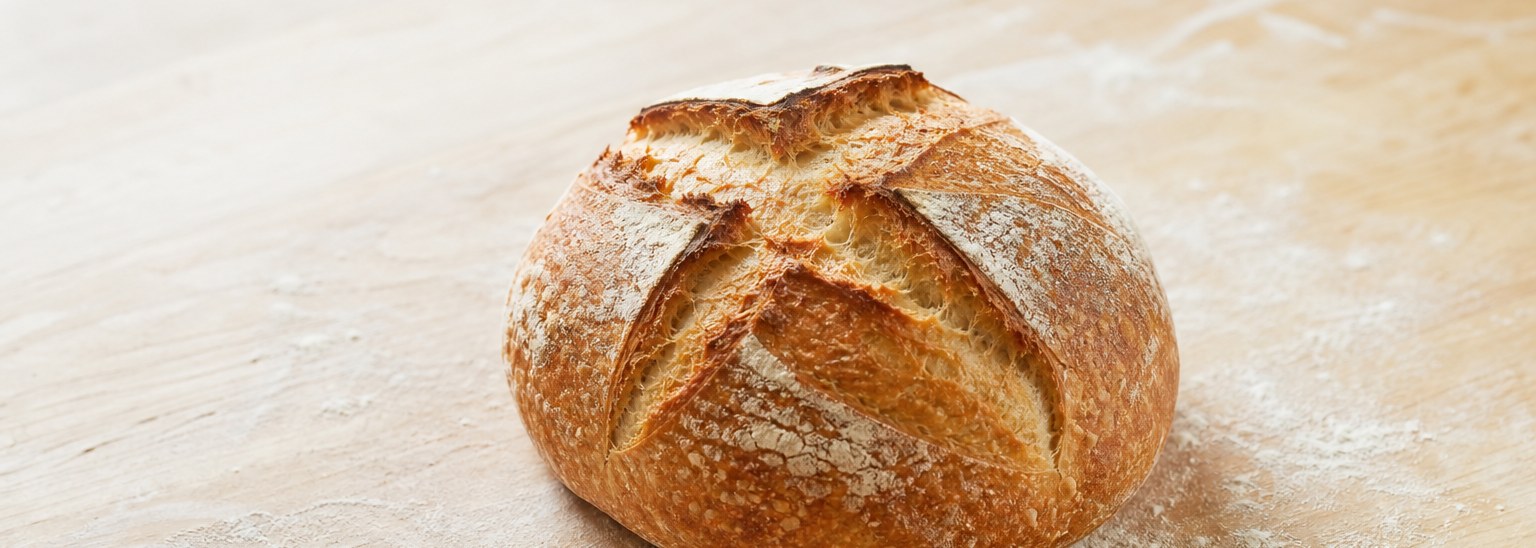
Pull up the photo I’ve got saved on my phone: two slices of bread side by side, one pale and tight-crumbed like a standard sandwich loaf, the other a deeply browned whole wheat sourdough with an open, irregular crumb structure. That single image is basically my whole argument in miniature, because a few years back my wife’s mother swore off bread entirely once her blood sugar numbers started creeping up. I cut her a generous wedge of my long-fermented whole wheat loaf and told her to just try it before deciding anything. She wasn’t convinced right away — to her, bread was bread, full stop. But once I actually dug into the research afterward, I uncovered a genuinely surprising story hiding inside every loaf I’d been shaping for years. As it turns out, sourdough bread glycemic index blood sugar response is something every home baker and bread lover ought to understand. What fermentation does to plain flour and water reaches well past flavor — it rewires how your body handles each bite you swallow.
The Science Behind Sourdough’s Lower Glycemic Index
Quick primer first: glycemic index, or GI, measures how fast a given food spikes your blood glucose after you eat it. Standard white sandwich bread lands around 70 to 75 on that scale, which puts it squarely in high-GI territory. A traditionally made sourdough loaf — particularly one built from whole grain flour and given a long, unhurried fermentation — typically lands in the low-to-mid 50s instead. That gap isn’t trivial, and it traces directly back to the chemistry unfolding while the dough ferments.
While your starter is doing its thing, the wild yeast and lactic acid bacteria inside it aren’t just generating bubbles and sour flavor — they’re also dismantling phytic acid, an antinutrient naturally present in grain that otherwise interferes with your body’s ability to absorb minerals like iron, zinc, and magnesium. At the same time, those same bacteria are churning out organic acids — mainly lactic and acetic acid — that drop the dough’s pH. That acidic environment, in turn, slows down how quickly digestive enzymes convert starch molecules into glucose. Slower starch breakdown means a smoother, more gradual blood sugar rise. That’s essentially the whole trick.
Resistant starch deserves a mention too. Both extended fermentation and simply letting a finished loaf cool before slicing boost the resistant starch content of bread. Functionally, resistant starch behaves more like fiber once it’s inside your body — it skips digestion in the small intestine entirely and instead becomes food for beneficial gut bacteria. Your bloodstream barely registers it.
Baking Choices That Maximize the Blood Sugar Payoff
This is where technique actually matters, because not every loaf labeled sourdough behaves the same way. Grocery-store bread carrying a sourdough label but leaning on commercial yeast for speed won’t hand you these same benefits. Genuine, active fermentation is non-negotiable, and so is time. Below is what years of baking — plus a fair amount of obsessive reading — has taught me.
Use Whole Grain Flours
Whole wheat, spelt, rye, einkorn — all of them pack in extra fiber, extra bran, and extra nutrients that put the brakes on digestion. That bran layer physically obstructs how fast digestive enzymes can reach the starch tucked inside each grain fragment. I began playing around with whole grain blends a few years back and haven’t gone back to all-purpose since. If whole grain sourdough still feels intimidating, grab a copy of Whole Grain Sourdough at Home by Kirsten Shockey — it’s the resource that showed me how to handle ancient grains like einkorn and spelt without producing a dense brick, and the nutrition boost more than justifies the learning curve.
Ferment Low and Slow
My go-to routine is a 4-to-6-hour room-temperature bulk fermentation followed by an overnight retard in the fridge. The longer that dough sits and ferments, the more time the bacteria get to manufacture those starch-slowing organic acids. Resist the urge to hurry it along. I get it — a busy weeknight makes shortcuts tempting — but both your blood sugar and your loaf’s flavor benefit from letting fermentation run its full course.
Let the Loaf Cool Completely
There was a stretch where I’d slice into a loaf the second it left the oven — the steam and the smell made waiting feel pointless. But cutting a hot loaf doesn’t just wreck the crumb texture; it also means you’re eating starch that hasn’t finished converting into that beneficial resistant starch I mentioned earlier. Let your bread rest on a wire rack for a minimum of two hours before slicing. Overnight cooling works even better.
Putting My Own Blood Sugar to the Test
Reading studies about fermentation blunting glycemic response is one thing — watching your own sourdough affect your own blood sugar is something else entirely. I got sick of throwing around claims I couldn’t back up with numbers from my own kitchen, so I started running informal glucose checks on myself and a handful of willing friends.
What works
- Readings come back quick and stay consistent enough that I could line up the same loaf against different fermentation windows — the gap between a 12-hour bulk and a 48-hour bulk was obvious.
- Strips and lancets don’t cost much, so running a bunch of side-by-side experiments doesn’t sting the wallet (I went through roughly 30 strips comparing hydration levels and flour types alone).
- Skipping the calibration-code step means grabbing a post-breakfast reading doesn’t turn into a fiddly ordeal.
What doesn’t
- Finger pricks are still required every single time, and that gets tiresome fast once you’re juggling several variables across a week of test bakes.
- Glucose response differs a lot person to person — a loaf that cut my spike by 15% barely budged my husband’s readings, so don’t treat any single loaf as a universal fix.
My first round of numbers looked so scattered I nearly abandoned the whole experiment, second-guessing whether I was testing wrong or whether fermentation even made a difference in the first place. But once I locked down timing and portion size across tests, an actual pattern emerged — and my long-standing obsession with slow fermentation suddenly had real evidence behind it.
Frequently Asked Questions
What glycemic index does sourdough bread typically have?
A traditionally made sourdough loaf, particularly one built from whole grain flour and given long fermentation, typically lands in the low-to-mid 50s on the glycemic index scale. That’s significantly lower than standard white sandwich bread, which lands around 70 to 75.
How long should I ferment sourdough for blood sugar benefits?
Sam’s go-to routine is a 4-to-6-hour room-temperature bulk fermentation followed by an overnight retard in the fridge. The longer the dough ferments, the more time bacteria have to manufacture organic acids that slow starch digestion and blunt blood sugar response.
Why does cooling sourdough bread matter for blood sugar?
Letting your bread cool completely allows starch to convert into beneficial resistant starch, which your bloodstream barely registers. Sam recommends cooling on a wire rack for a minimum of two hours before slicing, though overnight cooling works even better.
Does whole wheat sourdough lower glycemic response more?
Yes. Whole wheat, spelt, rye, and einkorn pack extra fiber, bran, and nutrients that slow digestion. That bran layer physically obstructs how fast digestive enzymes reach the starch inside each grain fragment, enhancing sourdough’s blood sugar benefits.
About This Article

Written by Sam Whitaker. Sam Whitaker has been baking sourdough for over a decade, including three years baking commercially, and now works out of a home kitchen in the Pacific Northwest. Sam's eleven-year-old starter, Harold, is the foundation for every recipe and troubleshooting guide on Sourdough Rising — real bread tested over and over until it works. More about this site.
Scope and limits. Sam is a home baker with no formal culinary training. Follow current food safety guidance for storage and handling, particularly with enriched or filled doughs.
Verify this against a primary source
Specifics change, and your situation may differ from the one described here. These are the authorities worth checking directly:
- USDA FoodData Central — flour and ingredient composition data
- FoodSafety.gov — safe handling and storage