Most printed recipes will tell you to add 2% salt and move on, but none of them explain what actually goes wrong if you skip it — I found that out the hard way. I was half-listening to a podcast during a bake, running on autopilot, and the salt jar never got opened. Through bulk fermentation the dough seemed totally fine, maybe even livelier than usual, bubbling away with strange enthusiasm. But the finished loaf told a different story: flat, gummy in the center, and bland enough that it barely tasted like bread at all. One missing ingredient had derailed the entire bake, and chasing down why sent me deep into research that changed how I treat salt in every loaf since.
| Salt Type | Dissolves Evenly | Seasoning Distribution | Effect on Gluten |
|---|---|---|---|
| Fine sea salt | Yes, melts fast | Even throughout dough | No tearing |
| Coarse salt | No, dissolves unevenly | Uneven pockets | Can tear strands |
The Real Job Salt Performs in Your Dough
Out of the four ingredients that make up a classic sourdough — flour, water, starter, and salt — salt is the one most bakers underestimate, even though it’s doing far more work than its small quantity would suggest. Here’s a closer look at exactly what it’s contributing.
Tightening Up Your Gluten Structure
Salt firms up the gluten matrix by drawing water away from the gluten proteins, forcing them into tighter bonds with one another. That’s what gives your dough the strength to hold its shape, take tension well during shaping, and reward you with the open crumb and dramatic oven spring every baker chases. Skip the salt, and that gluten network stays loose and weak — precisely why my unsalted loaf collapsed flat in the oven.
Keeping Fermentation From Running Away
Salt puts the brakes on the wild yeast and bacteria living in your starter. That sounds counterproductive, but it’s exactly what stops your dough from blowing past peak fermentation before you’re even ready to shape it. Remember that unusually bubbly, almost hyperactive dough from my saltless attempt? That was the yeast colony left completely unrestrained. With salt in the mix, fermentation moves at a rate you can actually plan around, giving you a longer, more forgiving window and far more consistent outcomes.
Bringing Out Flavor You Didn’t Know Was There
If you’ve ever tasted a loaf without it, this point needs no convincing. Salt doesn’t simply make bread taste salty — it pulls forward every other flavor already present, from the natural sweetness in the flour to the layered tang your starter contributes. It also tames excess acidity. A loaf salted correctly has a depth of flavor that’s nearly impossible to fake with anything else.
Figuring Out the Right Amount of Salt
My go-to guideline — the one I use every single time — is a range of 1.8% to 2.2% salt, calculated against your total flour weight. This is baker’s percentage math, and once it clicks, the whole process of baking starts feeling far more instinctive.
Here’s how that percentage translates into actual grams:
- 500g flour calls for roughly 9g to 11g of salt
- 750g flour calls for roughly 13.5g to 16.5g of salt
- 1000g flour calls for roughly 18g to 22g of salt
My own loaves usually sit right at 2% — it’s the balance point where the dough gets stronger and the flavor deepens without crossing into overly salty territory. If sodium is a concern for whoever you’re baking for, dropping to 1.8% still works, but going any lower starts costing you structure.
One thing worth remembering: stick with fine-grain salt for sourdough, never the coarse kind. Coarse crystals dissolve unevenly, leaving pockets of uneven seasoning, and if they sit too long directly on the dough’s surface, they can actually tear at the gluten strands. Fine sea salt, by contrast, melts into the dough fast and evenly.
Timing Your Salt Addition
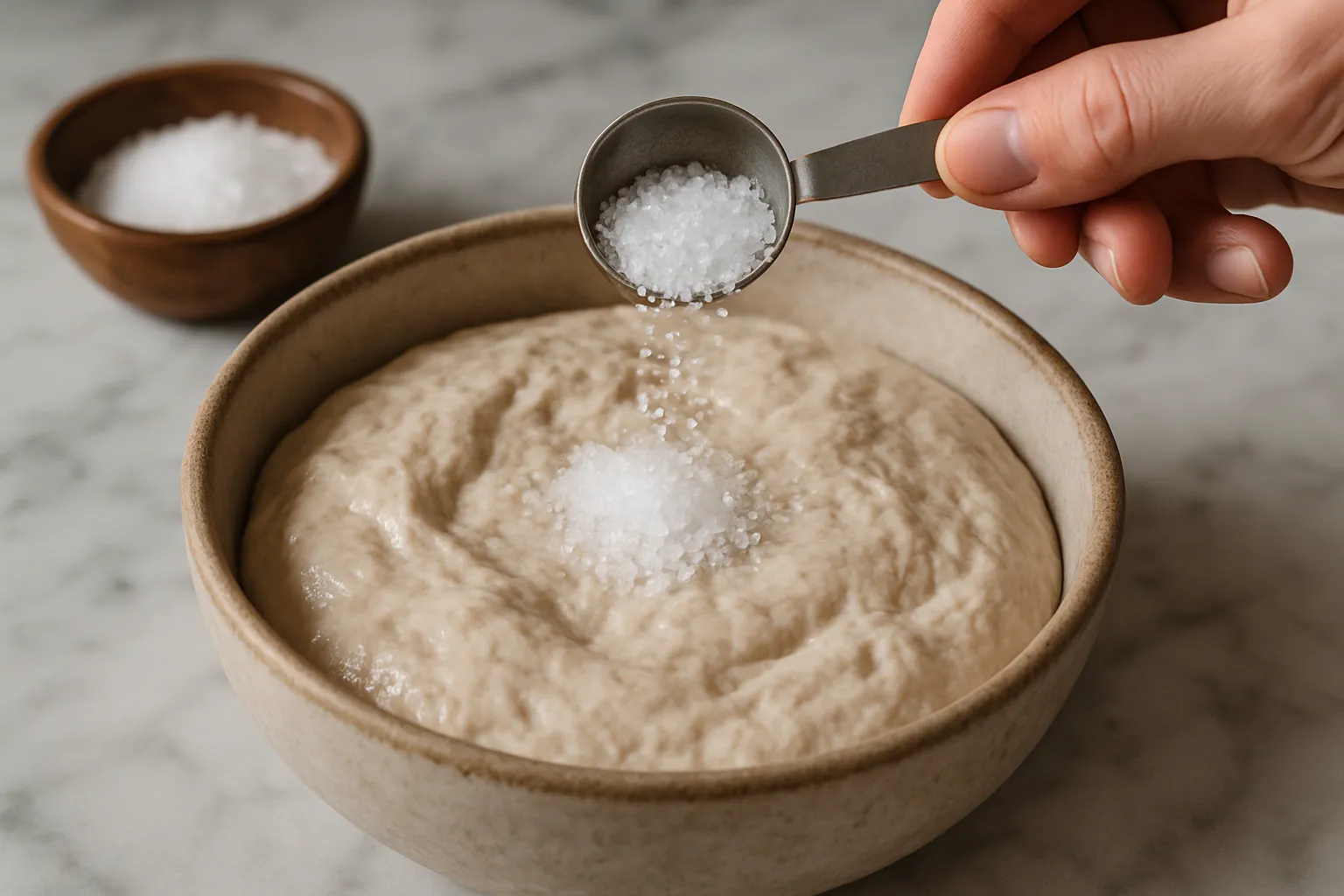
A lot of bakers, myself among them, wait until after a 30-minute autolyse to add salt. That head start lets the flour and water begin hydrating and building gluten before salt steps in to tighten everything up. Some bakers mix salt in right from the start with no problems at all, but if you’re running an autolyse, it’s better to hold off until that rest is finished. Whichever route you choose, just make sure it’s completely worked into the dough before bulk fermentation gets underway.
The Salt Swap That Fixed My Flat-Tasting Loaves
For years I grabbed whatever inexpensive fine sea salt sat on the grocery shelf, and eventually I noticed my bread had this flat, faintly metallic edge that made me question whether my fermentation process was off somewhere. Switching over to an unrefined, mineral-heavy salt changed both the taste of my finished bread and how reliably my dough behaved through bulk fermentation.
Where This Salt Shines
- Trace minerals bring a soft sweetness and roundness to the loaf that you just don’t get from refined salt — it shows up most clearly in the crust and that opening bite.
- It melts into the dough fast with no clumping, which translates to steadier fermentation and zero surprise salty pockets in the crumb.
- The grain size suits sourdough perfectly, blending in cleanly once autolyse is done, without tearing at your gluten the way coarser crystals sometimes do.
Where It Falls Short
- It runs pricier than the standard sea salt at the grocery store, so baking several loaves a week will show up in your ingredient spending.
- There’s no pour spout on the packaging, which gets tedious when measuring small quantities — I usually end up dumping mine into a shaker partway through the bag.
I’ll admit I almost talked myself out of buying this again after the first bag because the price felt hard to justify when bulk salt exists, but then I baked a side-by-side comparison loaf with cheap refined salt and immediately understood why it was worth it. If you’re serious about tasting the real potential of your sourdough, grab the Redmond Real Salt – Ancient Fine Sea Salt, Unrefined Mineral Salt, 16 Ounce Pouch (2 Pack).
Frequently Asked Questions
What happens if you forget salt in sourdough dough?
Without salt, your dough ferments too quickly and uncontrollably, the gluten stays weak, and the finished loaf collapses flat in the oven. The crumb becomes gummy in the center and the bread tastes bland. Salt is essential for structure, flavor, and controlled fermentation.
How much salt should I add to sourdough?
Use 1.8% to 2.2% salt calculated against your total flour weight. For 500g flour, that’s roughly 9g to 11g of salt. For 750g flour, use roughly 13.5g to 16.5g. For 1000g flour, use roughly 18g to 22g. Most bakers, including Sam, use exactly 2%.
When should I add salt during sourdough mixing?
If you’re doing a 30-minute autolyse, wait until it finishes before adding salt. This gives flour and water time to hydrate and build gluten first. Some bakers add salt from the start with no problems, but holding off after autolyse works well too. Just ensure it’s fully worked in before bulk fermentation starts.
Should I use coarse or fine salt for sourdough?
Always use fine-grain salt, never coarse. Coarse crystals dissolve unevenly, create pockets of uneven seasoning, and can tear gluten strands if they sit on the dough’s surface too long. Fine sea salt melts in fast and evenly, distributing throughout the dough.
About This Article

Written by Sam Whitaker. Sam Whitaker has been baking sourdough for over a decade, including three years baking commercially, and now works out of a home kitchen in the Pacific Northwest. Sam's eleven-year-old starter, Harold, is the foundation for every recipe and troubleshooting guide on Sourdough Rising — real bread tested over and over until it works. More about this site.
Scope and limits. Sam is a home baker with no formal culinary training. Follow current food safety guidance for storage and handling, particularly with enriched or filled doughs.
Verify this against a primary source
Specifics change, and your situation may differ from the one described here. These are the authorities worth checking directly:
- USDA FoodData Central — flour and ingredient composition data
- FoodSafety.gov — safe handling and storage