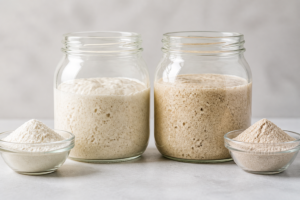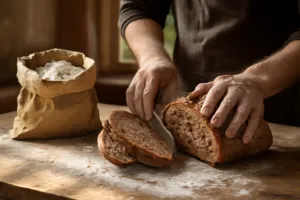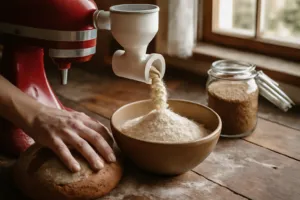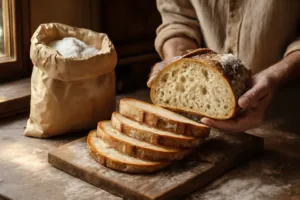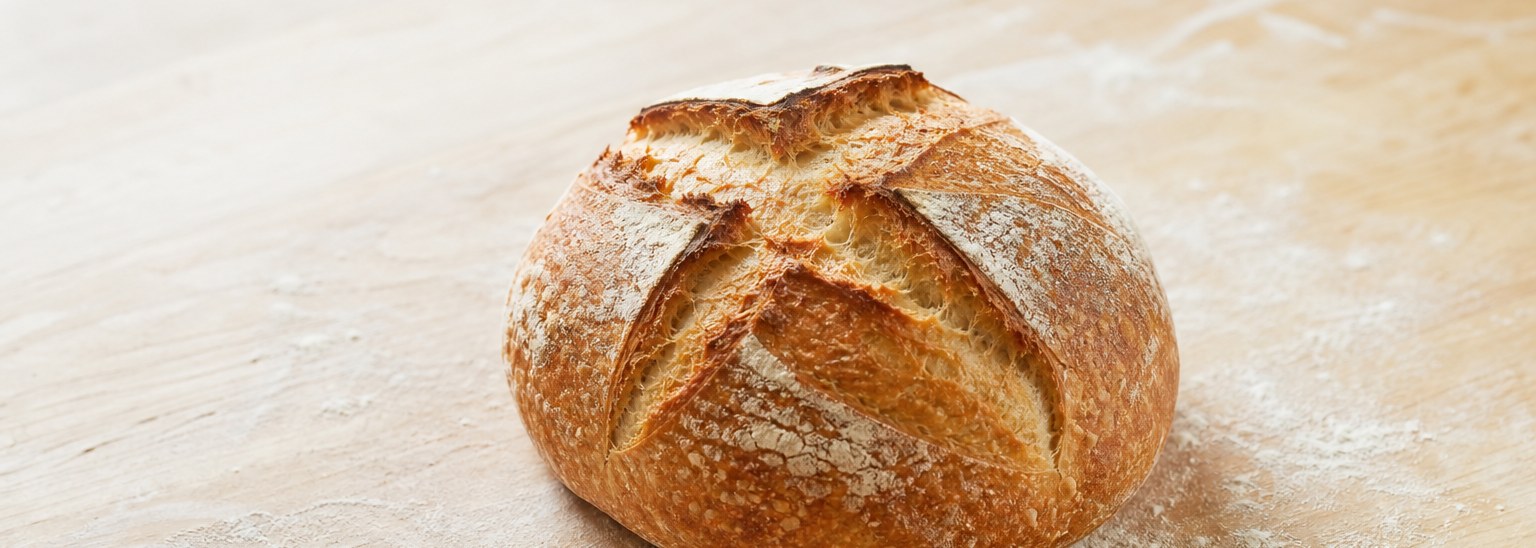
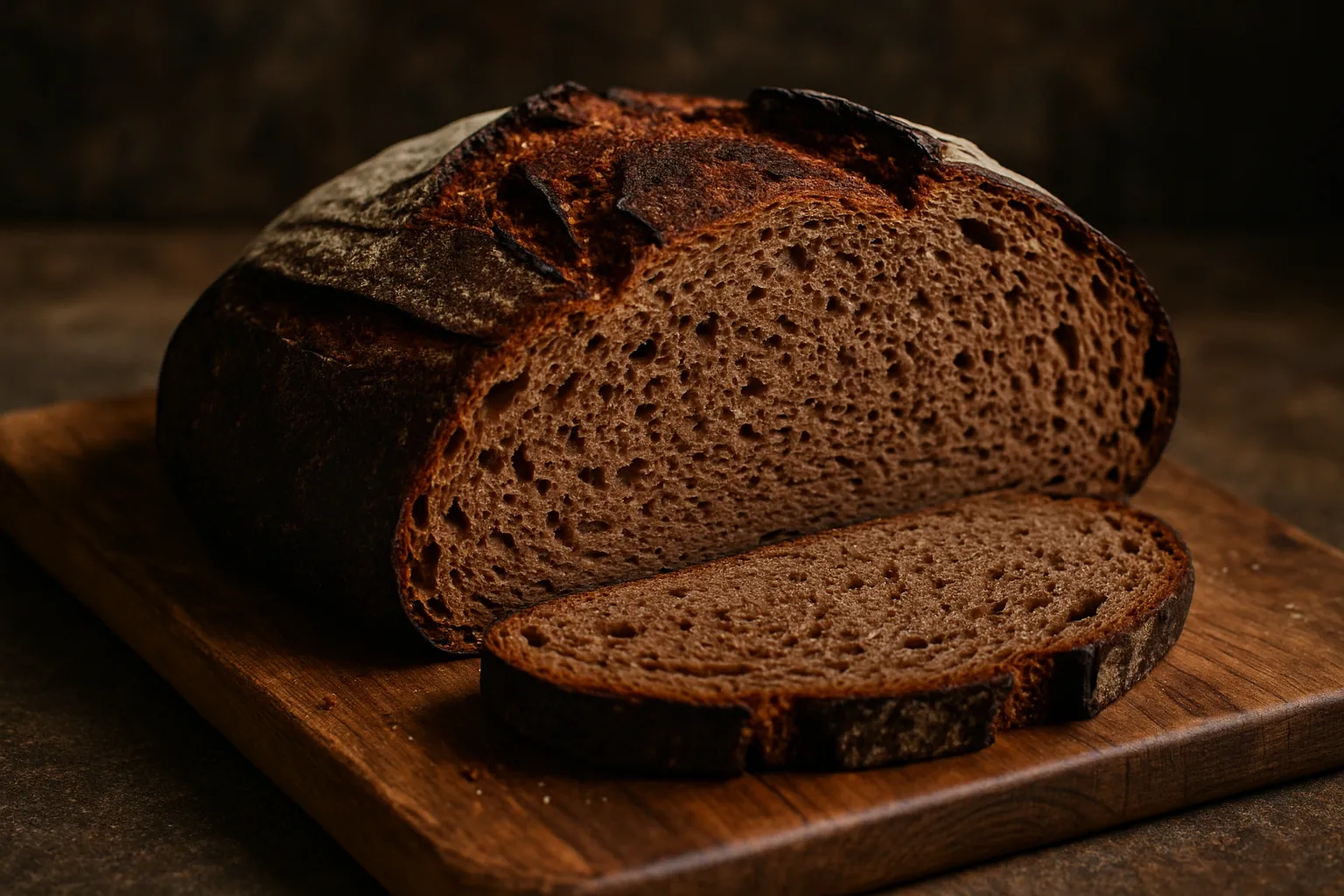
The jar looked wrong before it smelled wrong — foam crowding up against the underside of the lid, the surface pocked with bubbles bigger than any starter of mine had ever thrown. I’d grabbed the flour tin on autopilot that morning, scooped, fed, and walked away, and it wasn’t until I came back an hour later that I realized I’d pulled from the rye bag instead of my usual all-purpose. My starter had basically doubled itself and was trying to escape the jar. That one mix-up is what pulled me into rye flour sourdough baking, and I’ve kept working with it ever since. If rye has been on your radar but you haven’t figured out how to actually use it, this is your starting point.
| Rye Grade | Bran & Germ | Flavor Profile | Dough Difficulty | Best For |
|---|---|---|---|---|
| Light Rye | Most sifted away | Milder taste | Simpler to work with | Not recommended for beginners |
| Medium Rye | Moderate amount | Real flavor lift | Manageable | Beginners starting out |
| Dark Rye | More retained | Flavor opens up | Stickier, demanding | After medium rye feels comfortable |
| Whole Grain Rye (Pumpernickel) | All retained | Maximum depth | Stickiest, most demanding | Advanced bakers |
Why Rye Changes the Way Your Sourdough Behaves
Rye earns the near-obsessive attention seasoned bakers give it, and the reason comes down to chemistry as much as taste. It carries a starch structure unlike wheat’s, plus a heavy load of pentosans — carbohydrate molecules that grab onto water and give rye doughs their distinctive tackiness. From a sourdough standpoint, though, the real payoff is that rye is loaded with wild yeast and the nutrients your bacterial culture craves. Even a modest amount stirred in can send your starter into overdrive.
Set the fermentation science aside for a second, and rye still gives you something white flour never will: a deep, earthy, faintly sour note that makes a loaf taste like it walked out of an old-world bakery instead of your kitchen. It’s flavor complexity in its purest form. Bake one loaf with just 20% rye folded in, and a straight white sourdough will suddenly taste a bit flat by comparison.
What You’ll Actually Notice Once Rye Enters the Mix
Enough theory — here’s what actually shifts once rye becomes part of your regular bake:
- Fermentation speeds up, noticeably. Rye acts like jet fuel for your wild yeast colony. Swap in just 10–20% and you’ll shave real time off bulk fermentation, which matters even more in a chilly kitchen.
- Your starter gets sturdier. Plenty of bakers, myself included, work a bit of rye into every regular feeding just to keep the culture lively and dependable throughout the year.
- Flavor picks up nutty, malty layers. That’s a depth wheat can’t produce on its own, and it only intensifies as your rye percentage climbs.
- Crust color deepens dramatically. The natural sugars in rye push your crust toward a rich amber shade, the kind that looks almost too good coming out of the Dutch oven.
- You pick up a nutritional bump. Rye beats refined white flour on fiber, on minerals like magnesium and iron, and on certain B vitamins — a solid extra on top of everything else it offers.
Sorting Out the Different Grades of Rye Flour
Rye isn’t a single ingredient — knowing the variations helps you pick the right one for what you’re trying to accomplish. You’ll typically run into light rye, medium rye, dark rye, and whole grain rye, which some bakers call pumpernickel flour. Light rye has had most of its bran and germ sifted away, leaving a milder taste and a dough that’s simpler to work with. Push toward dark or whole grain rye and you gain fiber, flavor, and fermentation power — along with a stickier, more demanding dough.
If you’re new to rye baking, medium rye is where I point people first. It delivers a real flavor lift and a genuine fermentation boost without turning your dough into something unrecognizable. Once that feels comfortable, dark rye is where the flavor really opens up.
Where Hydration Trips People Up
Here’s the mistake nearly every new rye baker makes: rye soaks up considerably more water than wheat flour does. Substitute it in without touching your hydration, and your dough will feel deceptively tight right after mixing, then turn into a sticky, uncooperative mass once those pentosans finish absorbing water. My rule of thumb is to add 5–10% extra water the first few times you experiment, and let the dough run wetter and looser than you’re used to. Don’t panic and start dumping in flour to compensate — let it do what it needs to do.
Easing Rye Into Your Sourdough Routine
There’s no rule that says you have to jump straight to a 100% rye loaf. Here’s the path I’d follow if I were doing this from scratch again:
- Begin with a 10–20% swap. Replace that share of your bread flour with rye and leave the rest of your recipe untouched. Pay attention to how the dough ferments, how it feels in your hands, and — the part that matters most — how it tastes.
- Fold rye into your feeding routine. A feeding mix that’s 20–30% rye is enough to keep your starter more energetic and resilient between bakes.
- Experiment with a rye soaker. When you’re pushing toward a higher rye percentage, mix your rye flour with hot water and let it sit for several hours before folding it into the main dough. Pre-soaking the flour like this gives you a softer, moister crumb.
- Handle the shaping gently. Rye doughs skip the gluten development that wheat doughs rely on. Lean on surface tension and a generously floured banneton rather than the vigorous folding you’d normally use.
The Rye Flour That Genuinely Gets Your Starter Moving
Most all-purpose flours feed your starter in a predictable rhythm — bubbles show up in 4 to 6 hours, and the rise is gentle. Rye plays by different rules, though, and if you’re planning to commit to it, you need a rye flour that behaves the same way bag after bag, not one that leaves your starter dragging or your crumb dense and gummy.
Where it delivers
- Kicks your starter into gear noticeably quicker than wheat alone — I get visible activity within 2–3 hours of feeding, which actually matters when you’re planning a bake around a work day.
- Delivers a clean, gently tangy flavor with no bitterness or mineral edge, so it complements the sourdough character you’ve spent days building instead of masking it.
- Its medium grind takes on water in a consistent way, so your hydration math actually works out instead of handing you a shaggy dough you can’t control.
Where it falls short
- Once you hit 20% rye or beyond, the dough turns sticky enough to demand a change in technique — no-knead and minimal-knead approaches get harder to manage, and your usual shaping instincts won’t carry you through.
- Stock can be inconsistent online depending on the time of year, and when it’s unavailable, it’s tempting to grab whatever rye you can find as a substitute — a swap that usually underdelivers.
I once tried stretching a 20% rye dough on my bench after only one fold, convinced I could shape it immediately, and ended up with a pancake instead of a boule—but that was operator error, not the flour’s fault. King Arthur Organic Medium Rye Flour gives you the stability to actually learn what rye does to your bake, rather than chasing inconsistency.
Frequently Asked Questions
How much rye flour should I add to my sourdough starter?
Start with 20–30% rye in your feeding mix to keep your starter more energetic and resilient between bakes. A modest amount works well; even just 10–20% rye folded into your bread flour noticeably speeds fermentation. You’ll see visible activity within 2–3 hours of feeding instead of the usual 4 to 6 hours with wheat flour alone.
Why does rye flour make my sourdough dough so sticky?
Rye contains pentosans, carbohydrate molecules that grab onto water and give rye doughs their distinctive tackiness. Rye also soaks up considerably more water than wheat flour does. Add 5–10% extra water the first few times you experiment, and let the dough run wetter and looser than you’re used to without compensating by adding flour.
What grade of rye flour is best for beginners?
Medium rye is where to start. It delivers a real flavor lift and a genuine fermentation boost without turning your dough into something unrecognizable. Light rye is milder but less flavorful, while dark rye and whole grain rye offer more complexity but demand a stickier, more demanding dough to manage.
Does rye flour really change sourdough flavor?
Yes. Rye gives you a deep, earthy, faintly sour note that makes a loaf taste like it walked out of an old-world bakery instead of your kitchen. Bake one loaf with just 20% rye folded in, and a straight white sourdough will suddenly taste a bit flat by comparison. Rye picks up nutty, malty layers wheat can’t produce on its own.
About This Article

Written by Sam Whitaker. Sam Whitaker has been baking sourdough for over a decade, including three years baking commercially, and now works out of a home kitchen in the Pacific Northwest. Sam's eleven-year-old starter, Harold, is the foundation for every recipe and troubleshooting guide on Sourdough Rising — real bread tested over and over until it works. More about this site.
Scope and limits. Sam is a home baker with no formal culinary training. Follow current food safety guidance for storage and handling, particularly with enriched or filled doughs.
Verify this against a primary source
Specifics change, and your situation may differ from the one described here. These are the authorities worth checking directly:
- USDA FoodData Central — flour and ingredient composition data
- FoodSafety.gov — safe handling and storage