Essential Scoring Techniques for Success
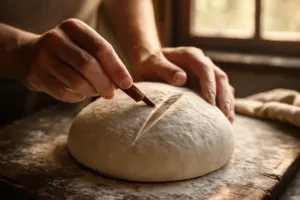
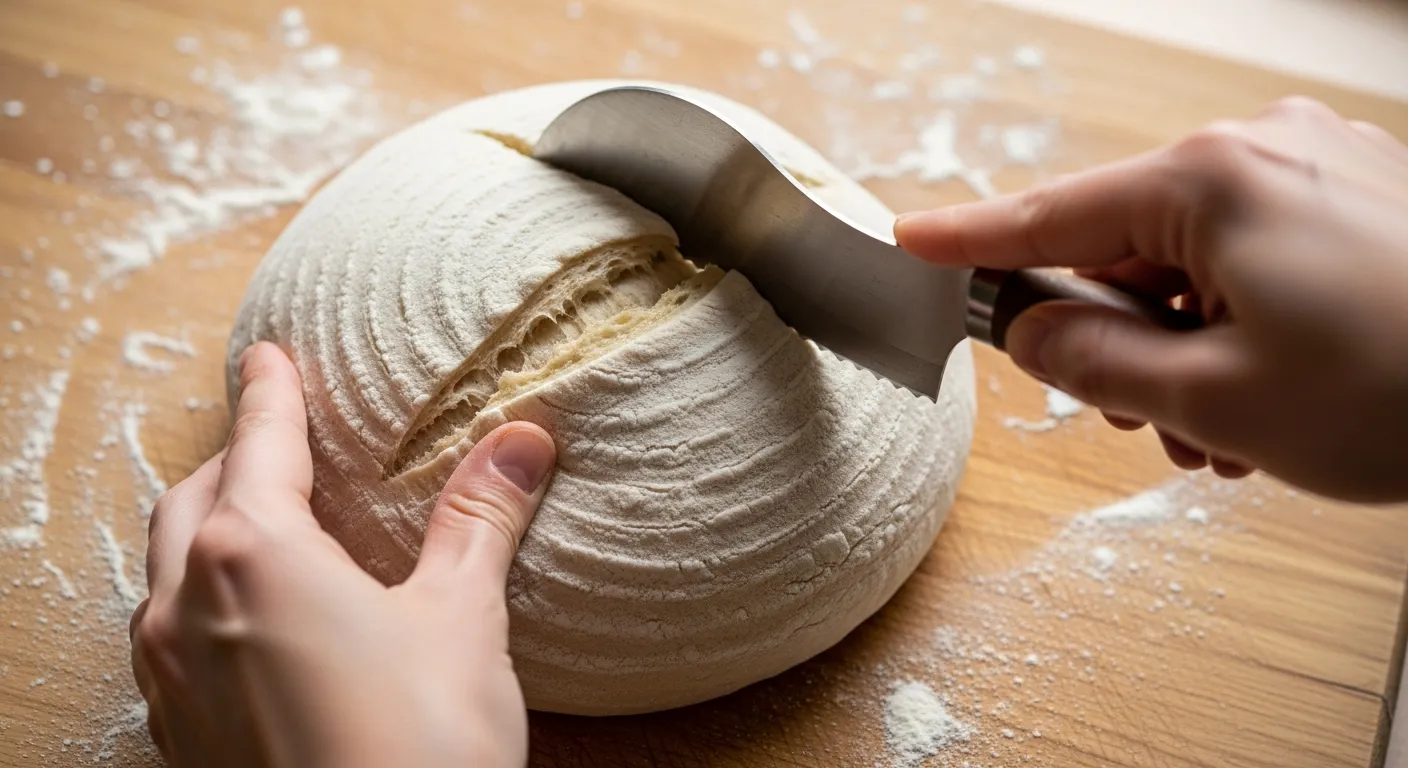
Owning a lame is only half the battle. Technique matters just as much. A classic approach is the single slash—one confident cut along the length of your boule. Start at a 45-degree angle near one end and draw the blade smoothly toward the opposite side, angling the lame gradually as you move. The depth should be about half an inch. Too shallow and you lose control over expansion; too deep and you risk deflating the crumb structure.
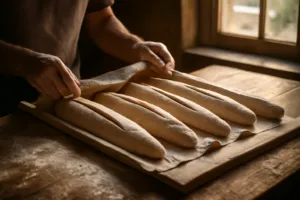
The cross-hatch pattern works beautifully for oval loaves. Make two or three parallel cuts at a slight angle, then score perpendicular lines across them. This creates pockets where steam can escape evenly and prevents any single point from blowing out. The key is consistency—equal spacing and depth make the difference between a deliberate design and a frantic hack job.
Timing your score matters too. Your dough should be properly cold from the final proof, but not frozen solid. A cold loaf holds its shape better under the blade, but one that’s been in the fridge too long becomes brittle. Most bakers score straight from the cold Dutch oven, creating steam that helps the loaf bloom dramatically in those first few minutes of baking.
I almost returned mine after I dinged the blade on my Dutch oven’s edge during a rushed bake, but the replacement blade pack proved the system actually works—and now I score with way less anxiety. Grab a bread lame and feel the difference.
Moving Forward With Confidence
Mastering sourdough scoring takes practice, but the right equipment removes one major barrier to success. A sharp, precise tool lets you focus on the actual artistry instead of fighting with your blade. Start with simple patterns, keep your lame sharp, and don’t rush the moment. Your loaves will thank you with beautiful, predictable blooms and scores that showcase the care you’ve put into every step of your process.
The Dual Purpose of Sourdough Scoring
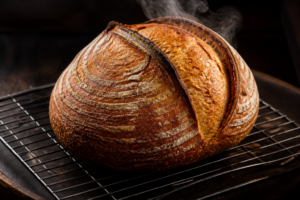
Sourdough scoring represents a crucial intersection of form and function in artisan baking. When bakers slice deliberate patterns into their dough, they’re essentially creating controlled weak points in the surface. These intentional cuts guide the loaf’s expansion as it bakes. Without proper scoring, the internal pressure from rising dough finds its own escape routes. Consequently, this results in unpredictable tears and splits that can ruin an otherwise perfect loaf.
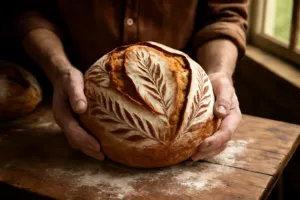
The beauty of scoring lies in its dual nature. Functionally, those cuts allow steam to escape in a controlled manner and direct the loaf’s “oven spring”—that dramatic rise that happens in the first few minutes of baking. Aesthetically, scoring creates the signature patterns that make artisan sourdough instantly recognizable. A well-executed score tells the story of your process: deep, confident slashes suggest a baker who understands their dough’s behavior.
Why Most Home Bakers Struggle With Scoring
Before I invested in proper equipment, I thought scoring was simply about making cuts. I’d use whatever knife was handy—a serrated bread knife, a paring knife, even a box cutter at one desperate point. The results were consistently mediocre. My loaves would tear in unexpected places. Scores would partially close up during the first minute of baking. The bread would split sideways instead of along my intended patterns.
The problem wasn’t my technique alone—though that needed work too. The real culprit was my tools. A dull or inappropriate blade drags through the dough rather than slicing cleanly. This compression deflates the very rise you’re trying to control. It’s like trying to perform surgery with a butter knife. You’ll cause damage before you help anything.
The Lame That Finally Gave Me Confident, Clean Cuts
A dull knife or shaky hand turns scoring from an art into a gamble—you end up dragging through the dough instead of slicing cleanly, which deflates your rise right when it matters most. A proper bread lame changed how much control I actually have over that critical moment.
What works
- The blade is sharp enough that you can score with almost no downward pressure—just let the angle and weight do the work, which means less dough compression and cleaner expansion patterns.
- The handle sits low and feels more like a scalpel than a knife, giving you the fine motor control you need to execute deliberate patterns instead of hacking at the surface.
- Replacement blades are cheap and easy to swap, so you’re never tempted to keep using a dulled blade because “it’ll do”—which I absolutely used to do.
The precision handle design makes all the difference. When you’re holding a bread lame properly, your hand naturally positions itself for controlled, angled cuts. This angle—typically 30 to 45 degrees—creates a “lip” of dough that peels back slightly as the bread expands. That lip catches the light beautifully and signals to anyone looking at your loaf that you know what you’re doing.
What doesn’t
- The blade is delicate and will dull faster than a serrated knife if you’re careless, and one misguided stroke into a Dutch oven rim will bend it—ask me how I know.
- It’s one more tool to keep track of and keep sharp, which means more maintenance than just grabbing whatever knife is in your knife block.
Essential Scoring Techniques for Success
Owning a lame is only half the battle. Technique matters just as much. A classic approach is the single slash—one confident cut along the length of your boule. Start at a 45-degree angle near one end and draw the blade smoothly toward the opposite side, angling the lame gradually as you move. The depth should be about half an inch. Too shallow and you lose control over expansion; too deep and you risk deflating the crumb structure.
The cross-hatch pattern works beautifully for oval loaves. Make two or three parallel cuts at a slight angle, then score perpendicular lines across them. This creates pockets where steam can escape evenly and prevents any single point from blowing out. The key is consistency—equal spacing and depth make the difference between a deliberate design and a frantic hack job.
Timing your score matters too. Your dough should be properly cold from the final proof, but not frozen solid. A cold loaf holds its shape better under the blade, but one that’s been in the fridge too long becomes brittle. Most bakers score straight from the cold Dutch oven, creating steam that helps the loaf bloom dramatically in those first few minutes of baking.
I almost returned mine after I dinged the blade on my Dutch oven’s edge during a rushed bake, but the replacement blade pack proved the system actually works—and now I score with way less anxiety. Grab a bread lame and feel the difference.
Moving Forward With Confidence
Mastering sourdough scoring takes practice, but the right equipment removes one major barrier to success. A sharp, precise tool lets you focus on the actual artistry instead of fighting with your blade. Start with simple patterns, keep your lame sharp, and don’t rush the moment. Your loaves will thank you with beautiful, predictable blooms and scores that showcase the care you’ve put into every step of your process.
This post contains affiliate links. As an Amazon Associate, I earn from qualifying purchases at no extra cost to you.