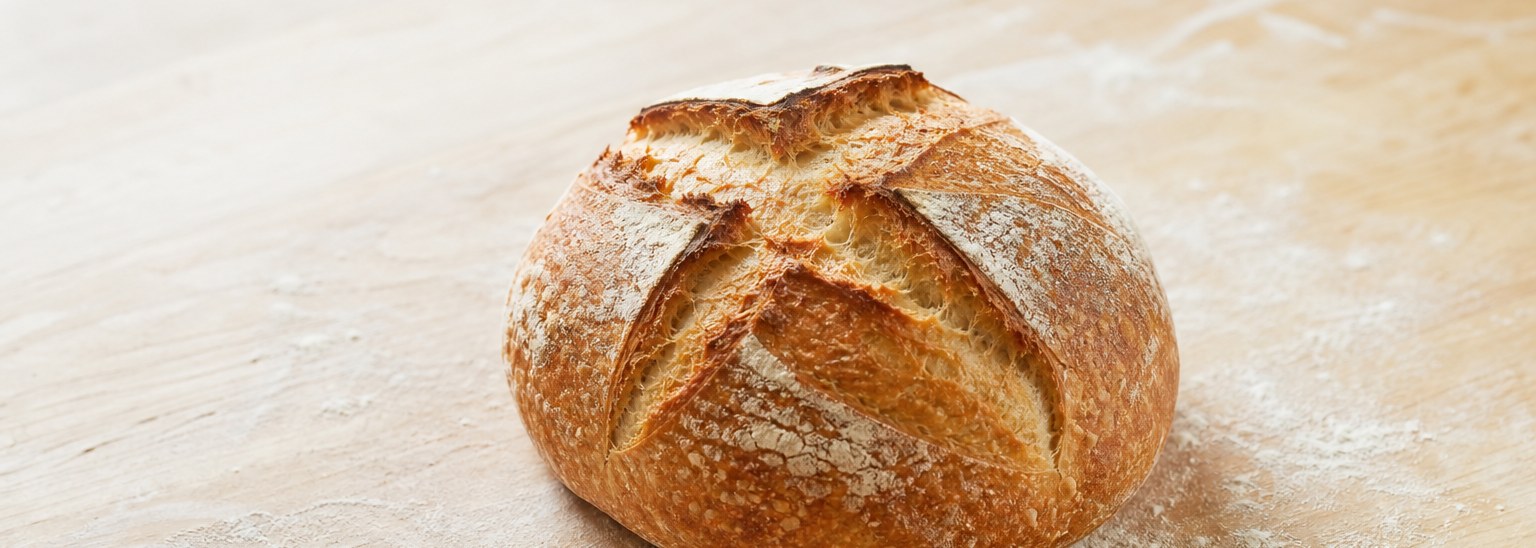
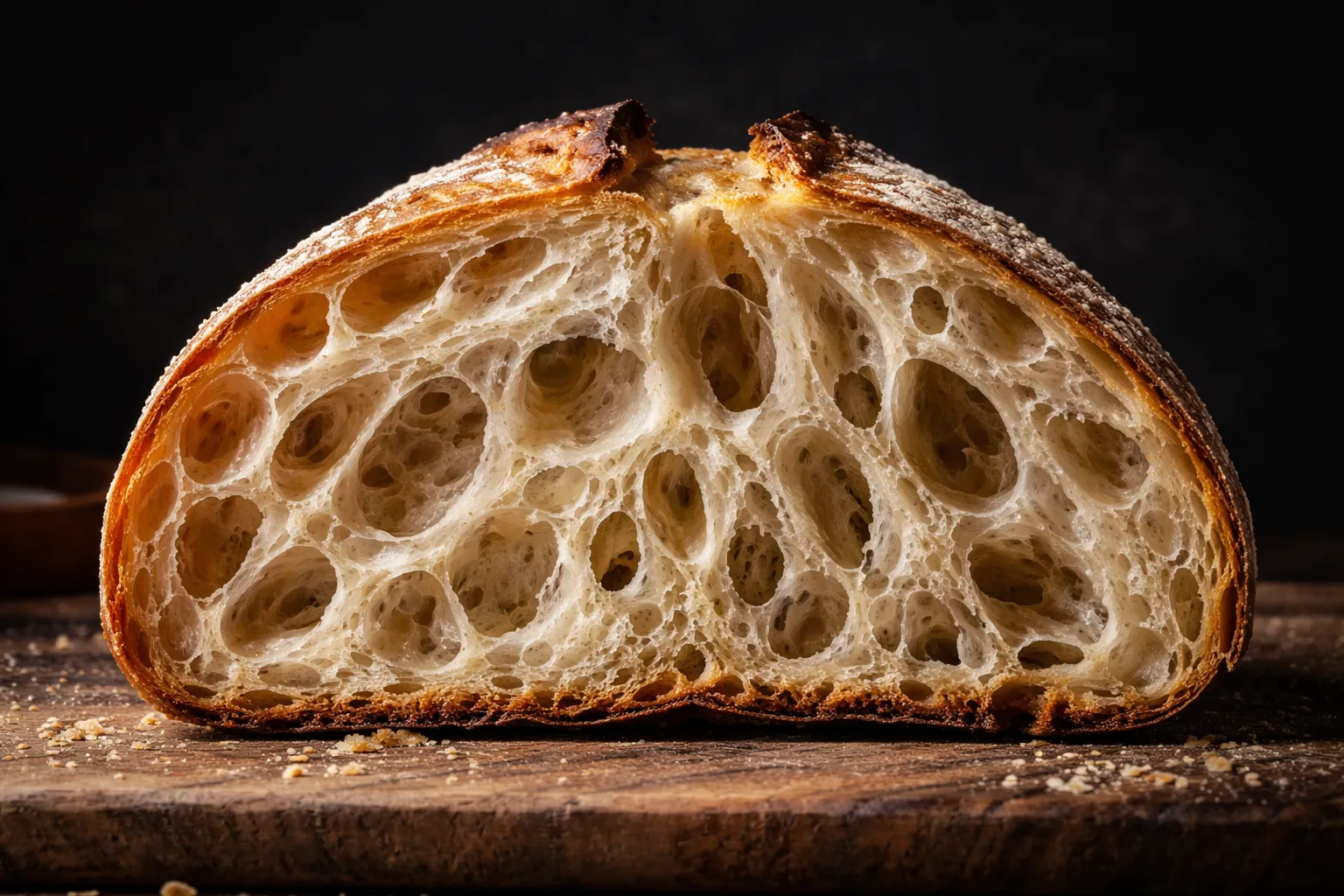
Open, lacey crumb has a reputation for needing a professional deck oven to pull off at home. It doesn’t — it needs correct hydration, real steam, and a dough you haven’t over-handled.
Why High Hydration Dough Is So Frustrating
Dough above 80% hydration is genuinely sticky and hard to shape without experience. It spreads instead of holding tension, sticks to every surface it touches, and punishes rough handling more than a stiffer dough would. The payoff, if you get it right, is a dramatically more open, glassy crumb.
| Flour Type | Protein Content | Result at 85% Hydration |
|---|---|---|
| Bread flour | 12.5%+ | Holds structure, supports open crumb |
| All-purpose flour | 10-11% | Slack, spreading dough, cannot support open crumb |
Ingredients
- 500g bread flour (12.5%+ protein)
- 425g water (85% hydration)
- 100g active starter
- 10g salt
Step by Step
- Autolyse: Mix flour and water, rest 45 minutes before adding starter and salt — this matters more at high hydration than at any other level.
- Bulk ferment: 4-5 hours with 5-6 gentle stretch and folds, spaced 30 minutes apart, using wet hands to prevent sticking.
- Shape: Handle minimally — a wet dough scraper and confident, quick motions beat slow, hesitant ones.
- Proof: Cold retard overnight in a well-floured banneton.
- Bake: 475°F in a preheated Dutch oven, lid on 20 minutes, lid off 25 minutes.
The Dutch Oven That Trapped Steam Properly
My early attempts at high-hydration bread came out with a pale, thin crust despite good fermentation — the problem was steam escaping before the crust had a chance to set. Switching to a heavy cast iron combo cooker with a tight-fitting lid solved it; the trapped steam gives the dough time to expand fully before the crust hardens.
Reading Fermentation on Wet Dough
High-hydration dough is harder to read by feel alone since it never firms up the way a stiffer dough does. I rely more heavily on visual cues at this hydration: a domed, slightly jiggly surface, visible bubbles breaking through, and a noticeable increase in volume — usually 50-60% rather than a full double, since fully doubled high-hydration dough is almost always over-proofed.
Why Bread Flour Matters More Here Than Anywhere Else
At 85% hydration, weak gluten simply can’t hold the structure together. All-purpose flour, which usually sits around 10-11% protein, will produce a slack, spreading dough that can’t support an open crumb no matter how careful your technique is. This is the one recipe where I’d never substitute — bread flour at 12.5% protein or higher is doing real structural work, not just a nice-to-have.
Building Up to This Recipe
If you’re coming from a standard 70-75% hydration loaf, don’t jump straight to 85% on your first attempt. I moved up in 5% increments over several bakes — 75%, then 80%, then 85% — giving myself time at each stage to adjust my folding technique before the dough got harder to manage. Trying to leap straight to high hydration usually ends in a dough you can’t shape at all, which is discouraging enough to make people give up on open crumb entirely.
Common Mistakes at This Hydration
- Adding water too fast during mixing: incorporate it gradually, especially the last 10%, or the dough breaks down instead of absorbing it
- Under-proofing out of fear of over-hydrating: high-hydration dough actually tolerates a slightly longer bulk ferment than people expect — trust the visual cues, not caution
- Skipping coil folds in favor of standard stretch and folds: coil folds handle wet dough far more gently and build strength without degassing it
What Works and What Doesn’t
What works
- A longer autolyse — 45 minutes minimum at this hydration
- Wet hands and a wet bench scraper instead of flour during shaping
- A heavy, tight-lidded Dutch oven for real steam retention
What doesn’t
- Trying high hydration before you can comfortably shape a 70% dough
- Over-flouring the work surface — it dries out the dough’s exterior and prevents a good seal during shaping
- A thin baking vessel that lets steam escape early
Frequently Asked Questions
What hydration should I start with before trying 85 percent?
If you’re coming from standard 70-75% hydration loaves, move up in 5% increments over several bakes. Sam recommends going 75%, then 80%, then 85% to adjust your folding technique at each stage before the dough gets harder to manage. Jumping straight to 85% usually ends in a dough you can’t shape.
Why does my high hydration bread have a pale thin crust?
Steam is escaping before the crust can set. A heavy cast iron combo cooker with a tight-fitting lid solves this by trapping steam so the dough expands fully before the crust hardens. The Dutch oven bakes at 475°F with the lid on for 20 minutes, then off for 25 minutes.
Can I use all purpose flour for 85 percent hydration sourdough?
No. At 85% hydration, weak gluten can’t hold the structure together. All-purpose flour sits around 10-11% protein and produces a slack, spreading dough that can’t support an open crumb. Use bread flour at 12.5% protein or higher—it’s doing real structural work, not just a nice-to-have.
How do I know if high hydration dough is properly proofed?
High-hydration dough is harder to read by feel since it never firms up like stiffer dough. Look for a domed, slightly jiggly surface, visible bubbles breaking through, and a noticeable volume increase of 50-60%, not a full double. Fully doubled high-hydration dough is almost always over-proofed.
About This Article

Written by Sam Whitaker. Sam Whitaker has been baking sourdough for over a decade, including three years baking commercially, and now works out of a home kitchen in the Pacific Northwest. Sam's eleven-year-old starter, Harold, is the foundation for every recipe and troubleshooting guide on Sourdough Rising — real bread tested over and over until it works. More about this site.
Scope and limits. Sam is a home baker with no formal culinary training. Follow current food safety guidance for storage and handling, particularly with enriched or filled doughs.
Verify this against a primary source
Specifics change, and your situation may differ from the one described here. These are the authorities worth checking directly:
- USDA FoodData Central — flour and ingredient composition data
- FoodSafety.gov — safe handling and storage