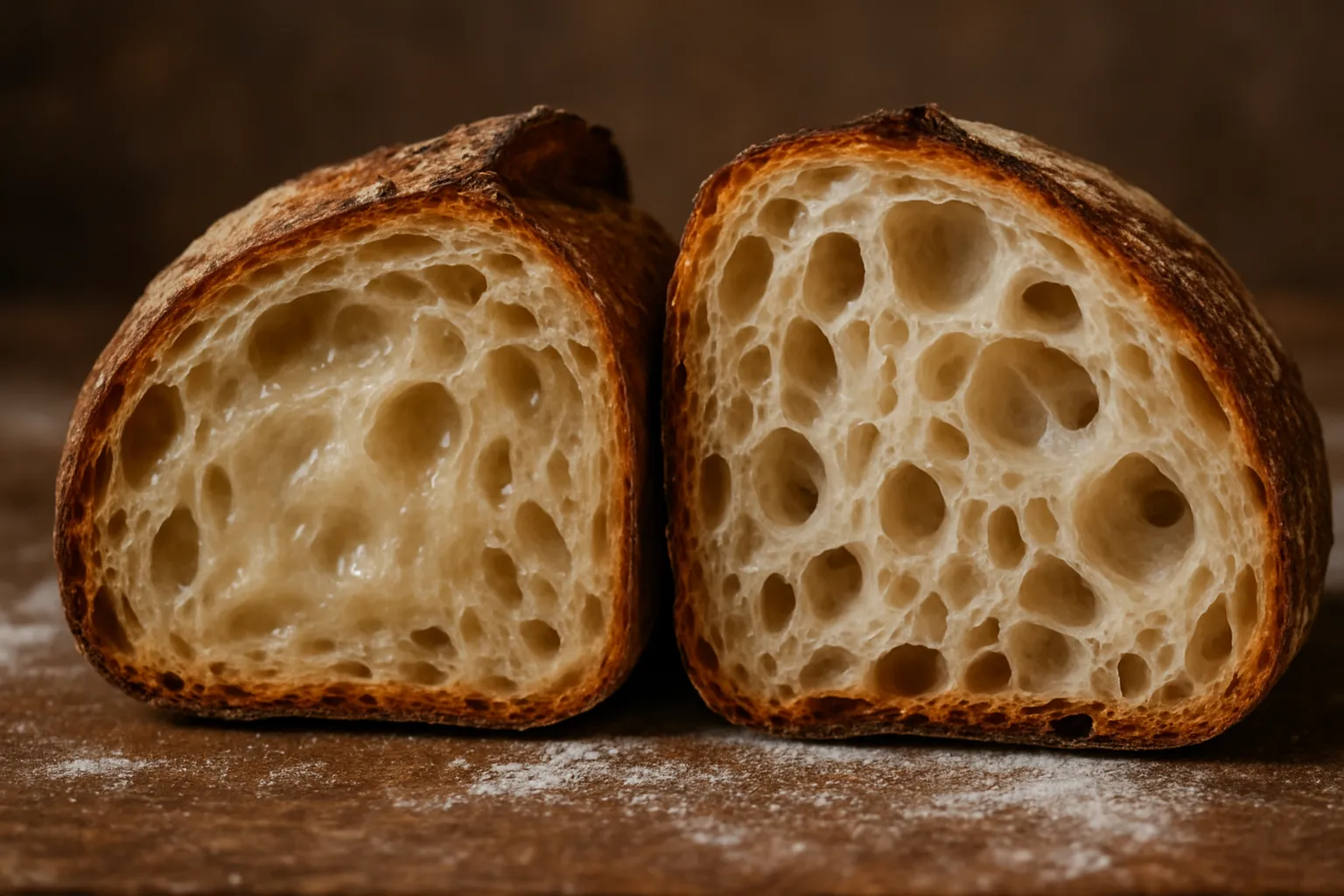
205 to 210°F — that’s the internal temperature a properly baked sourdough loaf needs to clear before the crumb can actually set. The first time I measured a loaf that had turned out gummy on me, mine had barely cracked 185°F, and the interior showed it: pale, wet, and clinging to my bread knife like wallpaper paste, even though the crust had blistered up gorgeous and the loaf had sprung with total confidence. If you’ve been chasing a gummy sourdough crumb fix, trust me, I’ve stood exactly where you’re standing now. That damp, under-baked texture is one of the most demoralizing things a home baker runs into, especially when it shows up after you’ve put in an 18-hour cold ferment and spent the whole time hoping for something better. Here’s the reassuring part: it’s fixable almost every time, and once the cause clicks for you, you’ll rarely run into it again.
So What’s Really Behind That Gummy Crumb?
Fixing this starts with understanding it, not skipping straight to a solution. A gummy interior almost never traces back to a single mistake — it’s typically two or three factors stacking on top of each other. After years of troubleshooting my own bakes, I’ve sorted out the usual suspects, and I’ll walk through each one so you can figure out honestly which one’s hitting your loaf.
Underbaking Tops the List, By Far
This is the biggest culprit of them all. Most home ovens run colder than their dial admits — sometimes 25 to 50°F colder. You dial in 500°F, feel good about it, and your Dutch oven still never actually gets there. Meanwhile the crust browns just fine, since that’s a reaction to steam and surface-level heat, but the center never climbs high enough to fully gelatinize the starches or lock the crumb into place. What you’re left with is that paste-like, gummy texture undoing an otherwise beautiful loaf.
Slicing In Too Early
I get it — this is the hardest rule to follow. But cutting into a loaf while it’s still hot is practically a guaranteed route to a gummy crumb. Once bread leaves the oven, it isn’t actually done — steam keeps moving through the interior, the starches are still finishing their set, and the whole structure is still firming up as it cools. Slice into it inside that first hour and you cut that process off midstream. I know how good it smells. I know the temptation to tear in immediately is real. Give it a minimum of two hours. I mean it.
When Over-Proofing and High Hydration Team Up
Dough that’s fermented past its peak turns slack and overly gassy, and that softness weakens the gluten network holding everything up. Bake a loaf that’s gone too far and it can sink slightly once it hits the oven, sealing moisture inside and forming that dense, gummy band right near the base. High-hydration doughs carry a related risk — they simply need more time in the oven and more careful handling, because all that extra water has to escape somehow. If your oven temperature falls short or your bake doesn’t run long enough, that water just stays trapped in the crumb.
The Fix That Actually Solves It
With the causes sorted out, here’s how to solve them. These are the specific changes I made in my own kitchen, and they took my loaves from gummy letdowns to the kind of open, chewy, fully-set crumb I’d been chasing all along.
Check Your Real Oven Temperature, No Exceptions
Quit taking your oven dial’s word for it — it isn’t telling the truth. The single change that made the biggest difference for me was putting an actual thermometer inside the oven so I could see the real temperature before any loaf went in. For anyone serious about sourdough, this isn’t a nice-to-have — it belongs right up there with your banneton.
Push the Bake Time Longer, Lid Off
Standard instructions usually have you bake covered for 20 minutes, then uncovered for another 20. If gumminess keeps showing up, stretch that uncovered portion out. I’ll frequently go 30 to 35 minutes with the lid off, watching for the crust to turn a deep mahogany color. A loaf that’s fully baked through should register 205 to 210°F internally. Grab an instant-read thermometer if you’ve got one — though honestly, getting your oven temperature right matters even more than this step.
Let It Cool Fully on a Wire Rack
Once it’s out of the oven, your loaf needs air moving around every side of it so steam can escape the way it’s supposed to. Rest it directly on a solid countertop and you trap moisture underneath the crust, which feeds gumminess right along the bottom of the crumb. I move every loaf straight onto a wire rack and leave it strictly alone for a minimum of two hours — longer still if it’s a bigger loaf.
The Single Temperature Check That Kills Gummy Crumbs for Good
Nobody mentions this part: there’s a good chance your oven is flat-out lying to you. I was sure my final bake was running at 450°F, yet my gummy centers told a completely different story — until I discovered my oven was actually running a full 25 degrees below what the dial claimed. A dependable oven thermometer is the quickest way to figure out whether your soggy crumb comes down to plain underbaking.
Where It Delivers
- It reads accurately within minutes of preheat starting, catching any drift before your dough ever goes in — no more guessing whether your oven’s actually at temperature.
- The stainless steel build holds up bake after bake, resisting the false readings that cheaper thermometers start giving after months of high-heat sourdough sessions.
- Its monitoring feature lets you check the real temperature partway through baking without cracking the oven door and deflating your spring.
Where It Falls Short
- Being built for commercial use, it’s chunkier and far less decorative than a typical kitchen thermometer — expect it to eat up real space near your Dutch oven.
- An oven with uneven hot spots will still trip this up, since it only measures one location rather than the entire cavity — you may still need to rotate your Dutch oven partway through.
I almost returned mine after the first bake because the reading seemed too low to be true—but when I bumped my actual oven temp up by 30 degrees to compensate, my next loaf baked through completely for the first time in weeks. If gummy crumbs are your problem, grab the Rubbermaid Commercial Products Stainless Steel Monitoring Thermometer and verify what’s actually happening in your oven.
Frequently Asked Questions
What internal temperature should sourdough reach to avoid gummy crumb?
A properly baked sourdough loaf needs to reach 205 to 210°F internally before the crumb can set. If your loaf falls short of this—say, 185°F—you’ll end up with a pale, wet, gummy interior even if the crust looks beautiful and the loaf sprang well.
How long should sourdough cool before slicing?
Give your loaf a minimum of two hours to cool completely. Cutting into it while still hot cuts off the steam-setting process midstream, leaving you with a gummy crumb even if the rest of your baking was perfect.
Why is my oven temperature causing gummy sourdough?
Most home ovens run 25 to 50°F colder than their dial claims. A 500°F dial setting may actually be 450°F, so the crust browns from steam and surface heat while the center never climbs high enough to gelatinize starches and set the crumb properly.
How long should I bake sourdough uncovered to fix gumminess?
Standard instructions call for 20 minutes uncovered, but if gumminess persists, stretch that to 30 to 35 minutes with the lid off, watching for a deep mahogany crust color. Check that your loaf hits 205 to 210°F internally.
About This Article

Written by Sam Whitaker. Sam Whitaker has been baking sourdough for over a decade, including three years baking commercially, and now works out of a home kitchen in the Pacific Northwest. Sam's eleven-year-old starter, Harold, is the foundation for every recipe and troubleshooting guide on Sourdough Rising — real bread tested over and over until it works. More about this site.
Scope and limits. Sam is a home baker with no formal culinary training. Follow current food safety guidance for storage and handling, particularly with enriched or filled doughs.
Verify this against a primary source
Specifics change, and your situation may differ from the one described here. These are the authorities worth checking directly:
- USDA FoodData Central — flour and ingredient composition data
- FoodSafety.gov — safe handling and storage