I want to tell you about the morning I proudly sliced into what I was absolutely certain was my best loaf yet, only to watch the entire thing collapse sideways like a soggy accordion. My husband was standing right there. He tried so hard not to laugh. He failed.
That disaster was actually what led me to finally nail this sourdough sandwich loaf recipe, and honestly? I’m almost glad it happened. Almost. But we’ll get to the happy ending. First, let me back up a little.
Why I Became Obsessed With Sourdough Sandwich Bread
I had been baking sourdough for about two years before I seriously attempted a proper sandwich loaf. My open-crumb boules were going great, my scoring was getting prettier by the month, and I was feeling pretty confident. Maybe too confident, as it turned out.
The thing is, my family doesn’t actually eat a lot of rustic boules day-to-day. What they eat is sandwiches. School lunches. Toast with peanut butter. The kind of bread that slices cleanly without crumbling into twelve pieces and destroying a seven-year-old’s lunch. I kept buying store-bought sandwich bread and feeling quietly defeated every time I put it in the cart.
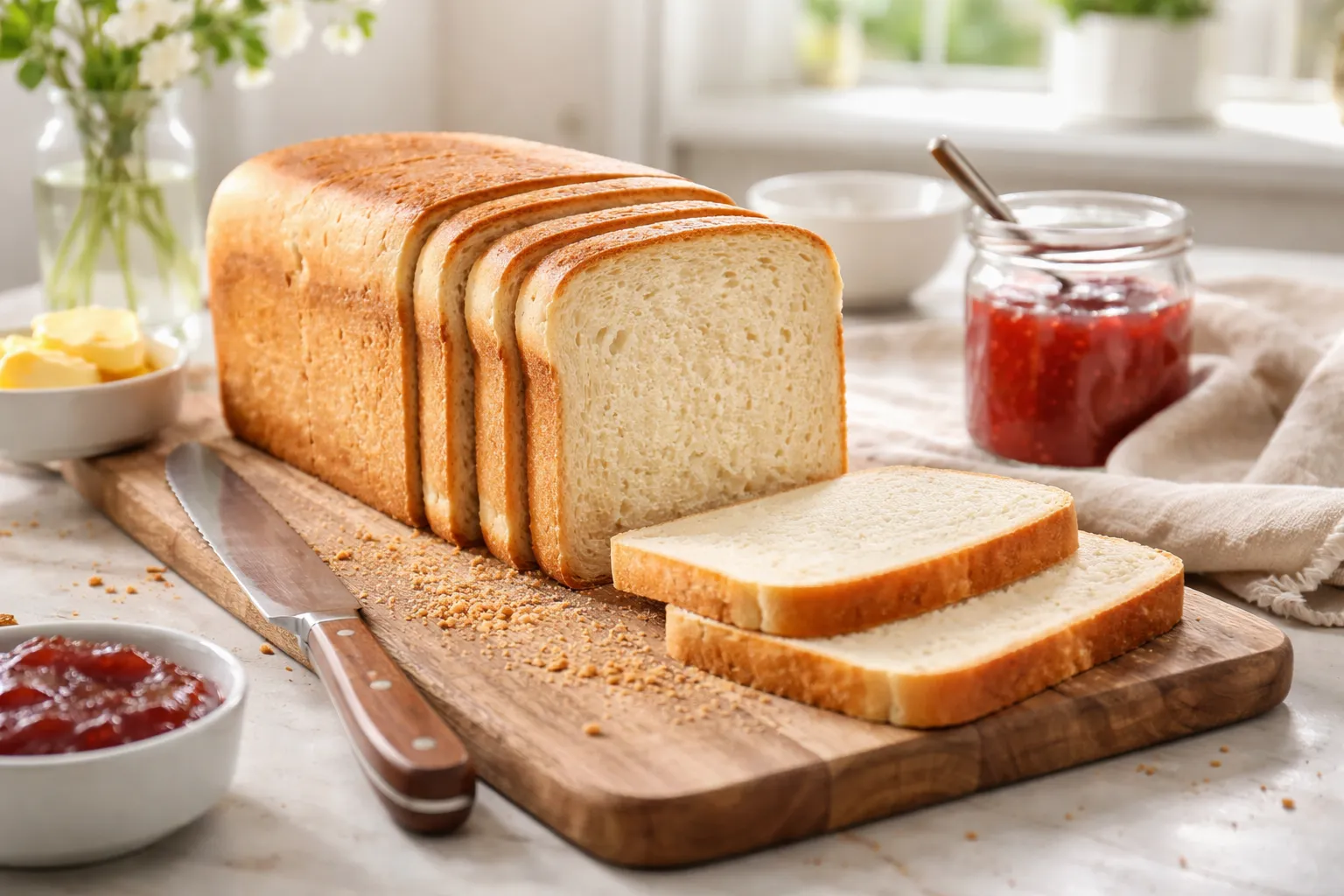
So I decided I was going to crack the soft, sliceable, pullman-style sourdough sandwich loaf. How hard could it be?
Very hard, apparently. My first attempt over-proofed in the pan overnight and turned into the accordion situation I mentioned. The second attempt was so dense it could have been used as a doorstop. By attempt three, I was muttering at my starter like it owed me money. But something clicked on that fourth bake, and now this loaf is on permanent rotation in our house. Here is everything I learned.
The Pan That Finally Stopped My Loaves From Splaying Sideways
A sandwich loaf needs containment—real, reliable containment—or it’ll spread into a squat puddle instead of rising tall enough to actually slice. Regular loaf pans were letting my dough push outward instead of up, and I kept ending up with something closer to focaccia than sandwich bread.
What works
- The cover is a game-changer—it traps steam during the rise so you get real oven spring without the loaf trying to escape over the edges.
- The 9 x 4 dimension keeps the dough tall and narrow, which means you actually get proper sandwich-slicing height instead of a wide, stubby brick.
- It’s heavy enough that it doesn’t warp in a hot oven, and the non-stick coating means I can turn the loaf out clean without that heart-stopping moment where you think it’s going to stick.
What doesn’t
- The cover sits tight, which is good for steam but means you have to remember to remove it for the last 10 minutes of bake, or you’ll get a pale, slightly sweaty crust.
- It’s a legitimate investment for a single loaf pan—USA Pan gear isn’t budget equipment—so this is a “I’m committing to sandwich loaves” purchase, not a casual experiment.
I was skeptical that a covered pan would actually improve my crumb, but the first time I baked in this thing and watched the dough rise straight up instead of sideways, I knew I’d been fighting the wrong battle all along. Get the USA Pan Bakeware Pullman Loaf Pan with Cover, 9 x 4 inch.
This post contains affiliate links. As an Amazon Associate, I earn from qualifying purchases at no extra cost to you.