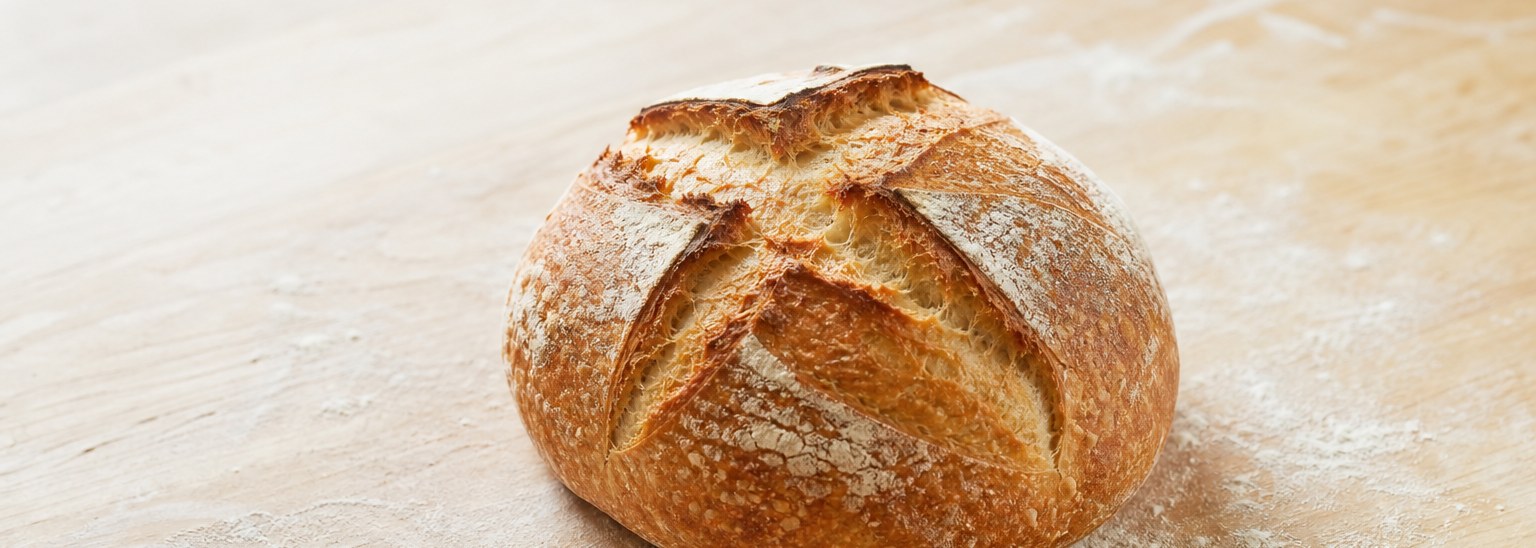
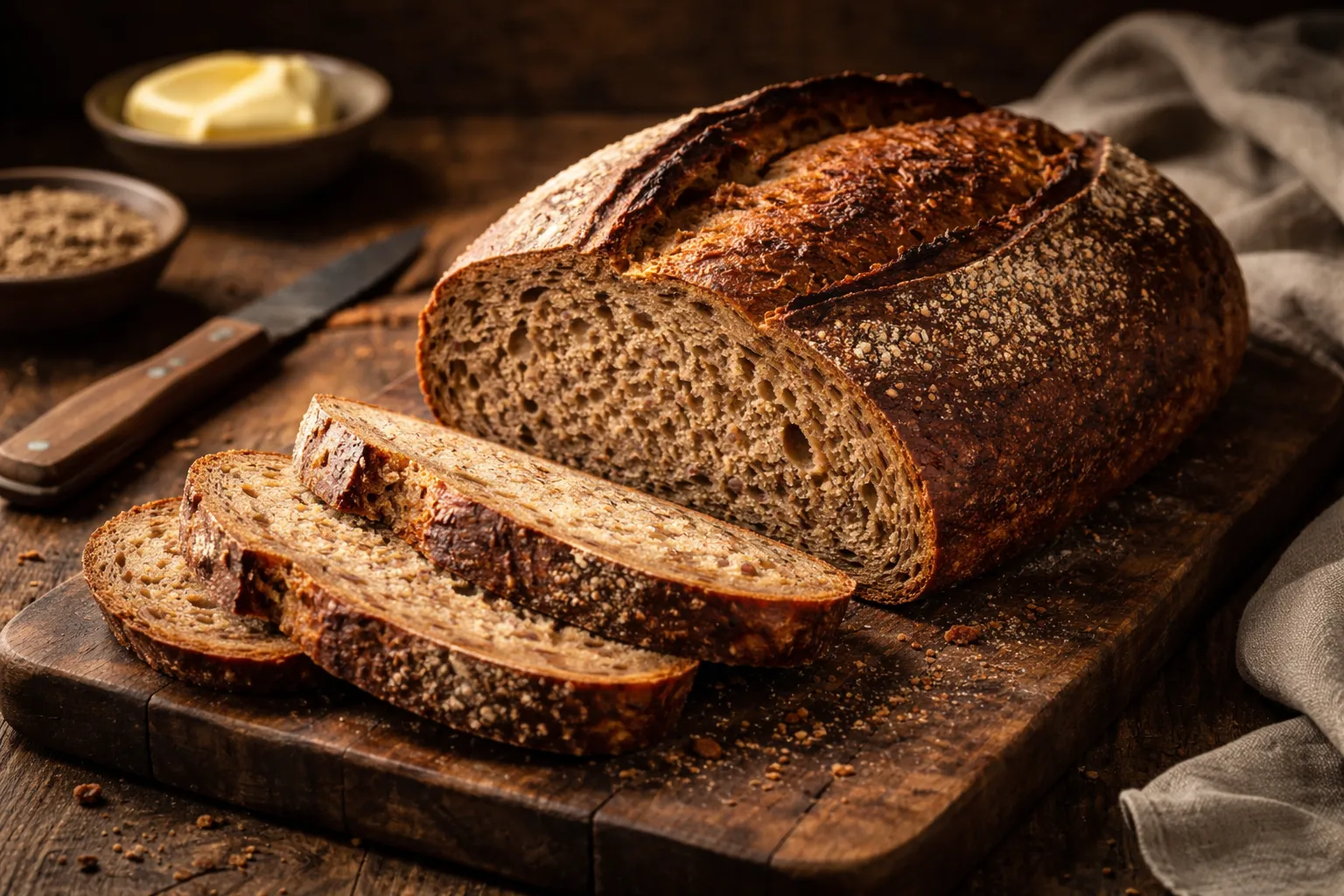
My bread knife is already through the crust before it fully registers what I’m slicing into: a squat two-inch slab, gummy dead center, heavy enough to double as a paperweight. Three days of babying that starter. Every single gram weighed on the scale. A recipe followed word for word, no shortcuts taken anywhere. And this — this sad, deflated brick — is what showed up when I attempted my first true 100 percent whole wheat sourdough loaf. I came within an inch of quitting and cutting my whole wheat with bread flour, exactly like every forum thread kept insisting I should. Thank goodness I didn’t cave.
If any part of that sounds painfully familiar, stick around. A properly baked whole wheat sourdough is one of the most rewarding loaves you’ll ever pull from an oven — but almost nobody tells you upfront just how steep the learning curve is. Once the reasons behind whole wheat’s odd behavior finally click, everything shifts. Here’s every discovery I made, every change I put into practice, and how I eventually landed a loaf worth doing a little kitchen fist-pump over.
| Attribute | Whole Wheat Flour | White Flour |
|---|---|---|
| Water absorption | Aggressive; soaks up liquid far more | Less aggressive |
| Effect on gluten | Bran cuts through gluten strands | Maintains gluten network |
| Dough elasticity | Heavier, less elastic | More elastic |
| Fermentation speed | Faster due to extra nutrients | Slower |
| Volume rise during bulk ferment | About 40-50% | Rises more dramatically |
What Makes True 100 Percent Whole Wheat Sourdough So Tricky
Here’s what’s really happening under the surface. Whole wheat flour keeps the entire kernel — bran, germ, all of it. Nutritionally, that’s a genuine win. Structurally, though, those sharp little bits of bran behave like tiny blades, slicing straight through the gluten network you’re working so hard to develop. Weaker gluten means the dough can’t hold onto gas as well, and dough that can’t hold gas turns out short and dense instead of tall and open. That’s not entirely a technique failure on your part — it’s simply how this flour behaves.
Then there’s the water problem. Whole wheat flour soaks up liquid far more aggressively than white flour ever does. A hydration percentage that turns into a perfectly manageable dough with bread flour will feel like stiff clay the moment you swap in whole wheat. The natural instinct is to just pour in more water to loosen things up — and that’s exactly how you wind up with a slack, sticky puddle that spreads sideways instead of rising upward. My second attempt went straight down that path. Different mistake, same letdown, though I suppose it counted as forward motion.
The third hurdle is how fast fermentation moves. All those extra nutrients packed into whole wheat flour give your starter and the wild yeast in your dough more fuel than white flour would, so things simply happen quicker. That sounds great right up until your dough sails past peak fermentation before you even notice it’s close, tearing apart the gluten structure you spent hours building and handing you right back that flat, gummy loaf you were trying so hard to avoid.
Finding a Whole Wheat Flour That Absorbs Water the Way It Should
Whole wheat flour takes on water in its own stubborn way — pulling in more of it and holding onto that moisture far longer than white flour does — and I had no clue how much that mattered until I switched brands and my dough suddenly stopped fighting me at every turn. If your flour has been sitting on a shelf too long, or swings wildly in protein content from bag to bag, you’ll spend forever chasing a hydration number that never quite settles.
Where This Pays Off
- Mixing goes noticeably smoother since water gets absorbed uniformly, giving you one cohesive mass instead of a shaggy pile that refuses to come together.
- Fermentation stops being a coin flip — your bulk rise becomes predictable, and the dough actually builds real strength instead of staying slack and soupy the whole way through.
- The interior crumb improves dramatically, with genuine open pockets replacing that dense, gummy center that makes you question three straight days of work.
Where It Falls Short
- It’s not sitting on the shelf at most grocery stores, so if you’re used to grabbing whatever flour’s handy, plan on ordering it online ahead of time instead.
- It runs pricier per pound than standard whole wheat flour, and that gap adds up quickly if you’re baking several loaves a week.
I nearly gave up on whole wheat sourdough entirely after that brick loaf—I actually considered it a failed experiment—but switching to this flour changed everything. Grab Bob’s Red Mill Whole Wheat Flour – 5 lb and see if consistency in your flour means consistency in your loaves.
Ingredients
- 500g whole wheat flour
- 425g water (85% hydration)
- 100g active sourdough starter
- 10g salt
- 20g honey (optional, softens the crumb)
Step by Step
- Mix. Combine whole wheat flour and water and autolyse for a full hour – whole wheat bran needs more time to hydrate than white flour. Add the starter, salt, and honey and mix thoroughly.
- Bulk ferment with folds. Do 4 sets of stretch-and-folds over the first 2 hours – whole wheat dough feels heavier and less elastic, and that’s normal.
- Continue bulk fermentation. Let the dough ferment at room temperature for 4-5 hours, until increased by about 40-50% (whole wheat rises less dramatically than white flour).
- Shape. Shape into a tight boule or batard, building surface tension carefully – whole grain bran can cut through gluten strands if handled roughly.
- Proof. Place in a floured banneton and refrigerate overnight, 8-12 hours.
- Score and bake covered. Preheat oven with a Dutch oven inside to 450F (230C). Score and bake covered for 20 minutes.
- Bake uncovered. Remove the lid and bake another 20-25 minutes at 425F (220C) until deeply golden and the internal temperature reads at least 205F.
- Cool completely, at least 2 hours, before slicing – whole wheat loaves need extra time for the crumb to fully set.
Whole wheat flour’s bran acts like tiny blades, cutting through gluten and preventing gas retention. Additionally, whole wheat absorbs water far more aggressively than white flour, and fermentation moves faster due to extra nutrients, causing dough to over-ferment before you notice. Switching to a quality flour with consistent protein content makes a significant difference. The recipe uses 85% hydration (425g water to 500g flour), which accounts for whole wheat’s aggressive water absorption. A hydration percentage that works perfectly with bread flour will feel like stiff clay with whole wheat. Quality flour with consistent protein content helps you achieve predictable, manageable dough at this hydration level. Bulk ferment whole wheat dough at room temperature for 4-5 hours, until increased by about 40-50%. Whole wheat rises less dramatically than white flour because fermentation moves faster due to extra nutrients in the grain. Watch for increased volume rather than relying on timing alone to avoid over-fermentation. Whole wheat dough naturally feels heavier and less elastic than white flour dough, and that’s completely normal. The bran bits cut through gluten strands, so handle the dough carefully during shaping to avoid rupturing it further. Do four sets of stretch-and-folds over the first two hours of bulk fermentation.Frequently Asked Questions
Why is my 100% whole wheat sourdough dense and gummy?
What hydration should I use for whole wheat sourdough?
How long should whole wheat sourdough bulk ferment?
Why does my whole wheat dough feel heavier during stretching?
About This Article

Written by Sam Whitaker. Sam Whitaker has been baking sourdough for over a decade, including three years baking commercially, and now works out of a home kitchen in the Pacific Northwest. Sam's eleven-year-old starter, Harold, is the foundation for every recipe and troubleshooting guide on Sourdough Rising — real bread tested over and over until it works. More about this site.
Scope and limits. Sam is a home baker with no formal culinary training. Follow current food safety guidance for storage and handling, particularly with enriched or filled doughs.
Verify this against a primary source
Specifics change, and your situation may differ from the one described here. These are the authorities worth checking directly:
- USDA FoodData Central — flour and ingredient composition data
- FoodSafety.gov — safe handling and storage