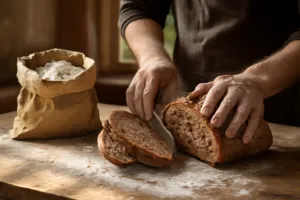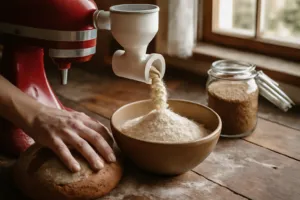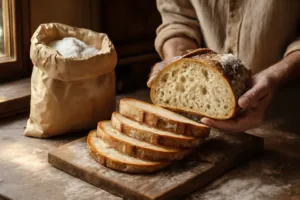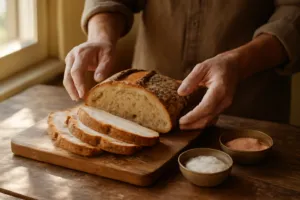
I want to tell you about the time I confidently ordered what I thought was “fancy bread flour” online, proceeded to bake four increasingly dense and confusing loaves over two weekends, and only realized my mistake when my neighbor — who was just being polite about the bread, bless her — asked why my sourdough tasted “almost like a cracker, but wetter.” That was my accidental, chaotic, completely unplanned introduction to high extraction flour sourdough baking. And weirdly? It changed everything.
What Is High Extraction Flour, and Why Does It Sound So Intimidating?
Let me back up. Before the cracker-bread incident, I had been baking sourdough for about two years using standard bread flour and occasionally whole wheat. I was happy. My loaves were decent. Then I fell down a rabbit hole of sourdough forums at midnight (classic mistake) and started reading about high extraction flour like it was some secret weapon that professional bakers were hoarding in a vault somewhere.
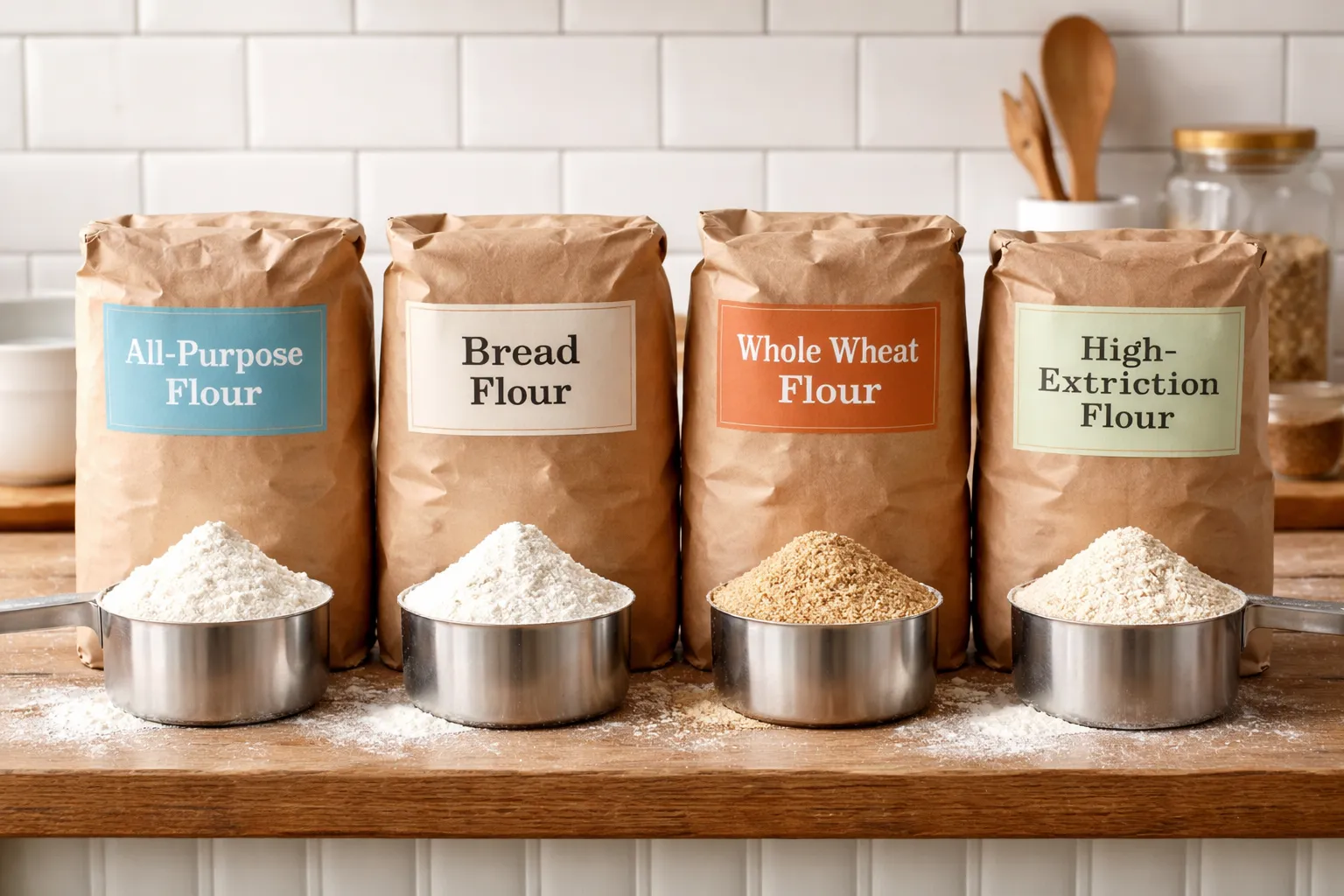
So what actually is it? Extraction rate refers to how much of the wheat berry ends up in your flour after milling. A typical white bread flour has an extraction rate of around 72 to 75 percent, meaning most of the bran and germ have been sifted out. Whole wheat flour is 100 percent extraction — everything stays in. High extraction flour sits in the middle, usually between 80 and 90 percent extraction. It keeps more of the bran and germ than white flour, but not as much as whole wheat.
The result is a flour that looks slightly creamy or tan rather than bright white. It has more mineral content, more natural flavor, and a slightly more complex protein structure. Bakers who use it describe their sourdough as having a deeper, nuttier flavor with a more open crumb than whole wheat allows, but with more character than plain white flour provides. It is basically the middle child that somehow turned out to be the most interesting sibling.
Why Serious Bakers Are Obsessed with High Extraction Flour for Sourdough
Back to my cracker-bread adventure. After my neighbor’s very diplomatic review, I actually sat down and did some real research instead of just reading forum posts at midnight. Here is what I learned about why so many dedicated sourdough bakers are passionate about high extraction flour.
The Flavor Is Genuinely Different
The extra bran and germ particles contain oils, sugars, and minerals that contribute enormous flavor. When your wild yeast and bacteria interact with those compounds during a long ferment, you get a complexity that white flour simply cannot produce. There is a reason bakeries like Tartine became famous using high extraction flour — that wheaty, slightly tangy, deeply satisfying flavor does not happen by accident.
The Fermentation Behaves Differently
Here is where things got interesting for me. High extraction flour ferments faster than white flour because the additional minerals and enzymes give your starter more to work with. This is actually why my early loaves were so dense and weird — I was treating the dough exactly like white flour dough, not accounting for the accelerated fermentation. The dough was over-proofing before I even got to shaping. Mystery solved, cracker-bread explained.
The practical takeaway: if you are switching to or adding high extraction flour to your blend, shorten your bulk fermentation by about 15 to 25 percent compared to what you would do with an all-white dough, especially in a warm kitchen. Watch the dough, not the clock.
Hydration Needs a Little Adjustment
High extraction flour absorbs more water than white flour because the bran particles soak up liquid. You will likely need to increase your hydration slightly — start by adding about 5 percent more water than your usual recipe calls for, then adjust from there. The dough will feel slightly stickier and more alive, which sounds alarming but is actually delightful once you get used to it.
The Flour That Finally Made My High-Extraction Loaves Actually Hold Together
High-extraction flour demands protein content and strength you can’t fake with just any bread flour sitting in the pantry. I needed something that could handle the bran and germ without collapsing into a dense brick, and that’s where King Arthur’s formula became non-negotiable.
What works
- The protein percentage (13.3%) gives you actual gluten development with high-extraction grain—my dough stopped feeling mushy around hour four of bulk fermentation.
- It performs reliably across different hydrations without turning into soup; I’ve pushed loaves to 78% hydration without the dough spreading like pancake batter on the bench.
- The organic version mills slightly coarser than all-purpose, which actually helps you feel the bran particles and adjust your technique instead of guessing.
What doesn’t
- It costs noticeably more per pound than commodity bread flour, which adds up when you’re baking twice a week like I do.
- The organic certification means batch variation is real—I’ve noticed subtle differences in absorption between bags, so you might need to adjust your water slightly bag-to-bag.
I almost abandoned high-extraction baking altogether after those first four disasters, convinced the technique was beyond my skill level—until I actually tested this flour and realized the problem was never me, it was the flour. King Arthur 100% Organic Bread Flour turned those confusing failures into actual loaves.
This post contains affiliate links. As an Amazon Associate, I earn from qualifying purchases at no extra cost to you.