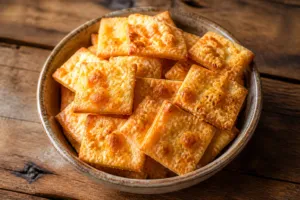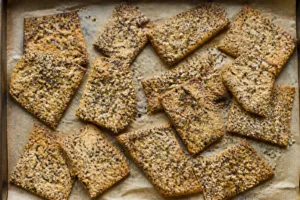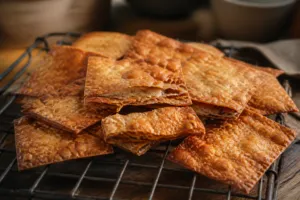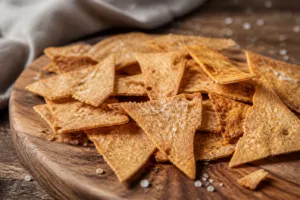
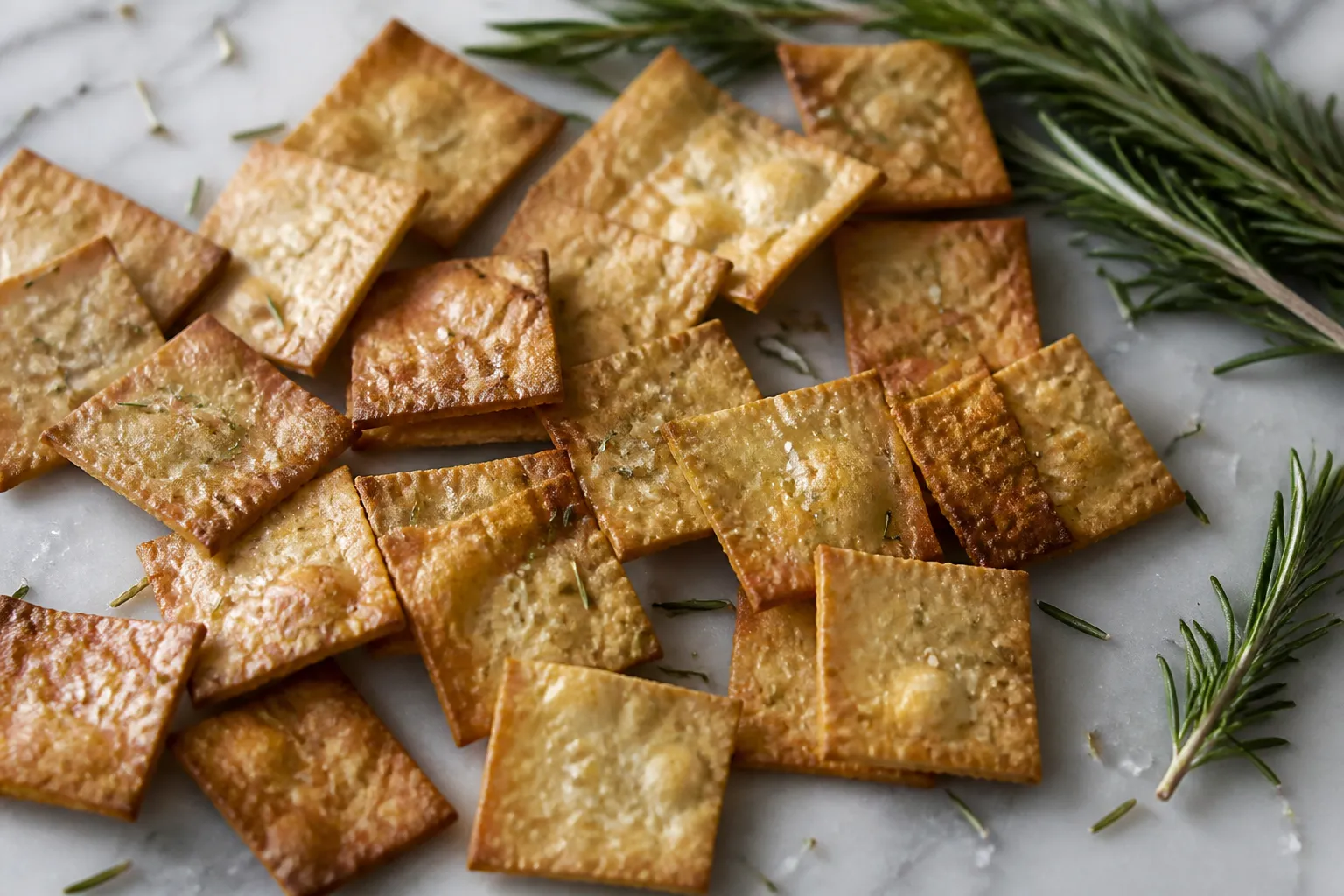
If I had to pick one flavored cracker to make for the rest of my life, it would be rosemary and sea salt. It’s the cracker I served first at every market table because it’s universally loved, it pairs with everything, and it makes the whole kitchen smell incredible while it bakes. After 11 years of baking and three years of microbakery production, these are the seven flavor combinations I come back to again and again — starting with the one that started it all.
The Base Recipe (Same Every Time)
Every flavor here uses the same base dough: 200g sourdough discard, 120g flour, 40g olive oil, 5g salt. The technique never changes — mix, rest, roll thin, dock, bake at 350°F to golden, cool. Only the flavorings change. If you’ve made the plain version, you already know how to make all of these.
1. Rosemary and Sea Salt
The classic. Finely chop 2 tablespoons of fresh rosemary — fresh, not dried; the difference is enormous — and work it into the dough. Brush the rolled dough with good olive oil and finish generously with flaky sea salt before baking. The flaky salt is the whole point: those little crystals give bright bursts of salinity against the piney rosemary. This is the cracker I’d put on any cheese board, next to any wine.
2. Black Pepper and Parmesan
Coarsely cracked black pepper — lots of it — plus 60g finely grated Parmesan worked into the dough. Parmesan is dry and salty, so go easy on the added salt. These are savory, peppery, and addictive, and they crisp beautifully because Parmesan has so little moisture. My second-best seller after the seeded crackers.
3. Za’atar
Two tablespoons of za’atar — the Middle Eastern blend of thyme, sumac, sesame, and salt — mixed into the dough, brushed with olive oil, and topped with a little more za’atar. Tangy, herby, and unlike anything you can buy in a box. These are spectacular with hummus or labneh.
4. Everything Garlic Herb
For a savory, almost garlic-bread cracker: 1 teaspoon garlic powder, 1 tablespoon dried Italian herbs, and a tablespoon of grated Parmesan in the dough. Brush with garlic-infused olive oil before baking. Watch the temperature — garlic powder scorches, so bake these at 325°F and pull them as soon as they’re golden.
5. Smoked Paprika and Sea Salt
One teaspoon of smoked paprika worked through the dough gives a warm, smoky, slightly sweet cracker with a beautiful rust color. A pinch of cayenne alongside it adds a gentle heat. These are wonderful with sharp cheese or alongside a bowl of chili.
6. Fennel and Cracked Pepper
Lightly toast a tablespoon of fennel seeds, crush them coarsely, and add them with plenty of cracked black pepper. The fennel brings a subtle anise sweetness that’s unexpected and sophisticated — this is a cracker for an antipasto board with cured meats.
7. Cinnamon Sugar (Yes, a Sweet One)
People forget crackers can be sweet. Skip the savory salt topping; instead, brush the rolled dough with melted butter and sprinkle generously with cinnamon sugar before baking. The sourdough tang against the cinnamon sugar is genuinely special — like a thin, crisp churro chip. My kids request these more than any other.
Fresh Herbs vs. Dried: It Matters
For rosemary, thyme, and other woody herbs, fresh makes a dramatically better cracker — brighter, more aromatic, less dusty. For blends like za’atar or Italian seasoning, dried is correct and convenient. The one rule: chop fresh herbs finely so they distribute evenly and don’t create weak tear-points in thin dough.
How to Add Flavorings Without Ruining the Dough
Dry spices and finely chopped herbs go straight into the dough at the mixing stage. Coarse toppings — flaky salt, extra seeds, cracked pepper — go onto the oil-brushed surface just before baking, and a gentle roll-over with parchment on top presses them in so they stay put. Anything prone to burning (garlic, onion, sugar) means dropping the oven to 325°F and watching closely.
The Tools Behind Every Batch
These all come together fast with a Danish dough whisk for mixing in the herbs and spices, and a good wooden rolling pin for rolling thin and even. I bake on heavy half-sheet pans lined with parchment paper, cut with a bench scraper, and finish almost all of the savory versions with a good flaky finishing salt — it’s the detail that makes them taste professional.
If you’d rather start from a complete setup, the sourdough baking kit covers the basics, and The Sourdough School by Vanessa Kimbell is my favorite book for understanding the flavor side of fermentation.
One Dough, Endless Crackers
This is what I love most about cracker baking: a single, simple base dough becomes a dozen different crackers depending on what’s in your spice drawer and herb garden. Master the plain recipe, then treat these seven as a starting point. Some of my best-loved flavors came from just opening the cabinet and trying something. Your discard will never go to waste again.
This post contains affiliate links. As an Amazon Associate I earn from qualifying purchases.
The One Tool That Keeps My Cracker Dough From Tearing
Cracker dough is stiff and unforgiving — when you’re mixing in seeds, salt, and herbs without a proper tool, you either end up with a lumpy mess or a sore shoulder. A good dough whisk cuts through that resistance without overworking the gluten the way a wooden spoon does.
What works
- The flat spring design breaks up dry pockets of flour and distributes flavoring mix-ins evenly without creating hot spots in the dough.
- It handles thick, stiff cracker dough without bending or flexing the way a regular whisk does — you get actual leverage and control.
- Clean-up is instant because nothing gets tangled in the wires the way it does with a balloon whisk.
What doesn’t
- It’s not great for finishing incorporated dough — the flat springs don’t cream butter or smooth out lumps the way a regular whisk does.
- The handle is narrow enough that after 20 batches, your hand starts to feel it.
I nearly switched back to a wooden spoon after one batch where I underestimated how thick the dough would get, but that’s exactly when the whisk proved itself — it powered through what would have been an arm-breaking mix. You can grab a Danish dough whisk for under $20.
This post contains affiliate links. As an Amazon Associate, I earn from qualifying purchases at no extra cost to you.