Most home bakers treat dried fruit, nuts, and spices as an afterthought — a handful tossed into an otherwise ordinary dough at the last second, just for show. That assumption falls apart the first time a fistful of dried cherries or a cup of walnuts changes how a loaf hydrates, rises, and holds together. Get the balance right and cherries, walnuts, cardamom, and olives stop being garnish and become the entire reason the loaf works, turning every slice into its own small study in flavor and texture.
Below are 10 well-known sourdough builds that put this idea to the test, each one paired with a full ingredient breakdown, a clear walk-through of the process, and a sense of what the finished loaf should look like. Whether you’re leaning toward something warm and spiced or savory and nut-heavy, one of these ten ought to hit the mark.
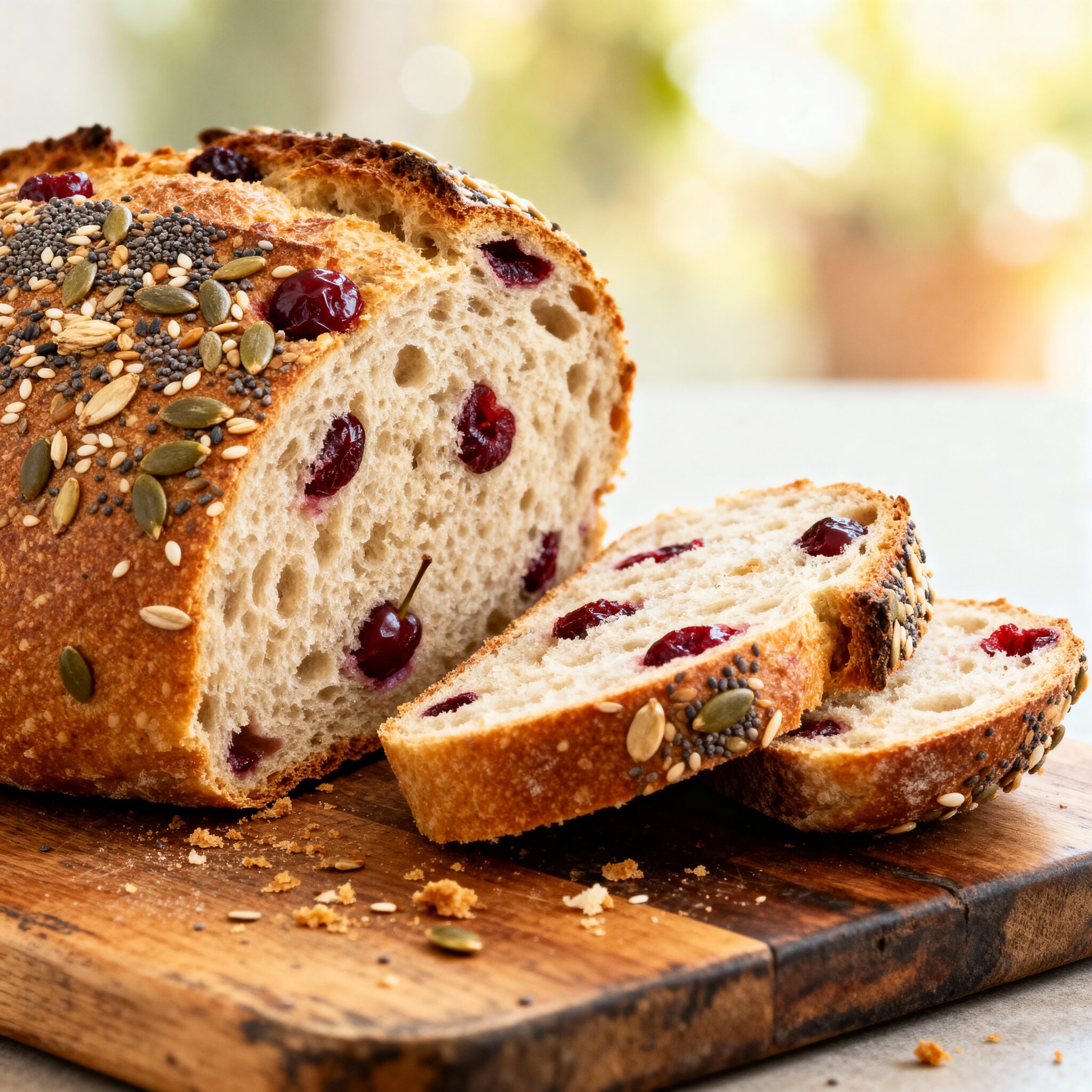
1. Dried Cherry Sourdough Wrapped in a Sunflower-Poppy Seed Crust
Sweet-tart dried cherries meet the familiar tang of sourdough in this loaf, and the whole thing gets pressed into a crackly seed shell before it hits the oven. Sunflower and poppy seeds on the crust aren’t just there for looks — they add real crunch and turn the exterior into something worth photographing.
Ingredients
For the Dough:
- 100g active, bubbly sourdough starter
- 400g bread flour
- 100g whole wheat flour
- 350g water, warmed to 80-85°F
- 10g salt
- 150g tart dried cherries, roughly chopped
For the Seed Crust:
- 2 tablespoons sunflower seeds
- 2 tablespoons poppy seeds
- 1 tablespoon sesame seeds
- 1 tablespoon water, for brushing the surface
Instructions
1. Mix the dough: Stir the starter, both flours, and the water together in a large bowl until no dry patches remain. Cover it and walk away for 30 minutes.
2. Add salt: Scatter the salt over the surface and work it in using a pinching-and-folding motion, continuing for 2-3 minutes until it’s fully absorbed.
3. Bulk fermentation: Run 4 rounds of stretch-and-fold, spaced 30 minutes apart, over a 2-hour window. By the end, the dough should feel smooth and springy.
4. Add cherries: Right after the third fold, fold the chopped cherries in gently so you don’t knock the air back out of the dough.
5. Continue bulk fermentation: Leave the dough at room temperature (70-75°F) for 2-3 more hours, until it’s puffed up by roughly 50%.
6. Shape: Turn the dough onto a lightly floured surface. Shape into a tight round boule, then place seam-side up in a proofing basket.
7. Cold proof: Cover it and slide it into the fridge for 12-24 hours.
8. Prepare to bake: Preheat your Dutch oven to 500°F for 45 minutes. Brush the top of the loaf with water and generously sprinkle with the seed mixture.
9. Bake: Score the loaf, then bake covered at 500°F for 20 minutes. Reduce heat to 450°F, remove lid, and bake for another 20-25 minutes until golden brown.
10. Cool: Set it on a wire rack and let it cool all the way before you cut in.
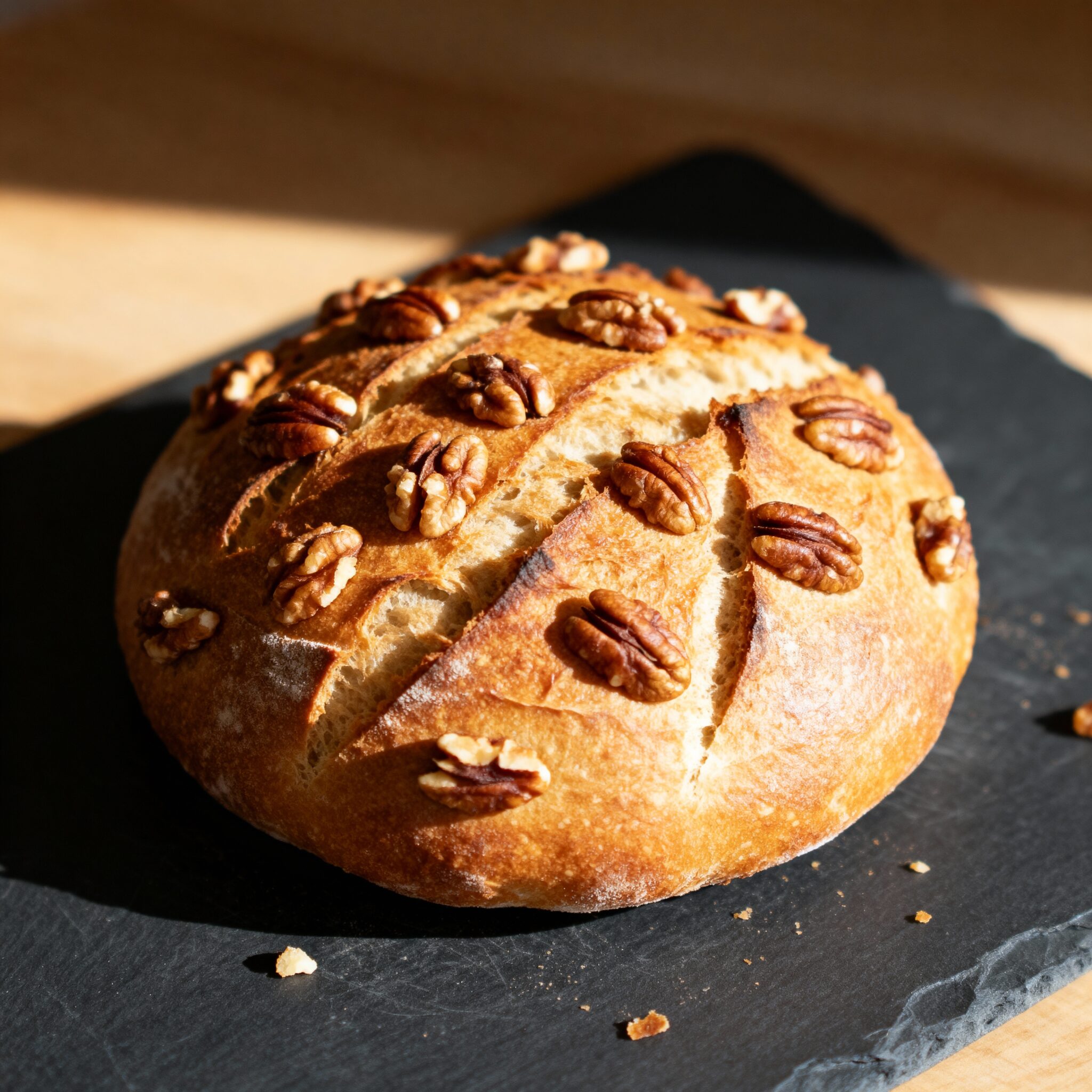
2. Honey-Sweetened Sourdough with Roasted Walnuts
A quiet sweetness from honey balances the tang of the sourdough here, while toasted walnuts bring a rich, nutty bite and satisfying crunch. Expect a soft, tender crumb that makes for excellent breakfast toast.
Ingredients
- 100g active sourdough starter
- 450g bread flour
- 50g whole wheat flour
- 350g water, warmed to 80-85°F
- 10g salt
- 2 tablespoons honey
- 150g walnuts, toasted and roughly chopped
Instructions
1. Toast walnuts: Spread the walnuts on a sheet pan and toast at 350°F for 8-10 minutes, until they smell fragrant. Let them cool fully before continuing.
2. Mix the dough: Combine the starter, both flours, water, and honey in a large bowl until a rough, shaggy dough comes together. Cover and let it sit for 30 minutes.
3. Add salt: Work the salt in with the pinch-and-fold method until it disappears completely into the dough.
4. Bulk fermentation: Complete 4 rounds of stretch-and-fold at 30-minute intervals. The dough should turn smooth and elastic by the end.
5. Add walnuts: After the third fold, fold in the cooled, toasted, chopped walnuts.
6. Continue rising: Allow the dough to sit at room temperature for 2-3 hours, until it’s grown by about half.
7. Shape: Shape into a tight boule and place seam-side up in a proofing basket.
8. Cold proof: Slide it into the fridge for 12-24 hours.
9. Bake: Preheat Dutch oven to 500°F. Score and bake covered at 500°F for 20 minutes, then uncovered at 450°F for 20-25 minutes.
10. Cool: Let it cool completely before slicing into it.
3. Warm-Spiced Fruited Sourdough Loaf
This one is loaded with plump dried fruit and layered with warming spice. Cinnamon, mixed spice, and orange zest come together for a complex, cozy flavor that suits a slow breakfast or an afternoon cup of tea equally well.
Ingredients
For the Dough:
- 100g active sourdough starter
- 400g bread flour
- 100g whole wheat flour
- 350g water, warmed to 80-85°F
- 10g salt
- 1 teaspoon ground cinnamon
- 1/2 teaspoon mixed spice (pumpkin pie spice works too)
- Zest from 1 orange
For the Fruit:
- 100g dried apricots, chopped
- 100g raisins
- 50g dried cranberries
- 2 tablespoons orange juice, for plumping the fruit
Instructions
1. Plump the fruit: Toss the dried fruit with the orange juice and let it sit for 30 minutes. Pour off any leftover liquid before you use it.
2. Mix the dough: Combine the starter, flours, water, spices, and orange zest until a shaggy dough forms. Cover it and rest for 30 minutes.
3. Add salt: Work the salt in using the pinch-and-fold technique.
4. Bulk fermentation: Complete 4 rounds of stretch-and-fold, 30 minutes apart.
5. Add fruit: Right after the third fold, gently fold in the plumped, drained fruit.
6. Continue rising: Let the dough sit at room temperature for 2-3 hours until it’s up by about 50%.
7. Shape: Shape into a tight boule and place in proofing basket.
8. Cold proof: Refrigerate for 12-24 hours.
9. Bake: Preheat Dutch oven to 500°F. Score and bake covered for 20 minutes, then uncovered at 450°F for 20-25 minutes.
10. Cool: Let it cool all the way before slicing. It’s especially good toasted with a swipe of butter.
4. Fig, Raisin, and Walnut Sourdough
Chewy, sweet dried figs, the tang of raisins, and a rich crunch from walnuts come together in this hearty loaf. It’s a complex, filling bread that earns its place on a cheese board or works fine on its own as a snack.
Ingredients
- 100g active sourdough starter
- 400g bread flour
- 100g whole wheat flour
- 350g water, warmed to 80-85°F
- 10g salt
- 100g dried figs, chopped
- 100g raisins
- 150g walnuts, toasted and chopped
- 2 tablespoons pepitas (pumpkin seeds)
- 2 tablespoons sunflower seeds
Instructions
1. Toast nuts and seeds: Toast the walnuts, pepitas, and sunflower seeds together at 350°F for 8-10 minutes, then let them cool.
2. Prepare figs: Soak the chopped figs in warm water for 15 minutes to soften them, then drain well.
3. Mix the dough: Combine the starter, flours, and water until shaggy. Cover it and let it rest for 30 minutes.
4. Add salt: Work the salt in with the pinch-and-fold method.
5. Bulk fermentation: Complete 4 rounds of stretch-and-fold at 30-minute intervals.
6. Add inclusions: After the third fold, gently work in the figs, raisins, walnuts, and seeds.
7. Continue rising: Let the dough sit at room temperature for 2-3 hours until it’s grown by roughly half.
8. Shape: Shape into a tight boule. Sprinkle additional seeds on top before placing in proofing basket.
9. Cold proof: Refrigerate for 12-24 hours.
10. Bake: Preheat Dutch oven to 500°F. Score and bake covered for 20 minutes, then uncovered at 450°F for 20-25 minutes.
11. Cool: Let it cool completely before slicing.
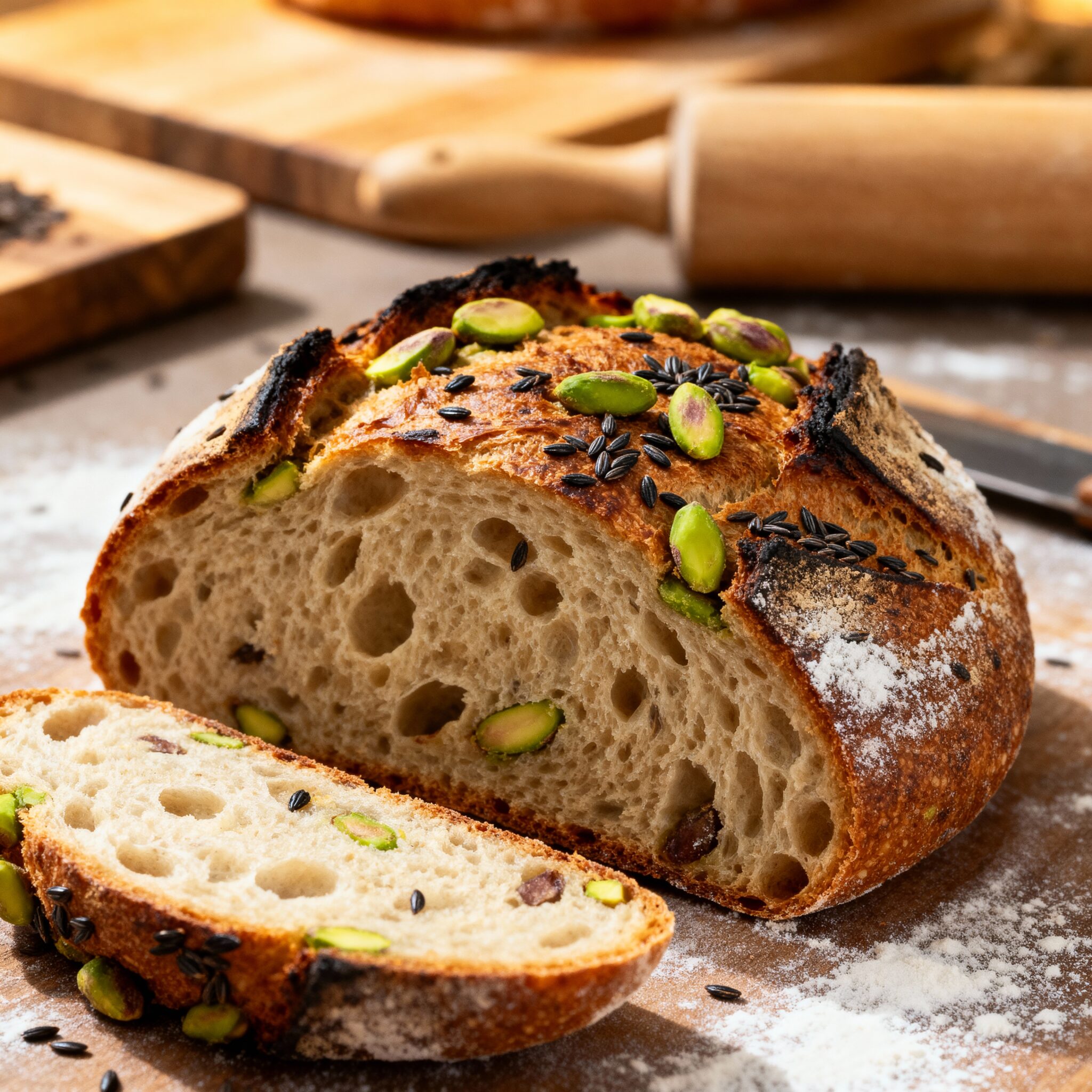
5. Pistachio and Caraway Seed Sourdough
A quiet sweetness from pistachios meets the distinctive, faintly anise flavor of caraway seeds in this unusual loaf. The result is a fragrant, complex bread with a soft crumb and a nutty aroma that fills the kitchen while it bakes.
Ingredients
- 100g active sourdough starter
- 450g bread flour
- 50g whole wheat flour
- 350g water, warmed to 80-85°F
- 10g salt
- 150g shelled pistachios, roughly chopped
- 2 tablespoons caraway seeds
- 1 tablespoon olive oil
Instructions
1. Toast pistachios and caraway: Toast the pistachios at 350°F for 8 minutes. Separately, toast the caraway seeds in a dry skillet over medium heat for 2 minutes until fragrant. Let both cool.
2. Mix the dough: Combine the starter, flours, water, and olive oil until shaggy. Cover and let it rest for 30 minutes.
3. Add salt: Work the salt in using the pinch-and-fold method.
4. Bulk fermentation: Complete 4 rounds of stretch-and-fold at 30-minute intervals.
5. Add pistachios and caraway: After the third fold, fold in the pistachios and caraway seeds.
6. Continue rising: Let the dough sit at room temperature for 2-3 hours until it’s up by about 50%.
7. Shape: Shape into a tight boule and place in proofing basket.
8. Cold proof: Refrigerate for 12-24 hours.
9. Bake: Preheat Dutch oven to 500°F. Score and bake covered for 20 minutes, then uncovered at 450°F for 20-25 minutes.
10. Cool: Let it cool completely before slicing.
6. Cardamom-Spiced Cranberry Orange Sourdough
Bright, tart cranberries pair naturally with orange zest and the exotic warmth of cardamom in this loaf. It’s a festive, flavor-packed bread that works just as well during the holidays as it does any random weeknight.
Ingredients
- 100g active sourdough starter
- 400g bread flour
- 100g whole wheat flour
- 350g water, warmed to 80-85°F
- 10g salt
- 1 teaspoon ground cardamom
- Zest from 1 large orange
- 150g dried cranberries
- 2 tablespoons orange juice
Instructions
1. Prepare cranberries: Let the dried cranberries soak in the orange juice for 30 minutes so they plump back up.
2. Mix the dough: Combine the starter, flours, water, cardamom, and orange zest until shaggy. Cover and rest for 30 minutes.
3. Add salt: Work the salt in using the pinch-and-fold method.
4. Bulk fermentation: Complete 4 rounds of stretch-and-fold at 30-minute intervals.
5. Add cranberries: After the third fold, drain off the extra juice and gently fold the plumped cranberries into the dough.
6. Continue rising: Let the dough sit at room temperature for 2-3 hours until it’s grown by about 50%.
7. Shape: Shape into a tight boule and place in proofing basket.
8. Cold proof: Refrigerate for 12-24 hours.
9. Bake: Preheat Dutch oven to 500°F. Score and bake covered for 20 minutes, then uncovered at 450°F for 20-25 minutes.
10. Cool: Let it cool completely before slicing.
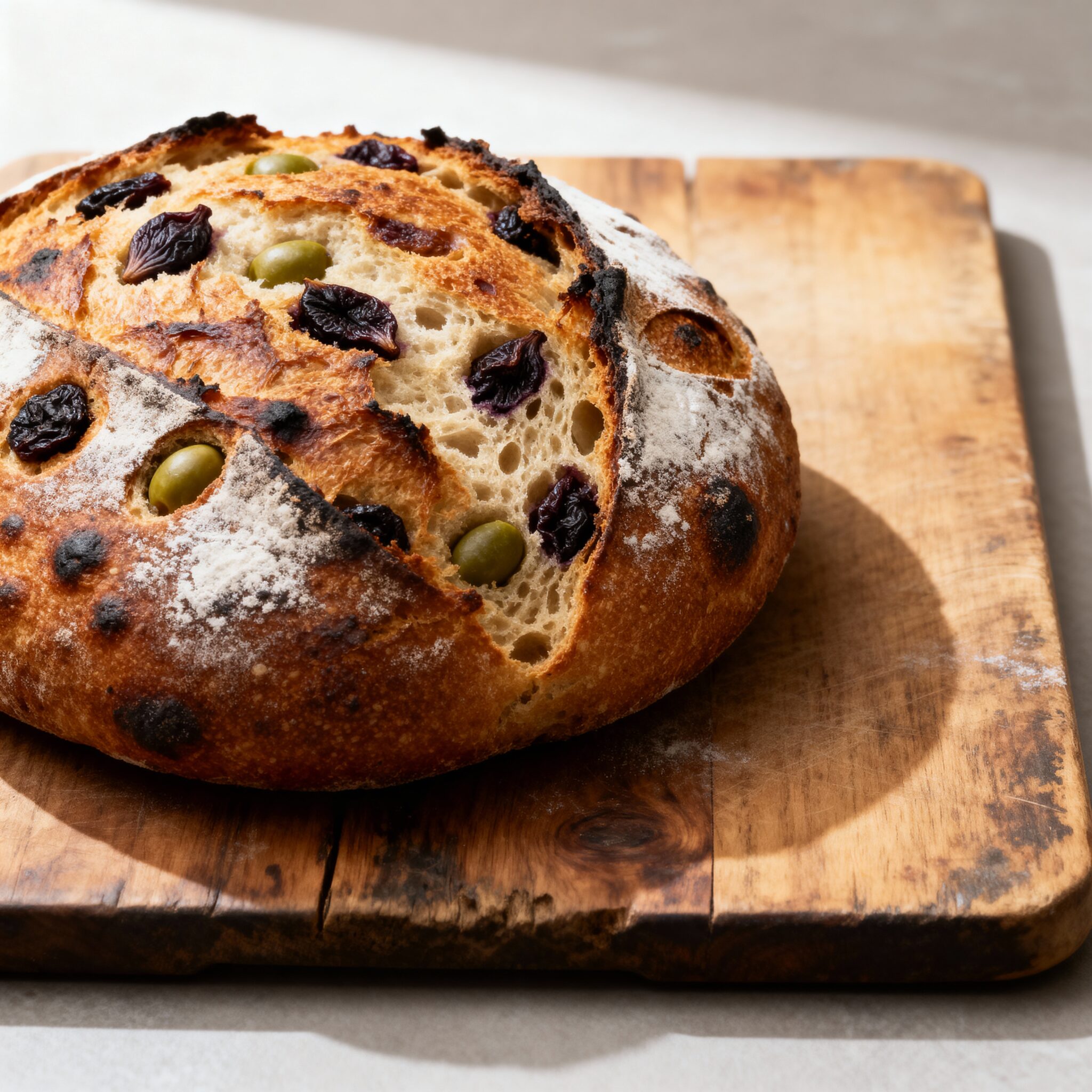
7. Fig and Olive Sourdough Loaf
This Mediterranean-leaning loaf sets the natural sweetness of figs against the brininess of olives in one savory-sweet bread. It works beautifully on a cheese board, alongside charcuterie, or simply dipped in good olive oil.
Ingredients
- 100g active sourdough starter
- 400g bread flour
- 100g whole wheat flour
- 350g water, warmed to 80-85°F
- 10g salt
- 150g dried figs, chopped
- 100g pitted Kalamata olives, roughly chopped
- 2 tablespoons fresh rosemary, chopped
- 1 tablespoon olive oil
Instructions
1. Prepare figs: Soak the chopped figs in warm water for 15 minutes to soften, then drain.
2. Mix the dough: Combine the starter, flours, water, and olive oil until shaggy. Cover and rest for 30 minutes.
3. Add salt: Work the salt in using the pinch-and-fold method.
4. Bulk fermentation: Complete 4 rounds of stretch-and-fold at 30-minute intervals.
5. Add inclusions: After the third fold, gently work in the figs, olives, and rosemary.
6. Continue rising: Let the dough sit at room temperature for 2-3 hours until it’s grown by about 50%.
7. Shape: Shape into a tight boule and place in proofing basket.
8. Cold proof: Refrigerate for 12-24 hours.
9. Bake: Preheat Dutch oven to 500°F. Score and bake covered for 20 minutes, then uncovered at 450°F for 20-25 minutes.
10. Cool: Let it cool completely before slicing. Try it with olive oil and a splash of balsamic.
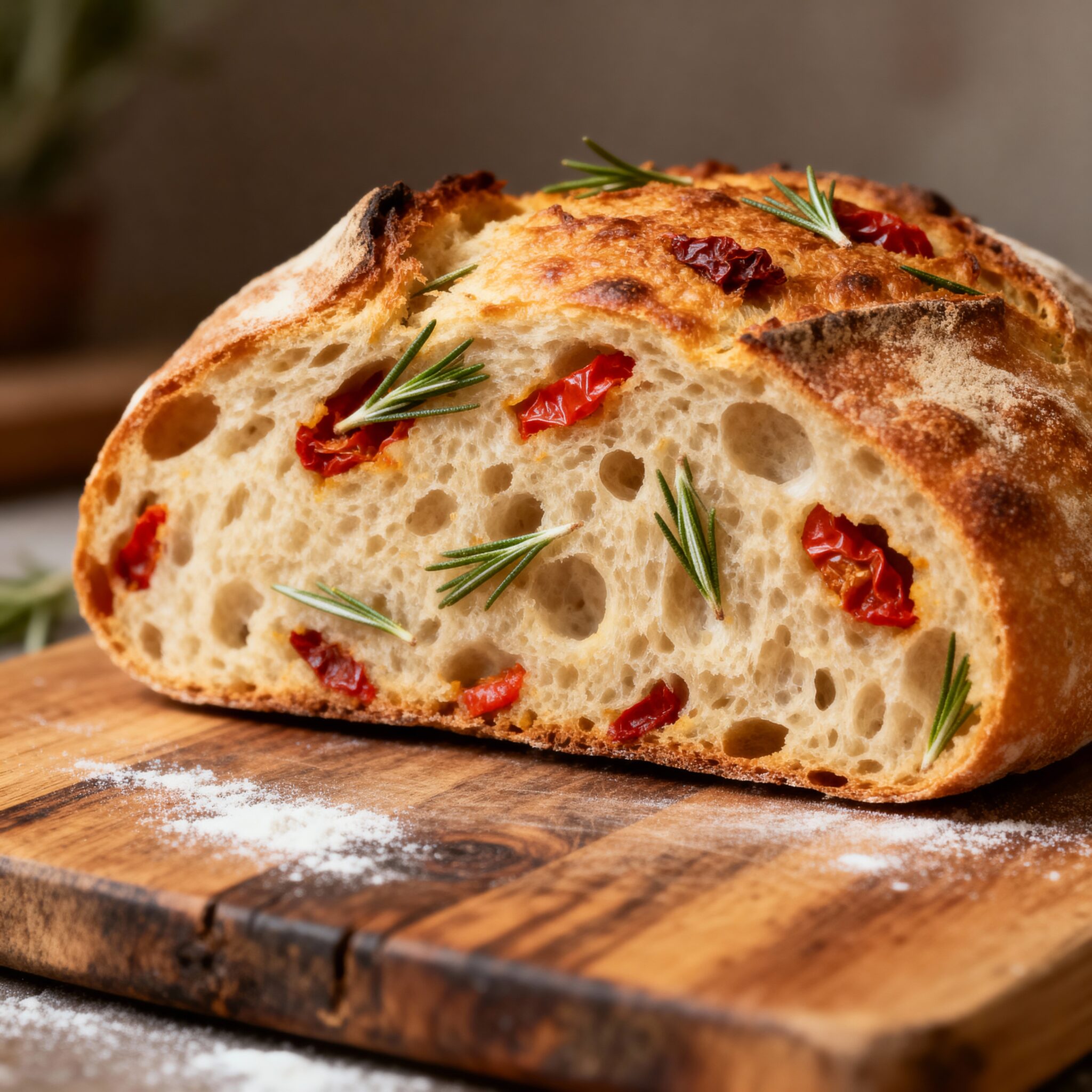
8. Rosemary Sun-Dried Tomato Sourdough
This savory loaf leans hard into Mediterranean flavor. Fragrant rosemary and intensely flavored sun-dried tomatoes combine for a bold, satisfying bread that works well in sandwiches or set alongside a meal.
Ingredients
- 100g active sourdough starter
- 400g bread flour
- 100g whole wheat flour
- 350g water, warmed to 80-85°F
- 10g salt
- 100g oil-packed sun-dried tomatoes, drained and chopped
- 3 tablespoons fresh rosemary, chopped
- 2 tablespoons olive oil, reserved from the tomatoes
- 1 teaspoon garlic powder (optional)
Instructions
1. Prepare tomatoes: Drain the sun-dried tomatoes and set the oil aside. Chop the tomatoes into small pieces.
2. Mix the dough: Combine the starter, flours, water, the reserved oil, and garlic powder if you’re using it. Mix until shaggy, cover, and rest for 30 minutes.
3. Add salt: Work the salt in using the pinch-and-fold method.
4. Bulk fermentation: Complete 4 rounds of stretch-and-fold at 30-minute intervals.
5. Add inclusions: After the third fold, gently work in the sun-dried tomatoes and rosemary.
6. Continue rising: Let the dough sit at room temperature for 2-3 hours until it’s grown by about 50%.
7. Shape: Shape into a tight boule and place in proofing basket.
8. Cold proof: Refrigerate for 12-24 hours.
9. Bake: Preheat Dutch oven to 500°F. Score and bake covered for 20 minutes, then uncovered at 450°F for 20-25 minutes.
10. Cool: Let it cool completely before slicing. It shines in sandwiches or dipped in olive oil.
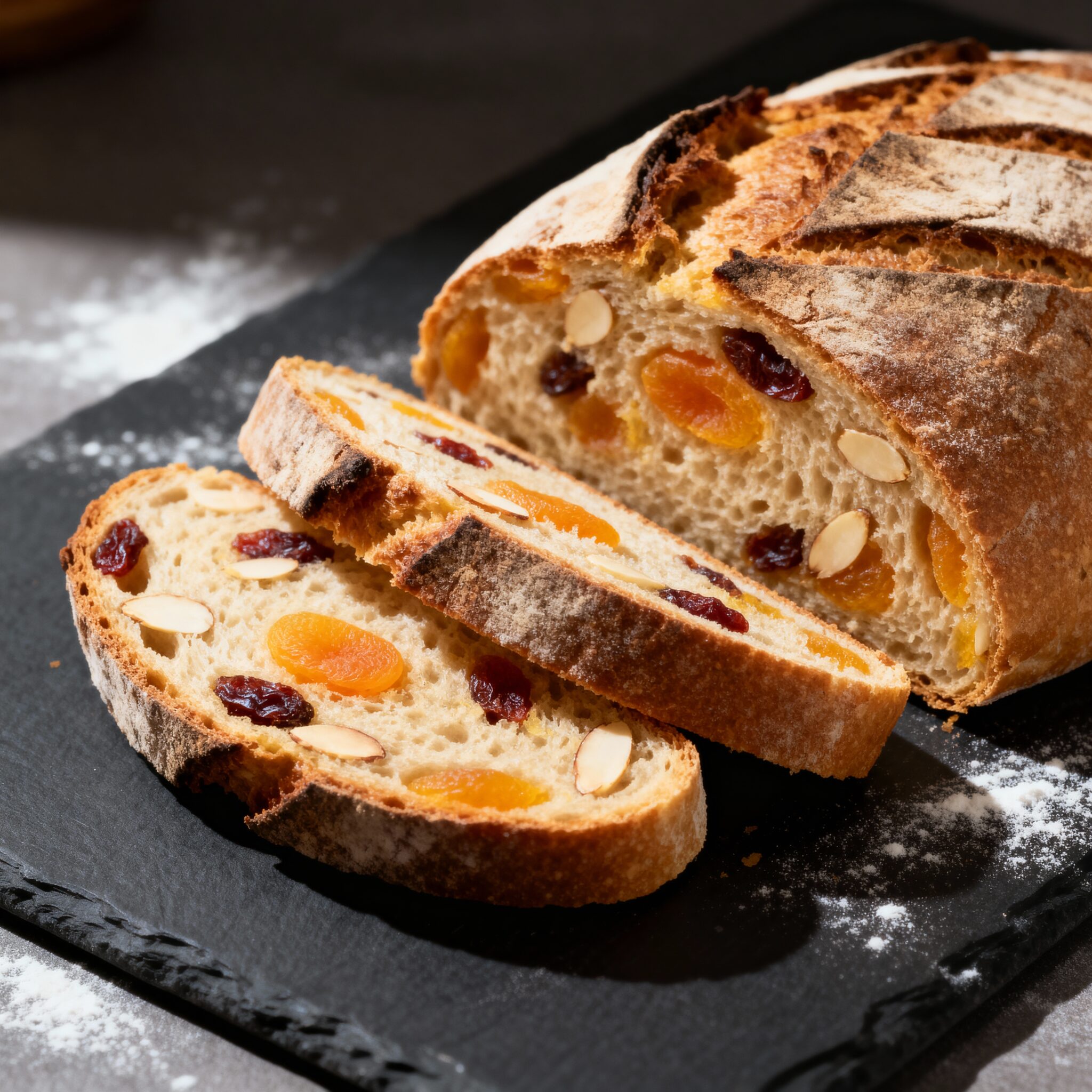
9. Apricot Almond Sourdough Bread
Delicate, sweet apricots meet the rich, nutty character of almonds in this loaf. Expect a tender crumb and a gentle sweetness that makes it a natural fit for breakfast or an afternoon tea break.
Ingredients
- 100g active sourdough starter
- 400g bread flour
- 100g whole wheat flour
- 350g water, warmed to 80-85°F
- 10g salt
- 150g dried apricots, chopped
- 150g almonds, toasted and roughly chopped
- 1 tablespoon honey
- 1/2 teaspoon almond extract
Instructions
1. Toast almonds: Toast the almonds at 350°F for 8-10 minutes, until golden and fragrant. Let them cool, then roughly chop.
2. Prepare apricots: Soak the chopped apricots in warm water for 15 minutes to soften, then drain.
3. Mix the dough: Combine the starter, flours, water, honey, and almond extract until shaggy. Cover and rest for 30 minutes.
4. Add salt: Work the salt in using the pinch-and-fold method.
5. Bulk fermentation: Complete 4 rounds of stretch-and-fold at 30-minute intervals.
6. Add inclusions: After the third fold, gently work in the apricots and almonds.
7. Continue rising: Let the dough sit at room temperature for 2-3 hours until it’s grown by about 50%.
8. Shape: Shape into a tight boule and place in proofing basket.
9. Cold proof: Refrigerate for 12-24 hours.
10. Bake: Preheat Dutch oven to 500°F. Score and bake covered for 20 minutes, then uncovered at 450°F for 20-25 minutes.
11. Cool: Let it cool completely before slicing. It’s delicious toasted with butter or a smear of cream cheese.
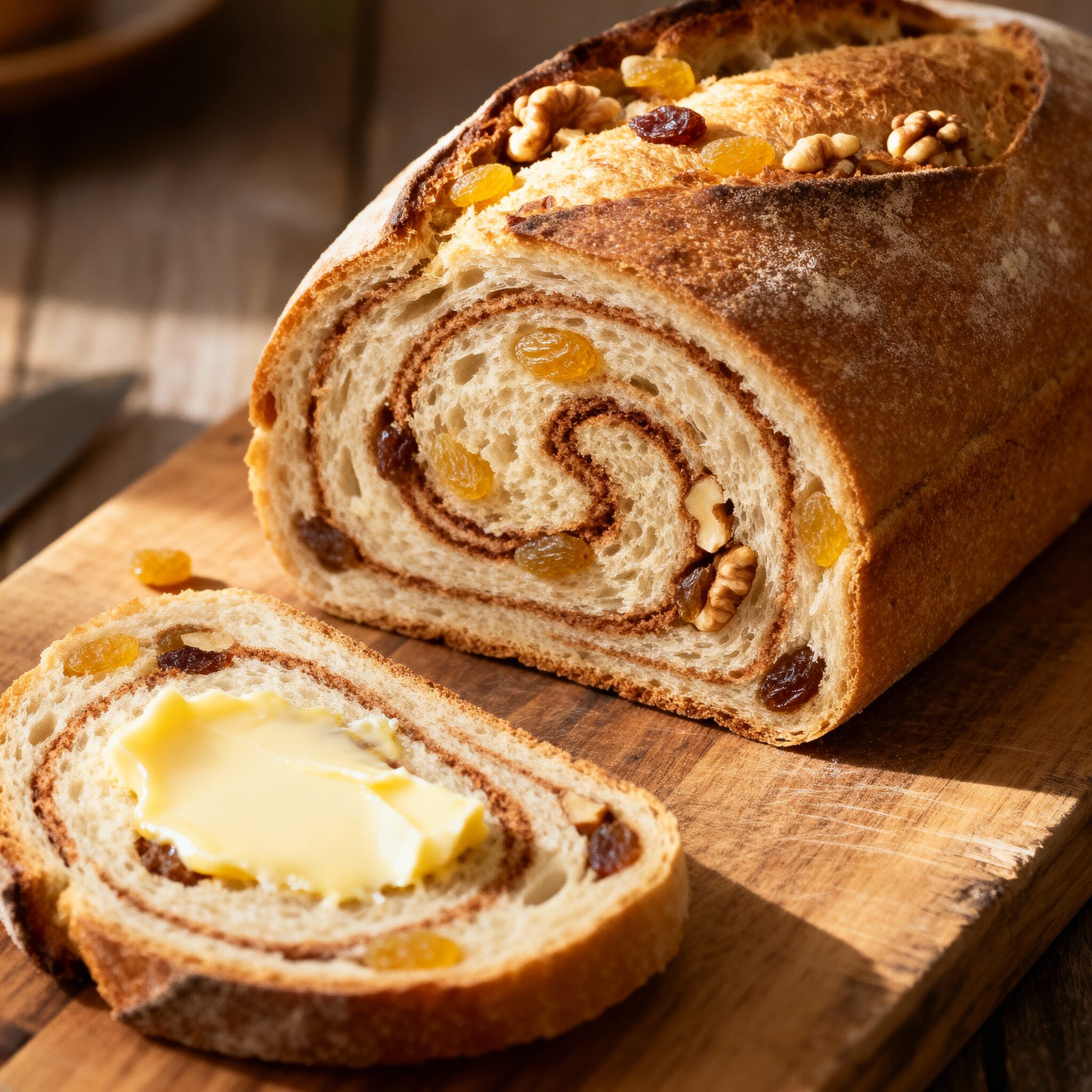
10. Cinnamon Raisin Walnut Sourdough
A pairing that never really goes out of fashion. Plump raisins, crunchy walnuts, and warm cinnamon run all the way through this loaf, making it an easy pick for breakfast toast, especially topped with butter or cream cheese.
Ingredients
- 100g active sourdough starter
- 400g bread flour
- 100g whole wheat flour
- 350g water, warmed to 80-85°F
- 10g salt
- 2 teaspoons ground cinnamon
- 150g raisins
- 150g walnuts, toasted and roughly chopped
- 2 tablespoons brown sugar (optional, for a little extra sweetness)
Instructions
1. Toast walnuts: Toast the walnuts at 350°F for 8-10 minutes, until fragrant. Let them cool, then roughly chop.
2. Prepare raisins: Soak the raisins in warm water for 15 minutes to plump them, then drain.
3. Mix the dough: Combine the starter, flours, water, cinnamon, and brown sugar if using. Mix until shaggy, cover, and rest for 30 minutes.
4. Add salt: Work the salt in using the pinch-and-fold method.
5. Bulk fermentation: Complete 4 rounds of stretch-and-fold at 30-minute intervals.
6. Add inclusions: After the third fold, gently work in the raisins and walnuts.
7. Continue rising: Let the dough sit at room temperature for 2-3 hours until it’s grown by about 50%.
8. Shape: Shape into a tight boule and place in proofing basket.
9. Cold proof: Refrigerate for 12-24 hours.
10. Bake: Preheat Dutch oven to 500°F. Score and bake covered for 20 minutes, then uncovered at 450°F for 20-25 minutes.
11. Cool: Let it cool completely before slicing. It’s best toasted and served with butter.
Getting It Right
Working Inclusions Into the Dough
- Timing matters more than you’d think: Work fruits, nuts, and spices in during the third or fourth stretch-and-fold so they distribute evenly without knocking the air out of the dough.
- Soak dried fruit ahead of time: A soak in warm water or juice plumps dried fruit back up and stops it from stealing moisture out of the dough later on.
- Toast your nuts and seeds first: A quick toast before mixing brings out more flavor and keeps them from turning soft and soggy once baked.
Managing the Dough Itself
- Stay gentle: Fold inclusions in with a light touch — rough handling here will deflate the dough fast.
- Spread things out evenly: Make sure whatever you’re adding is distributed all through the dough so every slice tastes consistent.
- Watch your hydration: Certain add-ins, dried fruit especially, can leave the dough tackier than usual — cut the water back slightly or add a touch more flour if needed.
Baking Considerations
- Score with care: Large chunks of fruit or nuts near the surface can catch your blade, so score around them thoughtfully.
- Keep an eye on bake time: A loaf packed with inclusions may need a few extra minutes to make sure the center bakes all the way through.
- Don’t rush the cooling: Give sourdough time to cool fully before you slice it — this is what sets the crumb and keeps it from turning gummy.
Wrapping Up
These 10 loaves are really just proof of how far sourdough can stretch. Whether your taste runs sweet and spiced or savory and nutty, there’s a version above built for it. What separates a good result from a mediocre one usually comes down to quality ingredients, sticking to the timing, and handling the dough gently once the inclusions go in.
At the end of the day, sourdough is equal parts science and art. Don’t hesitate to try your own combinations of fruit, spice, and nuts beyond what’s listed here — every loaf is a chance to build something that’s genuinely yours. Happy baking!
The Dutch Oven That Finally Gave Me Oven Spring with Fruit-Heavy Doughs
A sourdough loaded with dried fruit, nuts, and spice is naturally denser and heavier than a plain loaf, which means it needs real, trapped steam to climb properly in the oven. Skip a good Dutch oven and all those mix-ins just weigh the dough down, leaving you with a flat, gummy crumb instead of the open, airy interior these loaves are supposed to have.
Where it earns its keep
- The heat retention is noticeably better than I expected — even a heavy cherry-walnut dough that used to barely budge in my old pot now shows real oven spring.
- The lid holds a tight enough seal to keep steam trapped through the full 20-minute covered bake, which matters a lot once fruit and nuts start pulling moisture out of the dough.
- The walls are tall enough that when a cardamom-studded dough expands more than I planned for, it stays contained instead of spilling over and scorching on the oven floor.
Where it falls short
- It’s genuinely heavy — dropping a 500g dough from a banneton into a preheated pot still makes me a little nervous every time, and anyone dealing with wrist issues will find lifting it in and out of the oven a real chore.
- The lid tends to stick if you don’t wipe flour off the rim between bakes, and I’ve had a couple of tense moments trying to pry it loose mid-bake just to check on the color.
I almost gave up on Dutch oven baking altogether after a particularly clumsy transfer scattered my olive-rosemary dough across the heating element, but this one’s design made the recovery worth it. If you’re serious about getting those fruit-and-spice loaves right, grab a Dutch oven that fits your shaping basket.
Frequently Asked Questions
When should I add dried fruit to sourdough dough?
Add dried fruit during the third or fourth stretch-and-fold so it distributes evenly without knocking air out of the dough. Work it in gently with a light touch to keep from deflating the dough fast. Soaking dried fruit in warm water or juice ahead of time plumps it back up and stops it from stealing moisture later.
How long should sourdough with fruit and nuts cold proof?
Cold proof the shaped dough in the fridge for 12-24 hours. This timing applies across all ten recipes in the article, whether you’re making a cherry-walnut loaf, cardamom-cranberry, or cinnamon-raisin sourdough.
What temperature should I toast nuts and seeds?
Toast nuts and seeds at 350°F for 8-10 minutes until fragrant and golden, then let them cool before adding to the dough. Toasting brings out more flavor and keeps them from turning soft and soggy once baked. Some recipes toast walnuts, pistachios, almonds, or a mix of seeds and nuts together.
Why does my fruit-heavy sourdough loaf come out flat?
A sourdough loaded with dried fruit and nuts is naturally denser and heavier than a plain loaf, so it needs real, trapped steam to rise properly in the oven. A good Dutch oven with a tight seal traps steam consistently through the full covered bake, allowing these heavier doughs to show real oven spring instead of staying flat.
About This Article

Written by Sam Whitaker. Sam Whitaker has been baking sourdough for over a decade, including three years baking commercially, and now works out of a home kitchen in the Pacific Northwest. Sam's eleven-year-old starter, Harold, is the foundation for every recipe and troubleshooting guide on Sourdough Rising — real bread tested over and over until it works. More about this site.
Scope and limits. Sam is a home baker with no formal culinary training. Follow current food safety guidance for storage and handling, particularly with enriched or filled doughs.
Verify this against a primary source
Specifics change, and your situation may differ from the one described here. These are the authorities worth checking directly:
- USDA FoodData Central — flour and ingredient composition data
- FoodSafety.gov — safe handling and storage