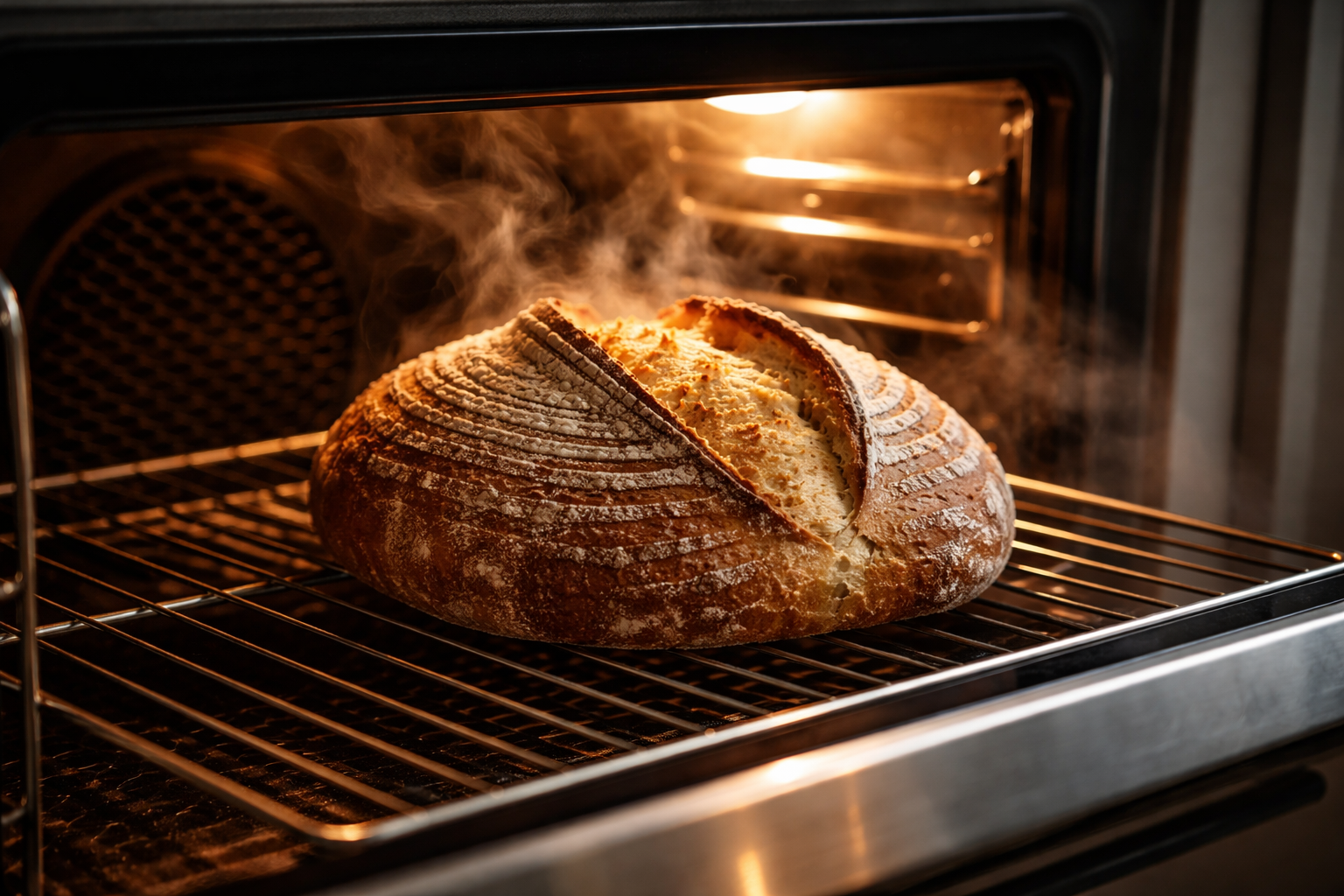
I pulled my sourdough loaf out of the oven on a Sunday afternoon, and it was genuinely the most beautiful thing I had ever baked. I am not exaggerating. The crust was deep mahogany brown, blistered in all the right places, and when I tapped the bottom it made that hollow knock that every sourdough baker lives for. I actually did a little victory dance in my kitchen. My dog looked concerned. I set it on the counter, covered it with a clean kitchen towel because that felt like something a serious baker would do, and went to watch TV for an hour. When I came back and sliced into it, the crust was soft. Not a little soft. Soft like sandwich bread soft. I stood there holding my bread knife wondering what I had done wrong, and whether my dog had somehow jinxed me with his worried look. If you have ever searched “sourdough crust soft after cooling” in a state of mild despair, this post is for you.
This post contains affiliate links. As an Amazon Associate, I earn from qualifying purchases.
Why Your Sourdough Crust Goes Soft After Cooling
The short answer is moisture, and the slightly longer answer is that you are probably trapping that moisture without realizing it. Here is what happens: your sourdough loaf comes out of the oven holding a tremendous amount of steam inside. As it cools, that steam needs somewhere to go. If you set your loaf on a flat surface, wrap it in a towel, or put it somewhere with restricted airflow, that moisture gets pushed outward and absorbed right back into the crust. The crust that was crispy and crackling ten minutes ago essentially gets steamed from the inside out. It sounds dramatic because it kind of is.
The crust on a sourdough loaf is different from most other breads. Because sourdough is typically baked at high heat in a covered Dutch oven, it develops a very thin, almost glassy crust that is delicious but also genuinely delicate once it starts interacting with moisture. That is part of what makes sourdough so special, but it also means you have to be a little more intentional about how you handle the loaf once it comes out of the oven.
The Most Common Mistakes That Lead to a Soft Sourdough Crust
Resting the Loaf on a Solid Surface
This was my exact mistake on that fateful Sunday. Setting a hot loaf directly on a cutting board, plate, or countertop completely blocks airflow to the bottom of the bread. The steam has nowhere to escape from underneath, so it condenses and soaks back into the crust. Even just a few minutes on a flat surface can begin to soften things up.
Covering the Loaf While It Is Still Hot
A towel over a hot loaf creates a little steam tent. I thought I was protecting my bread from drying out. What I was actually doing was recreating the exact conditions that soften a crust. Let your loaf breathe completely uncovered while it cools. You can store it once it reaches room temperature, but those first one to two hours of cooling time should be open air only.
Under-Baking the Loaf
If there is too much moisture in the crumb when the loaf comes out of the oven, no amount of clever cooling technique will save your crust. A properly baked sourdough loaf should reach an internal temperature of around 205 to 210 degrees Fahrenheit. I know that sounds high, but trust it. Under-baked bread has a gummy crumb and releases way more steam during cooling, which means even more moisture attacking that crust from the inside.
Not Leaving the Lid Off Long Enough
Most sourdough recipes bake the loaf covered for the first 20 minutes or so, then uncovered for the remaining time. That uncovered period is not just about getting color. It is about driving off surface moisture and crisping the crust. If you pull the loaf too early, or your oven runs cool so it does not quite finish, the crust will not have developed enough structure to stay crispy once that internal steam starts moving.
What You Actually Need to Keep That Crust Crispy
Good news: fixing this problem does not require any fancy new technique. It mostly requires the right tools and a little patience, which I have finally, after many soft-crusted loaves, managed to develop.
A Proper Wire Cooling Rack
This is the single biggest game changer. A wire cooling rack elevates your loaf so air can circulate completely around it, including underneath, while it cools. I now have two of these sitting on my counter at all times during baking days and I will never go back.
I have been using the 2PCS Cooling Racks for Cooking and Baking (10″ x 15″ Heavy Duty Stainless Steel) and they are solid, sturdy, and easy to clean. They fit perfectly over a standard half sheet pan, which is nice if you want to catch any crumbs. If you want something with a bit more flexibility, the P&P CHEF Cooling Rack Set of 2 with a 2-Tier Stackable Design is a great option because you can stack them when counter space is tight. And if you want something straightforward and budget-friendly, these Cooling Racks for Cooking and Baking (2 PCS Grid Wire Baking Rack) do exactly what they need to do without any fuss. The point with all of them is the same: get that loaf up off the counter and let the air do its job.
An Oven Thermometer
I cannot tell you how many baking problems in my life turned out to be oven temperature problems in disguise. Most home ovens run 25 to 50 degrees hotter or cooler than the dial says, and that variation absolutely affects how your crust develops and how much moisture gets driven out during the bake. An oven thermometer takes all the guesswork out of it.
The Rubbermaid Commercial Products Stainless Steel Monitoring Thermometer is a reliable option with a wide temperature range that works great for sourdough baking temperatures. If you prefer something a little more compact, the Stainless Steel Oven Thermometer with Hook and Stand Design is battery-free, easy to read, and hangs right from your oven rack. Either one will help you bake with a lot more confidence.
My Quick-Reference Tips for a Crust That Stays Crispy
- Always cool your loaf on a wire rack, never on a flat surface.
- Leave the loaf completely uncovered for the first one to two hours of cooling.
- Bake uncovered for the last 20 to 25 minutes of your bake to develop and set the crust.
- Make sure your internal loaf temperature hits 205 to 210 degrees Fahrenheit before pulling it out.
- Verify your oven temperature with a thermometer rather than trusting the dial alone.
- Consider turning the oven off and cracking the door open for the last five minutes of baking to help dry out the crust even further.
- Store cooled bread in a paper bag or bread box, not a plastic bag, if you want to preserve some crust texture.
The Happy Ending (and Why I Now Own Three Cooling Racks)
The week after my soft-crust disaster, I ordered a couple of wire cooling racks and an oven thermometer. Turns out my oven was running about 30 degrees cooler than I thought, which explained a lot of things actually, not just the soggy crust situation but also several years of slightly underdone cookies. I adjusted my bake temperature, made sure to go the full uncovered baking time, and then transferred my next loaf directly to the wire rack the second it came out of the Dutch oven. I left it there, uncovered, resisting every urge to drape a towel over it, for a full ninety minutes before slicing.
Reader, the crust crackled when I cut into it. Genuinely crackled. My dog looked relieved. I may have done a slightly more dramatic victory dance than the first time.
If you have been frustrated by sourdough crust soft after cooling, please know that this is one of the most common sourdough problems out there and it is also one of the most fixable. You do not need a new recipe