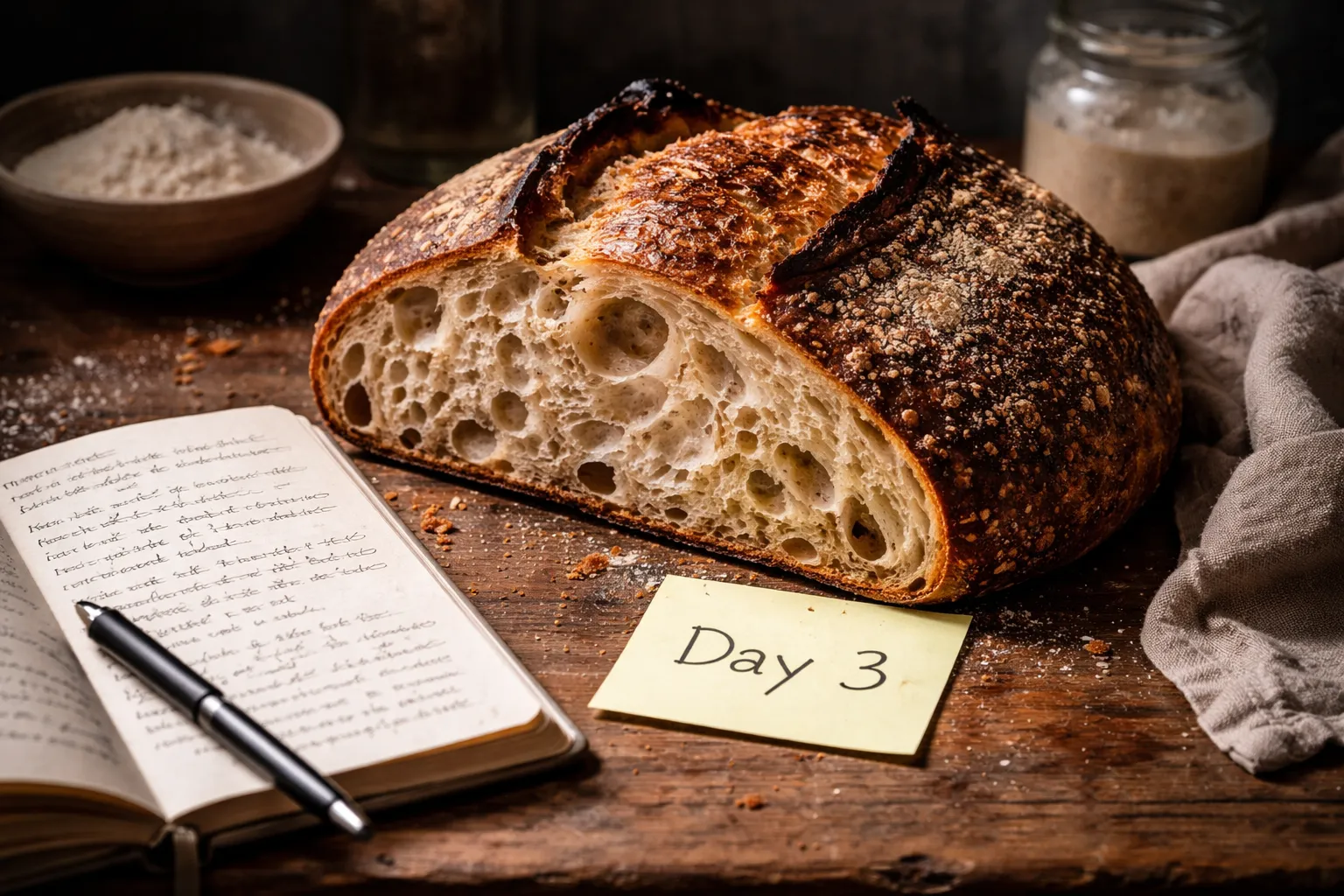
I want to tell you about the Sunday afternoon I sat on my kitchen floor and cried over a loaf of bread. Not metaphorically. Actually sat down, back against the cabinet, flour on my shirt, and cried. I had been chasing a specific flavor for months — that deep, complex, almost wine-like tang you get from a truly great sourdough — and I kept falling short. My loaves were fine. Pretty, even. But they tasted like bread, not like an experience. That afternoon, my fourth attempt in two weeks had come out gummy in the center and barely sour at all, and I had wasted nearly four cups of flour and a whole weekend on something I was embarrassed to put on the table. It wasn’t until I finally committed to a real two day sourdough schedule flavor experiment — slowing everything down intentionally — that everything changed.
If you have ever felt like your sourdough is good but not great, like it’s missing that something you can’t quite name, I genuinely believe this two-day schedule is the answer. It was for me, and I want to walk you through exactly how it works and why the slow road makes all the difference.
Why Slowing Down Unlocks Two Day Sourdough Schedule Flavor
Here is the thing nobody told me when I started baking sourdough: flavor is not built in the oven. Flavor is built during fermentation, and fermentation needs time. When you rush a bulk ferment at room temperature and bake the same day, you are leaving most of the flavor potential sitting on the table.
Sourdough gets its complexity from two main organisms in your starter: wild yeast and lactic acid bacteria. The wild yeast produces carbon dioxide, which gives you rise and structure. The bacteria produce acetic acid and lactic acid, which give you flavor. The key detail is that these bacteria work more slowly at lower temperatures, and when they work slowly, they produce more acetic acid — the sharper, more complex acid associated with that deep sour flavor you are chasing.
A cold, extended proof in the refrigerator does something almost magical. It slows the yeast down enough to prevent over-fermentation while giving the bacteria hours and hours to keep working. The result is a loaf with layered flavor, better crust color, and a crumb that has had time to develop real structure. A two-day schedule simply gives all of that chemistry more room to breathe.
The Container That Finally Let Me Control My Cold Fermentation
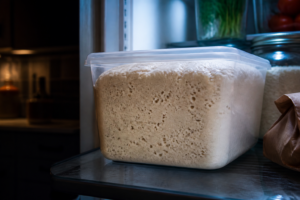
A two-day sourdough lives in your fridge, and that means you need a container that doesn’t trap condensation, doesn’t let your dough dry out, and actually fits a shaped boule without you having to fold it like a yoga position. I spent years using mismatched bowls with plastic wrap, only to open the fridge and find either a desiccated surface or a puddle of condensation pooling on top.
What works
- The lids seal just tight enough to prevent drying during a 24-48 hour cold ferment, but aren’t airtight enough to trap a layer of condensation that drips back onto your dough.
- Four quarts gives you actual breathing room—your shaped loaf sits comfortably without the dough pressing against the sides, which means it rises evenly and doesn’t flatten against the walls.
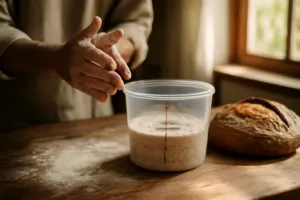
- The translucent sides let you watch fermentation progress without opening the fridge and losing your cold chain, so you can spot when your dough is actually ready to bake instead of guessing.
What doesn’t
- The lids don’t have gaskets, so if you try to stack them heavily or move them around a lot, they can slip off easier than a truly sealed container—a problem if you’re clumsy in your kitchen like I am.
- At four quarts, they take up real fridge space, and if you’re doing multiple loaves back-to-back or storing anything else, you’ll feel the squeeze pretty quickly.
I almost sent these back after the first use because I was paranoid the lid wasn’t sealing properly—I kept opening the fridge to check—but once I realized that slight looseness was actually the whole point, everything changed. Cambro Food Storage Containers with Lids (2 Pack, 4 Quart)
This post contains affiliate links. As an Amazon Associate, I earn from qualifying purchases at no extra cost to you.