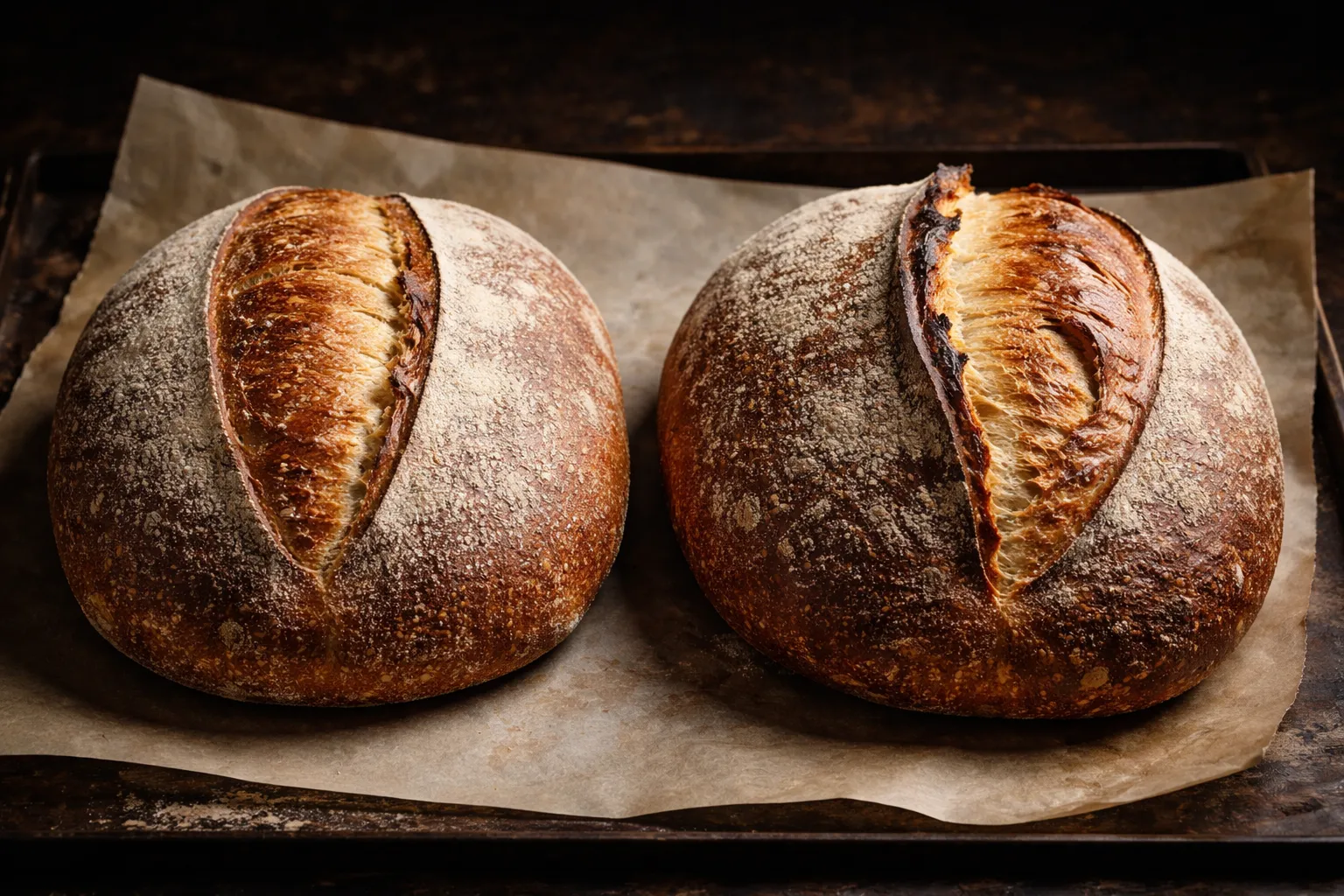
I stood at my kitchen counter at 7am, oven mitts still on, staring at the most pathetic loaf I had ever baked. No ear. Not even a hint of one. Just a smooth, rounded dome that had split down the side like it was laughing at me. If you have ever Googled “sourdough ear won’t open” at an ungodly hour while still in your pajamas, clutching a coffee and quietly questioning your life choices, then welcome. You are in exactly the right place.
That loaf was my fourteenth attempt at getting a proper ear. Fourteen. I had watched every YouTube video, read every forum thread, and even printed out a scoring diagram that I taped to my cabinet like some kind of artisan bread war room. And still, nothing. But here is the twist ending to my sad little story, and I promise we will get there together.
Why Your Sourdough Ear Won’t Open (And Why It’s Not Your Fault)
Let me save you some frustration right now: a flat, earless loaf is almost never the result of one single problem. It is usually a perfect storm of two or three small things happening at the same time. The good news is that each of those things is fixable once you know what to look for. The bad news is that most tutorials skip the diagnosis and jump straight to technique, which is like a doctor handing you medicine without asking what hurts.
So let us actually diagnose this together, starting with the two biggest culprits: scoring and steam.
The Scoring Problem: Your Angle, Your Blade, and Your Confidence
When I finally asked a baker friend to watch me score a loaf over video call, she said something that stung in the most useful way: “You’re hesitating.” And she was right. I was pressing down slowly, dragging the blade, and scoring almost straight down into the dough. Every single one of those things works against you.
Angle Is Everything
To get that beautiful ear to bloom open, your blade needs to enter the dough at a low, nearly horizontal angle, somewhere between 30 and 45 degrees to the surface. When you score too vertically, the cut pinches closed during baking instead of peeling back and lifting. Think of it less like stabbing and more like slicing a piece of paper at an angle — you want to create a flap, not just a slit.
Speed and Confidence Matter
A slow, hesitant score drags and tears the dough. You want one swift, decisive motion from one end of the loaf to the other. This is genuinely the part that feels most unnatural when you are a careful, nervous baker. But the dough responds to confidence. Take a breath, and commit.
Your Blade Might Actually Be Dull
This was my embarrassing revelation on loaf number fourteen. I had been using the same blade for six bakes. Six. A dull blade drags, tears, and deflates your dough instead of gliding through cleanly. Replace your blade regularly, and make sure you are using a proper bread lame designed for this purpose.
The Lame That Actually Lets You Score Deep Enough for an Ear
A dull blade or a scoring tool that doesn’t grip right will either drag through your dough or barely kiss the surface—and neither of those gets you an ear. The depth and angle of your score is what determines whether that lip opens up or stays stubbornly sealed.
What works
- The blade is genuinely sharp enough to cut a clean 30-45 degree angle without hesitation—I noticed the difference immediately on my first bake; the ear opened within minutes of the oven spring instead of staying flat.
- The handle gives you actual control and leverage, so you can score with confidence and speed rather than tentatively dragging the blade like you’re afraid of tearing the dough.
- It’s hand-crafted well enough that it doesn’t feel like a toy—the weight and balance make it feel like a real tool, which sounds silly until you’re holding a flimsy scoring tool at 6am and realizing you can’t trust it.
What doesn’t
- The blade dulls faster than I’d like if you’re baking multiple loaves a week—after about 15-20 bakes I noticed the score dragging slightly, which meant it was time to replace the blade or sharpen it.
- It’s pricier than the cheaper plastic lames, so if you’re still in the “maybe sourdough isn’t for me” phase, it feels like a bigger investment than you might want to make.
I almost returned it after my second bake because I was convinced I was still scoring too shallow—until I realized the ear was actually opening and I’d just never seen one before. SAINT GERMAIN Premium Hand Crafted Bread Lame
This post contains affiliate links. As an Amazon Associate, I earn from qualifying purchases at no extra cost to you.