I pulled open the oven door, slid out the baking stone, and stared at what can only be described as a sad, tan frisbee. No pocket. No puff. Just a flat, chewy disc that looked more like a hockey puck than anything I had ever eaten at a Middle Eastern restaurant. It was my fourteenth attempt at a sourdough pita bread recipe, and I was starting to wonder if I was fundamentally broken as a baker.
That was about six months ago. Fast forward to today, and I am pulling pillowy, perfectly pocketed sourdough pitas out of my oven on a weekly basis, stuffing them with falafel, roasted vegetables, and anything else I can find in the refrigerator. The journey from frisbee to fluffy took me forty flat attempts, a lot of wasted flour, and one genuinely embarrassing phone call to my mom asking if she thought I should just give up baking altogether. She laughed. I did not. But I got there, and I am going to tell you exactly how.
Why Sourdough Pita Is Harder Than It Looks (And Why It Is So Worth It)
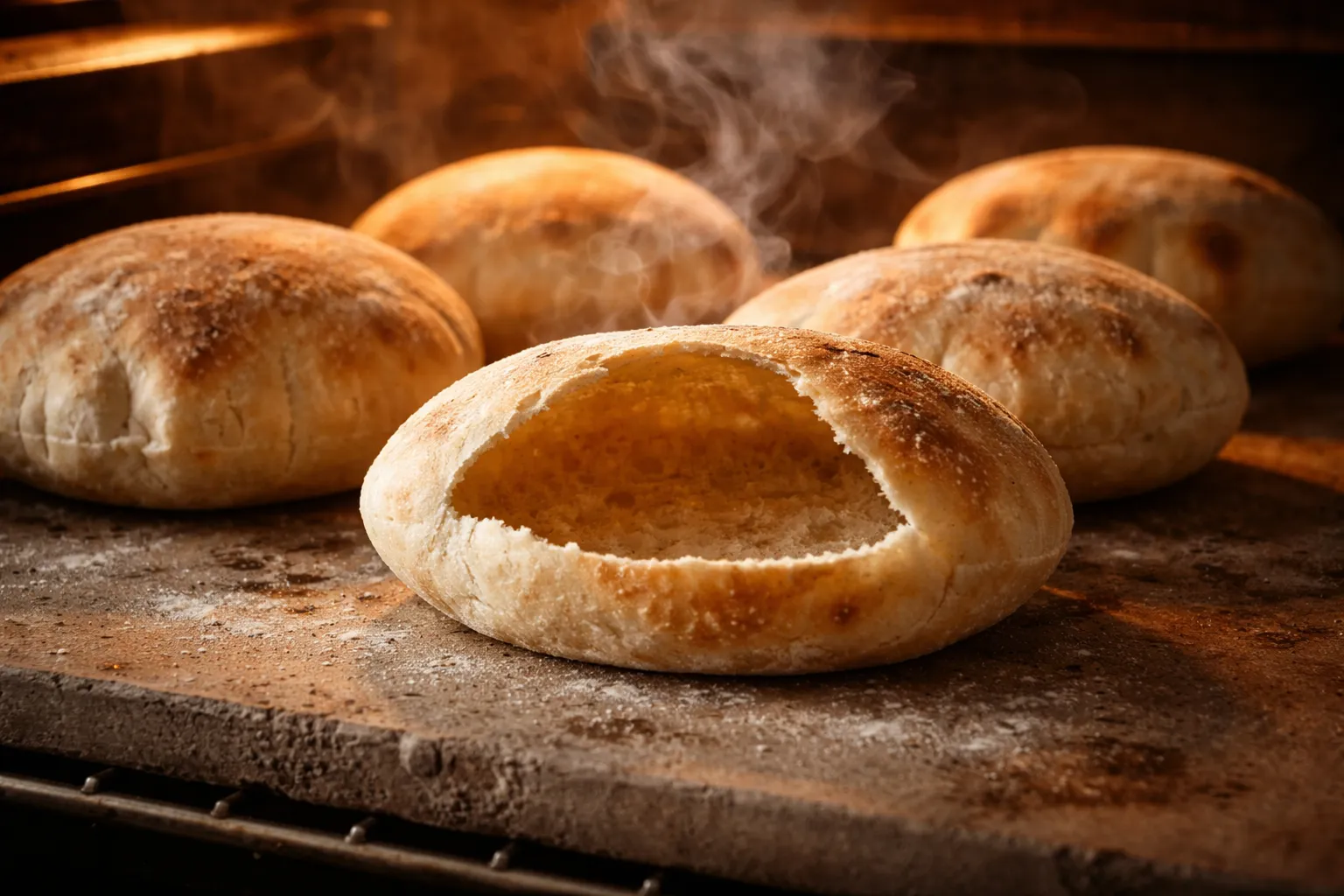
Here is the thing about pita bread that nobody warned me about: the pocket is not just about the recipe. It is about heat, timing, hydration, and a tiny bit of faith. The pocket forms when a thin disc of dough hits an extremely hot surface and the steam inside has nowhere to go but up, splitting the layers apart in a dramatic little balloon. Miss any one of those variables and you get a frisbee. I missed all of them, repeatedly, for weeks.
The sourdough element adds another layer of complexity. Commercial yeast is predictable and fast. Your starter is alive, opinionated, and deeply personal. The fermentation affects gluten development, hydration absorption, and how the dough behaves under extreme heat. Once I understood that, I stopped blaming myself quite so much and started treating the process like a conversation rather than a command.
And the flavor payoff? Absolutely extraordinary. There is a gentle tang, a depth of flavor, and a chewiness that store-bought pita simply cannot touch. Once you nail it, you will never go back.
The Pizza Stone That Finally Held Heat Through the Puff
Pita pockets depend on intense, sustained heat—the kind that turns a wet dough into steam in seconds. My old baking sheet was absorbing and losing heat too fast, collapsing my pitas before they had a chance to puff. I needed something heavy enough to actually hold a temperature spike.
What works
- The cordierite holds heat so evenly that when I slid a wet pita onto it, I could actually see the dough react immediately—no slow, sad deflation like I was used to.
- It’s thick enough that even after pulling it out to rotate a batch, the temperature doesn’t crater, so consecutive pitas bake with the same aggressive oven spring I got on the first one.
- The 15 x 12 size fits two pitas side-by-side without them crowding or blocking heat circulation, which was the sweet spot I needed after years of one-at-a-time baking.
What doesn’t
- It’s genuinely heavy—moving it in and out of the oven requires attention, especially when you’re tired or in a rush, which is when accidents happen.
- If you don’t preheat it for a full 45 minutes, you lose the heat-retention advantage that makes pita pockets actually work, so it demands patience upfront.
I almost sent this back after my first week when I forgot to preheat long enough and got flat pitas again—then I realized the mistake was mine, not the stone’s. Unicook Pizza Stone, Heavy Duty Cordierite Pizza Pan for Oven and Grill, Thermal Shock Resistant, 15 x 12 Inch
This post contains affiliate links. As an Amazon Associate, I earn from qualifying purchases at no extra cost to you.