I want to tell you about the morning I nearly threw away a starter I had been nurturing for three months. It was a Tuesday, I had just shuffled into the kitchen in my pajamas, and when I lifted the lid off my jar I was greeted by what I can only describe as the scent of a frat house at 8am. There was a dark, murky liquid sitting on top of my flour-and-water baby, and my first thought — I am not proud of this — was that I had somehow brewed alcohol by accident and possibly needed to call someone. As it turns out, I had discovered sourdough starter hooch, and everything I thought I knew about what I was looking at was completely wrong.
What Is Sourdough Starter Hooch, Exactly?
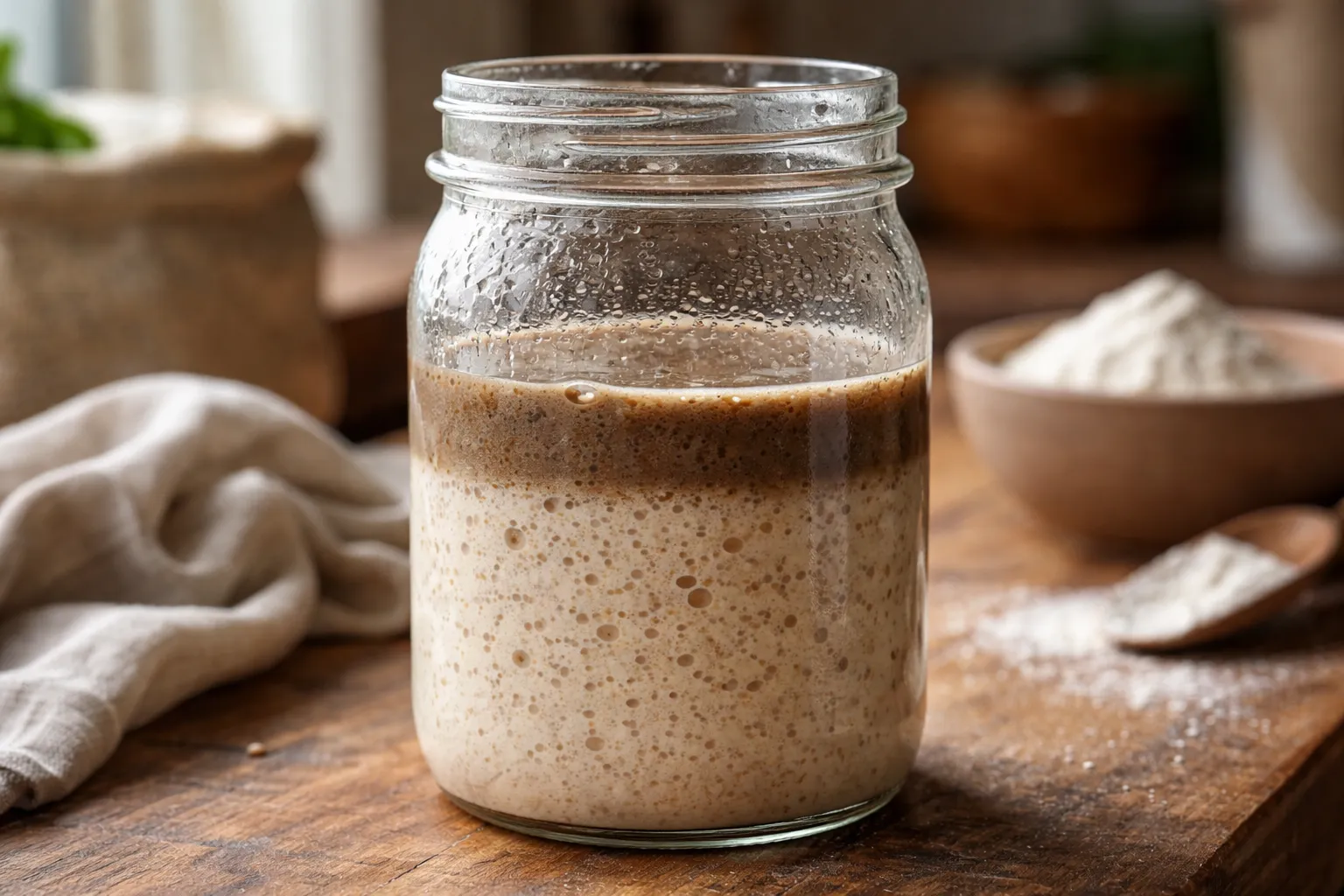
Hooch is the dark, grayish, or sometimes brownish liquid that separates and pools on top of (or occasionally underneath) your sourdough starter when it has gone too long without being fed. The name is completely accurate, by the way. It actually is a mild alcohol — ethanol, specifically — produced by the wild yeast in your starter as a byproduct of fermentation. When the yeast runs out of fresh food, it keeps fermenting and producing this liquid as a kind of metabolic exhaust.
The color can range from pale gray to a deep, almost black-looking liquid depending on how long your starter has been sitting. The smell is distinctly boozy, sour, and a little sharp. The first time you see it, it genuinely looks alarming, especially if you have been babying your starter and you are already a little anxious about keeping it alive. I understand. I was there. I was standing in my kitchen holding a jar and googling “sourdough starter gone bad” with increasing desperation.
Why Your Starter Separates in the First Place
Here is the thing nobody tells you clearly enough at the beginning: hooch is not a sign your starter is dead or ruined. It is actually a sign that your starter is alive enough to have eaten through all its available food and is now sending you a very pungent little message that says, “Hey. I am hungry. Feed me.”
Think of it this way. Your starter is a living community of wild yeast and lactic acid bacteria. When you feed it flour and water, those organisms get to work eating the starches in the flour and producing carbon dioxide (which makes your bread rise) and organic acids (which give sourdough its flavor). When all that food is gone and you still have not fed it again, the yeast shifts gears and starts producing more ethanol. That liquid separates and floats to the top because it is less dense than the thick, pasty starter beneath it.
A few common reasons this happens include feeding on a less frequent schedule than your starter needs, keeping your starter somewhere warm where fermentation moves faster than expected, using a very small amount of starter with a lot of flour so it burns through resources quickly, or simply forgetting about it entirely because life got busy. That last one is basically my autobiography.
Should You Actually Worry About Hooch?
Short answer: no. Medium answer: it depends on the color and smell, but probably still no. Long answer: let me walk you through it.
If the liquid is gray, dark gray, or even slightly brownish and smells sour and boozy, your starter is simply hungry and needs a feeding. You have two options. You can either pour the hooch off and discard it before feeding, which will tone down the very sharp flavor of your starter, or you can stir it right back in. Stirring it in is completely safe and gives your starter an extra-tangy flavor profile, which some bakers actually prefer. I now stir mine in every single time, because I love that deep sour punch in my bread.
What you actually want to watch out for is pink or orange streaks in your starter, which can indicate contamination with unwanted bacteria. That is a different situation and one that typically calls for tossing the starter and beginning again. But gray liquid on top? That is just hooch. That is just your starter being a little dramatic about being hungry.
After you deal with the hooch, give your starter a proper feeding. A common ratio to bring a hungry starter back is 1:2:2 or 1:3:3, meaning one part starter to two or three parts each of flour and water by weight. Keep it somewhere warm, between 70 and 78 degrees Fahrenheit is ideal, and watch it come roaring back to life within four to eight hours. That moment when you see the bubbles forming and the starter doubling in size is genuinely one of the most satisfying things about this hobby.
The Jar That Finally Let Me Watch My Starter Without Panic
When you’re staring at hooch for the first time, you need a container that lets you actually see what’s happening — and gives you tools to understand it. A basic jar works, but one designed for starter monitoring turns that anxious guessing game into something you can actually track and trust.
What works
- The date marking band lets you actually clock how fast your starter is rising and falling, which is the real way to know if hooch means you need to feed more often.
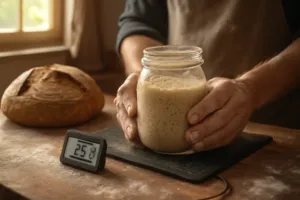
- The thermometer strip is genuinely useful — I realized half my hooch panic was because my kitchen was cold and my starter was just sleeping, not dying.
- The silicone scraper means you can actually get every bit of starter out without waste, and the cloth cover breathes way better than a tight lid for daily maintenance.
What doesn’t
- The jar is smaller (24oz) than standard quart jars, so if you’re building up to larger batches, you might outgrow it faster than you’d expect.
- The thermometer strip is approximate — it got me in the ballpark but wasn’t precise enough to really dial in temperature-sensitive issues once I moved past the basics.
I almost returned this jar after week two because I thought the extra bells and whistles were overkill, but once I actually started using the band to track feeding schedules, it became the thing that made hooch stop feeling like a mystery. Sourdough Starter Jar with Date Marked Feeding Band, Thermometer, Silicone Scraper, and Cloth Cover
This post contains affiliate links. As an Amazon Associate, I earn from qualifying purchases at no extra cost to you.