I still remember the first loaf I pulled from my oven that made me want to cry — and not in a good way. The crust was pale, the crumb was dense, and the whole thing looked more like a frisbee than an artisan boule. I had done everything right: fed my starter, shaped carefully, even scored with a brand-new lame. What I hadn’t done was use the right vessel. The moment I started researching the best dutch oven for sourdough bread, everything about my baking changed. If you’re struggling with flat loaves, pale crusts, or crumb that never quite opens up, I’d be willing to bet this is the missing piece for you too.
This post contains affiliate links. As an Amazon Associate, I earn from qualifying purchases. This means if you click a link and make a purchase, I may earn a small commission at no extra cost to you. I only recommend products I genuinely use or have thoroughly researched.
Why a Dutch Oven Isn’t Optional for Sourdough
Here’s the thing about sourdough that nobody tells you upfront: your home oven, as wonderful as it is, simply cannot replicate the conditions inside a professional bread oven. Commercial bakeries use deck ovens that inject steam during the first critical minutes of the bake. That steam keeps the crust soft long enough for the loaf to fully expand, producing that gorgeous oven spring and the crackling, blistered crust we all dream about. Without steam, the crust sets too fast, trapping the loaf and giving you that sad, flat frisbee I know all too well.
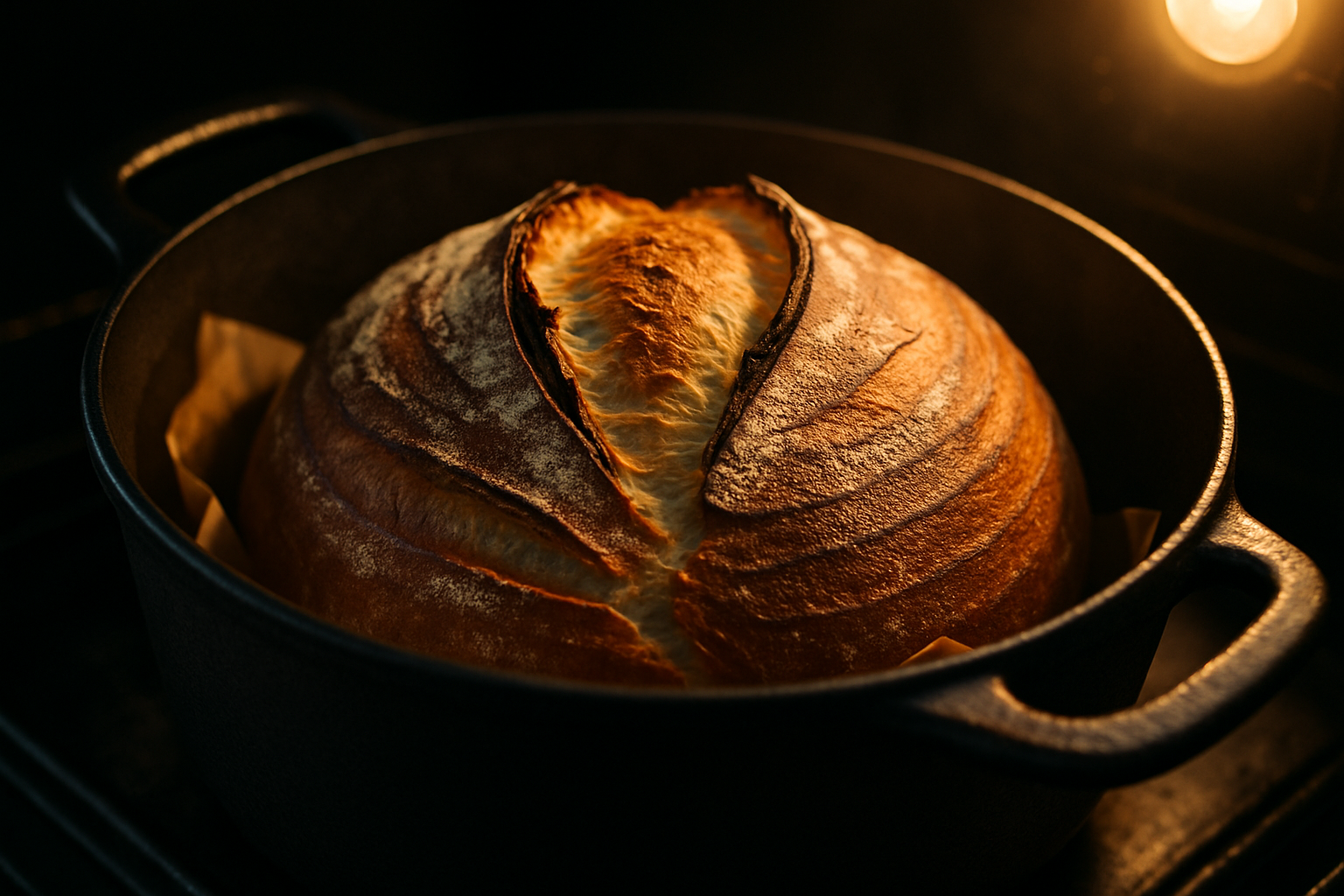
A Dutch oven solves this beautifully. When you drop your shaped dough into a preheated Dutch oven and clamp the lid on, the moisture already present in the dough creates its own steam environment. For the first 20 minutes or so, that trapped steam does exactly what a commercial deck oven does — keeps the exterior pliable while the loaf rockets upward. Then you remove the lid, let the dry heat do its work, and the crust deepens into that rich, mahogany brown you see on every sourdough photo you’ve ever saved to your phone.
The mass of cast iron also plays a huge role. It holds heat incredibly well and transfers it evenly to the bottom of your loaf, preventing the dreaded gummy base and ensuring an even, thorough bake all the way through. There really is no workaround that works as consistently. I’ve tried roasting pans with foil lids, covered clay bakers, and even a stockpot in a pinch. Nothing — and I mean nothing — competes with a proper cast iron Dutch oven for sourdough baking.
What to Look for When Choosing a Dutch Oven for Sourdough
Not every Dutch oven on the market is equally suited to bread baking. Before you add anything to your cart, here are the features I always look for:
- Size: A 5-quart Dutch oven is the sweet spot for a standard 900g–1000g sourdough boule. It gives the loaf enough room to spring upward without spreading too wide. A 6-quart works well too, especially if you like a slightly larger loaf.
- Material: Cast iron — either bare or enameled — is the gold standard. Enameled versions are easier to clean and don’t require seasoning. Bare cast iron is more affordable and nearly indestructible.
- Oven-safe temperature: You’ll be preheating to 450–500°F (230–260°C), so make sure your Dutch oven and its lid handle can tolerate those temperatures. Most quality cast iron can manage this easily.
- Heavy lid with a good seal: The lid is just as important as the pot. A heavy, well-fitting lid traps steam effectively. Lighter lids with gaps let steam escape and undermine the whole process.
- Loaf shape compatibility: Round Dutch ovens suit boules perfectly. If you love batards (oval loaves), look for an oval Dutch oven or a loaf-shaped bread pan with a lid.
The Dutch Ovens I Recommend (What I Use and Why)
I’ve tested several Dutch ovens in my own kitchen over the years, and I keep coming back to the same shortlist. Here’s what I genuinely recommend, depending on your budget and priorities.
Best Budget-Friendly Pick: Lodge 5 Quart Cast Iron Dutch Oven
If you’re just starting out and don’t want to spend a lot, the Lodge 5 Quart Cast Iron Dutch Oven is where I’d send every new sourdough baker. Lodge has been making American cast iron for over a century, and this pot is built to last several lifetimes. It’s pre-seasoned, oven-safe, has exceptional heat retention, and the lid seals well. It’s not fancy, but it produces stunning loaves. The loop handle keeps things simple and sturdy. This is the workhorse, and honestly, many experienced bakers never feel the need to upgrade from it.
Best Enameled Pick (Classic Look): Umite Chef 5QT Enameled Cast Iron Dutch Oven
If you prefer enameled cast iron — easier cleanup, no seasoning required, and it looks beautiful on the counter — the Umite Chef 5QT is a fantastic value. You can grab it in a clean Cream White or a bold Red — both come with cotton potholders, which is a genuinely helpful bonus when you’re yanking a 500°F pot out of the oven. The enamel interior means you don’t have to worry about your dough sticking or reacting with the iron, and cleanup is a breeze. The heavy-duty construction and tight-fitting lid give you exactly the steam environment your sourdough needs.
Best for Larger Loaves: Mueller Home 6 Quart Enameled Dutch Oven
If you regularly bake larger loaves or want a little extra room for higher-hydration doughs that spread a bit before they set, step up to the Mueller Home 6 Quart Enameled Cast Iron Dutch Oven. It’s oven-safe up to 500°F, works across all cooktops, and comes in a gorgeous Thyme Green that looks absolutely stunning in a kitchen. The quality is solid, the enamel is durable, and the extra quart of space makes a meaningful difference when you’re working with a bigger batard or a 1200g loaf.
Best All-in-One Starter Kit: Enameled Cast Iron Bread Oven with Sourdough Tools
For bakers who want to hit the ground running with everything they need in one package, this Categories Gear & Buying Guides