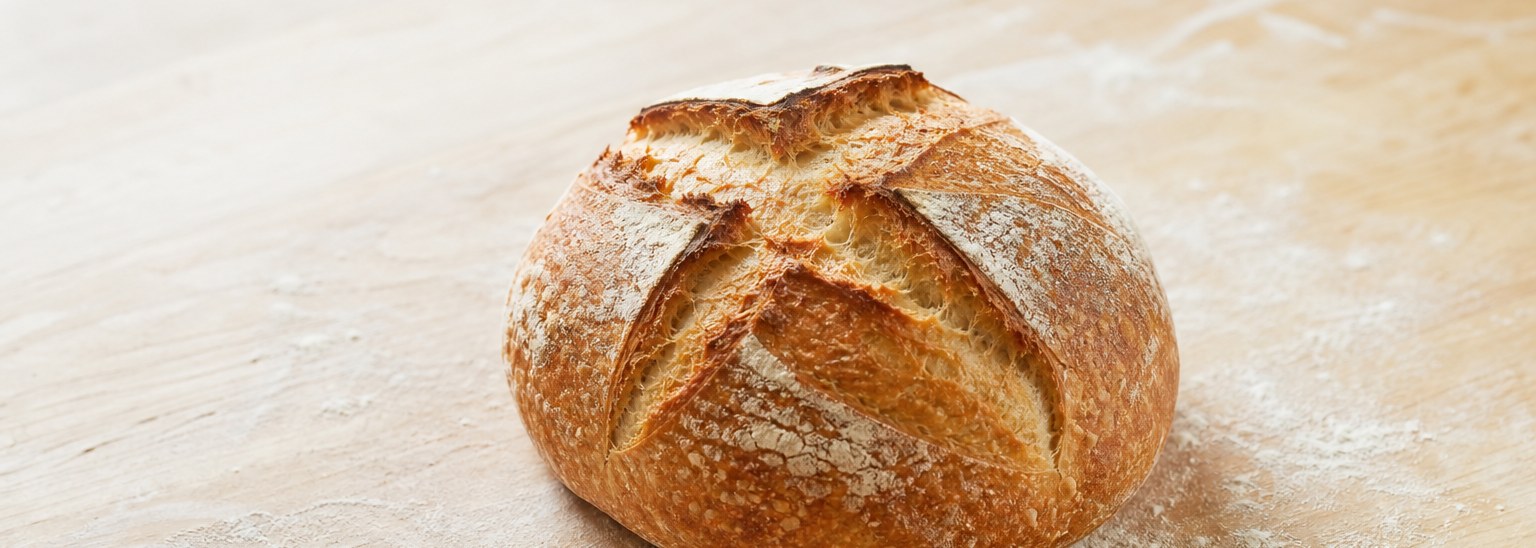
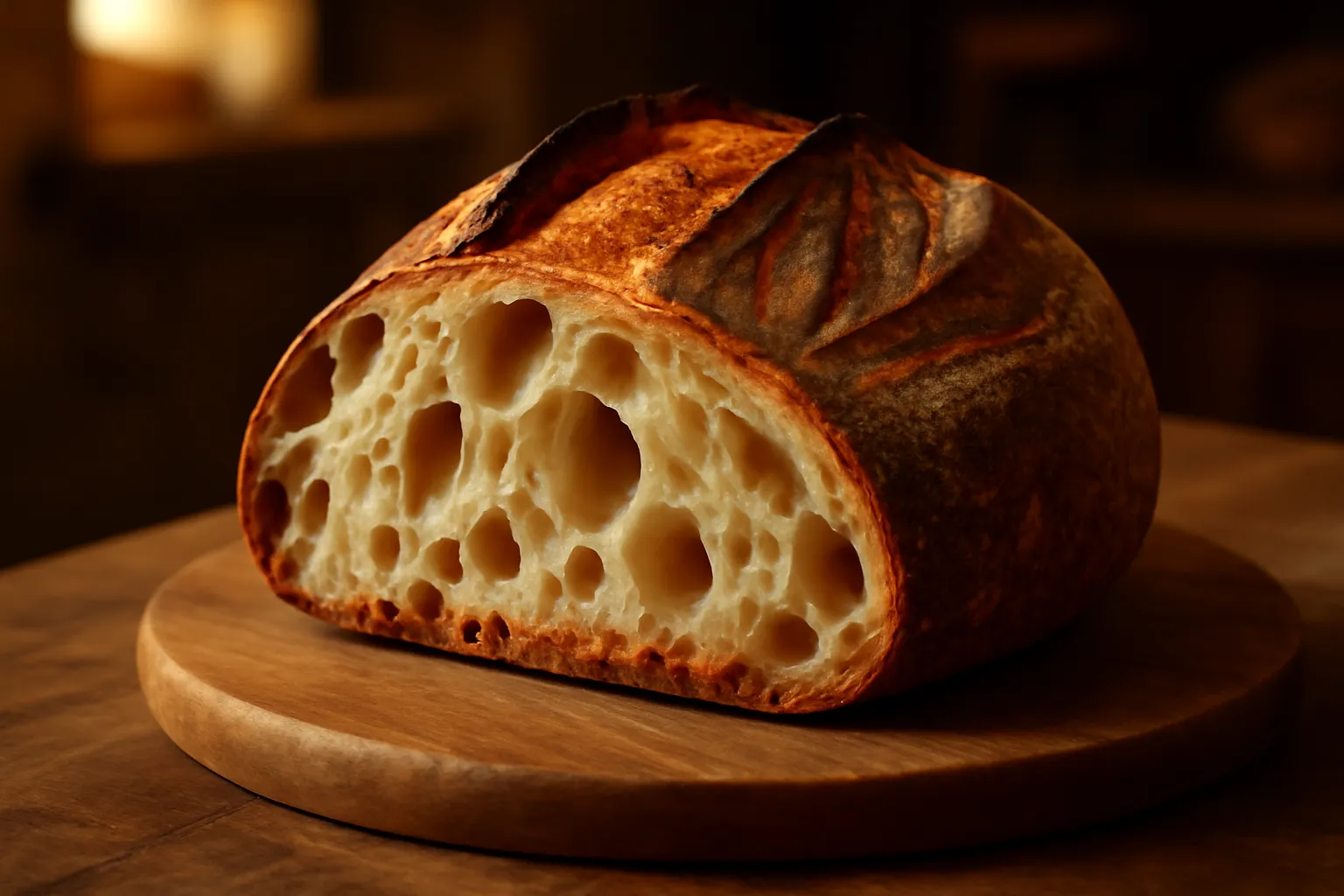
Ever wonder if the wreck you pulled out of your oven on attempt one means you’re just not cut out for this? You’re not — mine looked like a deflated frisbee, dense in the center, gummy, with a crust so pale it seemed like it had skipped the oven entirely. I’d followed the recipe to the letter. I’d done everything the instructions asked. And I still had zero clue what had gone sideways.
That was eleven years back. Since then I’ve turned out thousands of loaves — including a multi-year run where I was cranking out 40 to 60 loaves a week for a regular roster of neighbors and friends who kept ordering. Fermentation stopped being a weekend hobby and became something I had to nail consistently, batch after batch, at real volume. I’ve tossed batches that represented an entire week’s flour budget and hours of effort. And along the way I’ve absorbed enough food science to explain, on a biochemical level, why nearly every rookie mistake happens the way it does.
I never trained as a baker. There’s no culinary certificate hanging anywhere. What I know came from relentless repetition and refusing to shrug off failures with “just try again.” The starter I built from nothing, right there in my own kitchen, is still bubbling away eleven years later.
So if I had a chance to sit my day-one self down, here’s exactly what I’d say.
1. Blaming Your Starter Is Premature
Nearly every new baker jumps straight to “my starter must be broken.” It smells off. It won’t double. There’s grey liquid pooling on top. It looks lifeless. I burned through my first two weeks certain I’d screwed something up at the root level.
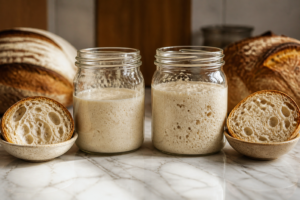
Here’s the reality: a young starter is basically a turf war between microbes. Wild yeasts and lactic acid bacteria are duking it out for control of that flour-and-water mixture. During days five through ten, expect chaos — big rises one day, flat nothing the next, and sometimes a smell so foul people compare it to nail polish remover or worse. That odor actually signals acetic acid bacteria having their brief moment of dominance. It’s temporary. They lose eventually. Just keep feeding through it.
To be fair, some starters really do die — usually because chlorinated tap water wiped out the microbial population, or because the room stayed under 65°F and fermentation basically ground to a halt. Stick to filtered water, or tap water rested at room temperature for an hour, and house your starter somewhere holding between 70°F and 78°F. In chillier homes, the top of the fridge is often a reliable warm spot.
Commit to two solid weeks of daily feedings before you let yourself worry.
2. It’s Temperature Running the Show, Not the Clock
Of everything I picked up during my high-volume baking stretch, this took the longest to actually sink in, embarrassingly so.
Any recipe telling you to “bulk ferment 4 hours” isn’t lying on purpose — it’s just structurally incomplete. That figure means nothing without knowing your dough’s actual temperature. Fermentation runs on enzyme activity and microbial metabolism, and both respond sharply to warmth or cold. At 78°F, bulk might wrap up in 4 hours. Drop to 68°F and that same dough could need 7 or 8. At 65°F, plan on 10 to 12 hours.
I spent two Chicago winters baking in a drafty rented kitchen sitting around 64°F. I almost gave up entirely — nothing behaved as expected — until I swapped the clock for a probe thermometer tracking actual dough temperature. Once I started aiming for 75°F to 78°F during bulk, my success rate jumped from roughly 50 percent to well past 90.
Get a probe thermometer before you spend money on anything else. Track your dough’s actual temperature, not just the room’s.
3. Underproofed Dough Trips Up Way More Beginners Than Overproofed
Dense loaf, gummy crumb, tight and irregular texture — your gut reaction might be to blame your shaping or the flour brand. Nine times out of ten, especially early on, the real culprit is a dough that didn’t ferment long enough.
New bakers tend to be terrified of overproofing. There’s so much content warning about overproofed dough as a total disaster that people instinctively rush their timeline. But dough pulled too early hasn’t built enough gas or gluten strength to hold structure. It’ll look perfectly fine sliding into the oven and emerge dense as a brick.
Here’s what tells you bulk is truly finished: the dough has expanded 50 to 75 percent in volume, feels airy and light rather than heavy in your hands, shows bubbles across the top and along the sides, and wobbles like Jell-O when you nudge the container. Missing any of those signs means it needs more time.
Overproofing is a genuine risk, but for most home bakers it takes real effort to reach that point. Quit pulling bulk short.
4. Skipping the Dutch Oven Isn’t Really an Option
I experimented with a baking stone plus a pan of boiling water for steam. I tried a covered roasting pan. I tried an upside-down metal bowl as a dome. None of it delivered consistently, and for two months I couldn’t pinpoint why my crust stayed thick and dull instead of turning crackly and deeply browned.
Enter the Dutch oven, which fixes the whole problem. Drop your shaped dough into a preheated Dutch oven, bake covered for the first 20 minutes, and the trapped moisture builds the steam environment that keeps your crust flexible during oven spring. Skip that steam and the crust hardens too fast, choking off expansion — you end up with a small, pale, dense result. It’s straightforward food science, the same logic behind the steam injection systems in commercial deck ovens.
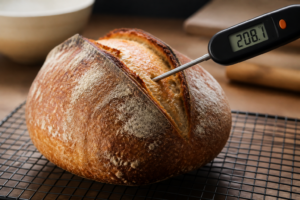
Preheat your Dutch oven at 500°F for a minimum of 45 minutes. Bake 20 minutes with the lid on, then 20 to 25 minutes uncovered, until internal temp hits 205°F to 210°F. That’s the whole method. Don’t shortcut the covered stage.
5. What’s on Your Plate Reflects Choices You Made a Day Earlier
This realization reshaped how I approach every single bake. Sourdough gives you delayed feedback. Whatever problem you spot when slicing into a finished loaf actually originated well before that dough ever touched the oven. That means learning to read your dough mid-process matters far more than post-bake inspection.
Start a baking log. Record your flour choice, hydration percentage, starter percentage, water temperature, room temperature, when bulk started and ended, how the dough behaved at each checkpoint, bake temperature, and your own verdict on the finished loaf. Yes, it sounds like a chore. It is, at least initially. But somewhere around bake ten or fifteen with notes in hand, patterns emerge that no recipe could ever hand you — because they’re unique to your kitchen, your flour, your starter.
I still log every bake, all these years later. Eleven years in, those notes still surprise me.
Gear I Actually Use and Stand Behind
Let me be blunt: having the right tools matters enormously when you’re a beginner still learning to interpret your dough. These are worth buying upfront instead of trying to jury-rig substitutes.
For getting started with a starter and your first proofing setup, this Pink Sourdough Starter Kit with Banneton Bread Proofing Basket and Jar gives you the essentials in one place — the banneton, the jar, and the tools to get your starter off the ground without hunting down pieces individually.
If you’d rather grab a complete, ready-to-gift bundle instead of piecing things together, this Sourdough Bread Baking Supplies and Starter Kit with Bread Proofing Basket and Tools handles proofing, scoring, and starter care in a single package.
For the Dutch oven — which, as I said above, is not optional — I’ve been impressed by the Umite Chef 5QT Enameled Cast Iron Dutch Oven with Lid and Cotton Potholders. The 5-quart size is ideal for a standard 900-gram to 1,000-gram sourdough loaf, the enameled surface is easy to clean, and the lid creates the steam seal you need for proper oven spring.
One More Thought
Sourdough is genuinely hard when you’re starting out, and I want to say that plainly, because so much beginner content pitches it as some breezy weekend hobby. It isn’t. You’re managing a fermentation process with several variables moving at once, and building the instinct to handle them all takes real time.
That difficulty, though, is exactly what makes it rewarding. Every single loaf teaches you something new — about your kitchen, your flour, your starter, your own hands. Eleven years in and I’m still picking up lessons. The bread keeps getting better. That’s really the entire point of doing this.
Nail the fundamentals, log what you’re doing, trust the underlying science, and let yourself bake a few duds along the way. Those failures are simply part of the path toward the loaves that actually work.
The Banneton That Kept My Dough From Puddling Into a Pancake
Back then, I hadn’t grasped that shaping and proofing are two completely separate skills — and that even beautifully fermented dough will collapse flat without proper support during that final rise. A banneton isn’t a luxury item; it’s what separates a loaf that keeps its form from one that oozes out into a sad, flattened disk.
What actually works
- The weave is dense enough that even a high-hydration dough releases cleanly after a lengthy cold proof, so you’re not battling stuck dough right when it’s time to score and bake.
- It genuinely holds the dough’s shape — loaves proofed in this basket showed noticeably taller oven spring and stronger structure compared to my old routine of using a floured mixing bowl.
- It comes bundled with a starter jar and other essentials, so anyone starting from zero avoids cobbling together five separate purchases just to get moving.
Where it falls short
- Flouring it takes care — go too light and you’ll tear dough away with the basket, too heavy and you bake in messy flour streaks across your crust.
- It has to dry out fully between bakes or mold takes hold, meaning you can’t treat it like a regular bowl you just rinse and stash away wet.
I remember one winter when I was being lazy about drying it thoroughly and actually had to toss one out after finding fuzzy growth inside the grooves. Since then I’ve been religious about air-drying it between bakes, and it’s been bulletproof. If you’re ready to stop guessing whether your dough will hold its shape, grab the Pink Sourdough Starter Kit with Banneton Bread Proofing Basket and Jar.
Frequently Asked Questions
Why does my new starter smell like nail polish remover?
That foul odor signals acetic acid bacteria having a brief moment of dominance during days five through ten of your starter’s development. It’s temporary and completely normal. Keep feeding through it daily for two solid weeks before worrying—the wild yeasts and lactic acid bacteria will eventually take control.
Should I follow recipe timing or use a thermometer?
Use a thermometer to track your dough’s actual temperature, not the clock. Fermentation runs on enzyme activity and microbial metabolism, both responding sharply to warmth or cold. At 78°F bulk might finish in 4 hours, but at 65°F it could need 10 to 12 hours. Get a probe thermometer before buying anything else.
How do I know when bulk fermentation is actually done?
Bulk is finished when your dough has expanded 50 to 75 percent in volume, feels airy and light in your hands, shows bubbles across the top and sides, and wobbles like Jell-O when nudged. Most beginner problems stem from underproofed dough pulled too early, not overproofed dough.
What’s the proper Dutch oven baking method?
Preheat your Dutch oven at 500°F for a minimum of 45 minutes. Bake 20 minutes with the lid on to trap steam, then 20 to 25 minutes uncovered until internal temperature hits 205°F to 210°F. The covered stage is essential—skipping it hardens the crust too fast and chokes off expansion.
About This Article

Written by Sam Whitaker. Sam Whitaker has been baking sourdough for over a decade, including three years baking commercially, and now works out of a home kitchen in the Pacific Northwest. Sam's eleven-year-old starter, Harold, is the foundation for every recipe and troubleshooting guide on Sourdough Rising — real bread tested over and over until it works. More about this site.
Scope and limits. Sam is a home baker with no formal culinary training. Follow current food safety guidance for storage and handling, particularly with enriched or filled doughs.
Verify this against a primary source
Specifics change, and your situation may differ from the one described here. These are the authorities worth checking directly:
- USDA FoodData Central — flour and ingredient composition data
- FoodSafety.gov — safe handling and storage