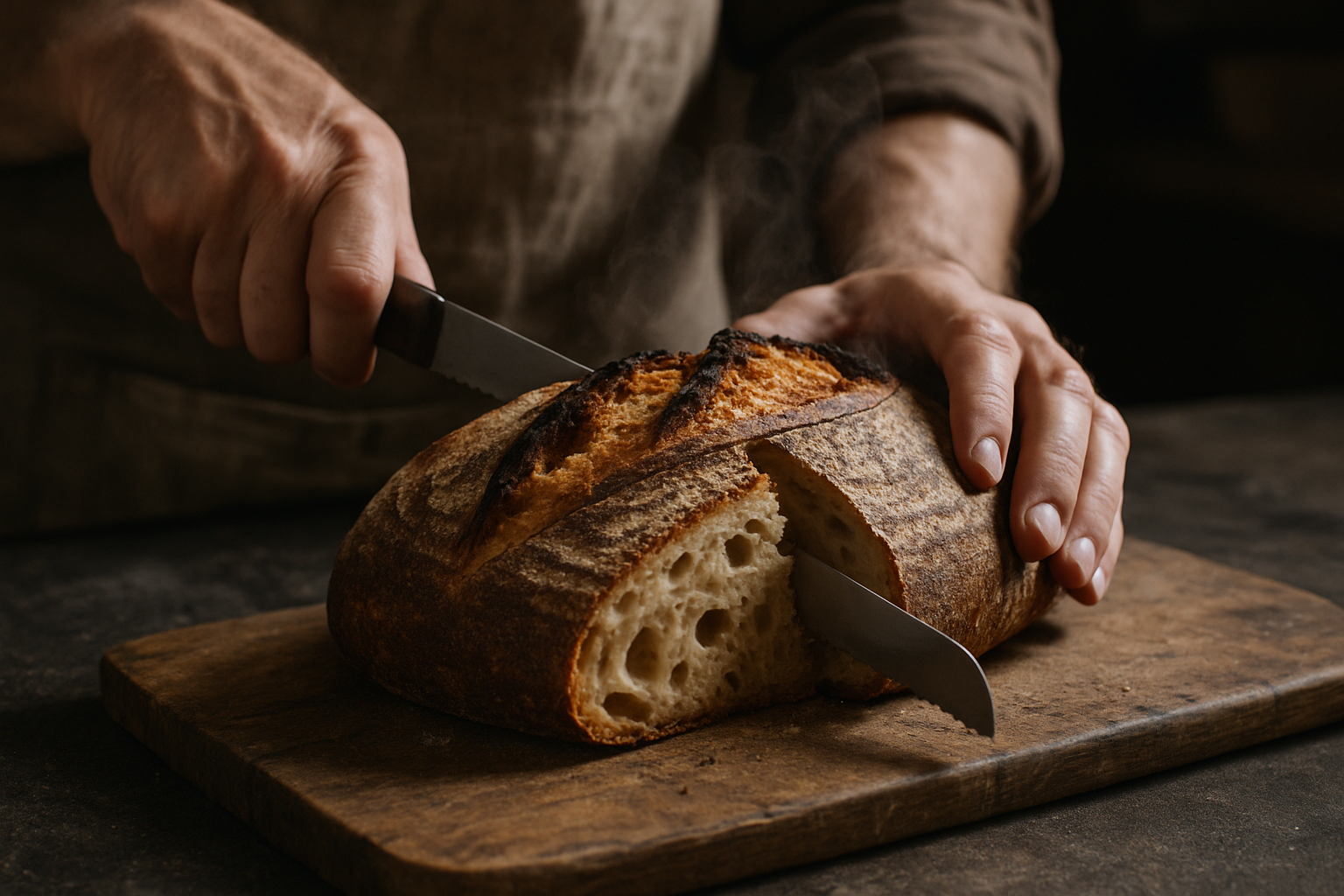
I still remember the loaf that made me obsessed with understanding how to control sourdough sourness flavor. It was a Tuesday afternoon, my third bake of the week, and I pulled a gorgeous golden boule out of the Dutch oven — beautiful ear, perfect crust, the whole deal. Then I sliced into it and took a bite. It was so aggressively sour it made my jaw ache. My husband politely called it “interesting.” My daughter just put hers down. I had created a bread that looked like a masterpiece and tasted like a science experiment gone wrong. That was the moment I stopped guessing and started actually learning what drives sourness in sourdough — and how to nudge it in either direction with intention.
This post contains affiliate links. As an Amazon Associate, I earn from qualifying purchases. This comes at no extra cost to you, and it helps me keep this little corner of the sourdough internet alive and full of free content. Thank you so much for your support!
Why Sourdough Gets Sour (The Science Made Simple)
Here’s the thing: sourness in sourdough doesn’t come from one place — it comes from two types of acid produced during fermentation. Lactic acid gives you that mild, yogurt-like tang that most people find pleasant and approachable. Acetic acid is the sharper, more vinegar-like acid that creates that jaw-clenching punch. Your starter and dough produce both, but the ratio between them is what determines whether your bread tastes gently complex or overwhelmingly tart.
The balance between these two acids is influenced by a handful of variables that are completely within your control: fermentation temperature, hydration, fermentation time, flour type, and how you handle your starter. Once I understood this, baking stopped feeling like a lottery. Every loaf became an experiment I could actually steer.
Let me walk you through exactly how to use each of these levers.
How to Control Sourdough Sourness Flavor With Fermentation Variables
Temperature: Your Most Powerful Tool
Temperature is the single biggest factor in determining how sour your bread will be. Warmer fermentation (75–82°F) favors lactic acid bacteria, producing a milder, more wheaty flavor. Cooler fermentation — especially long, cold retards in the refrigerator — slows everything down and encourages acetic acid production, giving you that deeper, more pronounced tang.
If your bread is too sour, try shortening your cold proof or bringing your bulk fermentation temperature up slightly. If it’s not sour enough, give it a longer cold retard — anywhere from 12 to even 36 hours in the fridge can dramatically deepen the flavor.
This is exactly where a dedicated proofing environment becomes a game changer. I used to be at the mercy of my drafty kitchen, which swings from 65°F in winter to 80°F in summer. Having precise temperature control changed everything.
Hydration: How Wet Your Dough Is Matters
Higher hydration doughs (75% and above) tend to produce more lactic acid, resulting in a milder, creamier flavor. Stiffer, lower hydration doughs encourage acetic acid production and a sharper sour profile. This is why a lot of traditional San Francisco-style sourdoughs — known for their intense tang — are made with lower hydration doughs fermented in cooler conditions.
If you want more sourness, try dropping your hydration slightly and extending your cold ferment. If you want less, bump up the water percentage and keep fermentation on the warmer end.
Timing Your Bulk Fermentation
Over-fermented dough gets very sour very fast — and also loses structure. Under-fermented dough won’t be sour at all and will have a dense, gummy crumb. The sweet spot is hitting peak fermentation without blowing past it. I typically look for 50–75% volume increase during bulk, a domed top, and bubbles throughout the dough when I do the “pull test.”
Keeping careful track of your timing is crucial here. I use a simple digital timer so I’m not relying on memory when I’m juggling life and a loaf at the same time. The Digital Kitchen Timer with Magnetic Loud Alarm is great for this — it’s loud enough that I actually hear it from the other room, and it sticks right to the fridge. If you’re baking multiple loaves or running overlapping timers, the Mwellewm 12-Pack Digital Kitchen Timers are a fun and affordable way to keep everything organized without losing your mind.
Your Starter’s Role in All of This
A young, freshly fed starter is more active but less acidic. A mature, hungry starter that’s been left longer between feedings will contribute significantly more acidity to your dough. If your bread keeps coming out too sour, try using your starter at peak activity — right when it’s domed and bubbly — rather than waiting until it’s started to fall. If you want more tang, use a slightly past-peak starter or increase the percentage of whole grain flour in your feeding routine, since whole wheat and rye both ramp up bacterial activity.
What I Use: Tools That Help Me Get Consistent Results
Once I committed to actually dialing in my fermentation environment, my bakes became dramatically more consistent — and more intentional. Here are the tools that made the biggest difference for me.
A temperature-controlled proofing box has honestly been one of the best investments I’ve made as a home baker. Being able to set an exact temperature and walk away is a completely different experience than hoping your oven-with-the-light-on is “warm enough.” I’ve been using the Bread Proofing Box with Temp and Timer Control, and I love that it folds flat for storage and has an NTC sensor for accurate temperature readings. It takes the guesswork out of warm proofing completely.
Another excellent option is the GIYUDOT Folding Bread Proofing Box, which offers a 50–113°F temperature range and a 48-hour timer — perfect for those long, slow ferments I mentioned earlier. It even comes with recipes and a humidor insert, which is a nice bonus for keeping your dough from drying out during an extended proof.
If you’re looking for something with an even wider temperature range and an ultra-long timer, the FarWalx Bread Proofing Box goes from 68–131°F with a 99-hour timer. That kind of range opens up a whole world of fermented foods beyond bread — yogurt, kombucha, and more.