
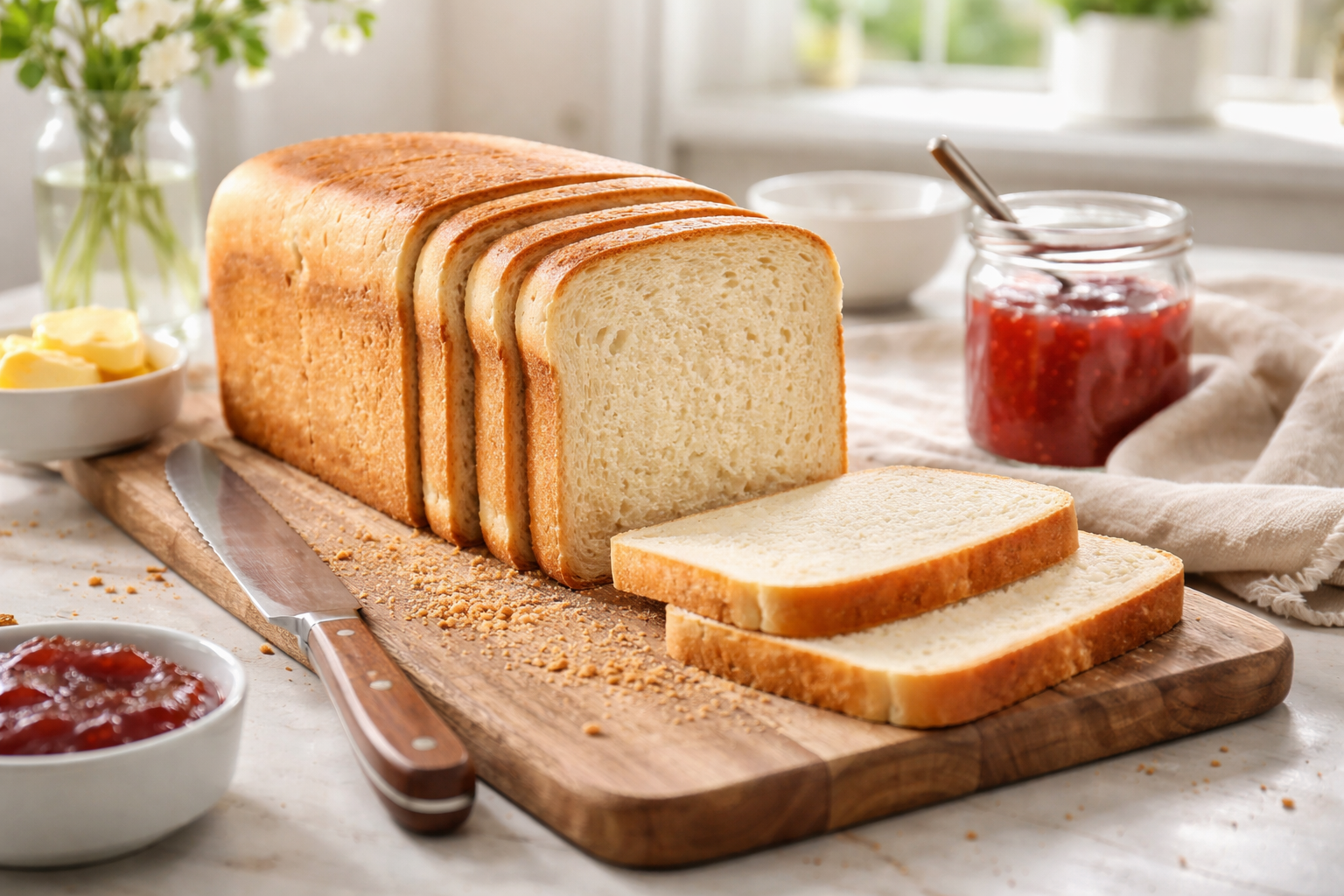
I want to tell you about the morning I proudly sliced into what I was absolutely certain was my best loaf yet, only to watch the entire thing collapse sideways like a soggy accordion. My husband was standing right there. He tried so hard not to laugh. He failed.
That disaster was actually what led me to finally nail this sourdough sandwich loaf recipe, and honestly? I’m almost glad it happened. Almost. But we’ll get to the happy ending. First, let me back up a little.
This post contains affiliate links. As an Amazon Associate, I earn from qualifying purchases.
Why I Became Obsessed With Sourdough Sandwich Bread
I had been baking sourdough for about two years before I seriously attempted a proper sandwich loaf. My open-crumb boules were going great, my scoring was getting prettier by the month, and I was feeling pretty confident. Maybe too confident, as it turned out.
The thing is, my family doesn’t actually eat a lot of rustic boules day-to-day. What they eat is sandwiches. School lunches. Toast with peanut butter. The kind of bread that slices cleanly without crumbling into twelve pieces and destroying a seven-year-old’s lunch. I kept buying store-bought sandwich bread and feeling quietly defeated every time I put it in the cart.
So I decided I was going to crack the soft, sliceable, pullman-style sourdough sandwich loaf. How hard could it be?
Very hard, apparently. My first attempt over-proofed in the pan overnight and turned into the accordion situation I mentioned. The second attempt was so dense it could have been used as a doorstop. By attempt three, I was muttering at my starter like it owed me money. But something clicked on that fourth bake, and now this loaf is on permanent rotation in our house. Here is everything I learned.
What You’ll Need for This Sourdough Sandwich Loaf Recipe
Equipment really does matter here more than it does with a freeform boule. A proper pullman pan gives you those clean, straight sides and a beautifully square profile that actually fits in a toaster. Here are the pans I recommend at a few different price points.
My personal workhorse is the USA Pan Bakeware Pullman Loaf Pan with Cover, 9 x 4 inch. It is nonstick, made in the USA from aluminized steel, and the lid slides on perfectly to give you that classic square sandwich loaf shape. I have baked in this pan dozens of times and it has never let me down. It is the one I reach for every single time.
If you want a slightly taller loaf, the USA Pan Pullman Loaf Pan, 9 x 4 x 4 gives you that extra inch of height and is built with the same quality aluminized steel. Great if your family likes a thick, generous slice.
On a budget or want a second pan so you can bake two loaves at once? The CARTMAN Bread Loaf Pan 2 Pack is a solid option. It comes with a lid, a silicone spatula, and a basting brush, which makes it a genuinely great starter set. Non-stick carbon steel and it holds 1 lb of dough per pan.
If you do not have a pullman pan yet and want to start with something more versatile, both the Wilton Platinum Non-Stick 9 x 5 in Loaf Pan and the Farberware Nonstick Baking Loaf Pan Set work well for an open-top sandwich loaf with a rounded crown. You won’t get the square pullman shape, but you will absolutely get delicious bread.
Ingredients
- 450g bread flour
- 100g active, bubbly starter (fed 4 to 6 hours before you begin)
- 280g warm water
- 9g fine sea salt
- 20g honey or sugar (this feeds the yeast and helps with that soft crumb)
- 25g neutral oil or softened butter (fat is the secret to softness)
The Method That Finally Worked (After My Accordion Incident)
The biggest difference between a rustic sourdough boule and a great sandwich loaf comes down to three things: hydration, enrichment, and proofing time. Get those right and everything else falls into place.
Step 1: Mix and Autolyse
Combine your flour and water and let it rest for 30 minutes. This autolyse step develops gluten without any kneading and makes the dough noticeably smoother and easier to work with. After the rest, add your starter, salt, honey, and oil. Mix until everything is fully incorporated. The dough will feel a little tacky but should not be sticky and unmanageable.
Step 2: Bulk Fermentation
Perform 4 sets of stretch and folds over the first 2 hours, spaced about 30 minutes apart. After that, let the dough rest undisturbed at room temperature for another 2 to 4 hours, until it has grown by about 50 percent and looks airy and slightly domed. This is where I went wrong on my first attempt. I rushed this step and then tried to compensate by letting it proof overnight in the pan, which is how accordion bread is born.
Step 3: Shape and Pan
Turn your dough out onto a lightly floured surface and gently flatten it into a rough rectangle. Roll it into a tight log, pinching the seam as you go. Place it seam-side down into your greased pullman pan. The dough should fill about two thirds of the pan at this point. If you are using a lid, leave it off for now.
Step 4: Final Proof
Cover the pan loosely and let it proof at room temperature for 3 to 5 hours, or in the refrigerator overnight for a more developed flavor. You want the dough to crown just slightly above the rim of the pan if you are baking open-top, or to just reach the top of the sides if you are baking with the pullman lid on. This is your key visual cue. Do not go past it. I am speaking from experience.
Step 5: Bake
Preheat your oven to 375 degrees Fahrenheit. If using the pullman lid, slide it on just before baking. Bake covered for 30 minutes, then remove the lid and bake for another 15 to 20 minutes until the top is golden brown and the internal temperature reads 200 to 205 degrees Fahrenheit. Let the loaf cool completely on a wire rack before slicing. I know waiting is painful. Do it anyway. Cutting into hot bread ruins the crumb texture and you will be sad.
Tips for the Softest, Most Sliceable Crumb
- Do not skip the fat. The oil or butter coats the gluten strands and gives you that tender, soft crumb that sandwich bread needs. This is not the place for a lean dough.
- Use bread flour, not all-purpose. The higher protein content gives you the structure to hold all that softness together without collapsing.
- Your starter must be active and bubbly. If it is not doubling reliably between feedings, your loaf will be dense. Feed it the night before and again in the morning if you need to.
- Store the cooled loaf in a beeswax wrap or a sealed bag at room temperature. It stays soft for 3 to 4 days, or freeze slices individually for easy toasting all week long.
- Keep a consistent kitchen temperature during bulk fermentation. Sourdough is sensitive to cold drafts and warm spots, so try to find a stable location in your home.