I want to tell you about the night I confidently slid a raw pizza directly onto the floor of my oven. Not onto the rack. Not onto the stone. Onto the actual oven floor, where it promptly draped itself over the heating element like a sad, doughy flag of defeat. Sauce everywhere. Cheese pooling into the corners. My smoke alarm doing its absolute best. And my husband standing in the doorway holding a menu for our local pizza place, giving me the most carefully neutral expression I have ever seen on a human face. That was eighteen months ago, and it was the best thing that ever happened to my pizza game. Because fixing that disaster is what finally pushed me to nail this sourdough pizza dough recipe, and I have been making it on repeat ever since.
This post contains affiliate links. As an Amazon Associate, I earn from qualifying purchases.
Why Sourdough Pizza Dough Is Worth Every Minute of the Wait
Before we get into the recipe and gear and the full embarrassing saga of that oven floor incident, let me make a quick case for doing this the slow way. Regular pizza dough made with commercial yeast is genuinely fine. I am not here to be a snob about it. But sourdough pizza dough has this depth of flavor that you just cannot fake. A long, cold fermentation gives the dough a gentle tang, a slightly open crumb in the crust, and a base that crisps up underneath while staying tender and chewy at the rim. It tastes like pizza from that one place you went on vacation and have been chasing ever since. Once you start making it at home, takeout becomes a little heartbreaking. My husband confirmed this unprompted, which felt like vindication for eighteen months of kitchen chaos.
The other beautiful thing about this dough is how forgiving it is once you understand the basics. It actually thrives on neglect. Mix it on a Thursday night, let it cold-ferment in the fridge until Saturday, and it just gets better. There is no precision-timing panic the way there sometimes is with same-day yeasted dough. Your starter does the work slowly and quietly, and you get to just show up on pizza night and look like a hero.
What You Will Need: My Honest Gear Recommendations
The single most important upgrade I made after the Great Oven Floor Incident was getting a proper pizza stone and learning how to use a peel correctly. I cannot overstate how much these two things changed everything. Here is what I actually use and recommend:
Pizza Stones
A hot, preheated stone is the secret to that crispy bottom crust. The stone absorbs and radiates intense heat directly into the base of the dough the moment it lands, mimicking a proper pizza oven in a way a metal baking sheet simply cannot. I currently use the Unicook Pizza Stone, Heavy Duty Cordierite Pizza Pan (15 x 12 inch rectangular, 6.8 lbs), which has been absolutely bulletproof. It heats evenly, handles high oven temperatures without any drama, and is easy to maintain. If you tend to make larger pizzas or want to bake two smaller ones at the same time, the Unicook Large Pizza Stone for Oven, 20 Inch gives you a generous 20 x 13.5 inch surface which is genuinely game-changing for big family pizza nights. Another solid option I have tried is the HANS GRILL Pizza Stone, Rectangular 15 x 12 Inch, which comes with a wooden peel included and works beautifully in both the oven and on a BBQ grill if you want to take this outside in summer.
Pizza Peels
This is the tool that would have saved my oven. A pizza peel lets you build your pizza on a flat surface, give it a quick shimmy to make sure nothing is sticking, and then slide it cleanly onto the hot stone. I use the New Star Foodservice Aluminum Pizza Peel with Wooden Handle, 52 inch overall for oven work because the long handle keeps your hands safely away from the heat. If you have a smaller kitchen or prefer something more compact and easier to store, the New Star Foodservice Aluminum Pizza Peel, 26 inch overall is a great everyday option. Both have a 12 x 14 inch blade which fits a standard home pizza perfectly.
Everything Else You Need
- Active, bubbly sourdough starter (fed 4 to 6 hours before mixing)
- Bread flour or a mix of bread flour and all-purpose
- Fine sea salt and olive oil
- A kitchen scale for accuracy
- A large mixing bowl and plastic wrap or a damp tea towel
- Semolina flour or cornmeal for dusting the peel
The Sourdough Pizza Dough Recipe: Step by Step
The Dough Formula (makes 2 medium pizzas)
- 450g bread flour
- 290g water (room temperature)
- 100g active sourdough starter (100% hydration)
- 10g fine sea salt
- 15g olive oil
Mixing and Building the Dough
Combine the flour and water in a large bowl and mix until no dry flour remains. Let it rest for 30 minutes. This autolyse step is a small effort for a big payoff: it jumpstarts gluten development and makes the dough noticeably smoother and more extensible before you even add the starter. After the rest, add your active starter and salt, and work everything together using the stretch-and-fold method or just a few minutes of hand kneading until the dough feels cohesive. Drizzle the olive oil in at the end and incorporate it fully. The oil tenderizes the crumb and helps the base crisp up without becoming tough.
Bulk Ferment and Cold Proof
Cover the bowl and leave the dough at room temperature for 4 to 6 hours, performing a set of stretch-and-folds every 30 minutes for the first two hours. You are looking for the dough to become noticeably more airy, smoother on the surface, and slightly puffy. Do not stress about dramatic volume increase the way you might with sourdough bread. Once it has had its bulk ferment, divide the dough into two equal balls, shape them gently, place each one in a lightly oiled container, cover tightly, and refrigerate for at least 24 hours and up to 72. This cold ferment is where the magic happens. The flavor develops slowly and deeply, and the gluten relaxes to the point where the dough will stretch like a dream.
Baking Day: The Part That Humbled Me
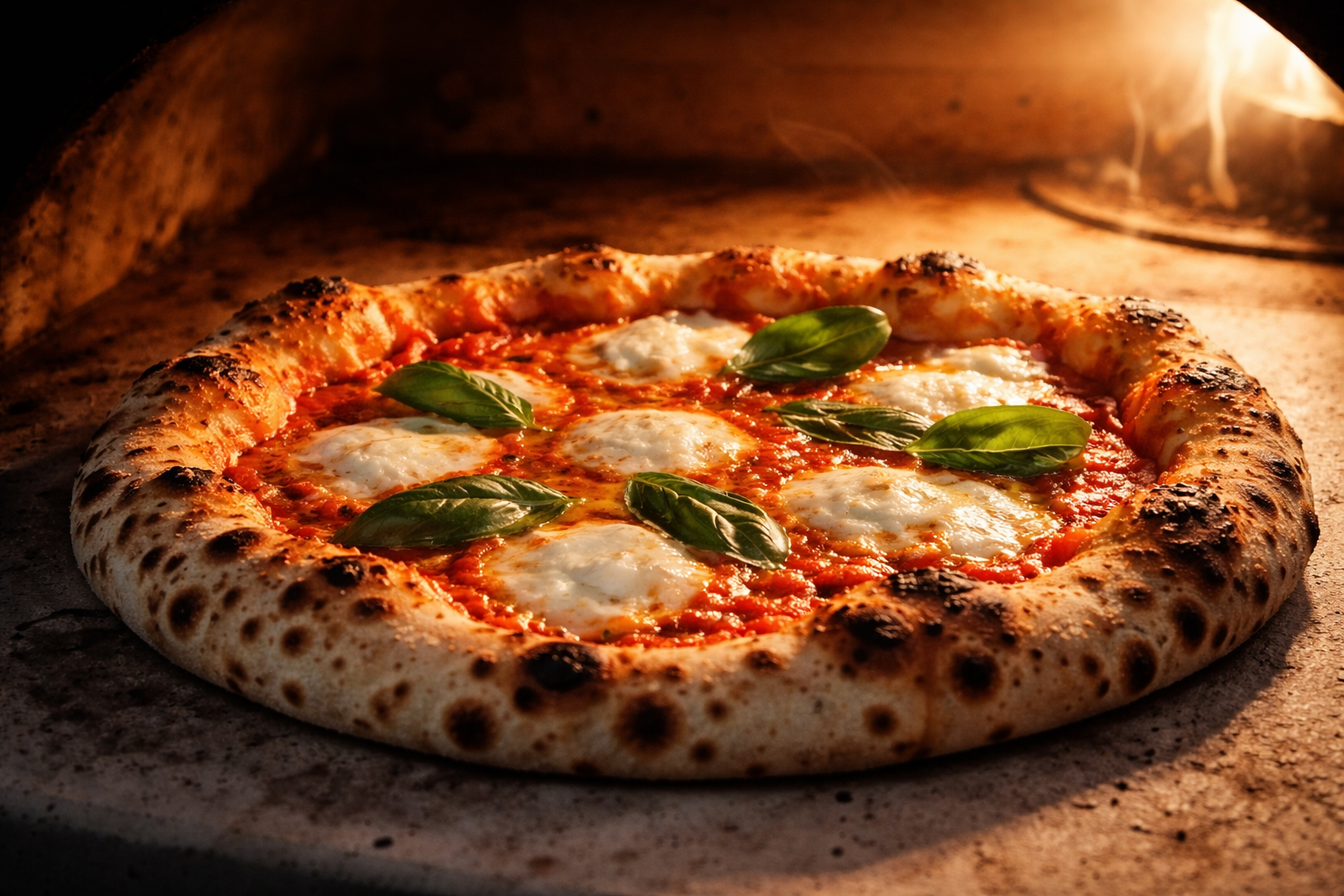
Pull the dough balls from the fridge about an hour before baking and let them come to room temperature on a lightly floured surface. Place your pizza stone on the middle rack and preheat your oven to its maximum temperature, usually 250 to 260 degrees Celsius (480 to 500 Fahrenheit), for a full 45 to 60 minutes. This step is non-negotiable. A cold stone is the enemy of crispy pizza. Dust your pizza peel generously with semolina flour or cornmeal, and this is important, do not skip this. The semolina acts like tiny ball bearings and allows the dough to slide freely. Stretch your dough by hand, working from the center outward and letting gravity do some of the work. Add your toppings quickly, give the peel one final shimmy to confirm nothing is sticking, and then slide the pizza onto the stone with a confident forward-and-back motion. Bake for 8 to 12 minutes, until the crust is blistered and deeply golden underneath.
That confident forward-and-back motion is exactly what I was missing eighteen months ago. I hesitated. The dough stuck to the baking sheet I was foolishly using instead of a peel. And then, well. You know the rest.
The Happy Ending (and Why You Should Make This Tonight)
The Saturday after the oven floor disaster, I ordered the pizza stone, ordered the peel, watched approximately four hours of pizza-launching videos, and tried again. The dough slid off the peel cleanly, landed flat on the stone, and baked into the most beautiful pizza I