
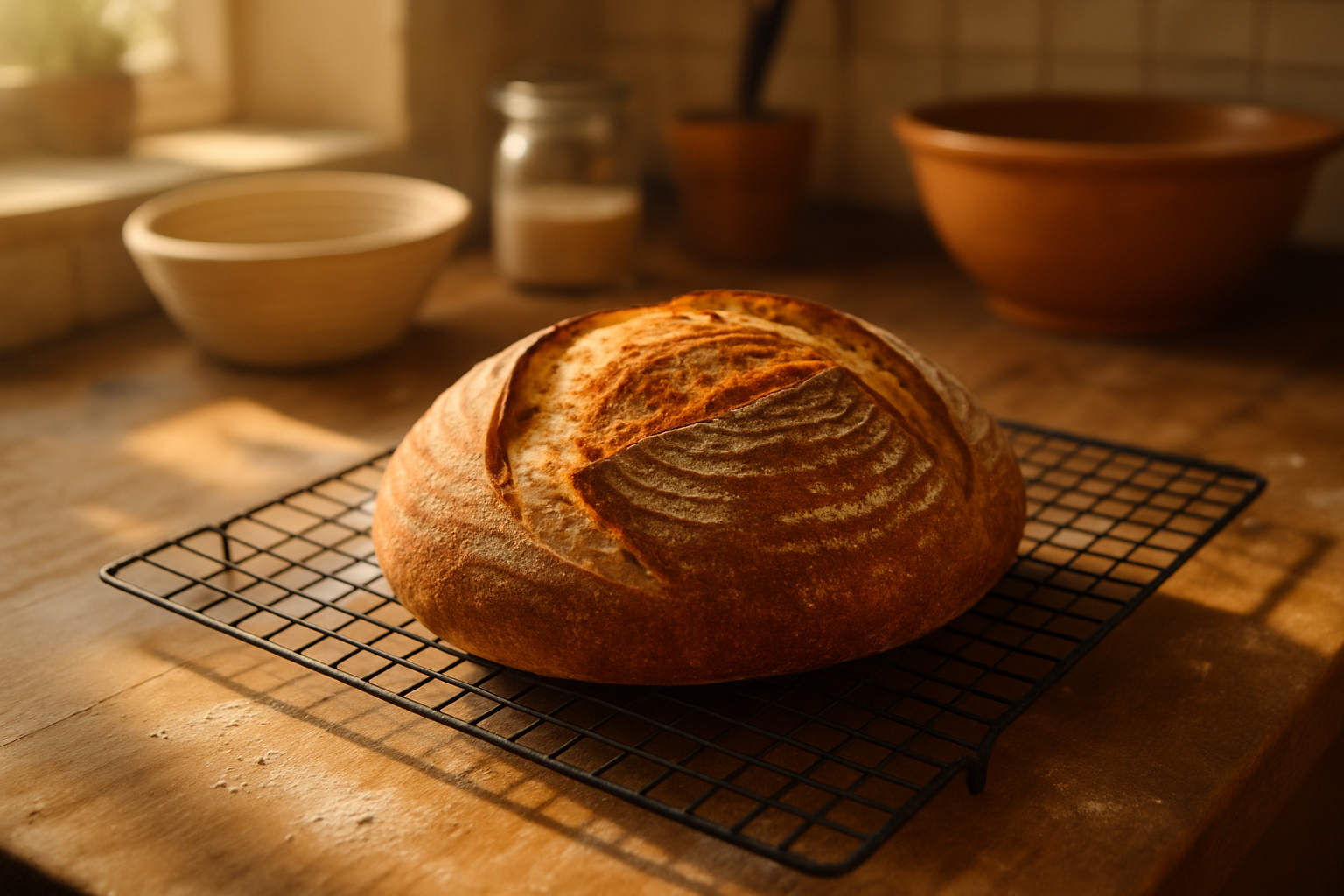
I still remember the morning I sliced into my very first real sourdough loaf and felt something shift — not just in the kitchen, but in my body. I’d been dealing with bloating and sluggish digestion for years, quietly blaming it on “just how I am.” But after a few weeks of eating the bread I was baking myself, things started to change. That’s when I went down the rabbit hole of sourdough gut health microbiome research, and honestly, I’ve never looked back. What I discovered blew my mind: the same ancient fermentation process that makes sourdough taste incredible is also doing something remarkable for your digestive system.
This post contains affiliate links. As an Amazon Associate, I earn from qualifying purchases. This means if you click a link and make a purchase, I may earn a small commission at no extra cost to you. I only recommend products I genuinely use and love.
What Makes Sourdough Different from Regular Bread?
Here’s the thing most people don’t realize: not all bread is created equal, and sourdough isn’t just “bread with a sour taste.” True sourdough is made through a long, slow fermentation process driven by wild yeast and lactic acid bacteria (LAB) — microorganisms you cultivate yourself in a living starter. That fermentation is everything. It’s the reason sourdough has a depth of flavor that commercial yeast bread simply can’t match, and it’s the reason your gut responds to it so differently.
Commercial bread is made fast. Dough is mixed, proofed quickly with commercial yeast, and baked — often in under two hours. There’s no time for fermentation to do its work. Sourdough, by contrast, ferments for anywhere from 6 to 24 hours (or even longer with cold retarding). During that time, the wild yeast and bacteria are busy transforming the flour in ways that matter deeply for your health.
Sourdough Gut Health and Your Microbiome: The Science Behind the Magic
Let’s talk about what’s actually happening during fermentation, because once you understand it, you’ll never rush a loaf again.
Probiotics: The Living Cultures in Your Dough
Sourdough starter is teeming with lactic acid bacteria strains like Lactobacillus — the same family of bacteria found in yogurt, kimchi, and other fermented foods celebrated for gut health. During fermentation, these bacteria multiply and produce lactic and acetic acids. While the high heat of baking does kill most live bacteria in the finished loaf, research suggests that the metabolic byproducts they leave behind — including certain peptides and organic acids — continue to support a healthy gut environment. And if you’re enjoying sourdough alongside other fermented foods, you’re building a genuinely diverse microbiome.
Prebiotics: Feeding the Good Guys Already Inside You
This is where it gets really exciting. Sourdough fermentation breaks down complex carbohydrates in the flour into shorter-chain molecules that act as prebiotics — essentially food for the beneficial bacteria already living in your gut. A well-fermented sourdough loaf made with whole grain or high-extraction flour is genuinely prebiotic-rich. You’re not just eating bread; you’re feeding your microbiome.
Phytic Acid Reduction and Better Mineral Absorption
Whole grains contain phytic acid, which binds to minerals like iron, zinc, and magnesium and limits how well your body absorbs them. Long fermentation dramatically reduces phytic acid content — studies have shown reductions of up to 90% in properly fermented sourdough. This means the minerals in your bread become significantly more bioavailable. Your gut isn’t working against antinutrients; it’s actually getting what it needs.
Lower Glycemic Impact
Sourdough’s fermentation also modifies the starch structure in ways that slow glucose release into the bloodstream. Multiple studies have shown that sourdough bread produces a lower glycemic response compared to the same flour made with commercial yeast. For gut health, stable blood sugar means less inflammation — and a calmer, happier digestive system overall.
How to Bake Sourdough That Maximizes Gut Benefits
Not every sourdough loaf is equally beneficial. Here’s what I’ve learned to do consistently to get the most gut-supportive bread possible out of every bake.
- Use whole grain or high-extraction flour. The more of the grain that’s intact, the more prebiotic fiber and minerals your bread will contain. I blend bread flour with whole wheat or whole spelt for almost every loaf.
- Ferment long and slow. Aim for a bulk fermentation of at least 6–8 hours at room temperature, or do an overnight cold retard in the fridge after shaping. This gives the LAB time to do their best work.
- Keep your starter healthy and active. A thriving starter means a thriving fermentation. Feed it regularly with good flour and filtered water, and pay attention to its rhythm and smell.
- Skip the additives. Real sourdough is flour, water, salt, and starter. That’s it. Any commercial bread with a long ingredient list — even if labeled “sourdough” — is not going to give you the same benefits.
- Let it cool completely before slicing. I know, it’s the hardest part. But cutting into a hot loaf interrupts the starch structure and affects texture and digestibility.
What I Use and Recommend
Over the years I’ve gathered a small stack of resources and supplements that have genuinely helped me deepen both my baking and my gut health journey. Here’s what’s on my kitchen shelf and nightstand right now.
If you want to dive deep into baking bread specifically designed to heal and support your digestive system, The Gut-Healing Sourdough Cookbook is an absolute gem. It pairs 75+ anti-inflammatory recipes with solid nutritional context, so you understand exactly why you’re making each choice. I’ve bookmarked half the pages.
For anyone who feels intimidated by sourdough baking — or has tried and given up — I can’t recommend Mastering Sourdough Bread for Gut Health highly enough. Its 5-step weekend approach strips away the overwhelm and gets you baking probiotic-rich bread fast, even if you’ve never touched a starter before.
And if you want the most thorough, science-backed guide to gut-friendly sourdough baking available, pick up The Sourdough School: The Ground-Breaking