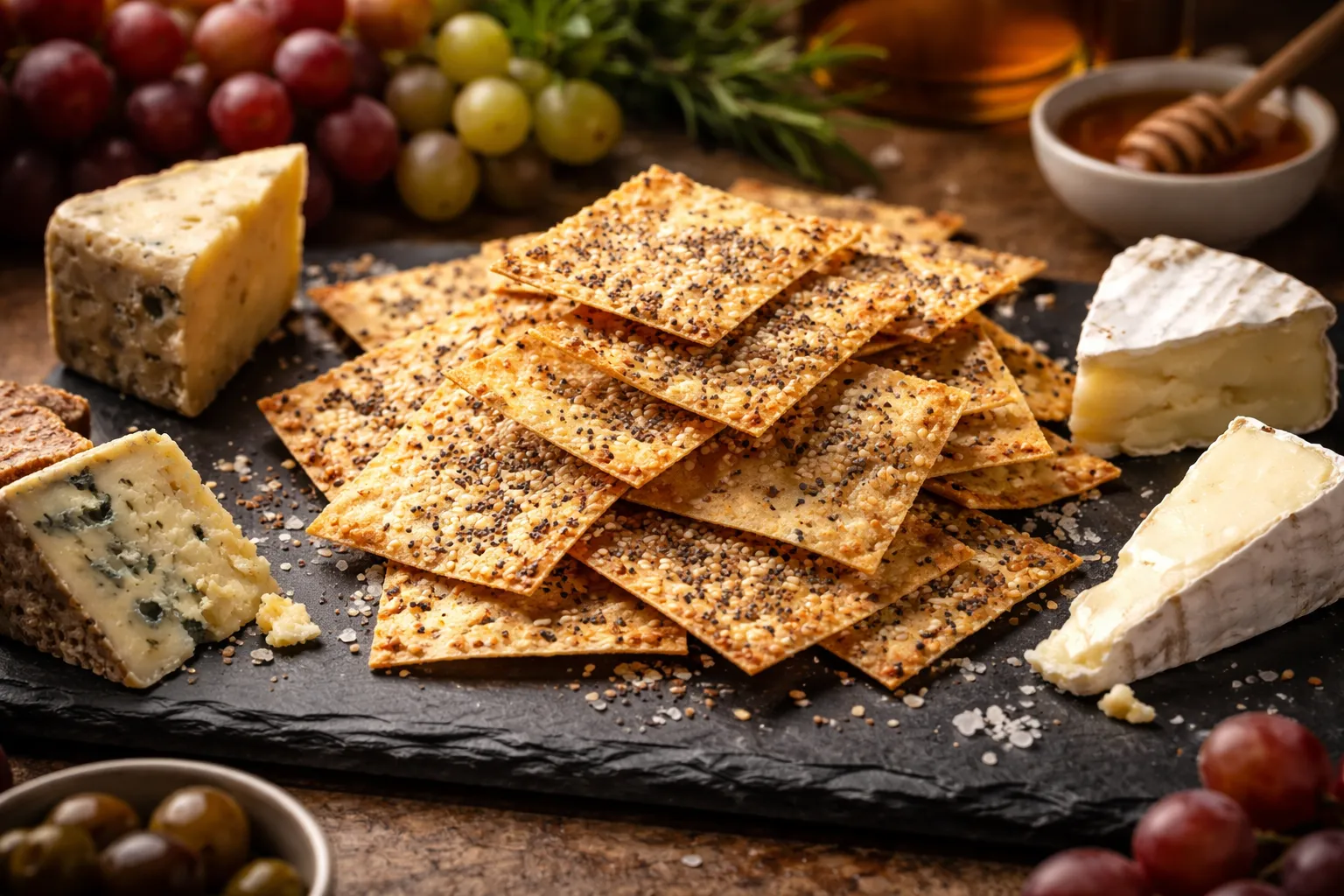
These sourdough crackers are everything you want in a snack — shatteringly crispy, deeply savory, and honestly a little too easy to eat by the handful. Whether you’re a seasoned sourdough baker or just getting started, this recipe is a perfect way to turn your sourdough discard into something genuinely delicious instead of letting it go to waste. And while these are designed as sourdough discard crackers, don’t let that stop you from using active starter if that’s what you have on hand — both work beautifully here.
What makes these sourdough crackers so addictive is the subtle tang from the starter, combined with a satisfying crunch that holds up well for snacking, dipping, or topping with your favorite spreads. They come together quickly, require minimal ingredients, and are endlessly customizable with different herbs, seeds, and seasonings. Once you make a batch, you’ll find yourself looking forward to having discard on hand.
I want to tell you about the night I accidentally became the most popular person at my friend Diane’s dinner party. Not because of my sparkling wit or my stunning outfit (it was a cardigan, let’s be honest), but because of a small pile of crackers I almost didn’t bring.
It started, as most of my kitchen disasters do, with a jar of sourdough discard I had completely forgotten about. I’d been meaning to feed my starter for days, and the discard situation had gotten a little… out of hand. I needed to use it up fast, and I needed something impressive enough to bring to a dinner party in under an hour. That’s when I decided to finally make sourdough discard crackers for the first time. What happened next genuinely surprised me, and now I make these every single week without fail.
The Discard Disaster That Changed Everything
Here is the thing about my sourdough discard situation that evening: the jar had been sitting in the back of my fridge for about nine days. I know. I know! In my defense, life got busy, and I kept telling myself I’d deal with it tomorrow. By the time I actually opened that jar, the smell was… assertive. Tangy in the way that makes you take a small step backward.
I almost threw the whole thing out. I genuinely stood over the sink with the jar in my hand, weighing my options. But something stopped me. Stubbornness, probably. Or maybe frugality. Either way, I put the jar down, pulled up a basic cracker recipe, and got to work.
I mixed the dough, rolled it out thin, scattered some sesame seeds on top, and slid the whole sheet into the oven. Then I went upstairs to get changed, completely forgot about the crackers, remembered them about four minutes past the recommended bake time, and sprinted back down to the kitchen in a panic.
They were deeply golden. Deeply, aggressively golden. I thought I had ruined them. But I tasted one anyway because of the aforementioned stubbornness, and I nearly fell over. They were shatteringly crisp, intensely nutty, and had this complex tangy flavor from the very mature discard that tasted like something you’d find at an expensive wine bar. I wrapped them up, brought them to Diane’s, and they were completely gone within fifteen minutes. Three people asked me for the recipe before dessert was even served.
The Rolling Pin That Finally Gave Me Thin, Even Crackers
Getting sourdough discard crackers uniformly thin is harder than it sounds—too thick and they stay chewy in the middle, too thin and they shatter before they hit the pan. A good rolling pin makes the difference between crackers that actually crisp up evenly and a batch that’s half soggy, half burnt.
What works
- The tapered French design lets you apply consistent pressure from edge to edge without accidentally creating thick spots that resist the oven.
- It’s light enough that you’re not muscling the dough—you can feel exactly how thin you’re going and stop before the dough tears.
- The smooth surface doesn’t drag or stick on oiled parchment, so your dough stays relaxed and even as you work.
What doesn’t
- It’s narrower than a traditional rolling pin, so it takes more passes to cover a full sheet pan—slower if you’re impatient.
- The weight is so light it almost feels insubstantial at first, and you might instinctively press harder than you need to, defeating the point.
I almost abandoned this for my old wooden pin after the first cracker batch came out uneven, but I realized I was still muscling the dough out of habit—switching my mindset made all the difference. Grab the Aisoso French Rolling Pin if you’re tired of uneven crackers.
This post contains affiliate links. As an Amazon Associate, I earn from qualifying purchases at no extra cost to you.