- Redmond Real Salt Ancient Fine Sea Salt (16 oz) — This one has become a true pantry staple for me. It’s unrefined, packed with natural trace minerals, and has a clean, rounded flavor that elevates everything it touches. I use this when I want my loaf to taste its absolute best.
- Celtic Sea Salt Light Grey Coarse (1 lb) — I keep this on hand primarily for finishing loaves after they come out of the oven — a few flakes on a buttered slice is heaven. If you grind it fine before adding to dough, it works great there too. Over 70 trace minerals and sustainably harvested.
- Celtic Sea Salt Light Grey Co
I still remember the loaf that finally made me understand the salt in sourdough bread importance in a way no recipe ever spelled out for me. I was rushing through a bake, distracted by a podcast, and I simply forgot to add the salt. The dough felt fine during bulk fermentation — maybe even a little too alive, almost frantically bubbly. But when that loaf came out of the oven, it was flat, gummy, and tasted like absolutely nothing. One missing ingredient had wrecked the entire bake. That mistake sent me down a deep rabbit hole, and what I learned changed how I approach every single loaf I make.
This post contains affiliate links. As an Amazon Associate, I earn from qualifying purchases. This means I may earn a small commission if you click through and make a purchase — at no extra cost to you. I only ever recommend products I genuinely use and love in my own kitchen.
What Salt Actually Does Inside Your Dough
Salt is one of just four ingredients in a classic sourdough loaf — flour, water, starter, and salt — and yet it does more heavy lifting than most bakers give it credit for. Let me break down exactly why it matters so much.
It Strengthens the Gluten Network
Salt tightens the gluten structure in your dough. It does this by pulling water away from the gluten proteins, which makes them bond more tightly together. The result is a dough that holds its shape, develops better tension during shaping, and gives you that gorgeous open crumb and oven spring we’re all chasing. Without salt, your gluten network stays weak and slack — which is exactly why my saltless loaf pancaked in the oven.
It Controls Fermentation Speed
Salt slows down the wild yeast and bacteria in your starter. This might sound like a bad thing, but it’s actually what keeps your dough from over-fermenting before you’re ready to bake. That frantic, overly bubbly dough I noticed during my saltless bulk fermentation? That was the yeast running completely unchecked. Salt keeps fermentation at a pace you can actually manage, giving you a wider window to work with and more predictable results.
It Enhances Flavor Profoundly
This one speaks for itself if you’ve ever bitten into a saltless loaf. Salt doesn’t just make bread taste “salty” — it amplifies every other flavor note, from the wheaty sweetness of the flour to the complex tang from your starter. It also balances acidity. A properly salted sourdough has that beautiful depth you just can’t fake.
How Much Salt Should You Use in Sourdough?
The standard recommendation — and the one I follow consistently — is 1.8% to 2.2% salt based on the total flour weight. This is called baker’s percentages, and once you start thinking this way, baking becomes so much more intuitive.
Here’s what that looks like in real numbers:
- For 500g of flour → use 9g to 11g of salt
- For 750g of flour → use 13.5g to 16.5g of salt
- For 1000g of flour → use 18g to 22g of salt
I personally land at 2% for most of my loaves. It’s the sweet spot — enough to strengthen the dough and build real flavor without tipping into overly salty territory. If you’re baking for someone watching sodium, you can nudge down to 1.8%, but I wouldn’t go lower than that or you’ll start losing structure.
One important tip: always use fine-grain salt for sourdough, not coarse. Coarse salt dissolves unevenly, which can create inconsistent seasoning and even damage gluten strands if the crystals sit on the dough surface too long. Fine sea salt dissolves quickly and incorporates beautifully.
When Should You Add the Salt?
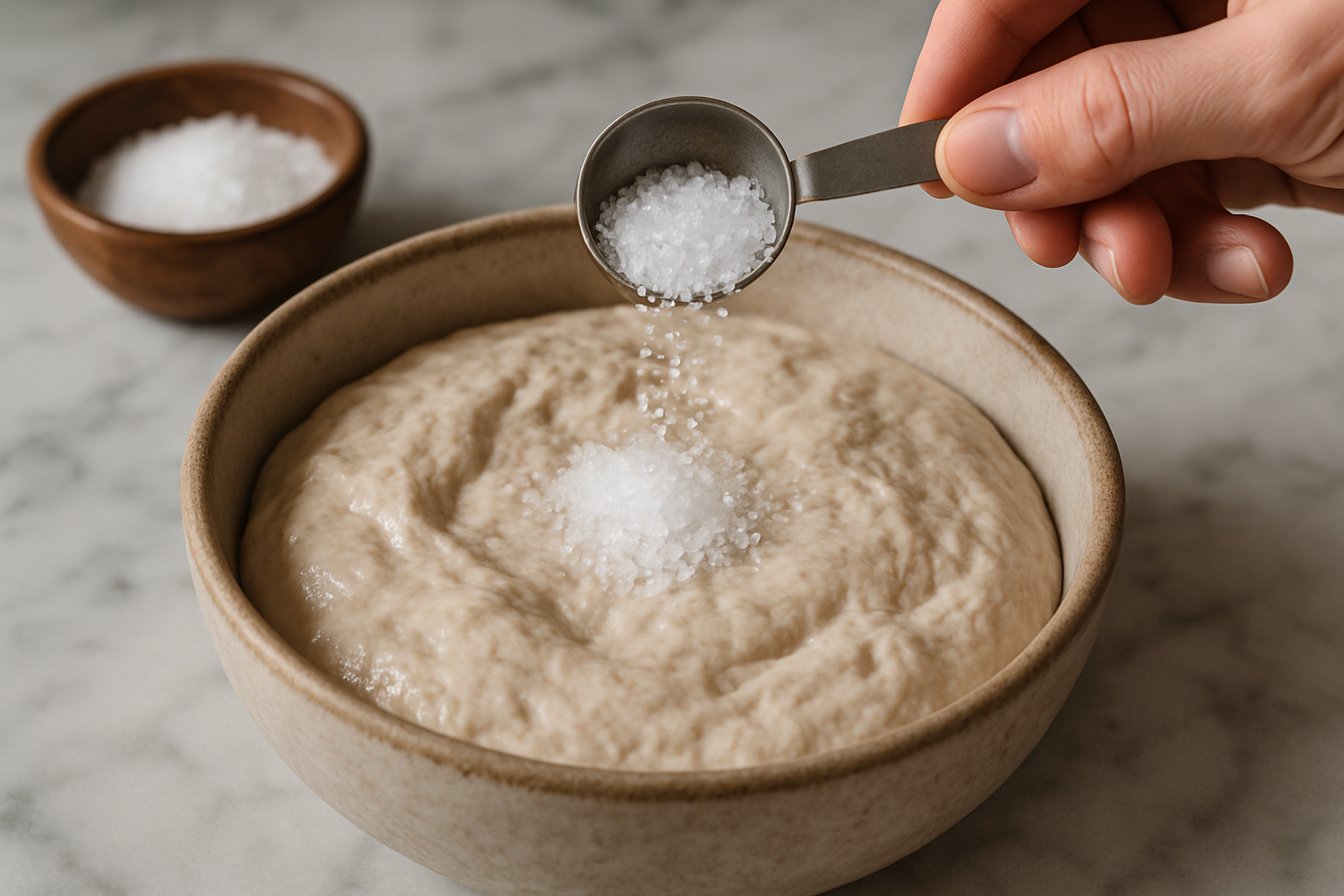
Many bakers — myself included — add salt after an initial 30-minute autolyse. This gives the flour and water a head start on hydration and gluten development before salt tightens things up. Some bakers add salt right at the start with no issues, but if you’re doing an autolyse, hold the salt until afterward. Either way, make sure it’s fully incorporated before bulk fermentation begins.
Salt in Sourdough Bread Importance: What I Use and Recommend
Not all salts are created equal for sourdough, and after experimenting with a bunch of them, I’ve settled on a few favorites I rotate through depending on what I have on hand. Here’s what’s currently in my bread kitchen:
Everyday Picks
- Amazon Grocery Fine Ground Sea Salt (16 oz) — My go-to workhorse salt. It’s affordable, reliably fine-grained, and dissolves instantly into dough. Perfect if you’re baking multiple times a week and burning through salt quickly.
- Fine Grain Baja Sea Salt (14 oz) — A pure, non-iodized option that I really appreciate. Iodized salt can inhibit yeast activity slightly, so using non-iodized salt is a smart move for sourdough specifically. This one is mineral-rich and works beautifully.
Mineral-Rich Favorites
- Redmond Real Salt Ancient Fine Sea Salt (16 oz) — This one has become a true pantry staple for me. It’s unrefined, packed with natural trace minerals, and has a clean, rounded flavor that elevates everything it touches. I use this when I want my loaf to taste its absolute best.
- Celtic Sea Salt Light Grey Coarse (1 lb) — I keep this on hand primarily for finishing loaves after they come out of the oven — a few flakes on a buttered slice is heaven. If you grind it fine before adding to dough, it works great there too. Over 70 trace minerals and sustainably harvested.
- Celtic Sea Salt Light Grey Co