Understanding Two Classic Breads
Bread lovers often confuse Pain au Levain with sourdough. However, these two breads tell different stories through their crusts and crumbs. Both rely on natural fermentation, yet they deliver distinct flavors and textures. The difference lies in their cultural origins, fermentation approaches, and final taste profiles.
If you’ve been inspired to start baking your own artisan breads at home after learning about these classic techniques, having the right tools and resources makes all the difference in achieving bakery-quality results. A comprehensive bread baking cookbook will guide you through mastering various loaf styles with clear instructions suitable for beginners and experienced bakers alike. For those ready to dive into authentic French-style baking, investing in a quality sourdough starter kit provides everything needed to cultivate and maintain your own natural leavening culture at home. When you’re ready to score your loaves with those beautiful patterns you see on artisan breads, a precision bread lame allows you to create professional-looking slashes that help control the loaf’s expansion during baking. Achieving that perfect crispy crust with a chewy interior becomes much easier when you bake on a proper pizza stone that distributes heat evenly throughout your oven. Learning the simplified techniques found in artisan bread baking books can revolutionize your approach to making these traditional loaves with minimal hands-on time. Essential pastry bench scrapers help you handle sticky dough effectively while keeping your workspace clean during the folding and shaping process. Having the proper equipment transforms bread baking from a frustrating experience into an enjoyable ritual that connects you to centuries of baking tradition. The difference between Pain au Levain and sourdough becomes even clearer when you experiment with making both styles yourself using authentic methods and quality tools.
Pain au Levain comes from French baking traditions. Meanwhile, American sourdough has carved its own identity. Each bread reflects the values and techniques of its homeland. Understanding these differences helps bakers and consumers appreciate what makes each loaf special.
The Flavor Profile Divide
Taste separates these breads more than any other factor. Source American sourdough typically delivers a sharp, tangy punch. This pronounced sourness comes from acetic acid, which develops during longer, cooler fermentation periods. . The result creates that distinctive bite many Americans love.
In contrast, Pain au Levain offers a gentler flavor experience. French bakers cultivate lactic acid rather than acetic acid in their starters. This approach produces a mild, creamy taste with subtle complexity. The bread tastes less aggressive and more nuanced. Consequently, it pairs beautifully with delicate cheeses and refined dishes.
The temperature during fermentation drives these flavor differences. American bakers often refrigerate dough for 12 to 24 hours. This cold environment encourages acetic acid production. French bakers, however, prefer warmer, shorter fermentation cycles. These warmer conditions favor lactic acid development instead.
Starter Maintenance Traditions
The French call their sourdough starter a “chef” or “levain.” This name reflects the respect bakers give this living culture. French bakers typically maintain their chef at 100% hydration. They feed it regularly with specific flour blends to preserve its character.
American sourdough starters vary widely in hydration levels. Some bakers prefer stiff starters at 50% hydration. Others maintain liquid starters at 125% or higher. This flexibility allows American bakers to experiment freely. Nevertheless, it creates inconsistency in flavor profiles across different bakeries.
French bakers follow stricter guidelines for starter care. They refresh their chef at precise intervals, often twice daily. Additionally, they use the same flour blend for each feeding. This consistency ensures the starter maintains its mild, lactic character. American bakers, conversely, may switch flours or adjust feeding schedules based on convenience.
Flour Selection and Quality
The French Classification System
The secret to authentic Pain au Levain lies in the unique French grading system. Unlike American labels based on gluten potential, France classifies flour by ash content. Essentially, this measures the mineral residue remaining after burning a sample. Higher numbers signify more whole grain presence. For instance, a high ash count means the flour retains more bran and germ. Consequently, these flours provide a darker color and richer fermentation activity compared to highly processed options.
Understanding the “T” Numbers
Bakers must select the specific “Type” (T) carefully to control the final loaf. American all-purpose flour roughly correlates to T55. However, artisanal French sourdough demands something more robust to achieve the correct flavor profile.
Here is a breakdown of common varieties:
- Type 65 (T65): This is the gold standard for traditional baguettes and light sourdough. It offers a creamy crumb with an open structure.
- Type 80 (T80): Often called “bis” flour, this semi-whole wheat creates a rustic texture.
- Type 110/150: These are whole grain options used for dense, nutrient-rich country breads.
The Protein Difference
Beyond classification, the wheat itself differs genetically between the two regions. American crops are typically Hard Red Spring wheat. In contrast, French farmers mostly grow Soft Winter wheat varieties. Therefore, the protein content is significantly lower in French flour.
This lower protein creates a distinct eating experience. The crust becomes crisp rather than leathery. Additionally, the interior crumb feels tender instead of chewy. Thus, replicating French sourdough in other countries often requires softer flour blends.
American sourdough bakers often use bread flour with higher protein content. This flour typically ranges from 12% to 14% protein. The higher protein creates stronger gluten networks. As a result, American sourdough often has a chewier crumb structure. French flour, with lower protein levels, produces a more tender crumb.
Organic and stone-ground flours have gained popularity in both countries. However, French regulations govern flour production more strictly. French millers must follow specific standards for each flour type. American millers enjoy more freedom in their milling processes. This difference affects how flour behaves in bread making.
Legal Definitions and Standards
France takes bread seriously enough to legislate it. French law defines what qualifies as “pain de tradition française.” This legal designation requires specific ingredients and methods. Bakers cannot use additives, enzymes, or frozen dough. Moreover, they must use traditional fermentation techniques.
Pain au Levain falls under these strict guidelines when sold in France. The bread must contain only flour, water, salt, and natural leaven. No commercial yeast can supplement the starter. These regulations protect traditional baking methods and ensure quality. Consequently, French consumers know exactly what they’re buying.
The United States lacks similar federal regulations for sourdough. American bakeries can label bread “sourdough” with minimal oversight. Some commercial “sourdough” contains commercial yeast and artificial flavoring. This flexibility benefits innovation but sometimes misleads consumers. Therefore, American buyers must research their local bakeries carefully.

Fermentation Time and Temperature
Fermentation schedules differ dramatically between these traditions. French bakers typically ferment Pain au Levain for 4 to 8 hours at room temperature. They may include a brief cold retardation, but it remains shorter than American methods. This approach develops flavor without excessive sourness.
American sourdough often undergoes extended cold fermentation. Bakers refrigerate shaped loaves for 12 to 48 hours. This long, cold period intensifies the tangy flavor profile. Additionally, it improves the bread’s keeping quality and digestibility. However, it requires more planning and refrigerator space.
The French Sensory Approach
In France, baking relies heavily on intuition and sensory engagement. Bakers prioritize the look and feel of the dough over a clock. Consequently, they physically touch the dough to assess its strength and elasticity. This tactile method requires years of hands-on experience to master. Furthermore, they observe specific visual cues carefully.
For instance, they look for a “domed” surface on the dough. This convex shape indicates strong fermentation activity. Additionally, they check for the presence of small gas bubbles along the sides. Therefore, the ambient temperature of the bakery dictates the daily schedule. If the room is colder, the dough simply rests longer. This fluid approach treats bread making as a living, breathing art form.
The American Scientific Method
Conversely, the modern American sourdough style favors scientific precision. Many bakers in the United States utilize technology to remove variables. For example, they often use controlled proofing boxes to maintain exact temperatures. This ensures consistency regardless of the weather outside. Moreover, they track the percentage of volume increase meticulously.
Key tools often used in American fermentation include:
- pH Meters: To monitor exact acidity levels.
- Aliquot Jars: Small samples used to track the rise accurately.
- Thermometers: To measure dough temperature frequently.
As a result, the process becomes highly reproducible. This data-driven approach significantly reduces the risk of over-proofing. It appeals to bakers who value predictability and structure.
Divergent Philosophies, Delicious Results
Ultimately, these distinct philosophies shape the character of the final loaf. The French method often yields a rustic, irregular crumb structure. This reflects a deep connection to artisanal tradition. Meanwhile, the American technique frequently produces a reliable, open crumb. It demonstrates a mastery of variables.
However, neither method is superior to the other. Both traditions acknowledge that bulk fermentation is the critical moment for flavor development. Thus, mastering either approach leads to exceptional sourdough success. Whether you use a spreadsheet or your fingertips, the goal remains the same. You are facilitating a transformation from simple flour to complex flavor.
Crust and Crumb Characteristics
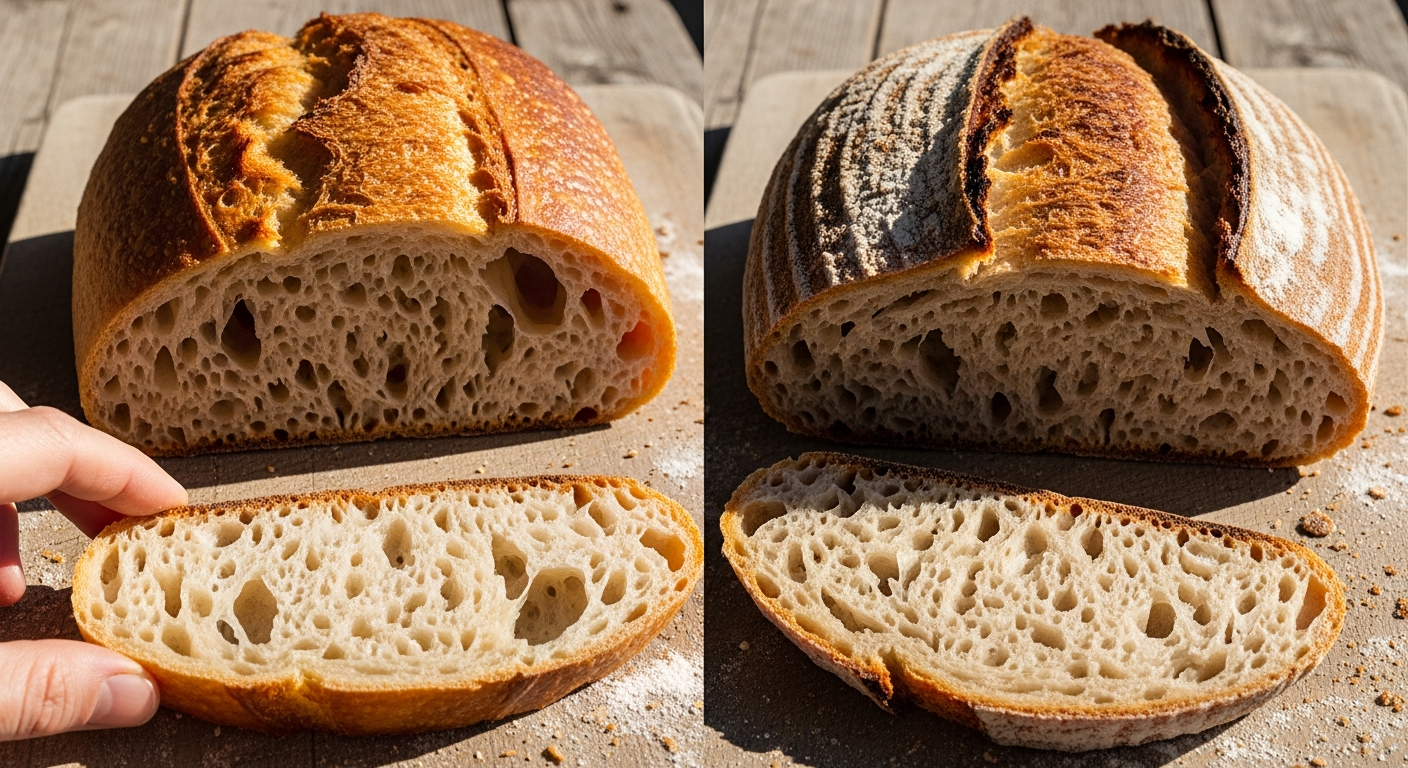
Pain au Levain typically features a golden-brown crust with moderate thickness. The crust crackles gently when broken but doesn’t shatter. Inside, the crumb appears creamy white with irregular holes. The texture feels tender yet substantial. This balance makes it perfect for everyday eating.
American sourdough often showcases a darker, thicker crust. Bakers achieve this through high-temperature baking and steam injection. The crust frequently displays dramatic scoring patterns. Inside, the crumb may be more open with larger air pockets. Some bakers aim for extremely open crumb structures with wild hole patterns.
Crust color reflects baking temperature and duration. French bakers typically bake at slightly lower temperatures for longer periods. American artisan bakers often use very hot ovens with initial steam. These techniques create different caramelization levels on the crust. Consequently, each bread offers unique textural experiences.
Cultural Context and History
French bread culture spans centuries of tradition. Pain au Levain represents everyday sustenance in French households. Families buy fresh bread daily from neighborhood boulangeries. This ritual connects modern French life to ancient baking practices. The bread serves as a cultural touchstone.
American sourdough culture emerged differently. San Francisco sourdough gained fame during the Gold Rush era. The city’s unique microorganisms created distinctive flavors. Later, artisan baking movements revived interest in natural fermentation. Today, American sourdough represents craft baking and artisanal quality.
Cultural Dining Philosophies
The way sourdough traditions integrate into daily life reveals fascinating cultural differences. French dining philosophy emphasizes harmony and balance across multiple courses. Therefore, Pain au Levain serves as a supporting player rather than the main event. Its subtle tang enhances cheese, charcuterie, and wine without competing for attention.
Meanwhile, American food culture celebrates individual ingredients as heroes on the plate. Consequently, a thick slice of tangy sourdough becomes the centerpiece of breakfast or lunch. The bread’s bold, assertive flavor takes center stage, often paired with simple toppings. For example, avocado toast showcases sourdough’s complex taste profile as the primary attraction.
Meal Structure and Bread’s Role
Furthermore, traditional French meals follow a structured progression through multiple courses. Bread appears at the table to cleanse the palate between dishes. Additionally, it helps diners appreciate subtle flavor transitions throughout the meal. The bread must never overpower delicate sauces or refined preparations.
In contrast, American dining often features fewer courses with bolder flavor combinations. As a result, sourdough’s pronounced sourness fits perfectly into this culinary landscape. Moreover, Americans frequently build entire meals around substantial sandwiches. The bread itself becomes a flavor destination rather than a neutral vehicle.
Texture Preferences Across Cultures
Texture expectations also differ significantly between these two traditions. French Pain au Levain typically features a tender, moist crumb with moderate chewiness. However, American artisan bakers often develop more dramatic textures. Their sourdough may include larger air pockets and a chewier bite.
These textural differences reflect broader cultural preferences in bread consumption. Therefore, neither style deserves judgment as superior or inferior. Instead, each approach honors distinct culinary traditions and dining customs. Both paths lead to delicious bread that satisfies their respective audiences perfectly.
Baking Techniques and Equipment
French bakers traditionally use deck ovens with steam injection. These ovens maintain consistent heat and humidity levels. The steam helps develop the characteristic crust while keeping the interior moist. Professional French bakeries invest heavily in quality oven equipment.
American home bakers often use Dutch ovens to replicate professional results. This enclosed environment traps steam during the initial baking phase. The technique has democratized artisan bread making. Additionally, many American bakers experiment with baking stones and steam pans.
Traditional French Shaping Methods
French artisan bakers follow centuries-old shaping protocols that emphasize functionality over decoration. Pain au Levain typically takes two primary forms in traditional boulangeries. The boule, a round loaf, represents the most classic shape. Meanwhile, the batard offers an elongated alternative that fits perfectly in French bread baskets.
The shaping process itself involves careful tension-building techniques. French bakers use their hands to create a tight skin on the dough’s surface. This tension helps the bread maintain its structure during the final rise. Furthermore, it contributes to the characteristic ear formation during baking.
Classic French scoring Patterns
French scoring traditions prioritize simplicity and purpose over artistic expression. Bakers typically use a lame, a specialized razor blade tool, to make decisive cuts. The most common pattern features a single long slash down the batard’s length. Alternatively, boules receive a cross-hatch or square pattern.
These cuts serve practical functions beyond aesthetics. They control where the bread expands during oven spring. Additionally, they allow steam to escape at predetermined points. Traditional French bakers view scoring as a technical necessity rather than creative expression.
The American Creative Revolution
In contrast, American sourdough culture has transformed scoring into an art form. Modern American bakers experiment with intricate designs that push creative boundaries. For example, some create leaf patterns with multiple delicate cuts. Others develop geometric designs featuring curves, spirals, and intersecting lines.
Social media platforms have amplified this artistic trend significantly. Instagram and Pinterest showcase elaborate scoring patterns that attract thousands of followers. Consequently, many American bakers develop signature designs that become their trademark. These distinctive patterns help them build brand recognition in competitive artisan markets.
Scoring as Personal Expression
American bakers often spend years perfecting their unique scoring styles. Some specialize in nature-inspired motifs like wheat stalks or flowers. Others create abstract patterns that resemble modern art installations. Moreover, seasonal designs featuring pumpkins, snowflakes, or hearts have become increasingly popular.
This creative approach reflects broader American culinary values. Innovation and personal expression take precedence over strict tradition. However, skilled American bakers still respect the functional aspects of scoring. They ensure their artistic cuts facilitate proper oven spring and crust development.
Nutritional Considerations
Both breads offer nutritional benefits through natural fermentation. The long fermentation process breaks down phytic acid in grains. This makes minerals more bioavailable for absorption. Furthermore, fermentation reduces gluten content slightly, though neither bread is gluten-free.
Pain au Levain’s milder fermentation may preserve more B vitamins. The shorter, warmer process causes less nutrient degradation. However, American sourdough’s extended fermentation increases certain beneficial compounds. Both breads provide more nutrition than commercially yeasted breads.
Enhanced Digestibility Through Natural Fermentation
Naturally leavened breads undergo a remarkable transformation during fermentation. This process fundamentally changes the bread’s structure at a molecular level. Furthermore, beneficial bacteria and wild yeasts work together to break down components. They target proteins, starches, and other complex molecules systematically. The extended fermentation time allows for thorough pre-digestion of ingredients.
Traditional sourdough fermentation typically lasts between 12 to 48 hours. In contrast, commercial yeast bread rises in just 2 to 3 hours. This extended timeline makes a significant difference in digestibility. Consequently, the longer fermentation creates more accessible nutrients for human consumption.
Breaking Down Complex Carbohydrates
The fermentation process specifically targets complex carbohydrates in flour. Lactic acid bacteria produce enzymes that break these chains into simpler sugars. Additionally, phytic acid—an anti-nutrient—gets reduced by up to 70 percent. This reduction improves mineral absorption significantly during digestion.
Moreover, the bacteria partially break down gluten proteins into amino acids. This partial breakdown makes the bread gentler on digestive systems. For example, people with mild gluten sensitivity often report fewer symptoms. However, this does not make sourdough gluten-free or safe for everyone.
Benefits for Sensitive Digestive Systems
Many individuals experience digestive discomfort with conventional bread products. These people often report bloating, gas, or general stomach upset. Nevertheless, they frequently tolerate artisanal sourdough without these same issues. The pre-digested components require less work from their digestive enzymes.
Therefore, sourdough represents a viable alternative for those with mild sensitivities. Some people describe it as a “gateway bread” back to enjoying baked goods. The lower pH level also slows starch digestion, preventing blood sugar spikes.
Critical Limitations for Celiac Disease
Celiac disease requires absolute gluten avoidance without exception. This autoimmune condition damages the small intestine when gluten enters the body. Furthermore, even trace amounts can trigger serious health consequences. The immune response causes inflammation and long-term intestinal damage.
Individuals with celiac disease must avoid all wheat-based sourdough completely. Additionally, they should avoid rye and barley sourdough varieties as well. No amount of fermentation eliminates gluten entirely from these grains. Therefore, medical guidelines remain clear and unambiguous on this matter.
Choosing Between the Two
Your flavor preferences should guide your choice. If you enjoy bold, tangy flavors, American sourdough delivers satisfaction. The pronounced sourness pairs wonderfully with rich foods like avocado or smoked salmon. It also makes exceptional toast with strong-flavored spreads.
Pain au Levain suits those preferring subtle, nuanced flavors. Its mild character complements delicate dishes without competition. French cheeses, pâtés, and light soups pair beautifully with this bread. Additionally, it works well as a table bread for multi-course meals.
Consider your intended use when selecting bread. American sourdough excels in sandwiches requiring structural integrity. Its chewy texture holds up to moist fillings. Pain au Levain shines alongside meals where bread plays a supporting role. Both breads elevate simple meals into memorable experiences.
Making Your Own at Home
Home bakers can create either bread style with proper technique. Starting with a healthy, active starter is essential for both. Feed your starter consistently for at least two weeks before baking. This establishes the microbial balance needed for successful bread.
Mastering the French style of sourdough requires careful attention to environmental variables. Pain au Levain is celebrated for its subtle complexity rather than an aggressive tang. Therefore, controlling the temperature is the most critical step for success.
Specifically, maintaining a dough temperature between 75°F and 78°F favors yeast activity over bacterial growth. Consequently, the final loaf develops a creamy, nutty flavor profile. In contrast, cooler temperatures would increase acetic acid, making the bread too sour for this specific style.
Optimizing the Flour Blend
Authenticity begins with your choice of grain. French bakers traditionally rely on specific ash-content flours, such as Type 65. However, home bakers can replicate this texture easily.
Try this simple blend for best results:
- 90% White Bread Flour: Provides strength and structure.
- 10% Whole Wheat or Rye: Adds enzymatic activity and flavor depth.
Furthermore, this mixture mimics the rustic nature of French country breads. As a result, the crumb achieves a pleasing, slightly off-white color.
Fermentation and Handling
Timing is another essential variable to control strictly. Unlike San Francisco sourdough, Pain au Levain demands a relatively short bulk fermentation. Typically, four to six hours is sufficient. Therefore, the dough develops strength without becoming overly acidic.
Moreover, this shorter window preserves the natural sweetness of the grain. You must watch the dough closely during this phase. Eventually, it should feel puffy and airy, signifying it is ready for shaping.
Handling the dough requires a delicate touch during the final stages. Ideally, you should preserve the gas bubbles created during fermentation. For instance, avoid heavy-handed folding or aggressive pressing.
Instead, cup your hands gently to create surface tension. Ultimately, this technique ensures a crumb that is open, tender, and light. Additionally, gentle handling prevents the loaf from becoming dense or gummy.
American sourdough benefits from longer, cooler fermentation. After shaping, refrigerate the dough overnight for 12-18 hours. This develops the characteristic tang. Use higher-protein bread flour for better structure. Score deeply before baking to encourage dramatic oven spring.
Conclusion
Pain au Levain and American sourdough both celebrate natural fermentation’s magic. Yet they express this shared foundation through different cultural lenses. Pain au Levain offers mild, creamy flavors that complement French culinary traditions. American sourdough delivers bold tanginess that stands proudly on its own.
Understanding these differences enriches your bread experience. Neither bread surpasses the other in absolute terms. Instead, each excels within its cultural context and intended purpose. French precision and American innovation both contribute valuable approaches to bread making.
The Nuance of French Pain au Levain
French baking tradition prioritizes balance above all else. Pain au Levain is not designed to overpower your palate. Instead, it serves as a subtle vessel for other flavors. The acidity is present, but it remains in the background. Consequently, the natural sweetness of the wheat becomes the star.
This style creates a distinct eating experience. The crumb is usually tighter and creamier than its American cousin. Furthermore, the crust is often thinner and crispier. French bakers achieve this through specific techniques:
- Lower Hydration: Stiffer doughs are easier to shape.
- Younger Levain: Using a starter before it peaks reduces sourness.
- Shorter Fermentation: Limiting time prevents excessive acid buildup.
As a result, this bread pairs perfectly with delicate cheeses and wines. It supports the meal without dominating it. Source
The Boldness of American Sourdough
In contrast, American sourdough embraces a rugged and intense profile. Specifically, the San Francisco style is famous for its sharp, tangy bite. This bread is unapologetically sour. Moreover, it typically features a wild, open interior structure.
The aesthetic is also quite different. American loaves often sport a dark, blistered crust. This provides a deep, caramelized flavor that combats the internal acidity. Additionally, the texture is usually chewy and moist.
To achieve this “assertive character,” bakers push boundaries. For example, they use very high water content. Then, they employ long, cold fermentation periods. This extended time in the fridge allows acetic acid to develop fully. Therefore, the final loaf delivers a powerful flavor punch.
Mastering the Fermentation Spectrum
Learning to control these variables is the true joy of baking. You are not stuck with just one style. Ultimately, you can manipulate time and temperature to shift the flavor profile.
Consider these factors when designing your perfect loaf:
- Starter Maintenance: Feed your starter frequently for mildness. Conversely, let it go longer between feeds for tang.
- Temperature: Warm dough ferments fast and stays sweet. However, cold dough ferments slowly and gets sour.
- Flour Choice: Whole grains ferment faster than white flour. Thus, adding rye or wheat increases activity.
By experimenting with these elements, you gain total control. You can bake a mild loaf for breakfast toast. Later, you can create a sour loaf for a hearty stew. This versatility makes sourdough an endless journey of discovery.
If you’ve been inspired to start baking your own artisan breads at home after learning about these classic techniques, having the right tools and resources makes all the difference in achieving bakery-quality results. A comprehensive bread baking cookbook will guide you through mastering various loaf styles with clear instructions suitable for beginners and experienced bakers alike. For those ready to dive into authentic French-style baking, investing in a quality sourdough starter kit provides everything needed to cultivate and maintain your own natural leavening culture at home. When you’re ready to score your loaves with those beautiful patterns you see on artisan breads, a precision bread lame allows you to create professional-looking slashes that help control the loaf’s expansion during baking. Achieving that perfect crispy crust with a chewy interior becomes much easier when you bake on a proper pizza stone that distributes heat evenly throughout your oven. Learning the simplified techniques found in artisan bread baking books can revolutionize your approach to making these traditional loaves with minimal hands-on time. Essential pastry bench scrapers help you handle sticky dough effectively while keeping your workspace clean during the folding and shaping process. Having the proper equipment transforms bread baking from a frustrating experience into an enjoyable ritual that connects you to centuries of baking tradition. The difference between Pain au Levain and sourdough becomes even clearer when you experiment with making both styles yourself using authentic methods and quality tools.
*As an Amazon Associate, I earn from qualifying purchases.