I still remember the sinking feeling of turning out a loaf that spread flat across my baking stone like a sad pancake. No oven spring, a dense crumb, and that telltale sour smell that told me I’d gone too far. That was my first real lesson in understanding over proofed vs under proofed sourdough — and honestly, it was one of the most valuable mistakes I ever made. If you’ve been there too, you’re in the right place. Today I want to share exactly how I learned to read my dough by touch, so you can catch proofing problems before they ever hit the oven.
This post contains affiliate links. As an Amazon Associate, I earn from qualifying purchases.
Why Proofing Is the Heart of a Great Sourdough Loaf
Proofing is that final, magical phase where your shaped dough rests and the wild yeast does its quiet, important work. Get it right, and you pull a beautifully domed, crackly-crusted loaf from the oven. Get it wrong — either too short or too long — and you’re troubleshooting a disappointment. The tricky part is that there’s no universal timer. Your kitchen temperature, the strength of your starter, your flour’s protein content, and even the humidity in the air all play a role. That’s why learning to read your dough through touch, rather than relying on the clock, is the single most transformative skill you can develop as a home sourdough baker.
Over Proofed vs Under Proofed Sourdough: What Each One Feels Like
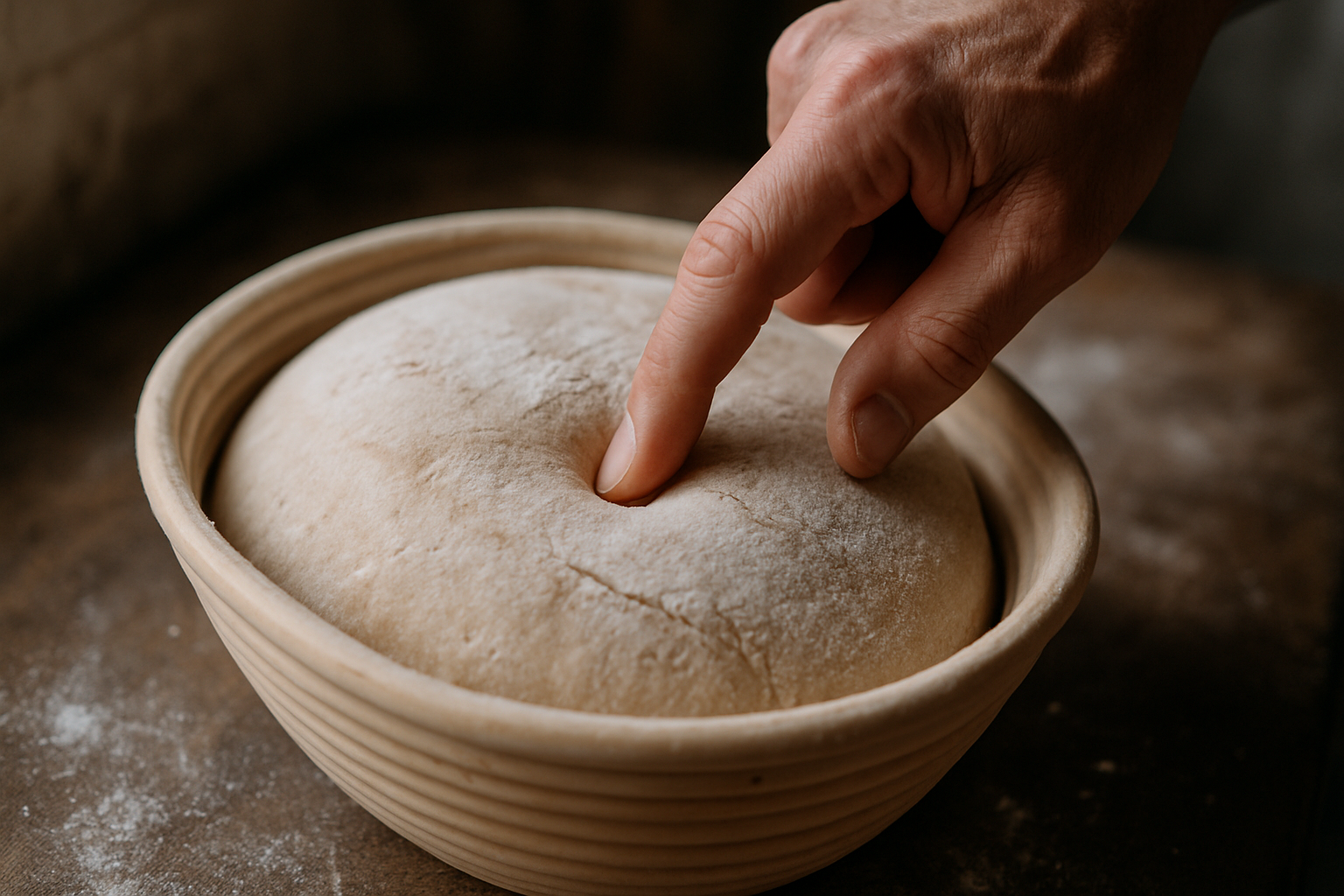
This is where the poke test becomes your best friend. Gently press a floured finger about half an inch into the surface of your dough. Watch what happens next — that’s your answer.
The Poke Test for Under-Proofed Dough
If you poke your dough and it springs back almost immediately — snapping right back to its original shape within a second or two — your dough is under-proofed. It’s telling you it’s still tight and tense, full of structure but not yet relaxed enough. Under-proofed dough feels firm and resistant under your finger, almost like pressing into a firm rubber ball. When you bake it at this stage, the yeast activity hasn’t peaked, so the crust will set before the interior has a chance to fully open up. You’ll often get a massive ear that tears rather than blooms beautifully, a dense and gummy crumb, and large irregular holes near the top of the loaf while the bottom stays tight. The flavor also tends to be milder and less complex, since the fermentation hasn’t had enough time to develop those wonderful organic acids we love in sourdough.
The Poke Test for Over-Proofed Dough
Now, if you poke the dough and the indentation barely moves — sitting there like a little crater that refuses to fill back in — you’ve over-proofed. Over-proofed dough feels pillowy and soft, almost fragile, like it could deflate with very little encouragement. The gluten structure has been exhausted by the long fermentation, and the yeast has consumed most of the sugars available to it. When you bake over-proofed dough, you’ll notice little to no oven spring, a flat or spreading profile, a gummy or slightly wet crumb texture, and a flavor that can taste almost unpleasantly sour. The loaf often looks collapsed rather than proud.
What Perfectly Proofed Dough Feels Like
The sweet spot sits beautifully between those two extremes. A perfectly proofed loaf feels soft and airy under your touch — there’s gentle give when you press it, and the indentation springs back slowly, filling in about halfway and then pausing. It feels alive and pillowy but still holds its shape with confidence. The surface has a subtle jiggle when you move the proofing basket, and the dough looks slightly domed and relaxed. This is your green light. Score it, load it, and bake with confidence.
Other Signs to Look and Smell For
Touch is your primary diagnostic tool, but your other senses matter too. Here’s what I pay attention to beyond the poke test:
- Volume: Your dough should have grown noticeably — typically 50 to 75 percent — during the final proof. If it’s barely grown, it needs more time. If it looks like it’s straining at the edges of your proofing basket or has started to lose its dome, act fast.
- Surface texture: Well-proofed dough has a smooth, slightly taut surface with small bubbles just visible beneath the skin. Over-proofed dough can look almost pockmarked or wrinkled, and the surface tension feels gone.
- Smell: A properly proofed loaf smells pleasantly tangy and yeasty — alive and inviting. Over-proofed dough often smells sharply acidic, almost like vinegar, because the acetic acid has built up significantly.
- Weight: This sounds strange, but over-proofed dough can feel surprisingly light and airy when you pick it up — almost hollow. Well-fermented dough has a satisfying, substantial weight to it.
Can You Fix Over-Proofed or Under-Proofed Dough?
If your dough is under-proofed, the fix is simple: give it more time. Pop it back in a warm spot and check it every 20 to 30 minutes using the poke test. I keep my dough near my oven while it preheats for a gentle warmth boost. If you’re cold-proofing in the refrigerator and you pull it out still feeling tight, let it sit at room temperature for 30 to 45 minutes before scoring and baking.
Over-proofed dough is trickier, but not always a lost cause. If it’s only mildly over-proofed, go ahead and bake it — lower your expectations a little, but you’ll still get edible bread. For a more dramatically over-proofed dough, you can try a gentle reshape (called a “rescue fold”), let it tighten up for 20 minutes, then bake immediately. You won’t recover the full structure, but you might salvage a decent loaf. And if it’s truly gone — very slack, sticky, and falling apart — consider using it as focaccia dough. High hydration, pan-proofed bread is far more forgiving of over-fermented dough, and it still makes something delicious.
Tools I Recommend for Better Proofing
Having the right proofing setup genuinely makes it easier to observe your dough and develop your touch instincts. Here are the tools I personally use and love:
For round loaves, I’ve been using the DOYOLLA Bread Proofing Baskets Set of 2 (8.5 inch Round). They come with linen liners, hold their shape beautifully, and the rattan creates that gorgeous spiral pattern on the crust. If you prefer a longer batard-style loaf, the Categories Troubleshooting