I still remember the first time I pulled a sourdough loaf out of the Dutch oven and felt my heart sink. The crust had burst open on the side — a wild, ugly tear that had nothing to do with my scoring and everything to do with the fact that I’d been “scoring” with a plain kitchen knife. The dough dragged, the surface deflated just slightly, and all that beautiful oven spring went sideways instead of up. That was the moment I finally understood why a dedicated bread lame scoring tool sourdough bakers swear by isn’t just a fancy accessory — it’s genuinely one of the most impactful tools in the whole process.
This post contains affiliate links. As an Amazon Associate, I earn from qualifying purchases. This means I may earn a small commission if you purchase through my links, at no extra cost to you. I only recommend tools I truly believe in and would use in my own kitchen.
If you’ve ever struggled with a loaf that bloomed in all the wrong places, or watched your scoring pattern vanish entirely under the oven spring, this one’s for you. Let’s talk about what a lame actually does, why the blade matters more than you’d think, and which tools are worth adding to your baking kit.
What a Bread Lame Actually Does (And Why It Matters)
A bread lame — pronounced “lahm,” from the French — is essentially a razor blade mounted on a handle, designed specifically for scoring bread dough before it goes into the oven. But that simple description undersells what’s really happening when you score well.
When sourdough hits that hot Dutch oven, the yeast goes into one final, dramatic burst of activity before the heat kills it off. This is oven spring, and it’s glorious — but only if the dough has a planned escape route. A proper score creates a weak point in the surface tension, directing the expansion exactly where you want it. Score boldly and cleanly, and you get a dramatic ear, an open crumb, and a crust that shatters when you tap it. Score timidly — or drag through the dough with a dull blade — and you get a sad, deflated loaf that tears where it wants to, not where you intended.
The difference between a sharp razor lame and a kitchen knife isn’t subtle. It’s the difference between a surgeon’s scalpel and a butter knife. Sourdough, especially a well-fermented, high-hydration dough, is incredibly delicate in those final moments before baking. You need a blade that glides through in one confident motion, not one that grabs and tugs.
Straight vs. Curved Blade: Which One Should You Use?
This is a question I get asked constantly, and the honest answer is: both have their place, and it depends on what you’re baking and what effect you want.
Straight Blade
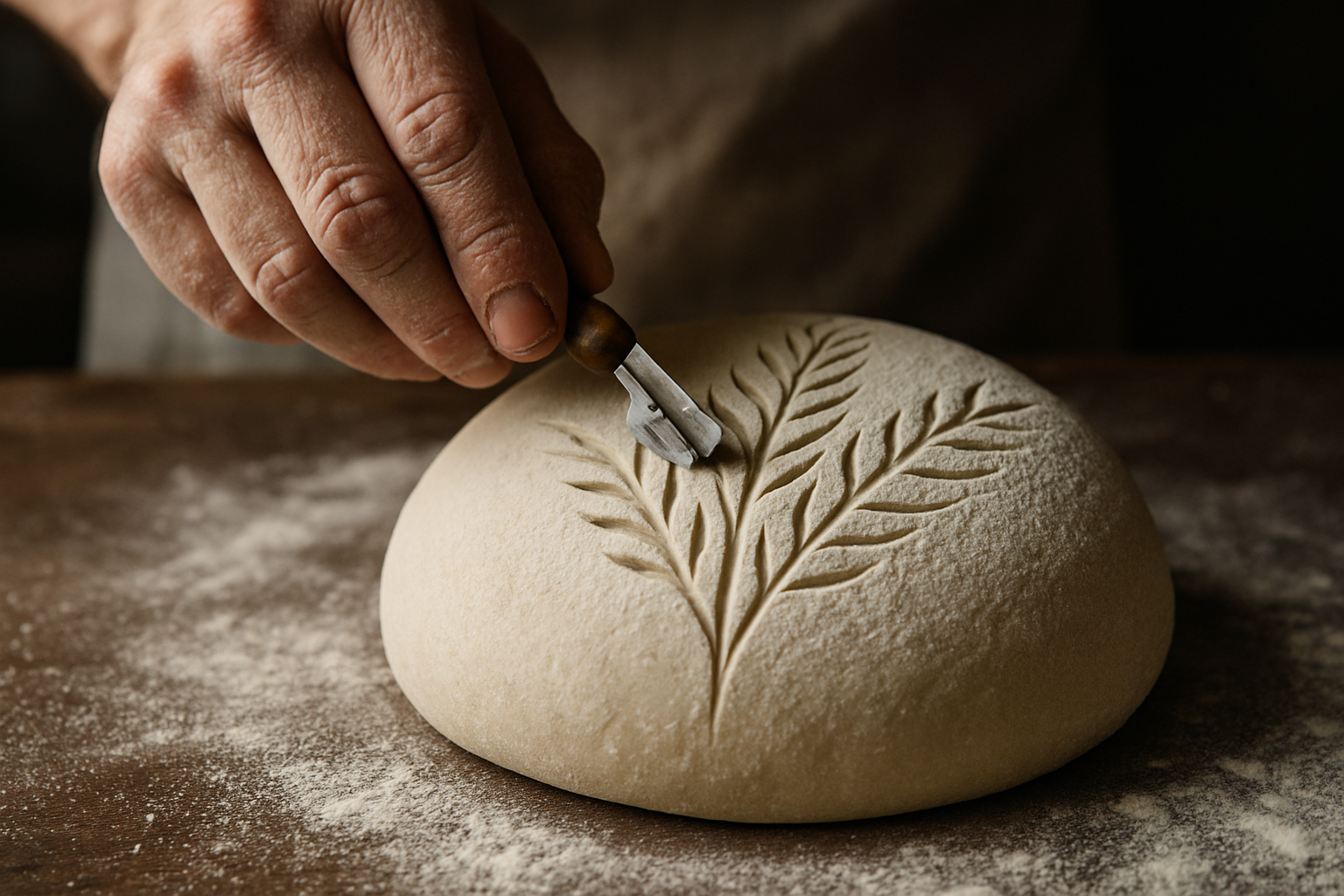
A flat, straight blade cuts clean and direct. It’s excellent for decorative scoring patterns — the intricate leaf designs and wheat stalks you see on Instagram — and for scoring baguettes with those classic diagonal slashes. Because it lies flat against the dough, it tends to produce a more open cut rather than a dramatic raised ear.
Curved Blade
A curved or “bent” blade is the secret to that coveted ear on a round boule or batard. When you hold the lame at a low angle and use the curve to arc through the dough, you’re essentially undercutting the surface just slightly. That flap of dough lifts away in the oven heat and becomes the crispy, caramelized ear that every sourdough baker dreams about. For everyday sandwich loaves and artisan rounds, a curved blade is my go-to.
The good news? Many of the best lames on the market now let you switch between both configurations, so you don’t have to choose.
Bread Lame Scoring Tool Sourdough Recommendations: What I Use and Love
I’ve tested quite a few lames over the years, and here are the ones I genuinely reach for — plus a great starter option if you’re just getting into the scoring game.
Best for Serious Bakers Who Want Versatility: Baker of Seville Bread Lame
This one has a patented design that lets you switch between a straight and curved blade configuration in seconds — no fumbling, no extra tools. It comes with six included blades, which is generous, and the build quality feels genuinely professional. If you’re baking multiple times a week and want one lame that does everything, this is the one I’d point you toward first. Check out the Baker of Seville Bread Lame on Amazon.
Best Starter Set: CRUSTLOVE 2-Piece Bread Lame Set
If you’re newer to scoring and want to experiment with both blade styles without committing to just one tool, this two-piece set is a fantastic value. You get both a straight and a curved scoring knife, plus five blades to work with. It’s a great way to figure out which style you prefer before investing more. See the CRUSTLOVE 2-Piece Set on Amazon.
Best Handcrafted Option: Saint Germain Premium Bread Lame
There’s something deeply satisfying about using a beautifully made tool, and the Saint Germain lame delivers that in spades. It comes with ten replacement blades and an authentic leather protective cover that looks and feels artisan-quality. If you love the ritual of baking and want tools that feel as good as they perform, this one is worth every penny. Find the Saint Germain Premium Bread Lame on Amazon.
Best Heavy-Duty Build: JACYAO’S Stainless Steel Bread Lame
Made from 304 stainless steel and coming with ten razor blades plus a metal storage box, this lame is built to last. The metal storage box is a genuinely thoughtful touch — keeping your spare blades organized and safe is one of those small quality-of-life improvements that you don’t know you need until you have it. Shop the JACYAO’S Stainless Steel Lame on Amazon.
Best Budget-Friendly Complete Kit: Bread Lame with Finger Sleeves and Protective Cover
This option stands out because it includes finger sleeves for protection — something newer bakers especially appreciate, since razor blades demand respect. With ten stainless steel razor blades and a protective cover included, it’s a complete, safety-conscious kit at an accessible price point.