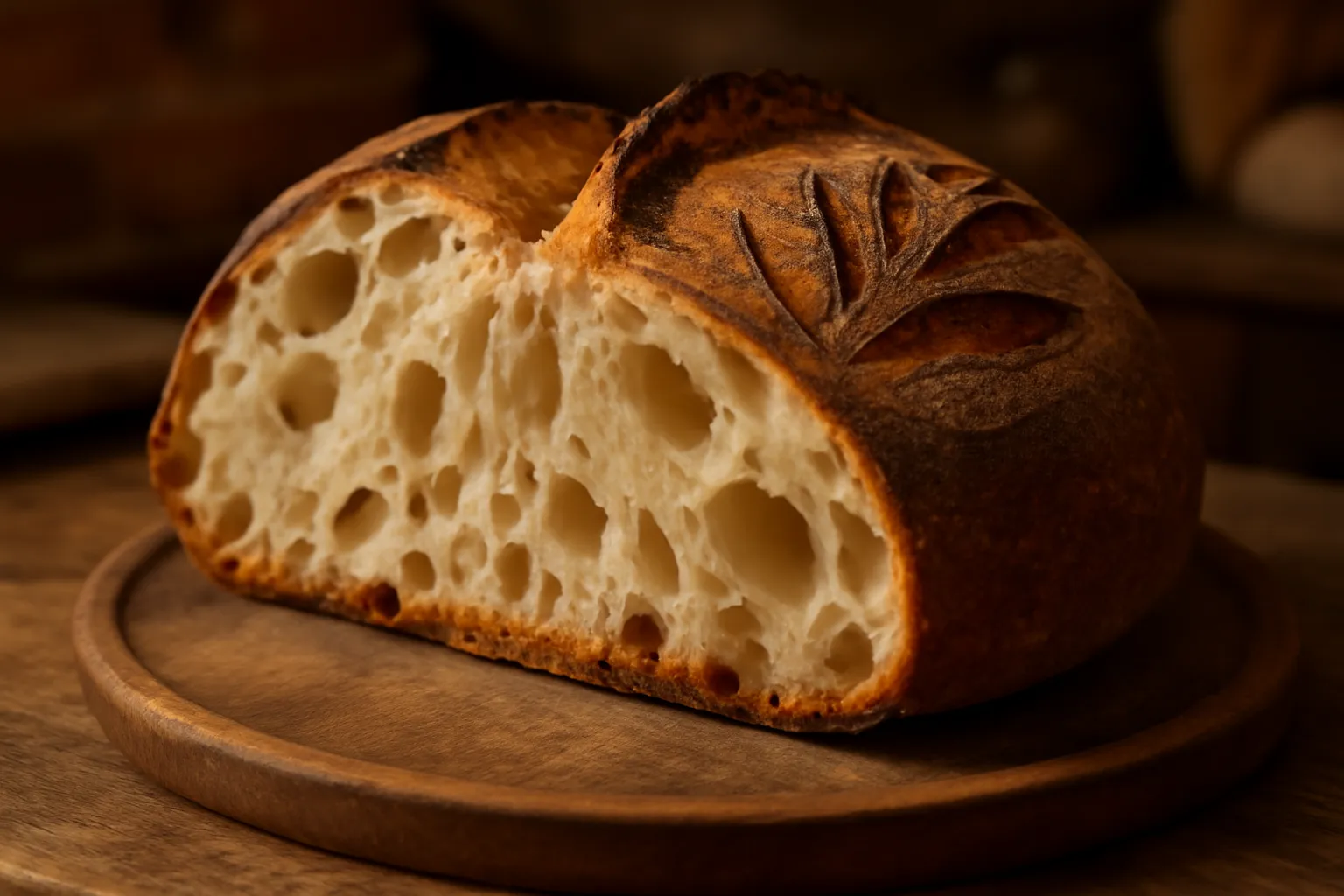
People ask me all the time whether my starter is “better” because it’s old. My honest answer is: it’s complicated. I started this starter in 2014 from nothing but flour, water, and time. I nursed it through a move, a microbakery phase where I was baking 50-plus loaves a week, and a pandemic baking frenzy where I was fielding starter questions from strangers on Instagram. It has survived my mistakes, my experiments, and my occasional neglect. And yes — it does produce a flavour profile that I cannot replicate with a younger culture. But not for the reasons most people think.
The Myth of the “Ancient” Starter
Let’s get something out of the way first. There’s a persistent idea in sourdough culture that older starters are inherently more sour, more complex, or more powerful because of accumulated history. Some of this is romantic nonsense. The microorganisms in your starter are not immortal beings carrying flavour memories from 2014. They’re constantly dying and being replaced. What you’re actually maintaining over years is a stable, well-adapted microbial community — and that stability is where the real flavour advantage lives.
Research from Leuven University’s lab on sourdough microbiology (published across multiple studies in the 2010s) consistently shows that a starter’s microbial composition is shaped primarily by its flour type, hydration, fermentation temperature, and feeding schedule — not its age alone. Age matters insofar as it gives you time to dial in all those variables. My starter isn’t flavourful because it’s old. It’s flavourful because I’ve had 11 years to understand exactly how it behaves.
What Actually Changes in an Old Sourdough Starter Flavor
That said, there are real, measurable differences in what a mature, well-maintained starter produces — and they do accumulate over time.
Acid Balance Becomes More Predictable
Sourdough flavour is primarily driven by two acids: lactic acid (smooth, yogurt-like, mild) and acetic acid (sharp, vinegary, punchy). Young starters tend to be erratic — they might produce a predominantly acetic loaf one week and a blandly lactic one the next, depending on temperature swings or flour changes. After years of consistent feeding with the same flour (I’ve used Marriages Strong White for most of my starter’s life, though I’ve experimented with whole rye extensively), my starter produces a remarkably consistent lactic-forward profile with acetic notes that appear predictably in cold-retarded loaves.
This isn’t magic. It’s microbial stability. The dominant Lactobacillus strains in my starter have outcompeted everything else over years of the same conditions. I know exactly what I’m getting.
Rise Timing Gets Dramatically More Reliable
When I was running the microbakery, reliability was everything. I couldn’t afford a slow ferment on a Friday when I had 40 loaves to get through a door by Saturday morning. By year three of that starter’s life, I could predict its peak within a 20-minute window at a given temperature. That kind of reliability directly affects flavour because fermentation timing is flavour timing. Over-fermented dough tastes flat and boozy. Under-fermented dough tastes raw and dull. Hitting the window consistently is what makes a loaf taste the way you intended.
The Starter Recovers Faster from Neglect
I won’t pretend I feed this thing religiously. There have been months when it sat in the back of my fridge ignored. A young starter takes several refreshments to get back to peak activity after neglect. My 11-year-old culture is back to full strength within two feeds. That resilience means I’m never baking with a compromised starter, which means I’m never fighting to salvage flavour from weak fermentation.
The Honest Caveat: Age Is Not a Shortcut
Here’s the thing I want to be direct about, because I see this misunderstood constantly: an old starter does not automatically produce better bread. I have tasted extraordinary loaves made with six-month-old starters and genuinely mediocre bread from bakers who’ve had their cultures for decades. The starter is one variable. Your flour, your shaping, your fermentation management, your baking vessel, your scoring — all of it matters just as much.
If you’re not happy with your sourdough’s flavour right now and you have a two-year-old starter, the answer is almost certainly not “wait another nine years.” The answer is probably in your fermentation temperature, your flour protein content, or your cold retard timing. I’ve seen more flavour transformation come from dropping bulk fermentation temperature by 2°C than from any amount of time.
How I Maximise Flavour From My Starter
These are the specific things I do that I believe actually leverage the qualities of a mature starter:
- I use a stiff levain (65% hydration) for loaves where I want complexity. Stiffer cultures favour acetic acid production and produce that deeper, more developed tang.
- I cold retard shaped loaves for 16 to 20 hours at 4°C. This slows lactic fermentation and allows more aromatic compounds to develop without over-proofing.
- I bake with a higher percentage of whole grain flour in the levain than in the final dough — usually 20% whole rye in the levain, white in the dough. The mineral content of the rye feeds my Lactobacillus strains without making the final crumb dense.
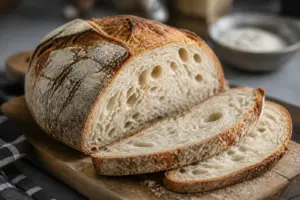
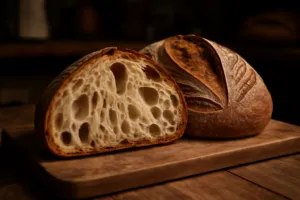
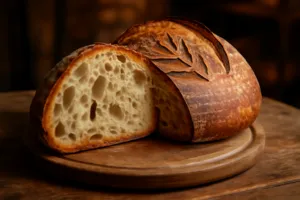
- I score deliberately, not decoratively. A proper ear isn’t just aesthetics — controlled oven spring means the crumb structure that supports flavour development actually sets correctly.
What I Use
After years of testing gear, I’ve settled on a few things I genuinely use and recommend. Starter storage is something people overthink in terms of jar type but underthink in terms of covering. You need something breathable — your starter needs gas exchange, not an airtight seal that builds pressure. I’ve been using linen covers for the past two years and they’re genuinely the right solution.
Right now I’m using the TERESRY Sourdough Starter Jar Cover Cloth, Reusable Linen Covers for Sourdough Starter Container on my main starter jar. Breathable, washable, keeps out fruit flies (a genuine problem in summer), and fits wide mouth mason jars without fussing. If you need more than one — and if you’re maintaining multiple starters or doing test batches you probably do — the 6 Pack Sourdough Starter Jar Covers Cloth, Unbleached Fabric Bread Fermentation Cover is better value and fits most standard 3-to-4-inch mason jars without any issues.
For scoring, I switched to the SAINT GERMAIN Premium Hand Crafted Bread Lame about four years ago and haven’t looked back. The leather cover keeps the blade protected between uses, it comes with 10 replacement blades, and the scoring control it gives you over a sharp angle is genuinely better than cheaper lames I used before. Clean scoring is not a luxury — it’s how you control oven spring and, by extension, crumb structure and flavour.
This post contains affiliate links. As an Amazon Associate I earn from qualifying purchases.
What 11 Years Has Actually Given Me
The real value of an 11-year-old starter isn’t a mystical depth of flavour that can’t be replicated. It’s knowledge. Every time something went wrong — a flat loaf, an over-acidic crumb, a dense, gummy interior — I learned something specific about that starter’s behaviour. The old sourdough starter flavor advantage I can legitimately claim is the result of thousands of hours of observation, not just the passage of time.
If you’re earlier in your sourdough journey, the most useful thing I can tell you is this: keep notes. Temperature, timing, flour brand, hydration, how the dough felt during shaping, what the crumb looked like. That data compounds. In five years, you won’t need to guess. You’ll know. And that knowledge will show up in your bread far more reliably than any amount of waiting for your starter to get old enough to do the work for you.
The Cloth Cover That Finally Stopped My Starter Skin from Forming
After years of fighting that papery, oxidized crust that forms on top of an active starter, I realized my kitchen towels were doing more harm than good. A proper breathable linen cover lets your starter exchange air without drying out—which matters more than you’d think when you’re trying to preserve the microbial ecosystem that took over a decade to build.
What works
- The weave is tight enough to keep dust and kitchen debris out, but loose enough that CO₂ escapes without creating condensation that drips back into the starter.
- Linen actually breathes better than cotton—I noticed my starter’s surface stayed supple and easy to stir, not desiccated like it used to get under a damp cloth.
- The elastic band holds secure enough that it won’t slip off during vigorous fermentation, but you can slip it on and off one-handed while holding a jar in the other.
What doesn’t
- Linen wrinkles and looks a bit lived-in after a few weeks—if you’re photographing your starter for Instagram, you’ll want a fresh cover.
- It needs regular washing or you’ll get mold spores settling into the fabric, which defeats the entire purpose.
I’ll admit I went back to a regular kitchen towel for about two weeks because I thought I was overthinking it—and watched my starter develop that film again almost immediately. Get the TERESRY Sourdough Starter Jar Cover Cloth, Reusable Linen Covers for Sourdough Starter Container.
This post contains affiliate links. As an Amazon Associate, I earn from qualifying purchases at no extra cost to you.