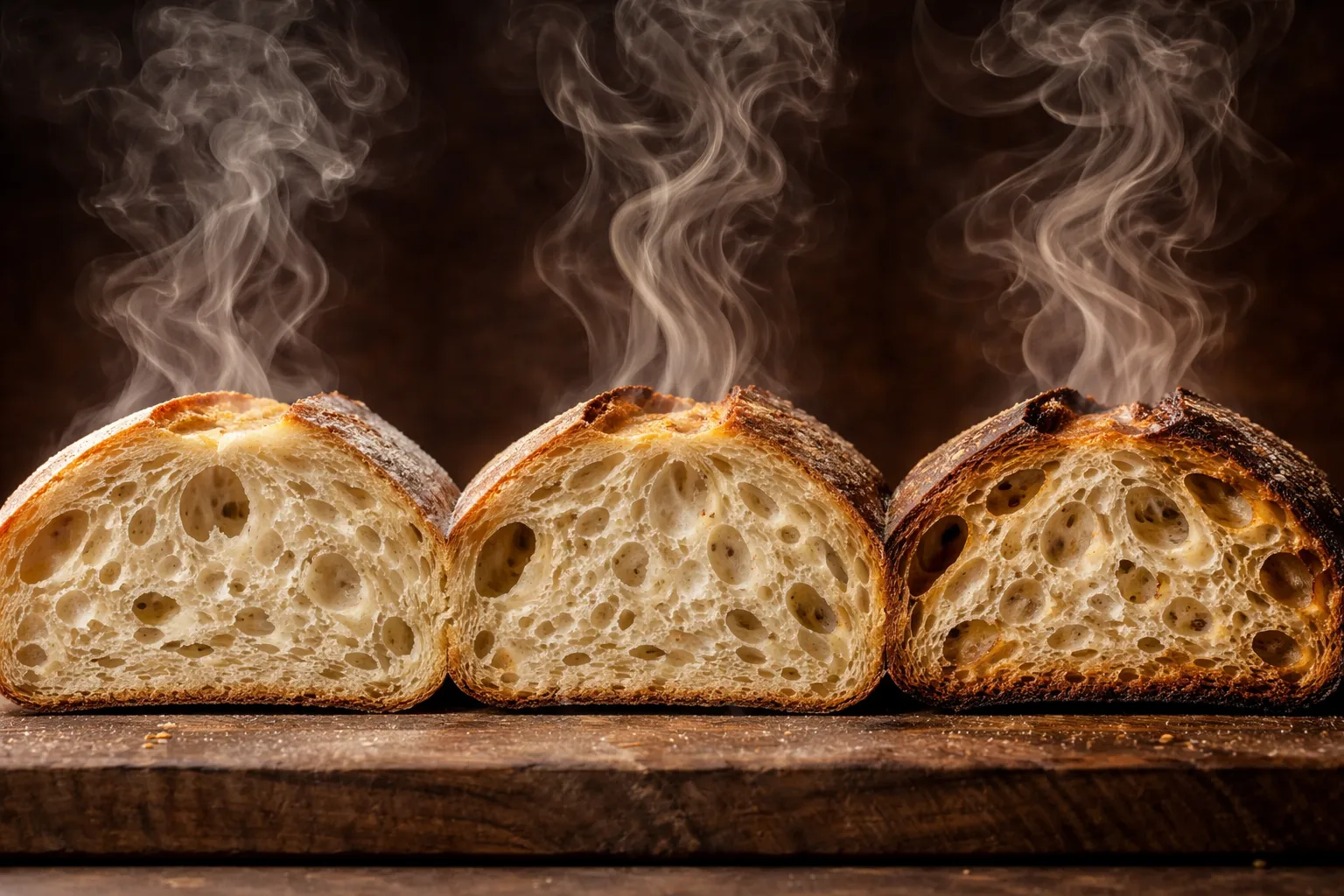
I want to tell you about the time I proudly pulled a sourdough loaf out of the oven, set it on the counter, and called my husband in to admire it. He looked at it. He looked at me. He said, very gently, “Babe, it’s… pale.” He was being kind. It looked like bread-shaped anxiety. Completely blonde, utterly wan, and about as appetizing as a lump of modeling clay. I had no idea then that I was missing out on one of the most transformative chemical reactions in all of cooking. I had never heard of the maillard reaction sourdough crust bakers talk about, and my loaves were suffering for it.
That pale, sad loaf was a turning point for me. And honestly? It turned into one of the best baking lessons of my life. Stick with me, because by the end of this post, your crust is going to be a deeply burnished, crackling, flavor-packed masterpiece. We are going to talk science, and it is going to be delicious.
What Is the Maillard Reaction, and Why Should Sourdough Bakers Care?
Named after French chemist Louis-Camille Maillard, who described it in 1912, the Maillard reaction is a chemical reaction between amino acids and reducing sugars that occurs when food is exposed to heat. It is responsible for the brown color and complex flavor of seared steak, toasted coffee, roasted vegetables, and yes, a gorgeous sourdough crust.
Here is the key thing to understand: the Maillard reaction is not the same as caramelization, even though both produce browning. Caramelization involves only sugars breaking down. The Maillard reaction is a whole conversation happening between sugars and proteins, and that conversation produces hundreds of distinct flavor compounds that you simply cannot get any other way. We are talking nutty, toasty, slightly bitter, deeply savory, malty notes all layered into that crust.
For sourdough specifically, your long fermentation process is actually doing you a huge favor here. The wild yeast and bacteria in your starter break down the starches in your flour into simple sugars over time, and they also produce amino acids as byproducts of fermentation. More available sugars plus more available amino acids equals more raw material for the Maillard reaction to work with. Your patience during bulk fermentation is literally pre-loading your loaf with flavor potential.
The Maillard Reaction and Your Sourdough Crust: What Has to Go Right
So why was my loaf so pale? I was making several classic mistakes that were shutting down the Maillard reaction before it ever got started. Here is what I learned.
Stop Guessing Your Oven Temperature and Start Actually Developing Crust
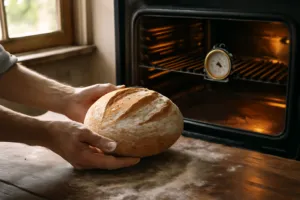
Your dial lies. I’ve baked dozens of loaves thinking my oven was at 500°F only to crack open the Dutch oven and find pale, slack dough that never developed that deep mahogany crust the Maillard reaction demands. An oven thermometer is the single easiest way to stop wasting fermentation and baking time on a temperature you can’t actually trust.
What works
- Reads dead-on consistent after the Dutch oven has been preheating—I’ve verified it against three different ovens and it matches every time within 2-3°F.
- Stainless steel probe doesn’t degrade or discolor even after months of sitting in a 500°F Dutch oven, and the dial face stays readable under the glow of your oven light.
- The stand angle lets you position it so you can read it without opening the oven door or guessing—you see the real temperature before you commit your loaf.
What doesn’t
- The dial can be finicky to read if your kitchen light is dim or you’re looking at it from a steep angle—I’ve squinted more times than I’d like to admit.
- It’s a passive thermometer, not digital, so you don’t get the convenience of a remote readout or alarm if your oven temperature drifts mid-bake.
I almost returned this the first time because I second-guessed whether a 50°F variance really mattered—until I used it for back-to-back bakes at actual temperature and saw the difference in crust color in real time. Get the AcuRite 00620A2 Stainless Steel Oven Thermometer and stop leaving crust development to chance.
This post contains affiliate links. As an Amazon Associate, I earn from qualifying purchases at no extra cost to you.