I want to tell you about the time I accidentally made the most beautiful loaf of my entire baking life while trying to hide evidence of a mistake from my husband. It started with a mislabeled bag, a moment of panic, and a desperate Google search at 11pm. And somewhere in the middle of that chaos, I discovered the magic of malted barley flour sourdough — and my baking has never been the same since.
Here is what happened. I had ordered a few different specialty flours and, in my very organized fashion, promptly dumped them all into unlabeled glass jars like some kind of chaotic apothecary. A few weeks later, I grabbed what I was absolutely certain was my bread flour, mixed up a big batch of sourdough dough, and only realized my mistake the next morning when I spotted the empty bag still sitting on the counter. I had used a full tablespoon of diastatic malt powder — basically malted barley flour in its concentrated form — in place of plain flour. The ratio was way off. I had used way too much. I did what any reasonable person does in that situation. I said nothing to anyone and put the dough in the fridge to cold ferment while I furiously researched whether I had just ruined everything.
What Is Malted Barley Flour and Why Does It Matter in Sourdough?
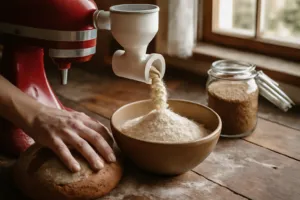
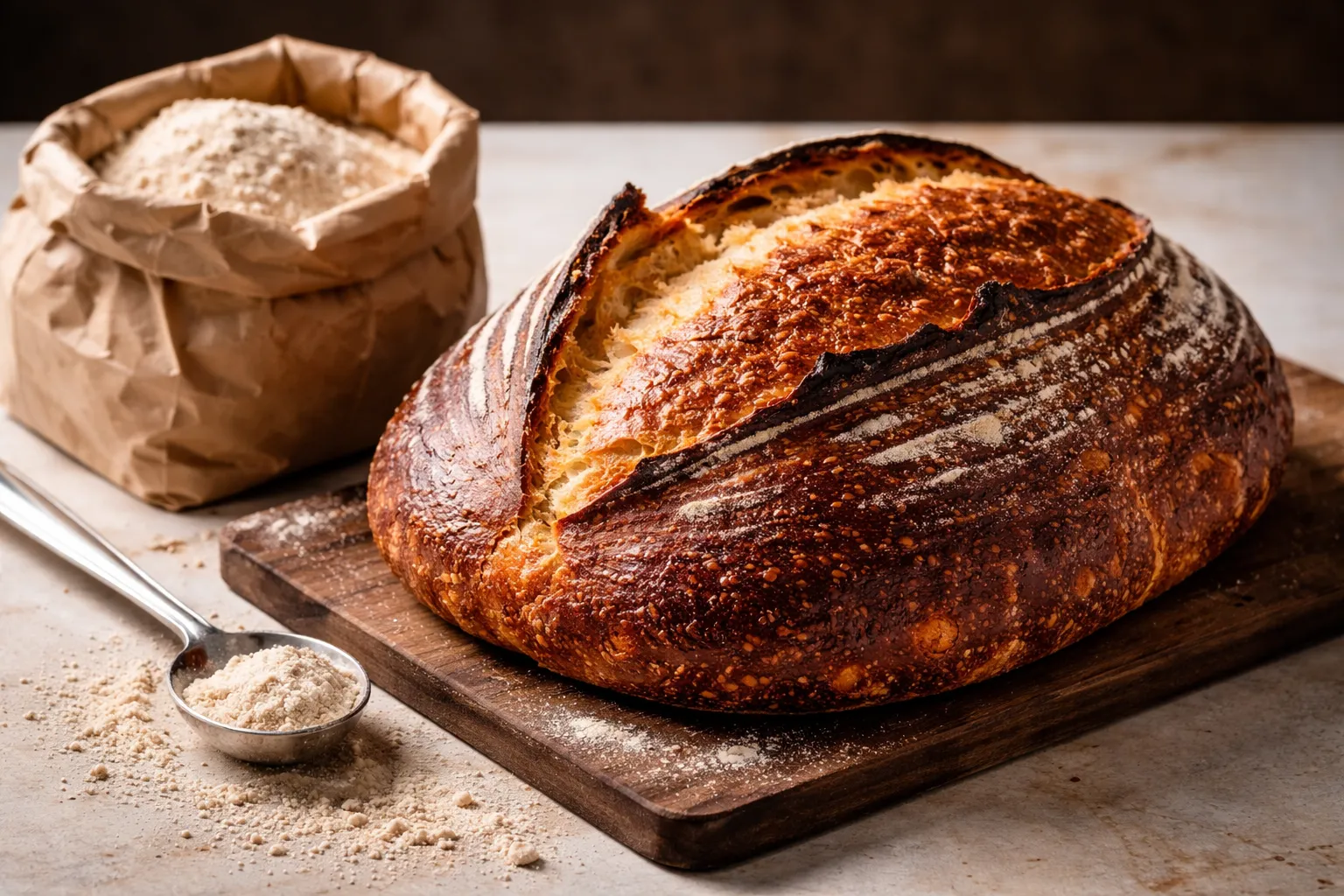
Okay, so here is what my midnight research session taught me. Diastatic malt powder is made from barley that has been sprouted, dried, and ground into a fine flour. The sprouting process activates natural enzymes — primarily amylase — which break down the starches in your flour into simple sugars. Those sugars do two incredibly important things. First, they feed your yeast, giving it extra fuel to produce carbon dioxide and helping your dough rise with more vigor and enthusiasm. Second, and this is the part that made me cry a little when I pulled my loaf from the oven, those sugars caramelize beautifully during baking and produce a deeply golden, crackling, glossy crust that looks like it came from a professional bakery.
This is different from non-diastatic malt, which has been heat-treated and contains no active enzymes. Non-diastatic malt adds flavor and color but does not have the same enzymatic effect on fermentation. When people talk about malted barley flour sourdough, they are usually talking about the diastatic version because that is where the real transformation happens.
The important caveat I learned the hard way: more is absolutely not better here. The standard recommendation is to use about 0.5 to 1 percent of your total flour weight. For a typical 500g flour recipe, that is roughly half a teaspoon to a full teaspoon. Too much and those overactive enzymes will actually start breaking down your gluten structure, leaving you with a sticky, extensible mess that spreads instead of rises. Which, theoretically, is exactly what happened to me. Theoretically.
The Diastatic Malt That Fixed My Pale, Lifeless Crusts
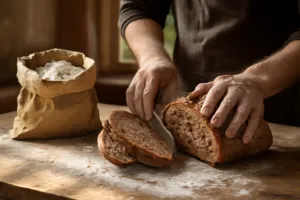
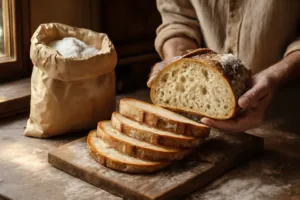
For years, my sourdough crusts were… fine. They were blonde, matte, and honestly kind of boring—the kind of loaf that looked like it came from a grocery store bread aisle, not from hours of my own hands and patience. Then I realized I was missing the one ingredient that actually deepens caramelization and brings out that mahogany shine.
What works
- Just a teaspoon or two transforms your crust color from pale to a rich, burnished brown—I noticed the difference within one bake, no experiment needed.
- It dissolves completely into your dough, so you don’t get any gritty texture or weird granules in your crumb like I worried you might.
- The enzymatic activity actually helps your gluten develop slightly faster, which means you can trust your bulk fermentation times without second-guessing yourself.
What doesn’t
- It’s expensive per ounce compared to regular flour, and a bag lasts longer than you’d think—so there’s a real risk you’ll forget you have it and buy another one.
- If you use too much (more than a teaspoon per loaf), your dough can get sticky and overactive faster than you expect, which I learned the hard way.
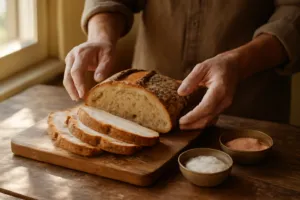
I hesitated for weeks before ordering, convinced that one more ingredient would complicate my routine, but the moment I opened my first loaf with that deep mahogany crust, I understood why bakers keep this stuff stocked. Bakers Club Artisan Diastatic Malt Powder has become part of every sourdough I make now.
This post contains affiliate links. As an Amazon Associate, I earn from qualifying purchases at no extra cost to you.