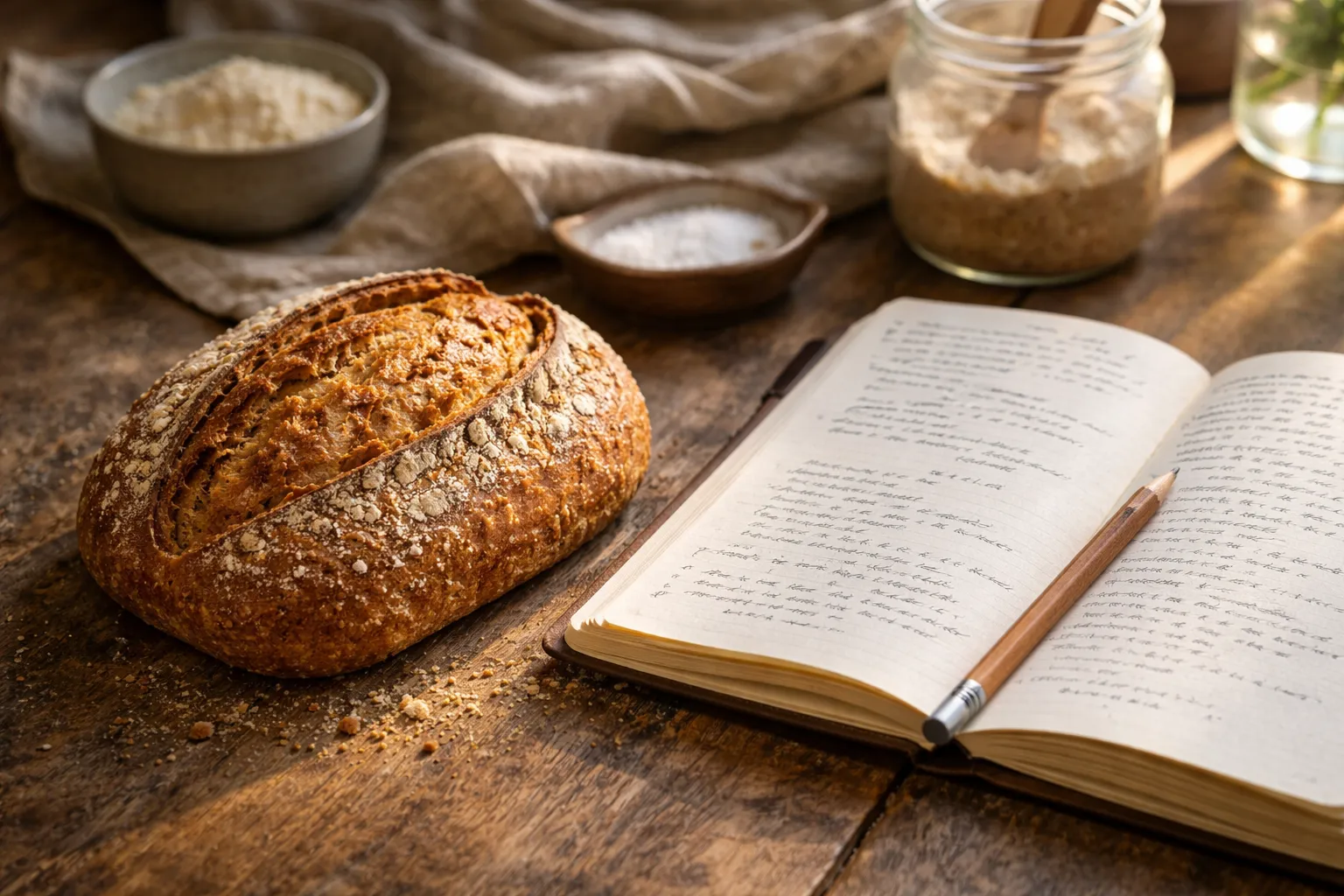
It was 6:47 on a Tuesday morning, and I was standing in my kitchen staring at what can only be described as a puddle. Not bread dough. A puddle. The kind of thing that spreads slowly across your countertop with the quiet confidence of something that has absolutely no intention of holding a shape. I had followed my usual sourdough routine to the letter. Or so I thought. What I had not accounted for was that I had swapped in einkorn flour for the first time, told myself it would be “basically the same,” and proceeded to treat it exactly like my trusty bread flour. Reader, it was not basically the same. And that puddle? It turned into the best loaf of einkorn sourdough bread I have ever eaten. But we are getting ahead of ourselves.
What Even Is Einkorn, and Why Should You Care?
Einkorn is one of the oldest cultivated grains on the planet. We are talking about a wheat that was being harvested around 10,000 years ago in the Fertile Crescent. It has never been hybridized or significantly altered by modern agriculture, which makes it a genuinely ancient grain in the truest sense of the phrase. It has a beautiful golden color, a nutty, almost buttery flavor, and a nutritional profile that puts modern wheat to shame in several areas, including higher protein content, more fat-soluble vitamins, and a different gluten structure that many people find easier to digest.
That gluten structure is also exactly why it behaved like a total toddler in my kitchen that Tuesday morning. Einkorn contains gluten, but it is a weaker, more extensible gluten compared to modern wheat. It absorbs water differently, it ferments faster, and it does not respond well to being handled the same way you would handle a high-gluten bread dough. Once I understood that, everything changed.
The Einkorn Flour That Finally Stopped My Dough From Melting Across the Counter
Einkorn behaves nothing like bread wheat—it absorbs water differently, ferments faster, and will absolutely punish you if you treat it like your usual sourdough starter recipe. Getting a consistent, reliably sourced einkorn flour is half the battle; the other half is accepting that your timing and ratios need to shift completely.
What works
- The whole wheat version actually holds gluten structure better than I expected—my second attempt (after the puddle incident) had real tension and didn’t collapse before shaping.
- Knowing the flour is organic and consistently milled means I can finally adjust my hydration down 5-8% and trust the results won’t be wildly different batch to batch.
- The flavor development is noticeably faster—I’m bulk fermenting for 3-4 hours instead of 5-6, which actually fits my schedule better once I stopped fighting the flour.
What doesn’t
- It’s more expensive than standard bread flour, and you’ll burn through it faster because einkorn loaves are denser and you’re likely to make more test batches before you dial it in.
- The 32 oz 2-pack size runs out quickly if you’re baking weekly—I’ve had to reorder more often than I’d like, and shipping costs start to sting.
I almost gave up on einkorn after that Tuesday puddle, convinced I’d never figure out the timing, but switching to a flour I could actually count on made all the difference. Jovial Organic Einkorn Whole Wheat Flour, 32 oz 2-Pack
This post contains affiliate links. As an Amazon Associate, I earn from qualifying purchases at no extra cost to you.