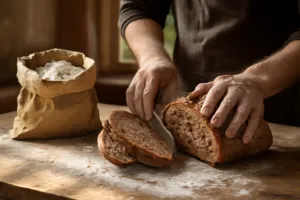
I still remember standing at my kitchen counter, staring at what could only be described as a very expensive, very heavy doorstop. It was a Tuesday evening, the house smelled amazing, and I had just unmolded my very first spelt sourdough bread onto the cooling rack. It thudded. Like, actually thudded. My husband wandered in from the living room and asked if I had dropped something. Reader, I had not dropped something. That was my loaf.
This post contains affiliate links. As an Amazon Associate, I earn from qualifying purchases.
I had been baking sourdough for about two years at that point, and I thought I knew enough to just swap in a new flour and wing it. Spoiler: you cannot just swap in a new flour and wing it. But that dense, gummy, honestly kind of sad loaf was also the beginning of one of my favorite baking obsessions, because spelt sourdough bread is genuinely extraordinary when you understand what you are working with. It took me three more loaves, a lot of reading, and one very honest conversation with myself about hydration ratios before I got there. And now I want to save you all of that pain.
What Makes Spelt Different From Regular Wheat
Spelt is an ancient grain, a distant cousin of modern wheat that has been cultivated for thousands of years. It has a nutty, slightly sweet flavor that is genuinely unlike anything you get from white or even whole wheat flour. That flavor alone is worth the learning curve. But here is the thing that tripped me up completely: spelt behaves very differently from wheat during fermentation and baking, and if you go in expecting it to act like bread flour, you are going to end up with your own doorstop moment.
Spelt does contain gluten, but the gluten structure is more fragile and more extensible than wheat gluten. It absorbs water quickly and it can over-ferment fast. The dough can go from perfectly developed to slack and sticky in what feels like minutes. This is not flour you can leave on the counter and forget about. It needs attention, and once you give it that attention, it rewards you with the most gorgeous, complex, earthy loaf you have ever tasted.
What You Will Need to Bake Spelt Sourdough Bread
Let me talk about flour first, because flour choice matters enormously here. I have tried several brands over the course of my spelt sourdough journey, and I want to share the ones I keep coming back to.
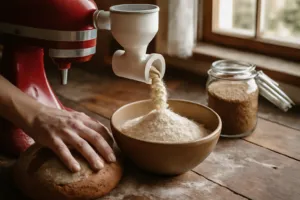
For whole spelt, I genuinely love Nature’s Legacy VitaSpelt Organic Whole Spelt Flour. It has excellent flavor and grinds consistently, which means your hydration calculations will be reliable from bake to bake. If you want something easy to grab in a smaller quantity while you are still experimenting, the Bob’s Red Mill Organic Spelt Flour 20oz is a fantastic starting point. I went through several bags of that one in my early days. For bakers who want a reliable 5-pound bag at a good value, Grain Brain Organic Whole Spelt Flour is a solid choice with great earthy flavor. I also keep the Bob’s Red Mill Spelt Flour 22oz on hand as a backup because I have definitely run out at inconvenient moments. And if you want to try something truly special, pick up One Degree Organic Foods Sprouted Spelt Flour. Sprouted spelt ferments even more readily and has an incredible depth of flavor that I save for special bakes.
Key Tools and Supplies
- A healthy, active sourdough starter fed within 4 to 8 hours of use
- A kitchen scale (weight measurements are non-negotiable with spelt)
- A bench scraper for handling the stickier dough
- A banneton or lined bowl for the final proof
- A Dutch oven for baking
The Lessons That Turned My Baking Around
After the doorstop incident, I sat down and really thought about what had gone wrong. The answer, it turned out, was pretty much everything at once. My hydration was too high, my bulk fermentation was too long, and I had handled the dough too aggressively during shaping. With spelt, each of those mistakes compounds the others. Here is what I changed.
Lower Your Hydration
This was the biggest shift. Because spelt absorbs water so quickly, it can feel like you need more water than you do. Start at around 70 to 72 percent hydration if you are using 100 percent whole spelt. If you are blending spelt with bread flour, which I highly recommend for beginners, you can go a bit higher. A blend of 50 percent spelt and 50 percent strong bread flour gives you the flavor of spelt with a bit more structural stability. That is actually how I bake most of my spelt loaves now.
Watch Your Bulk Fermentation Closely
Spelt ferments faster than wheat. In a warm kitchen, your bulk fermentation might be done in three to four hours, not five or six. Look for a 50 to 75 percent volume increase and a dough that feels airy and slightly domed when you check it in the container. If the dough starts to feel slack and you can see large bubbles on the sides of the bowl, you have gone too far. I now do my spelt bulk ferments at a slightly cooler room temperature, around 72 to 74 degrees Fahrenheit, to give myself a wider window to work with.
Handle the Dough Gently
Because the gluten network in spelt is more fragile, rough handling during shaping will tear it apart rather than build tension. Use a light touch. I do a simple pre-shape, let the dough bench rest for 20 minutes, and then do one gentle final shape. Fewer folds during bulk fermentation also helps. I do three sets of stretch and folds at 30-minute intervals and then leave it completely alone. Less really is more here.
Cold Proof Overnight
I always cold proof my spelt loaves overnight in the refrigerator. The cold slows everything down and gives you much better oven spring and a more developed flavor. Bake straight from the fridge into a screaming hot Dutch oven. Score quickly and confidently, put the lid on, and let the oven do its thing at 500 degrees Fahrenheit for 20 minutes before you drop the temperature and remove the lid to brown the crust.
The Loaf That Made Me Cry (Happy Tears This Time)
About six weeks after my doorstop disaster, I baked a loaf using a 60/40 blend of whole spelt and bread flour, kept my hydration at 72 percent, watched my bulk ferment like a hawk, and shaped with the gentlest hands I could manage. I put it in the fridge Friday night and baked it Saturday morning.
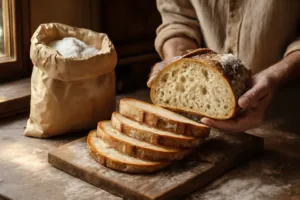
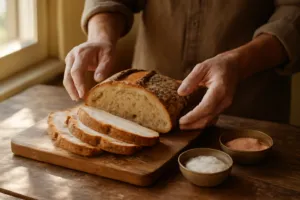
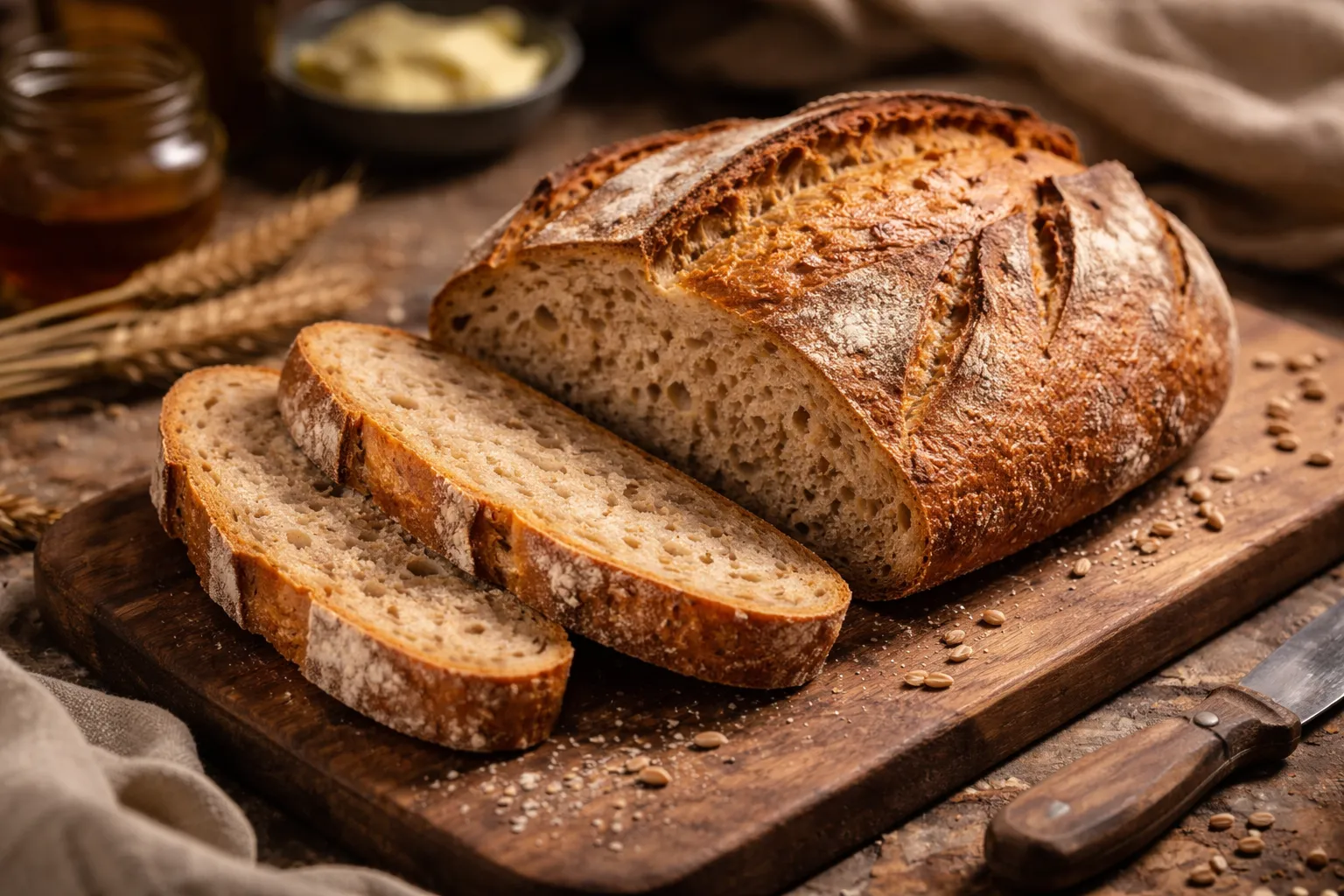
When I tipped it out of the Dutch oven, it sang. I mean that little crinkle-crackle sound that a perfectly crusted loaf makes as it cools. It had real height. It had a gorgeous score that bloomed open like a flower. When I cut into it an hour later, the crumb was open and chewy, with that warm, nutty spelt aroma that I had been chasing for weeks. My husband took one bite and said, without any prompting, that it was the best bread I had ever made. I may have cried a little. Into my coffee, quietly, where no one could see.
That is the thing about spelt sourdough bread. The learning curve is real, but the payoff is genuinely unlike anything else you will pull out of your oven. The flavor is complex and ancient and somehow deeply satisfying in a way that a standard white sourdough, as much as I love it, just cannot touch. If your first loaf is dense and you feel like giving up, please do not. Lower your hydration, shorten your ferment, be gentle, and try again. The loaf that waits on the other side of that frustration is absolutely worth it.
Have you tried baking with spelt yet? Drop a comment below and let me know how it went. I love hearing your stories, dense loaves and all.