I will never forget the look on my mother-in-law’s face when I proudly set my “rustic artisan loaf” on her Thanksgiving table. It had started out as a beautiful boule. It arrived looking like a deflated frisbee someone had sat on. I had cold-proofed it in an oval banneton, flipped it onto parchment, and watched in slow motion as it spread sideways like it had given up on life entirely. That was the day I finally got serious about understanding sourdough boule vs batard — because clearly, shape matters more than I had ever wanted to admit.
If you have ever stared at a recipe and wondered whether to reach for your round proofing basket or your oval one, you are not alone. The difference between a boule and a batard goes way beyond aesthetics. It affects how your dough ferments, how it scores, how it bakes, and yes — how it looks when you nervously slide it onto your in-law’s holiday table. Let me break it all down for you, frisbee trauma and all.
Sourdough Boule vs Batard: What Is the Actual Difference?
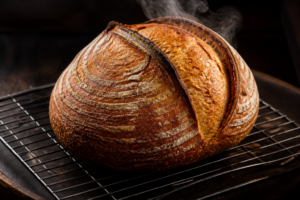
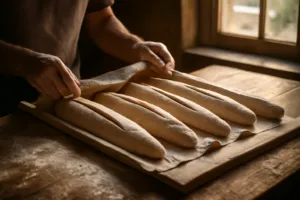
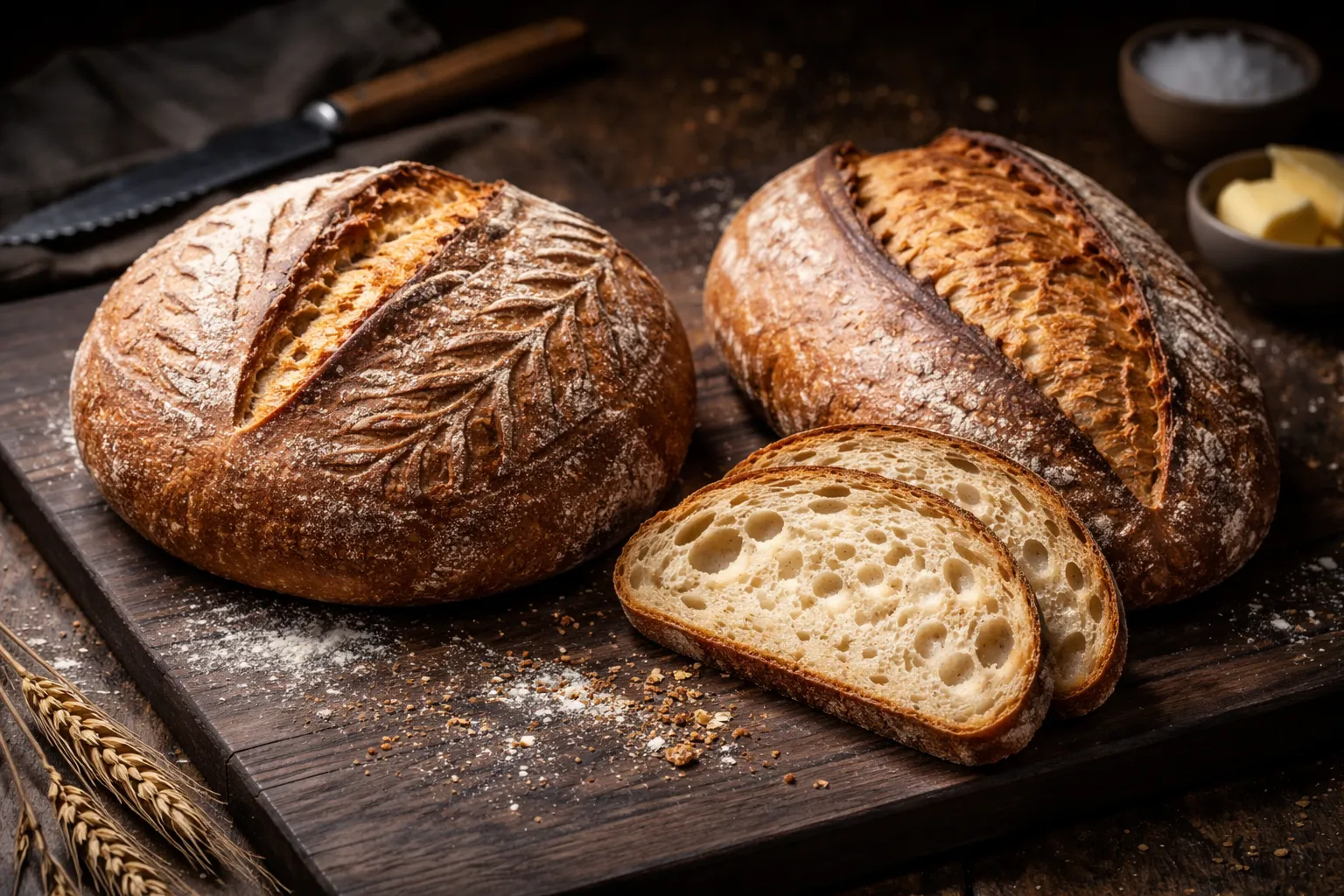
The word “boule” is French for ball, and that is exactly what it is — a round, domed loaf. A batard is an oval or torpedo-shaped loaf, somewhere between a boule and a full baguette in length. Both are classic sourdough shapes, both are gorgeous when done right, and both require slightly different handling to reach their full potential.
The Boule
A boule is shaped by pulling the dough into a tight, round ball with surface tension built up through a series of folds and a final drag across an unfloured surface. It proofs in a round banneton, bakes up tall and domed, and delivers a deeply satisfying cross-section when sliced. Because the tension is distributed evenly in all directions, a good boule holds its shape remarkably well — assuming you are using the right basket and not an oval one like I was on that fateful Thanksgiving.
The Batard
A batard involves a slightly more involved shaping technique. You flatten the dough gently into a rough rectangle, fold the sides in, roll it toward you with tension, and seal the seam. The result is an elongated oval that fits beautifully into an oval proofing basket. Batards tend to be a little easier for beginners to score with a single long slash, and they slice into more uniform pieces — which makes them fantastic for sandwich-sized slices or gift-worthy loaves.
Why Shape Actually Changes How Your Bread Bakes
Here is the thing that took me forever to understand: a loaf’s shape is not just decorative. It is structural. The surface tension you build during shaping determines how your dough expands in the oven. A tight, well-shaped boule will spring upward. A well-shaped batard will burst open along that long score with dramatic, ear-lifting flair. A poorly shaped loaf of either variety — say, one proofed in the wrong basket — will spread outward instead of upward, because there is nothing guiding that oven spring in the right direction.
The shape also affects the crumb. Round loaves tend to have a more open, airy crumb near the center because the dough mass is equidistant from all sides. Oval loaves often have a slightly more even crumb throughout, which is one reason many bakers prefer them for everyday sandwich bread.
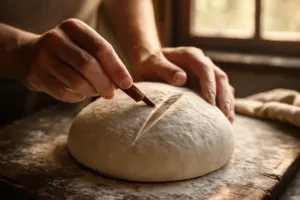
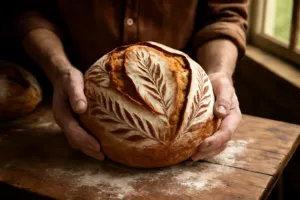
And then there is scoring. A boule is typically scored with a cross, a square, a wheat stalk pattern, or a curved ear score. A batard almost begs for that single, confident diagonal slash that lets the whole loaf bloom open like a flower. Getting the match between shape and score right is one of those small things that makes a huge visual difference.
My Gear: The Bannetons I Actually Use and Recommend
After the Great Thanksgiving Frisbee Incident, I invested in the right proofing baskets for each shape, and it genuinely changed everything. Here is what I reach for now.
The Round Banneton That Actually Holds a Boule’s Shape
If you’ve ever watched a perfectly shaped boule collapse into a puddle during cold proof, you know the banneton matters more than you’d think. The right round basket with a sturdy liner makes the difference between a loaf that springs up in the oven and one that spreads like mine did on that Thanksgiving table.
What works
- The thick cane construction actually supports the dough’s weight during a long cold proof without sagging or creating flat spots on the final loaf.
- The included linen liner is tight enough that your dough doesn’t sink into the gaps between the coils, which means cleaner scoring and better oven spring.
- The 9-inch size is the sweet spot for boules—large enough for a 500-750g shaped dough without overcrowding, snug enough that there’s real structure underneath.
What doesn’t
- The liner needs to be washed and dried completely between uses, or it will harbor mold—I learned this the hard way with a basket I tried to reuse before it was fully dry.
- At 9 inches, it’s specifically a boule basket, not a hybrid, so if you want to bake batards regularly you’ll need a separate oval banneton to get the same support.
I was skeptical that a banneton would truly fix my spreading problem until I used this one for three consecutive boules and actually got loaves that held their height. Saint Germain Bakery Premium Round Bread Banneton Basket with Liner (9 inch)
This post contains affiliate links. As an Amazon Associate, I earn from qualifying purchases at no extra cost to you.